
🚨 THEY WERE ALL WRONG 😂😂😂
YouTube · adYwyRunXc8
Quick Read
Summary
Takeaways
- ❖Trump's 'Operation Epic Fury' against Iran is a necessary, pre-emptive strike to prevent Iran from acquiring nuclear weapons and neutralize a long-standing threat.
- ❖Former counterterrorism director Joe Kent's resignation and anti-war stance are suspicious, given his past pro-intervention comments and alleged ties to figures like Tucker Carlson and Peter Thiel, suggesting a 'counter-MAGA op.'
- ❖European NATO allies are 'freeloaders' who refuse to assist in the Iran conflict, despite benefiting from US protection and energy security, prompting Trump to consider withdrawing US support from the Strait of Hormuz.
- ❖The host posits a 'good cop, bad cop' strategy where Trump allows Israel to act aggressively against Iran, then steps in as a 'moderate peacemaker' to achieve US geopolitical goals.
- ❖Critics of the Iran war, including Bernie Sanders and Candace Owens, are dismissed as hypocritical, misinformed, or part of a broader disinformation campaign.
Insights
1Trump's Iran Strategy: Pre-emptive Action Against an Inevitable Threat
The host asserts that Trump's military action against Iran, 'Operation Epic Fury,' is a justified pre-emptive strike. He argues that Iran posed an 'inevitable threat' due to its pursuit of nuclear weapons, state sponsorship of terrorism, and repeated threats against the US and its allies. Waiting for an 'imminent' attack is deemed a dangerous 'leftist policy.' This action is framed as fulfilling Trump's decades-long promise to confront Iran, executed without deploying US ground troops.
Host's interpretation of Trump's long-standing rhetoric (), Iran's alleged pursuit of nuclear weapons (, ), and the host's belief that Iran is an 'inevitable threat' ().
2Joe Kent's Resignation as a 'Counter-MAGA Op' and Alleged Treason
Joe Kent, former Director of the National Counterterrorism Center, resigned, claiming the Iran war was unnecessary and driven by Israeli pressure. The host frames Kent's actions as a suspicious 'counter-MAGA op' or even treason, noting Kent's alleged history as a leaker and his removal from intelligence briefings months prior. The host highlights Kent's past tweets advocating for aggressive action against Iran, contrasting them with his current anti-war stance, and suggests ties to Tucker Carlson and Peter Thiel as part of a larger political maneuver.
Joe Kent's resignation statement (), Trump administration officials claiming Kent was a known leaker and cut off from briefings (, , ), host's analysis of Kent's contradictory past tweets (, , , , , ), and FBI investigation into Kent for leaking ().
3European Allies as 'Freeloaders' and Trump's NATO Strategy
The host criticizes European NATO allies for their refusal to contribute military assistance to the US-led operations against Iran, despite acknowledging Iran as a threat. He labels them 'cowards' and 'parasites' who rely on US funding for NATO and military protection without reciprocating. The host suggests Trump's public statements about potentially withdrawing US forces from the Strait of Hormuz are a strategic move to force European nations to take responsibility for their own energy security and expose NATO's perceived one-way street dynamic, potentially leading to a US exit from the alliance.
Trump's statement on NATO allies refusing to get involved in Iran (), Trump's questioning of NATO's value (), Trump's threat to withdraw from the Strait of Hormuz (), and the subsequent joint statement from European and Asian nations expressing readiness to contribute to Strait of Hormuz security ().
4The 'Good Cop, Bad Cop' Strategy for Iran's Energy Infrastructure
The host theorizes that Trump and Israel are employing a 'good cop, bad cop' strategy regarding attacks on Iran's energy infrastructure. He suggests Trump secretly authorized Israel's strike on Iran's largest natural gas facility, then publicly condemned it and warned against further Israeli attacks, while simultaneously threatening massive US retaliation if Qatar's LNG facilities were targeted by Iran. This allows Trump to appear as a 'moderate peacemaker' while Israel acts as the 'attack dog,' ultimately serving US interests by destabilizing Iran and pressuring other Gulf nations.
Initial reports of Israel striking Iran's gas facility 'approved by the United States' (), Trump's subsequent statement denying US knowledge of the attack and warning Israel (), and Trump's threat of massive US retaliation if Qatar is attacked ().
Bottom Line
The host alleges a 'coup' within the Republican party, orchestrated by figures like Tucker Carlson, Joe Kent, and Peter Thiel, aiming to take over the party in 2028 by pushing an anti-war, anti-Israel narrative that contradicts Trump's long-held positions.
This suggests a deep internal ideological battle within the conservative movement, where perceived 'America First' principles are being redefined or weaponized against former allies, potentially leading to significant shifts in future Republican foreign policy and leadership.
Analyzing the evolving alliances and rhetoric within the Republican party could reveal emerging power brokers and future policy directions, offering insights for political strategists and those tracking conservative media influence.
The host claims that the FBI investigation into Joe Kent for leaking classified information predated his public resignation and anti-war statement, suggesting his resignation was a pre-emptive move to appear as a 'martyr' or to advance a hostile political agenda.
This implies that Kent's public dissent was not a genuine change of heart but a calculated maneuver to leverage an ongoing investigation for political gain, potentially undermining national security processes and public trust in intelligence officials.
Investigating the timing and motivations behind high-profile resignations and public criticisms from former intelligence officials could expose deeper political machinations and vulnerabilities within government agencies.
Key Concepts
Inevitable vs. Imminent Threat
The host argues that waiting for an 'imminent' threat (e.g., a nuclear attack) is a 'gayest mentality.' Instead, the US should proactively neutralize 'inevitable' threats like Iran, which is perceived to be on a path to acquiring nuclear weapons and attacking the US, before they fully materialize.
Good Cop, Bad Cop Geopolitics
The host theorizes that Trump and Israel are executing a 'good cop, bad cop' strategy. Israel acts as the 'attack dog' by striking Iranian assets, allowing Trump to publicly condemn the actions while privately approving them, thereby appearing as a 'moderate peacemaker' and achieving strategic objectives without direct US blame.
Lessons
- Critically evaluate public statements from former government officials, especially when they contradict past positions or emerge amidst ongoing investigations, to discern potential political motivations.
- Monitor the rhetoric and alliances of emerging figures within political parties, particularly those with ties to influential media personalities or wealthy donors, to identify potential shifts in party platforms or leadership.
- Analyze geopolitical events, such as military actions and international alliance dynamics, through multiple lenses, including potential 'good cop, bad cop' strategies or efforts to expose perceived weaknesses in international agreements.
Notable Moments
The host highlights a CNN poll showing 100% approval for Trump among the MAGA GOP base, calling it 'insane' and 'diabolical.'
This moment underscores the host's perception of Trump's unshakeable support within his base, framing it as a unique and powerful political phenomenon that defies conventional political analysis and media narratives.
The host details how European nations, after weeks of refusing to help secure the Strait of Hormuz, immediately pledged readiness to contribute after Trump threatened to withdraw US forces, causing a 32% surge in European gas prices.
This sequence of events is presented as concrete evidence of European dependency on the US and the effectiveness of Trump's 'America First' approach in compelling allies to act in their own self-interest, validating the host's critique of NATO.
Quotes
"We are superior. We are better. We are stronger. We are cooler. And God likes us more."
"In my opinion, blowing up terrorists that have been trying to kill us is actually based and true."
"Iran posed no imminent threat to our nation. It is clear that we started this war due to pressure from Israel and its powerful American lobby."
"We have enough uranium to build 11 nuclear bombs, and we are going to do it."
"Asking Kier Starmer advice for warfare is like asking a nun's advice for sex."
Q&A
Recent Questions
Related Episodes

Iran Update: Israel’s Newest Bombing Campaign, the Oncoming War With China and How to Avoid It
"Colonel Wilerson reveals how the US and Israel are actively bombing China's strategic infrastructure in Iran, escalating a covert economic war that Beijing intends to win without direct military conflict by dismantling the dollar's global dominance."
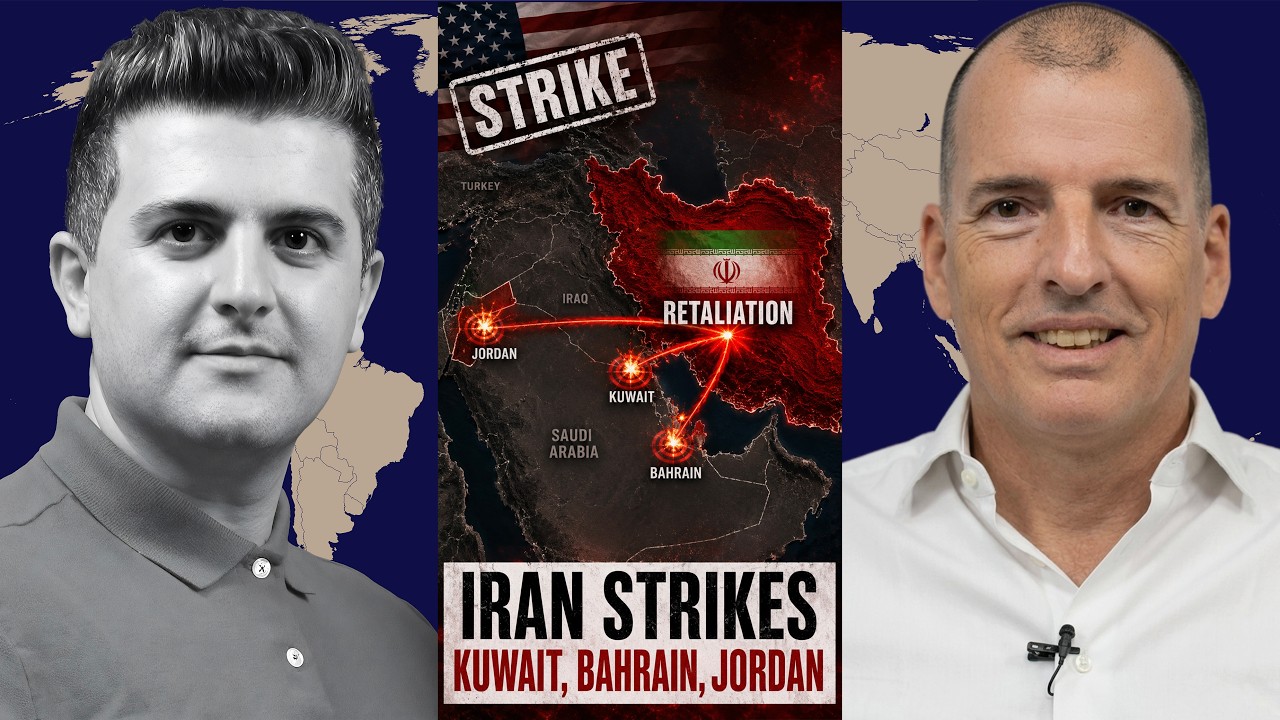
Alex Krainer: US STRIKES Iran – Iran RETALIATES Against Kuwait, Bahrain & Jordan!
"Amidst escalating US-Iran conflict and Iranian retaliation against regional US allies, this episode argues that US foreign policy is deeply controlled by an 'Anglo-Zionist conspiracy' led by the Rothschild banking dynasty, prioritizing Israeli interests over American ones."

Patrick Henningsen: Hezbollah JUST Fired Back at Israel - Iran Vows to “Crush” All Attacks
"Patrick Henningsen argues that the US and Israel initiated an illegal war against Iran, driven by Trump's incompetence and Israeli influence, leading to an inevitable escalation with severe global economic repercussions."

🚨 TOTAL F*CKING CHECKMATE 😂😂😂
"The host argues that Trump's 'ceasefire' with Iran was a calculated '5D chess' move to orchestrate a global energy market reshuffle, while simultaneously lambasting 'woke' domestic policies and the 'freefall' of anti-Trump conservative figures."