BREAKING: U.S. Warships Launch Hormuz Op., Iran SEETHES, Threatens Strike | TBN Israel
YouTube · afhq96dDfZk
Quick Read
Summary
Takeaways
- ❖The U.S. launched 'Operation Liberty' in the Strait of Hormuz with destroyers, nuclear submarines, and hundreds of aircraft to escort neutral ships.
- ❖Iran considers any American intervention in the Strait of Hormuz a violation of the ceasefire and threatens to attack any force approaching the area.
- ❖Over 1,000 commercial ships and 20,000 crew members are reportedly trapped in the Persian Gulf due to the Strait's closure.
- ❖The U.S. operation is a broader strategy to create a new maritime order in the Gulf under American leadership and apply maximum pressure on Iran.
- ❖Iran has lost an estimated $4.8 billion due to the naval blockade, with oil reserves filling up and production reduced.
- ❖IDF officers estimate a limited U.S. strike in Iran might be required to force the Revolutionary Guards to abandon their nuclear program.
- ❖Iran's strategy of using the Strait of Hormuz as a bargaining chip is backfiring, as the world accelerates the development of bypass trade routes (e.g., Saudi land routes, pipelines).
- ❖China is playing a 'both sides' strategy, pushing Iran to negotiate with the U.S. while quietly supplying dual-use commercial and technological equipment.
- ❖Iran's underground missile cities, once considered impenetrable, are now seen as intelligence targets, with concentrated capabilities becoming vulnerable to targeted strikes on entrances or support systems.
- ❖Iran's global terror activation has shifted to using criminal gangs, mercenaries, and online recruitment to create distance and deny responsibility for attacks.
Insights
1U.S. 'Operation Liberty' in Hormuz: Humanitarian Front, Strategic Intent
The U.S. launched Operation Liberty, deploying over 15,000 soldiers, destroyers, and 100+ aircraft, to escort neutral ships through the Strait of Hormuz. While publicly presented as a humanitarian effort to aid stranded crews, the underlying strategy is to establish a new American-led maritime order in the Gulf and exert maximum pressure on Iran.
Trump announced Operation Liberty in the Straits of Hormuz... The United States will military escort neutral ships that are stuck in the Strait of Hormuz as a humanitarian gesture... behind the move stands a much broader strategy, an attempt to create a new maritime order in the Gulf under American leadership while applying maximum pressure on Iran.
2Iran's Economic Strain and Retaliatory Threats
Iran has lost an estimated $4.8 billion due to the naval blockade, leading to reduced oil production and severe internal economic pressure. In response to Operation Liberty, Iran's National Security and Foreign Policy Committee head, Ibraim Azizi, warned that any American intervention would be considered a ceasefire violation, threatening to attack any force approaching the area and asserting that the Strait is under Tehran's control.
In the Pentagon, they estimate that because of the naval blockade, Iran has so far lost $4.8 billion... The head of the National Security and Foreign Policy Committee in the Iranian Parliament, Ibraim Azizi, warned on the social network X, that the Islamic Republic would consider any American intervention in the Strait of Hormuz as a violation of the ceasefire.
3Global Efforts to Bypass Hormuz Undermine Iran's Leverage
Iran's closure of the Strait of Hormuz, intended as a strategic weapon, is inadvertently accelerating international efforts to build alternative trade routes. Saudi Arabia is utilizing existing pipelines and developing new sea-to-land routes, while other Gulf states are exploring rail corridors. These bypasses aim to reduce global reliance on the Strait, diminishing Iran's long-term strategic influence.
If Iran is using Homus as a hostage, is it actually pushing the world to build new trade routes that one day in the future will make its threat less relevant basically bypassing the Iranian influence?... Saudi Arabia is also using pipelines built to bypass the straight. Gulf states are examining land routes, ideas like rail corridors through Jordan, Turkey, and Central Asia and suddenly becoming more important.
4China's Dual Strategy: Diplomacy and Covert Support for Iran
China is pursuing a 'both sides' strategy regarding Iran. It encourages Iran to negotiate with the U.S. to prevent a global energy crisis and maintain regional stability. Simultaneously, Western intelligence indicates that Chinese companies are covertly supplying Iran with dual-use commercial and technological equipment, potentially supporting its military efforts, including components for missiles and drones.
Beijing is playing a double game. On one hand, it is pushing Iran to stay in negotiations... On the other hand, China is not cutting itself off from Iran. Western intelligence assessments indicate that dual use equipment, materials, and commercial technologies continue to reach Iran through Chinese companies.
Bottom Line
Iran's heavily invested underground missile bunkers, once perceived as impenetrable assets, are now becoming intelligence targets. Their centralized nature makes them vulnerable to targeted strikes on entrances, access routes, or support systems, effectively trapping missiles rather than protecting them.
This changes the calculus of strategic defense, suggesting that 'hardened' targets can become liabilities if their support infrastructure or access points are compromised. It implies a shift from needing to destroy the entire facility to merely neutralizing its operational capacity.
Develop advanced precision munitions and intelligence capabilities focused on disrupting critical infrastructure and access points of deeply buried targets, rather than requiring full penetration and destruction. This could offer a more cost-effective and achievable military objective.
Iran's shift to using criminal gangs, mercenaries, and online recruitment for global terror operations reflects a weakening of its traditional, more organized proxy networks (Hezbollah, Houthis, Hamas).
This indicates a degradation of Iran's command and control over its terror apparatus, forcing it to rely on less reliable and more deniable methods. It also suggests increased effectiveness of counter-terrorism efforts against its established proxies.
Enhance intelligence and counter-terrorism efforts focused on online recruitment platforms and tracking financial flows to criminal networks. This approach could disrupt Iran's ability to project influence and carry out attacks without direct attribution, further isolating the regime.
Key Concepts
The Powder Keg
The situation in the Strait of Hormuz is described as a 'powder keg of pressure' due to the significant military presence of both the U.S. and Iran, coupled with Iran's 'trigger-happy' regime and internal factions. This model highlights how a small mistake or misunderstanding can rapidly escalate into a large-scale conflict.
The Boomerang Effect
Iran's attempt to use the Strait of Hormuz as a 'hostage' and blackmail tool is creating a 'boomerang effect.' By making the Strait dangerous, Iran is inadvertently pushing the international community to invest in and develop alternative trade routes, thereby reducing the Strait's strategic importance and Iran's leverage in the long term.
The Dual Switch Strategy
Iran views the Strait of Hormuz and the Bab el-Mandeb Strait (controlled by Houthi proxies) as 'two switches' to exert pressure. If it cannot directly confront the U.S. and Israel, it attempts to make the entire world pay an indirect price by disrupting global shipping and energy flows.
Lessons
- Monitor global shipping and energy markets closely for volatility, as the Strait of Hormuz remains a critical chokepoint susceptible to rapid escalation.
- Evaluate supply chain resilience and explore diversified trade routes, considering the growing international efforts to bypass the Strait of Hormuz and Bab el-Mandeb.
- Stay informed about the geopolitical dynamics in the Middle East, particularly the U.S.-Iran tensions, as a single miscalculation could have far-reaching consequences.
Notable Moments
U.S. President Trump announced 'Operation Liberty' to militarily escort neutral ships stuck in the Strait of Hormuz, deploying 15,000 soldiers, destroyers, and over 100 aircraft.
This marked a direct and significant U.S. military intervention in a highly contested waterway, signaling a shift from economic pressure to active force projection, increasing the immediate risk of conflict.
Iran's National Security and Foreign Policy Committee head, Ibraim Azizi, warned that any American intervention in the Strait of Hormuz would be considered a violation of the ceasefire and threatened military action.
This explicit threat from a senior Iranian official underscored Iran's hardline stance and its readiness to escalate, directly challenging the U.S. operation and raising the stakes for a military confrontation.
Quotes
"If there's any disruption to the humanitarian crisis and the process of rescuing these ships, we will have to deal with it, unfortunately, with great force."
"The Strait of Hormuz and the Persian Gulf will not be managed by Trump's delusional pros."
"The United States will be required to carry out a limited strike in Iran in order to defeat the Iranian regime and bring it to its knees."
"When a strategic route becomes a tool for blackmail, the market begins to build an alternative."
Q&A
Recent Questions
Related Episodes

Patrick Henningsen: Hezbollah JUST Fired Back at Israel - Iran Vows to “Crush” All Attacks
"Patrick Henningsen argues that the US and Israel initiated an illegal war against Iran, driven by Trump's incompetence and Israeli influence, leading to an inevitable escalation with severe global economic repercussions."

🚨 TOTAL F*CKING CHECKMATE 😂😂😂
"The host argues that Trump's 'ceasefire' with Iran was a calculated '5D chess' move to orchestrate a global energy market reshuffle, while simultaneously lambasting 'woke' domestic policies and the 'freefall' of anti-Trump conservative figures."

Iran Update: Israel’s Newest Bombing Campaign, the Oncoming War With China and How to Avoid It
"Colonel Wilerson reveals how the US and Israel are actively bombing China's strategic infrastructure in Iran, escalating a covert economic war that Beijing intends to win without direct military conflict by dismantling the dollar's global dominance."
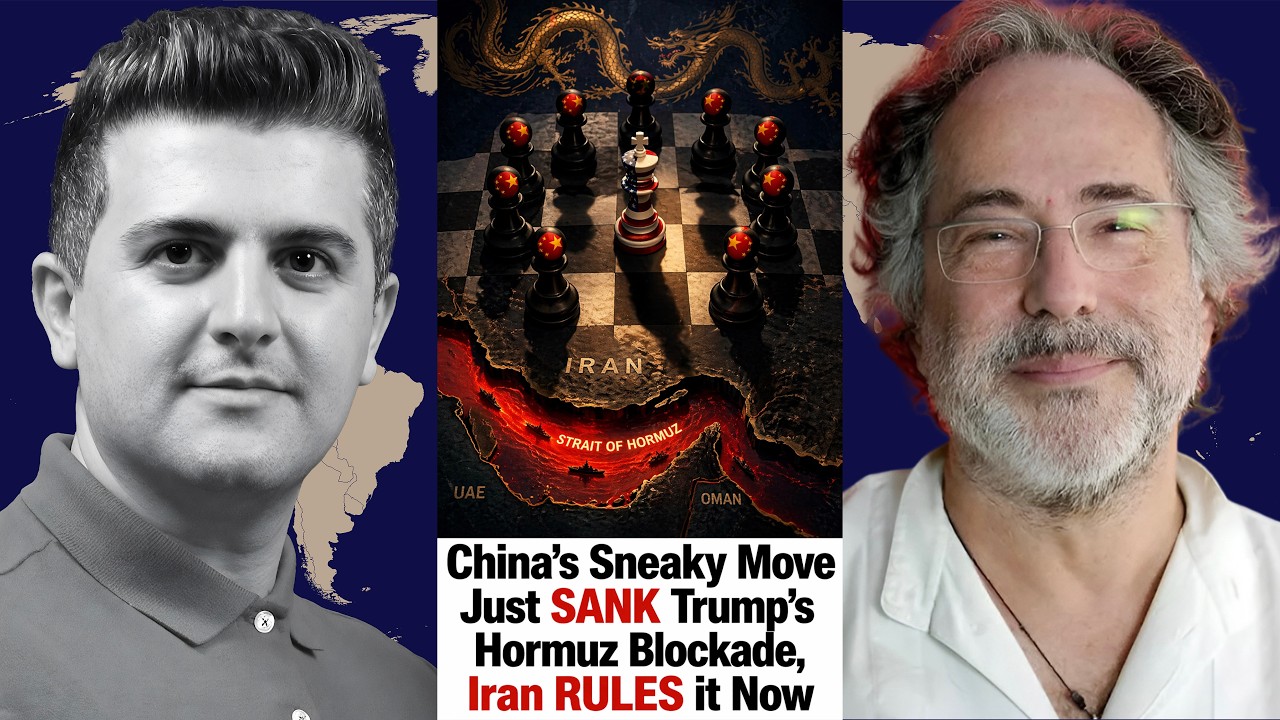
Pepe Escobar: “Total Failure”: Trump’s Blockade Just Backfired Disastrously
"Pepe Escobar argues that the US blockade against Iran, spearheaded by Donald Trump, has utterly failed and backfired, accelerating global economic chaos and challenging US geopolitical dominance."