BREAKING: Iran PLUTONIUM Path In Focus; U.S. Readies SIEGE; Sailors Trapped | TBN Israel
YouTube · bOkOQi-7gQw
Quick Read
Summary
Takeaways
- ❖The Strait of Hormuz remains largely closed to free shipping due to Iranian threats and actions, trapping over 20,000 sailors and hundreds of ships.
- ❖US preparations for a prolonged naval blockade of Iran are underway, with economic pressure seen as the primary leverage.
- ❖Qatar is playing a key, under-the-radar role in mediating a one-page memorandum of understanding between the US and Iran to end the war.
- ❖Iran's Revolutionary Guards have threatened severe retaliation against US bases and ships if their oil tankers are attacked.
- ❖American intelligence suggests Iran's Supreme Leader is severely burned and isolated, raising questions about his control and the true decision-makers.
- ❖Iraqi militias are operating in Tehran, indicating the Iranian regime's struggle to maintain internal control and its reliance on foreign forces.
- ❖US and Israeli strikes have significantly damaged Iran's nuclear and missile programs, pushing back its nuclear timeline by years.
- ❖Israel operated a forward air force post deep inside Iraq during 'Operation Roaring Lion' for potential pilot rescue missions.
- ❖Hezbollah in Lebanon fears isolation and reduced power if a future agreement between Israel and Lebanon materializes without strong Iranian backing.
Insights
1Strait of Hormuz Blockade and Humanitarian Crisis
Iran has maintained an effective blockade of the Strait of Hormuz for over 65 days, trapping hundreds of ships and more than 20,000 sailors. These sailors face severe shortages of food, water, fuel, and medicine, with some critically ill crew members running out of essential medication. This situation is not merely a maritime crisis but a strategic move by Iran to demonstrate its ability to disrupt global trade and extend the conflict beyond its borders.
More than 20,000 sailors have been stuck for more than 65 days in the Persian Gulf while food supplies are running out with no rescue in sight. They were caught in the exchange of fire. More than 30 ships have been hit by Iranian drones and missiles. At least 10 sailors have been killed. Crews are reporting shortages of food, of water, fuel, and medicine. On some ships, crew members with medical conditions have already run out of basic medication.
2US Strategy: Prolonged Siege and Economic Attrition
The US, under President Trump, has ordered preparations for a prolonged naval blockade of Iran, believing that sustained economic pressure will force Tehran to yield. This strategy is based on the assessment that Iran is losing approximately half a billion dollars daily in oil revenue due to the blockade, while the US economy is benefiting from increased global demand for its own oil.
Trump has ordered preparations for a prolonged siege of Iran. According to the Wall Street Journal, the US president ordered the military to prepare a scenario for an ongoing naval blockade. The White House believes that economic pressure will break Thran, but there is no quick solution on the horizon. The Iranian regime is losing about half a billion dollars a day in oil revenue. The United States is only financing its war machine, but it's not actually losing money as a country. In fact, if you really dive into the analysis of that, you realize that they're actually making more money than before because the global demand for oil is now more focused on US markets than it is on the Iranians who can no longer sell oil.
3Iran's Internal Instability and Leadership Crisis
American intelligence indicates that Iran's Supreme Leader, Muchay, is severely wounded with burns across his body and is operating from near-total isolation, communicating only through couriers. This raises significant questions in Washington about who is truly in control and whether the Revolutionary Guards are using his name to advance their own agenda. Furthermore, Iraqi forces from the Kashkabi militia are now operating in Tehran and other Iranian cities, enforcing internal rules and setting up checkpoints, signaling the regime's distrust in its own security forces to control the capital.
According to American intelligence, much is suffering from severe burns and is completely isolated with no access to electronic devices. Despite the injury, he is still involved in shaping the strategy against President Trump. But in Washington, they are wondering whether he has become a puppet of the Revolutionary Guards. Iraqi forces from the Kashkabi militia are operating in Tehran and in other cities. They're joining security forces, setting up checkpoints, inspecting vehicles, and helping enforce internal rules, including hijab laws. For residents of Tehran, this is not just extra manpower. It feels like internal occupation.
4Damage to Iran's Nuclear and Missile Capabilities
A new assessment reveals that American and Israeli strikes have significantly damaged Iran's nuclear capabilities, hitting at least six sites including enrichment facilities. A portion of Iran's enriched uranium stockpile is now in more detectable locations, making any attempt to assemble a crude nuclear weapon more complicated and exposed. Israel's Chief of Staff stated that Iran's nuclear project suffered a severe blow and was pushed back years, with major damage also inflicted on its missile capability, including the removal of hundreds of launchers and missiles.
A new assessment says American and Israeli strikes have significantly damaged Iran's nuclear capability. At least six sites have been hit since the beginning of the confrontation, including enrichment facilities and locations connected to military nuclear activity. According to the assessment, part of Iran's enriched uranium stockpile is now located in places where any movement would be easier to detect. The chief of staff has already said that Iran's nuclear project suffered a severe blow and was pushed back years. He also spoke about major damage to Iran's missile capability, the removal of hundreds of launchers and missiles.
5Israeli Forward Operating Post in Iraq
During 'Operation Roaring Lion,' the Israeli Air Force established a forward operating post deep inside Iraq. This strategic deployment was designed to facilitate rapid rescue operations for Israeli fighter pilots who might be forced to eject over Iranian territory. The post housed elite units like Shaldag, Sayeret Matkal, and Unit 669, along with advanced medical teams capable of providing complex emergency care, highlighting the depth of planning for potential ground events within enemy territory.
During Operation Roaring Lion, the Israeli Air Force operated a forward post inside Iraq. The purpose was clear and practical. If an Israeli fighter jet had been hit over Iran and if a pilot had been forced to eject over enemy territory, a rescue force would already have been closer to the arena. At that post, teams from Shaldag Matk and 669 unit were prepared. Medical units were also positioned with the ability to provide complex emergency care up to the level of a forward operating room.
Bottom Line
Iran is attempting to weaponize underwater internet cables passing through the Strait of Hormuz, demanding payments from Western companies for their passage.
This signifies Iran's intent to extend its control beyond physical shipping to critical digital infrastructure, potentially impacting global communication, insurance, and the speed of decision-making in Washington.
Companies relying on these cables may need to explore alternative routes, invest in hardened infrastructure, or engage in diplomatic efforts to secure passage, creating opportunities for new infrastructure development or specialized risk management services.
Lessons
- Monitor developments in the Strait of Hormuz closely for potential impacts on global supply chains and oil prices.
- Support organizations like Magen David Adom (saveifeisrael.com) that provide emergency medical services in conflict zones like Israel.
- Engage in informed discussions and share reliable information about the complex geopolitical situation in the Middle East to counter misinformation.
Notable Moments
Project Freedom, a US military operation to restore commercial movement through the Strait of Hormuz with 15,000 troops and over 100 aircraft, was frozen after only 36 hours.
This demonstrates the significant challenges and risks involved in directly confronting Iran's asymmetrical tactics in the Strait, highlighting the limitations of conventional military superiority against guerrilla-style naval warfare.
During the Israeli Air Force's 'Operation Roaring Lion,' a serious operational accident occurred when two helicopters collided during a dust storm while attempting to land at a forward post in Iraq. No casualties were reported.
This incident underscores the inherent dangers and complexities of special operations in hostile environments, even for highly trained forces, and the meticulous planning required for such missions, including contingency for accidents.
Quotes
"If the American bomb our oil tankers, we will attack their bases and their ships."
"If the enemy attacks Iran again, it will be surprised by new weapons, new methods of warfare, and new battlefields."
"The period of restraint is over. any attack on our ships will be answered with a strong and decisive response against American ships and bases. Time is running out and this is not in America's favor."
"The war is no longer measured only by the number of strikes. It is measured by a different question. Who wears down first? The Iranian regime, the global economy, or the patience of Washington and Jerusalem?"
"However you read the Bible, wherever you read the Bible, we are commanded to pray for Israel. Not only that, we're commanded also to pray for our leaders."
Q&A
Recent Questions
Related Episodes

Patrick Henningsen: Hezbollah JUST Fired Back at Israel - Iran Vows to “Crush” All Attacks
"Patrick Henningsen argues that the US and Israel initiated an illegal war against Iran, driven by Trump's incompetence and Israeli influence, leading to an inevitable escalation with severe global economic repercussions."

🚨 TOTAL F*CKING CHECKMATE 😂😂😂
"The host argues that Trump's 'ceasefire' with Iran was a calculated '5D chess' move to orchestrate a global energy market reshuffle, while simultaneously lambasting 'woke' domestic policies and the 'freefall' of anti-Trump conservative figures."
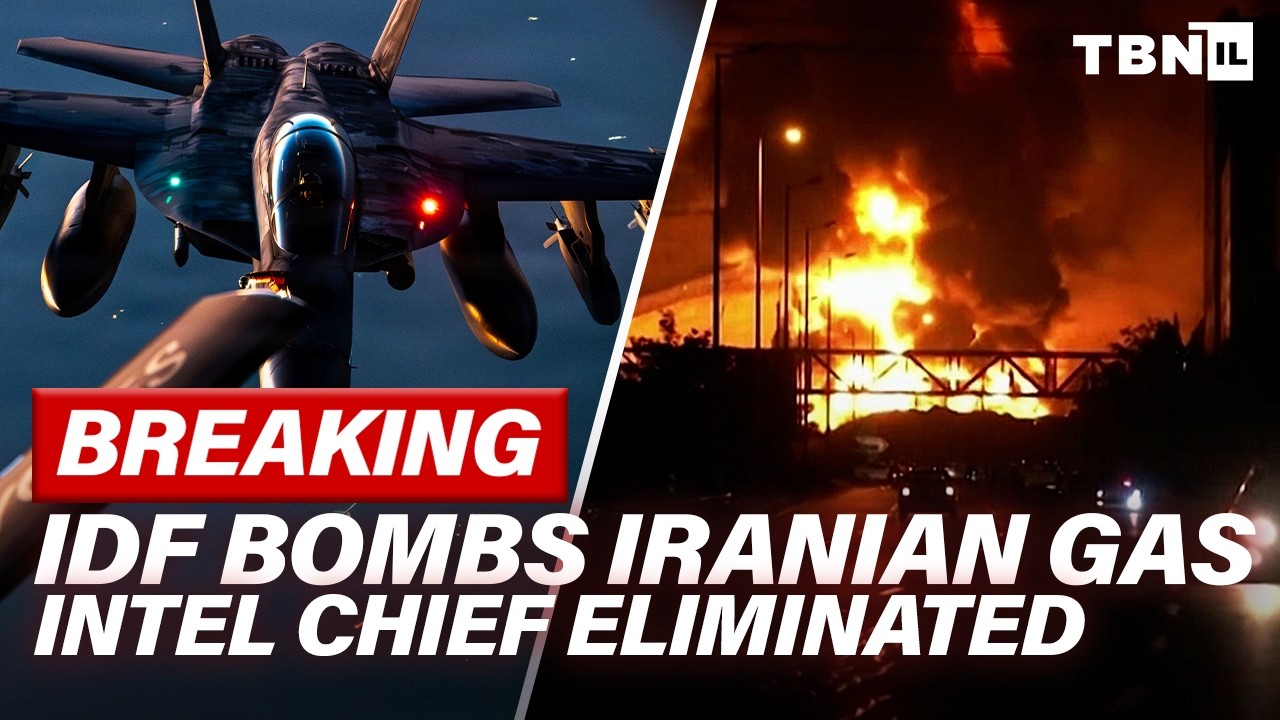
BREAKING: Israel BOMBS Major Iran Gas Site; Top Mullah ELIMINATED; Iran Vows VENGEACE | TBN Israel
"Israel and the United States have escalated their 'Roaring Lion War' against Iran, striking its largest gas facilities, eliminating key intelligence and military figures, and disrupting missile production, while Iran threatens a broader energy war in the Gulf."
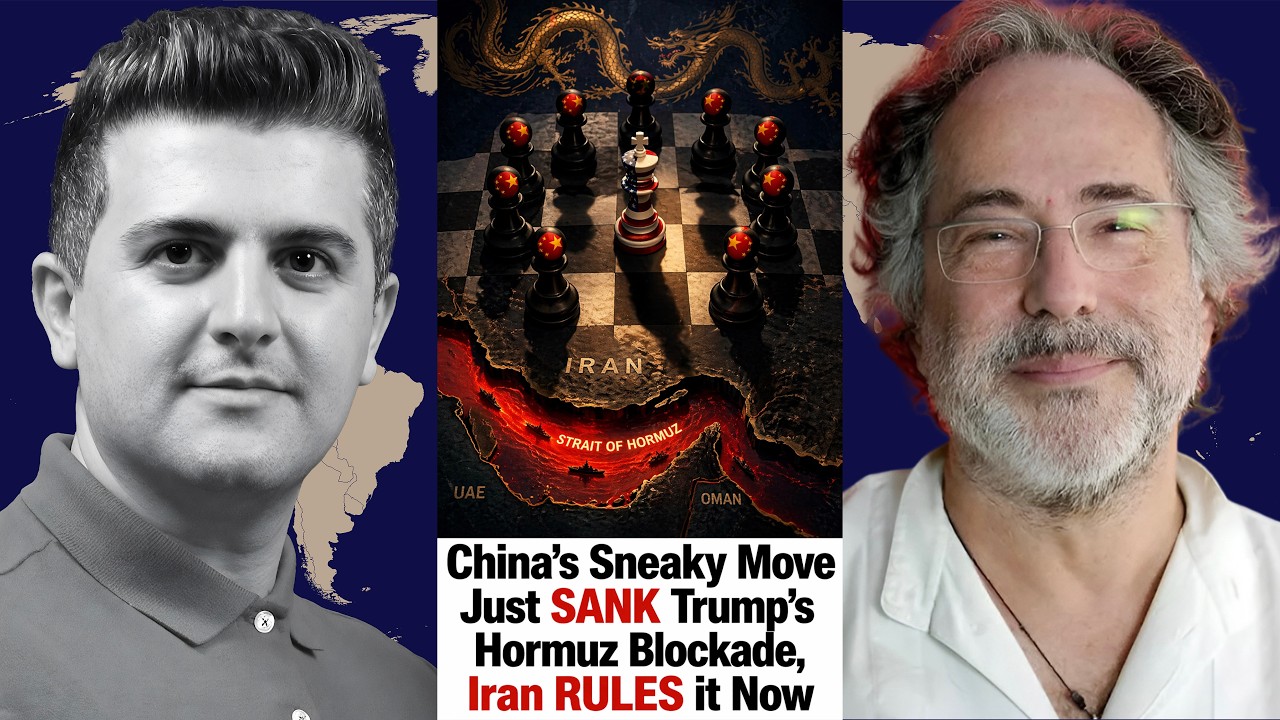
Pepe Escobar: “Total Failure”: Trump’s Blockade Just Backfired Disastrously
"Pepe Escobar argues that the US blockade against Iran, spearheaded by Donald Trump, has utterly failed and backfired, accelerating global economic chaos and challenging US geopolitical dominance."