
PBS News Hour full episode, May 26, 2026
YouTube · bVgfX-QDM90
Quick Read
Summary
Takeaways
- ❖U.S. 'self-defense' strikes against Iranian missile sites and boats have strained cease-fire negotiations, with Iran accusing the U.S. of bad faith.
- ❖Israel is escalating its offensive against Hezbollah in Lebanon, pushing forces further north despite a U.S.-brokered cease-fire.
- ❖Former National Security Adviser John Bolton advocates for U.S. military force to open the Strait of Hormuz and achieve regime change in Iran, arguing against negotiations.
- ❖A U.S. Tomahawk missile strike on a school in Minab, Iran, killed over 150 people, mostly children, on the war's opening day; the Pentagon claims it was within a military base, which locals deny.
- ❖President Trump's health is under renewed scrutiny after his fourth publicly announced exam, with concerns raised about transparency and sleep habits.
- ❖The Ebola outbreak in Central Africa has killed at least 220 people, with response efforts hampered by armed conflict, refugee camps, and deep community mistrust.
- ❖North Carolina Central University is using immersive interactive labs, generative AI, and virtual reality to train nursing students, improving licensure exam pass rates.
- ❖Historian Jon Meacham reflects on the resilience and blindness of leadership, particularly regarding President Biden's decision to seek re-election, and the undermining of trust in elections.
Insights
1U.S.-Iran Cease-fire on Shaky Ground Amid Strikes
U.S. 'self-defense' strikes against Iranian missile launch sites and boats, which the U.S. claims were attempting to lay mines in the Strait of Hormuz, have led Iran to accuse the U.S. of violating a truce and acting in bad faith. Despite U.S. officials insisting the cease-fire is holding, Iran's state broadcasters promised consequences, and a resident expressed distrust in U.S. agreements.
Iran says the U.S. has violated its truce after the U.S. carried out what it called self-defense strikes against Iranian missile launch sites and boats. () William Brangham reports on Iranian state broadcasters promising consequences for recent U.S. strikes. () A Tehran resident stated, 'The politicians should not pay any attention to America and their agreements at all, because they really go back on all their agreements.' ()
2Bolton Advocates Military Force for Strait of Hormuz and Regime Change
Former National Security Adviser John Bolton argues that the U.S. should use military force to open the Strait of Hormuz, rather than negotiate with Iran. He believes negotiations would legitimize Iran's control over the strait and set a dangerous precedent for international waterways. Bolton also explicitly calls for regime change in Iran, asserting that the current regime is entrenched and dangerous.
John Bolton states, 'I do not believe the U.S. should be negotiating with Iran or working towards a deal, that the U.S. needs to use military force to open the Strait of Hormuz.' () He adds, 'I have heard in another interviews you have also been calling for regime change, a full-on regime change in Iran.' ()
3Deadly School Strike in Minab, Iran, Sparks Outrage
A U.S. Tomahawk missile strike on February 28 flattened half of Shajarah Tayyebeh Elementary School in Minab, Iran, killing 168 people, including 120 students aged 6-11. The Pentagon claims the school was inside an active military base, but local residents and authorities vehemently deny this, asserting it was a civilian area. The attack has fueled anti-U.S. sentiment among survivors and victims' families.
More than 150 people were killed when airstrikes hit the school in Minab, most of them children. () Reza Sayah reports the elementary school was believed to be hit by a U.S. Tomahawk missile strike on February 28. () Jafar Karimi, a resident, states, 'It's not. That's a lie.' regarding the Pentagon's claim of a military base. ()
4AI and VR Transform Nursing Education to Combat Shortages
North Carolina Central University's nursing program is leveraging immersive interactive labs, virtual reality (VR), and generative AI to train students. This technology allows students to practice critical thinking, prioritization, and patient communication in a safe, realistic environment, addressing challenges like limited clinical placements and improving licensure exam pass rates from 94% to 96%.
North Carolina has one of the largest projected nursing shortages in the country. () Tina Scott, director of the Experiential Learning Center, states, 'We're able to train more students. We're able to bring more students in.' () After the introduction of immersive technologies, North Carolina Central's pass rate for the nursing licensure exam rose from 94 to 96 percent. ()
5Ebola Outbreak Outpacing Containment Efforts in Central Africa
The Ebola outbreak in Central Africa has resulted in at least 220 deaths and nearly 1,000 suspected cases, with the WHO warning that its spread is outpacing response efforts. Key challenges include armed conflict, militants, refugee camps, and deep community mistrust of health authorities, leading to resistance against safe burial teams and contact tracing efforts, which are severely underfunded due to USAID cuts.
At least 220 people are believed to have died from the Ebola outbreak in Central Africa, with suspected cases now nearing 1,000. () Dr. Celine Gounder highlights 'armed conflict. You have these militants backed by the Rwandan government in much of the affected area.' () She notes, 'only one in five [contacts] are currently undergoing contact tracing and follow-up.' ()
Lessons
- Monitor global conflict zones: Pay close attention to the Strait of Hormuz and the Lebanon-Israel border for potential escalations, as these areas remain highly volatile despite cease-fire attempts.
- Invest in healthcare technology: Consider how AI and virtual reality can be integrated into training programs for critical professions like nursing to address workforce shortages and enhance practical skills.
- Support international public health initiatives: Recognize the critical need for funding and community engagement in containing outbreaks like Ebola, especially in conflict-affected regions where mistrust and infrastructure challenges are severe.
Notable Moments
Reza Sayah's report from Minab, Iran, detailing the aftermath of a U.S. missile strike on an elementary school, including interviews with grieving residents and a survivor.
This segment provides a rare, on-the-ground perspective of the human cost of the U.S.-Iran conflict, directly challenging official narratives and highlighting the devastating impact on civilian populations, particularly children.
Quotes
"The politicians should not pay any attention to America and their agreements at all, because they really go back on all their agreements."
"I do not believe the U.S. should be negotiating with Iran or working towards a deal, that the U.S. needs to use military force to open the Strait of Hormuz."
"The conclusion is clear. It's a school. America lies. Netanyahu lies. Their Arab allies lie."
"It's just the government that's cruel and dirty. Most people in America are good. They know this is not right."
"The characteristics that propelled him to the pinnacle of power prevented him from doing what he needed to do to step away from it."
Q&A
Recent Questions
Related Episodes

LIVE: Trump HIDES FROM PUBLIC as US SOLDIER KILLED!!! 6/2/2026
"The host exposes alleged government cover-ups regarding military casualties, Trump's unexplained public absence, and questionable political appointments, arguing these reflect a 'regime of loser babies' and a failing foreign policy."

🚨 THEY F*CKED AROUND FOR THE LAST TIME 😭😭😭
"This episode unleashes a torrent of highly opinionated commentary on the US-Iran deal, Israel's role, and a scathing critique of 'leftist' policies and immigration, particularly highlighting the UK grooming gang report as evidence of Western societal decay."
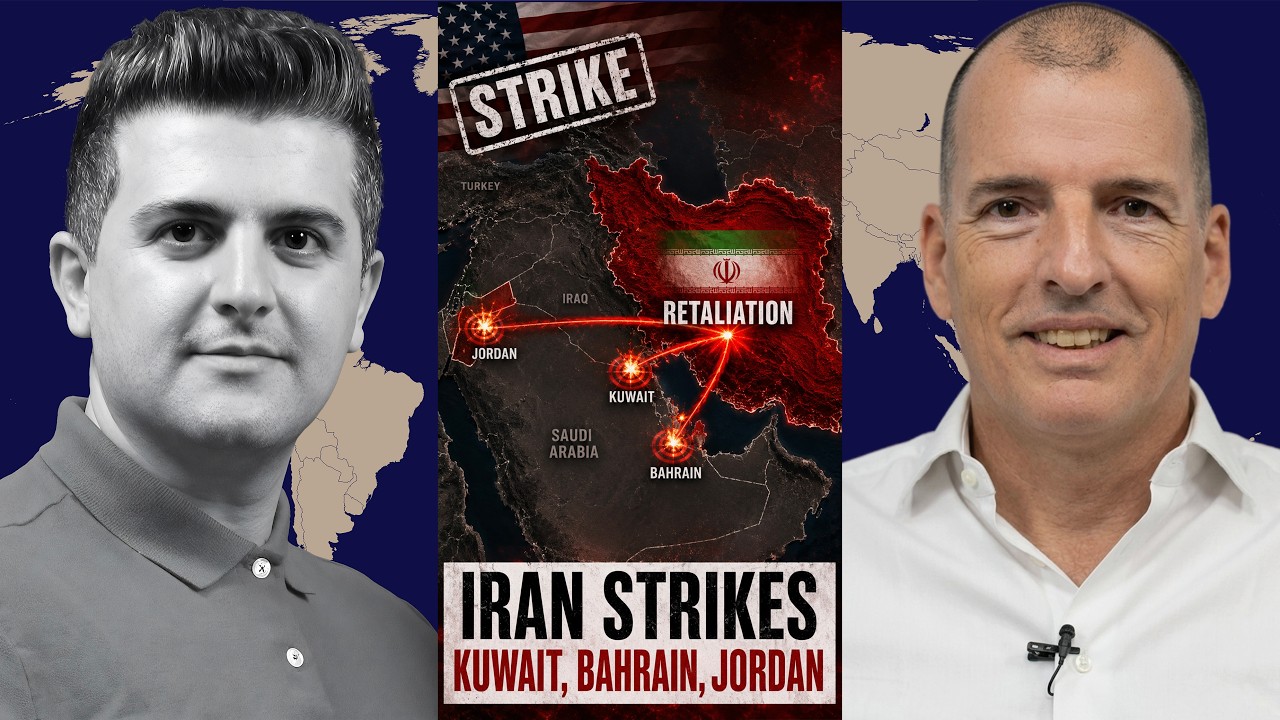
Alex Krainer: US STRIKES Iran – Iran RETALIATES Against Kuwait, Bahrain & Jordan!
"Amidst escalating US-Iran conflict and Iranian retaliation against regional US allies, this episode argues that US foreign policy is deeply controlled by an 'Anglo-Zionist conspiracy' led by the Rothschild banking dynasty, prioritizing Israeli interests over American ones."

Iran Update: Israel’s Newest Bombing Campaign, the Oncoming War With China and How to Avoid It
"Colonel Wilerson reveals how the US and Israel are actively bombing China's strategic infrastructure in Iran, escalating a covert economic war that Beijing intends to win without direct military conflict by dismantling the dollar's global dominance."