Trump Lashes Out & Attacks Justices After Supreme Court Limits His Power to Impose Tariffs
YouTube · batzHKMnB54
Quick Read
Summary
Takeaways
- ❖The Supreme Court, in a 6-3 decision, struck down President Trump's global tariffs, citing a lack of clear congressional authorization for such broad executive power.
- ❖Chief Justice John Roberts' majority opinion emphasized that the President requires explicit congressional delegation for imposing tariffs of unlimited amount, duration, and scope.
- ❖Immediately after the ruling, Trump announced new 10% global tariffs, which he increased to 15% the following day, utilizing a different statutory authority (Section 122 of the 1974 Trade Act) related to balance of payments.
- ❖Trump personally attacked the Supreme Court justices, calling them 'disgraceful' and 'unpatriotic,' and expressed regret over his appointments of Justices Neil Gorsuch and Amy Coney Barrett, who joined the majority opinion.
- ❖The Supreme Court's ruling did not address the issue of refunding an estimated $150 billion in tariffs previously collected under the now-invalidated authority, creating a complex problem for businesses and consumers.
- ❖Lori Wallak of the American Economic Liberties Project characterized Trump's reaction as an 'unhinged rant' and noted that his 'abuses' of tariff authority led to the permanent loss of a specific presidential power (IEPA tariff authority) for all future presidents.
- ❖The guest argued that Trump's tariff program failed to achieve its stated goals of creating manufacturing jobs and balancing trade, citing a loss of 88,000 US manufacturing jobs and a $60 billion increase in the manufacturing trade deficit in 2025.
Insights
1Supreme Court Curtailed Presidential Tariff Authority
The Conservative Supreme Court, in a 6-3 ruling, struck down President Trump's global tariffs, asserting that the President cannot unilaterally impose tariffs of unlimited scope without clear congressional authorization. This decision significantly limits executive power in trade policy.
Chief Justice John Roberts wrote for the majority, stating, 'The president asserts the extraordinary power to unilaterally impose tariffs of unlimited amount, duration, and scope... He must identify clear congressional authorization to exercise it.' Justices Gorsuch and Barrett, both Trump appointees, joined the majority.
2Trump Re-Imposed Tariffs Under New Statutory Authority
Despite the Supreme Court's setback, President Trump immediately announced new 10% global tariffs, increasing them to 15% the next day. He utilized Section 122 of the 1974 Trade Act, which allows for tariffs up to 15% for five months in cases of balance of payments problems, demonstrating his intent to continue using tariffs as a policy tool.
Trump responded to the ruling on Friday by announcing a new 10% global tariff. Then on Saturday, he increased it to 15%. Lori Wallak explained, 'what he used is a thing called section 22 which refers to part of the 1974 trade act. And section 122 basically says if you have a balance of payments problem you can put up to 15% tariffs in place Mr. President automatically no other showing for up to 5 months.'
3Unresolved $150 Billion Tariff Refund Dilemma
The Supreme Court's ruling did not provide guidance on how to handle the estimated $150 billion in tariffs already collected under the now-invalidated authority. This creates a complex refund scenario where large companies might receive windfalls, while small businesses and consumers who bore the costs may struggle to get compensation.
Justice Kavanaugh, in a dissenting opinion, warned of 'short-term chaos' and the potential need to 'refund billions of dollars.' Lori Wallak elaborated, 'it doesn't speak to what to do about tariff refunds... the biggest companies, the Costcos, the Walmarts, they have monopoly power... if they get paid back, it's a windfall because their supplier probably paid most of it up front, plus a bunch of them passed on those expenses to consumers.'
4Trump's Attacks on Justices and Judicial Independence
President Trump personally attacked the Supreme Court justices, including his own appointees, for their decision. He called them 'disgraceful,' 'unpatriotic,' and 'disloyal to our constitution,' and expressed regret over their nominations, highlighting a challenge to the judiciary's independence.
Trump stated, 'I'm ashamed of certain members of the court... They also are a frankly disgrace to our nation.' When asked about Gorsuch and Barrett, he said, 'I think their decision was terrible... I think it's an embarrassment to their families.' Lori Wallak described this as an 'unhinged rant' that 'sounded just like a dictator talking about the loyalty of judges to the king.'
Lessons
- Understand that presidential power over trade policy, particularly regarding tariffs, has been significantly constrained by the Supreme Court, requiring more explicit congressional approval for broad actions.
- Recognize that despite judicial limitations, presidents can still utilize other existing statutory authorities to impose tariffs, as demonstrated by Trump's immediate re-imposition under a different act.
- Be aware of the complex and unresolved issue of tariff refunds; if you or your business were impacted by the invalidated tariffs, monitor developments regarding potential compensation, as the process may favor larger entities.
Notable Moments
Illinois Governor JB Pritzker sent a letter to President Trump demanding tariff refunds for every family in his state, framing it as 'one more unconstitutional act' and threatening further action if compensation is not provided.
This highlights the immediate political and economic fallout of the Supreme Court's ruling, with state governments attempting to reclaim funds for their constituents and challenging the federal administration's actions.
Lori Wallak explained that Trump's 'abuses' of the IEPA tariff authority led to its permanent shutdown, meaning no future president can use that specific power, even judiciously, to protect US workers or the environment.
This demonstrates a long-term consequence of executive overreach, where the misuse of a power can result in its complete revocation, impacting the tools available to future administrations for trade policy.
Quotes
"The president asserts the extraordinary power to unilaterally impose tariffs of unlimited amount, duration, and scope in light of the breadth, history, and constitutional context of that asserted authority. He must identify clear congressional authorization to exercise it."
"The Supreme Court's ruling on tariffs is deeply disappointing and I'm ashamed of certain members of the court, absolutely ashamed for not having the courage to do what's right for our country. They also are a frankly disgrace to our nation."
"I think it's an embarrassment to their families. You want to know the truth? The two of them? Yeah."
"That unhinged rant was truly terrifying. It sounded just like a dictator talking about the loyalty of judges to the king."
"The constitution has one of its starkest checks and balances on trade. So the constitution gives exclusive authority over tariffs to Congress. So the only way a president can impose a tariff is if the congress has delegated authority."
Q&A
Recent Questions
Related Episodes

Trump's Trade War Derailed By SCOTUS w/ Mark Joseph Stern | MR Live
"The Supreme Court significantly curtailed former President Trump's sweeping tariff authority, ruling his use of an emergency statute for broad taxation was unlawful, yet the financial benefits of these illegal tariffs are unlikely to reach the public."
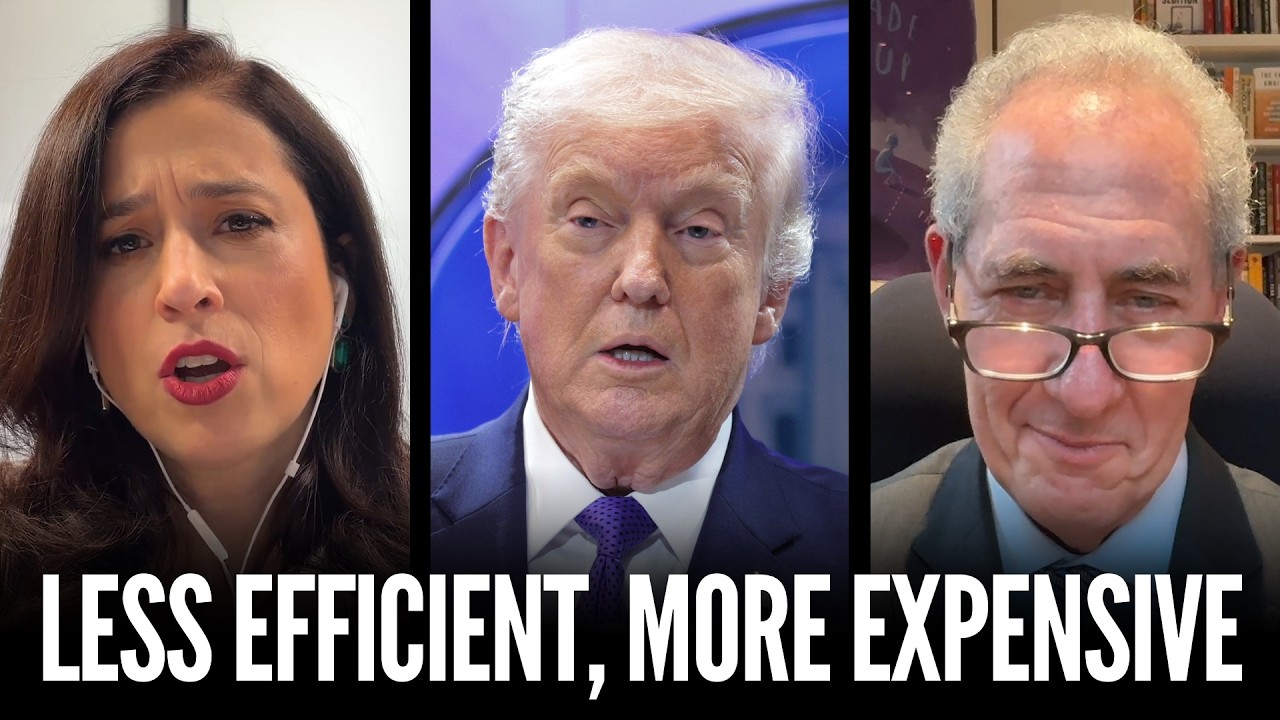
Trump Imposes New Tariff After SCOTUS Loss
"The Supreme Court struck down Trump's use of the IEEPA for tariffs, but the former President immediately announced new tariffs under different authorities, signaling a continued era of high tariffs and complex trade negotiations."
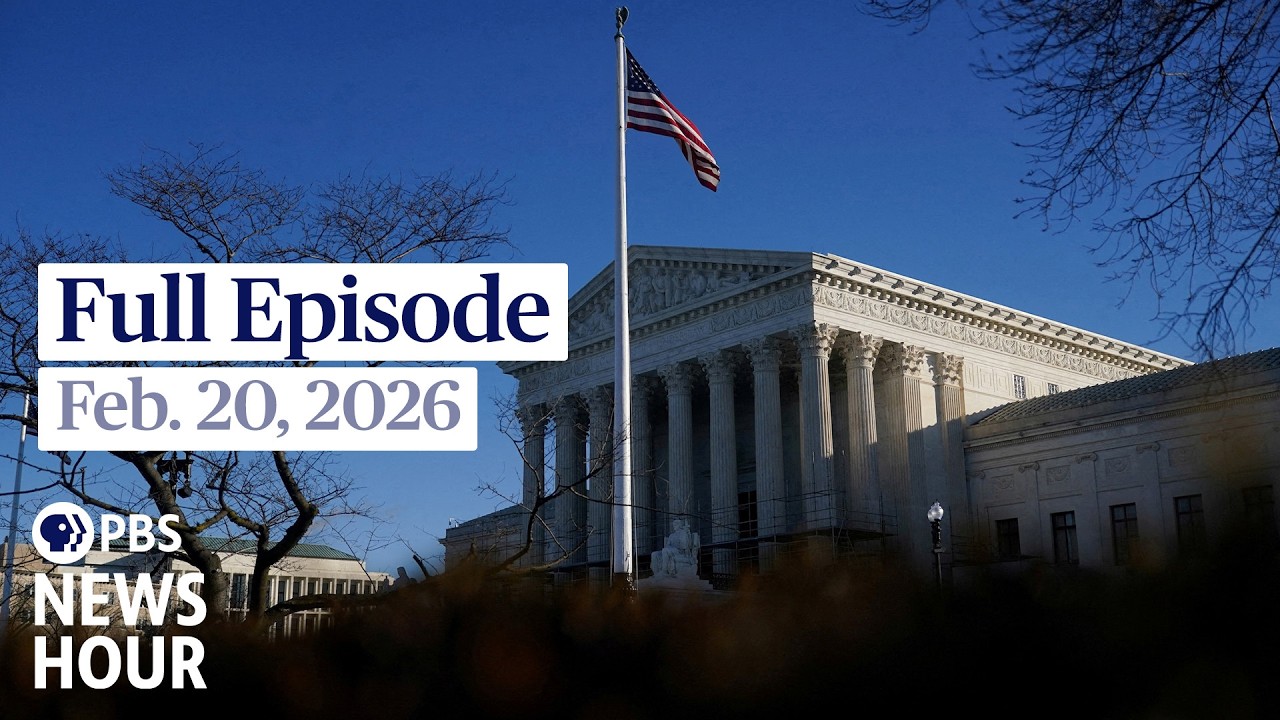
PBS News Hour full episode, Feb. 20, 2026
"The Supreme Court struck down President Trump's sweeping global tariffs, prompting an immediate presidential counter-move with new tariffs and escalating tensions with Iran, while the EPA rolled back critical environmental protections."

Ghana’s Prez Confronts Slave Trade Legacy. Reparations Push Grows. Trump Tariffs Hit Small Biz
"Ghana's President secures a UN resolution classifying the transatlantic slave trade as a 'gravest crime against humanity,' while US small businesses reel from Trump's tariffs and concerns grow over potential US military escalation in Iran."