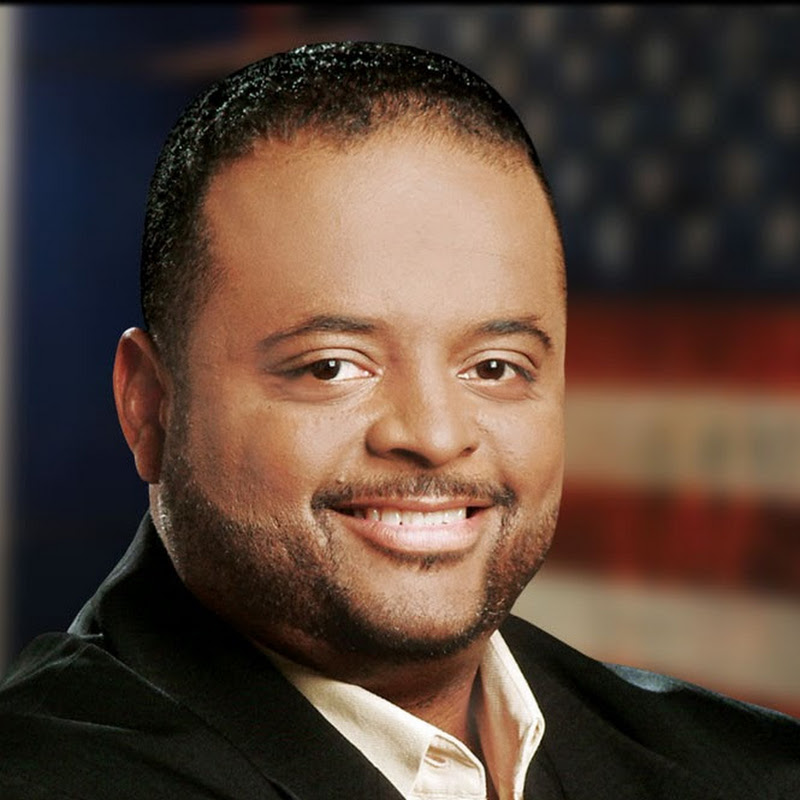
SCOTUS Shields USPS in Mail-In Ballot Case. White South Africans Fast-Tracked. Lacks Settlement
YouTube · bxBXnokpYYU
Quick Read
Summary
Takeaways
- ❖The Supreme Court's 5-4 ruling, authored by Justice Clarence Thomas, grants the USPS immunity from lawsuits even for intentional non-delivery of mail.
- ❖This ruling is seen as a direct threat to mail-in voting, potentially allowing postal workers to withhold ballots from specific zip codes without legal repercussion.
- ❖Republicans are accused of leveraging this ruling alongside state laws that reject ballots received after election day to suppress votes in Democratic strongholds.
- ❖Elections are increasingly decided by extremely small margins (e.g., 7,000 votes for House control), making targeted voter suppression highly effective.
- ❖Effective voter mobilization requires sustained, independent, year-round infrastructure and funding from the community, not just reliance on political campaigns or parties.
- ❖The debate over candidate 'viability' in Texas's Senate primary is framed as racially and gender-coded, favoring white male candidates over more qualified Black women.
- ❖Democrats' most realistic path to Senate control lies in states like North Carolina, Maine, Alaska, Iowa, and Ohio, rather than historically red states like Texas or Florida.
- ❖Reverend Jesse Jackson Senior's legacy includes inspiring millions to vote and run for office, emphasizing policy's impact on the poor and working class.
Insights
1SCOTUS Shields USPS from Intentional Mail Non-Delivery Lawsuits
The Supreme Court issued a 5-4 decision, with Justice Clarence Thomas writing for the majority, stating that the U.S. Postal Service cannot be sued for intentionally choosing not to deliver mail. This ruling originated from a case involving a Black Texas landlord, Leine Kadan, who alleged racial prejudice led to her mail being deliberately withheld for years.
Host Roland Martin states: 'Supreme Court recently ruled that the post office they can intentionally not deliver your mail... a case involving a black woman who sued.' () He later adds: 'Justice Clarence Thomas, no shock, writing for the majority, said the federal law protects the postal service from lawsuits regarding missing, lost, and undelivered mail, but it also applies to intentional mail non-dely.'
2Ruling Enables Targeted Voter Disenfranchisement
The host and Cliff Albright argue that this USPS immunity, combined with state laws preventing the counting of ballots received after election night, creates a direct pathway for voter suppression. They suggest postal employees or a Postmaster General could intentionally hold mail-in ballots from predominantly Black, Latino, or Democratic zip codes, knowing there are no legal repercussions.
Cliff Albright states: 'Combine these two things where all you need is some some some postal workers or a postmaster general that will say, 'Oh, let's hold on to these as you said in these targeted.' ...And you've just basically found a way to to not count votes coming major from majority black voters in majority black cities.'
3Critique of 'Viability' in Texas Senate Race as Racially Coded
The panel discusses the Texas Democratic Senate primary between Congresswoman Jasmine Crockett (Black woman) and James Talarico (white man). The host and panelists contend that arguments for Talarico being more 'viable' are racially and gender-coded, reflecting a societal bias about what a U.S. Senator from Texas 'looks like,' despite Crockett's strong qualifications and effectiveness in Congress.
Host Roland Martin challenges: 'I'm trying to understand why it's, oh, he is a viable candidate and she's not when I've seen multiple polls that show if the corrupt Texas Attorney General Ken Paxton beats incumbent Senator John Cornin that it's going to be a tight race whether it's Telerico or Crockett. So, how is he more viable than she is?' () Michael Emotep adds: 'It's not that just Terico is a white man. What it is is when if you think of the previous US senators from Texas... they were all white men or mostly white men.'
4Democratic Path to Senate Control: Focus on Specific States, Not Texas
Roland Martin critically assesses the Democratic Party's strategy for regaining Senate control, arguing that Texas is not a realistic 'pickup' state due to a lack of sustained infrastructure and historical voting patterns. He advocates for focusing finite resources on states with clearer pathways to victory, such as Georgia (hold), Michigan (hold), North Carolina (pickup), Maine (pickup), Alaska (pickup), and Ohio (pickup).
Roland Martin states: 'I don't put the Texas race in this. I'm not... I see the Democratic pickups really in four places. I see North Carolina very strong. I see Maine, uh, very strong. I see Iowa, Alaska, and the last one, Ohio.' () He later adds: 'I don't see Texas or Florida or Mississippi as a great pickup opportunity for Democrats.'
Bottom Line
The host argues that the Democratic Party's failure to gain ground in Texas stems from a fundamental lack of year-round, micro-level organizing and mobilization infrastructure across all 254 counties, not just the major urban centers. The key is to narrow the losing margins in rural, red counties (e.g., from 80/20 to 55/45) to make up the difference in large, blue counties.
This insight challenges the common 'big tent' or 'charisma-driven' approaches to statewide elections in historically red states. It implies that a sustained, granular, and locally embedded organizational strategy is more critical than high-profile candidates or broad messaging, especially in diverse and geographically vast states.
Political organizations and community groups can shift focus from macro-level campaigning to micro-level, year-round infrastructure building in neglected rural and smaller urban areas. This involves consistent engagement, voter registration, and issue-based education, aiming to incrementally reduce loss margins over multiple election cycles, similar to Georgia's successful flip.
Key Concepts
Voter Suppression by Critical Mass
The principle that one does not need to suppress every vote, but rather a 'critical mass' or a sufficient margin of votes in key areas, to swing an election outcome, especially in races decided by narrow margins. This model highlights the strategic efficacy of targeted disenfranchisement.
Infrastructure Over Charisma (Political Organizing)
The idea that a candidate's charisma or a campaign's short-term messaging cannot overcome the fundamental lack of a sustained, year-round, grassroots organizing and mobilization infrastructure. Long-term political success and electoral change depend on continuous community engagement and organizational presence, independent of specific election cycles or individual candidates.
Lessons
- Voters must be vigilant about their mail-in ballots, understanding that intentional non-delivery may occur without legal recourse for the USPS.
- Support and fund independent, grassroots voter mobilization organizations (like Black Voters Matter) that build year-round infrastructure, rather than solely relying on political parties or candidate campaigns.
- Engage in local and state-level political organizing to ensure that every precinct and community, especially those in 'black belt' or rural areas, receives consistent attention and resources for voter education and turnout.
- Challenge racially or gender-coded narratives about candidate 'viability' by actively supporting and promoting qualified candidates from underrepresented groups, regardless of traditional perceptions.
Building Sustainable Electoral Power in Challenging States
**Invest in Year-Round Infrastructure:** Establish and continuously fund independent, community-led organizations focused on voter registration, education, and mobilization, rather than relying on transient campaign cycles.
**Micro-Targeting and Margin Reduction:** Implement a granular strategy that extends beyond major urban centers to all counties. Focus on reducing loss margins in historically red or rural areas (e.g., from 80/20 to 55/45) to make up the difference in strongholds.
**Connect Issues to Local Pain Points:** Develop messaging that directly links electoral outcomes and policy decisions to tangible local issues affecting everyday people, such as housing costs, food prices, healthcare access, and utility bills.
**Cultivate Local Leadership & Candidates:** Identify, train, and support local leaders and candidates who can electrify the base and genuinely represent the community's interests, fostering a pipeline of diverse political talent.
**Maintain Independence from Party Control:** While aligning with broader political goals, ensure local infrastructure maintains a degree of independence from party control to retain flexibility, community trust, and long-term sustainability, even when party priorities shift.
Notable Moments
The podcast opens with a solemn tribute to Reverend Jesse Jackson Senior, highlighting his profound impact on civil rights, voter mobilization, and inspiring Black political leadership.
This segment grounds the political discussions in a historical context of Black activism and the ongoing struggle for voting rights and representation, emphasizing the long-term fight for justice and the importance of sustained engagement.
The host, Roland Martin, directly challenges the notion of 'viability' in the Texas Senate primary, arguing that it's a racially and gender-coded term used to dismiss qualified Black female candidates.
This moment exposes systemic biases within political discourse and party strategies, underscoring how race and gender continue to influence perceptions of electability and potentially limit opportunities for diverse leadership.
Quotes
"What are the implications if you decide to mail in your ballot and they just decide that, you know what, we're not going to deliver the mail from certain zip codes?"
"You don't have to suppress every vote... All you need to do is suppress a critical mass, right? A certain margin because all of these elections... are going to be close."
"We cannot wait on campaigns. We cannot wait on parties to fund what's happening on the ground. We've got to be providing our resources to get out the vote, touch the people, and to make them aware of the issues."
"The idea that the Supreme Court essentially... sanctioned intentional acts that divest people of their rights essentially under the law is crazy."
"If your ballot is lost, if your ballot is um uh uh is thrown away, there's absolutely nothing that you can do. We have got to do something about this."
"When they say that Taler Rico is more viable, they are operating based upon their conception of what a US senator from Texas looks like."
"If that [get out the vote infrastructure on the ground] is non-existent, there is no candidate who is so charismatic that they can overcome that. Charisma of a candidate will never be able to overcome a lack of infrastructure."
Q&A
Recent Questions
Related Episodes

NC Targets DEI. Trump Blocks Housing Bill. Minority Banks Face New Rules. Kohen Wiley Protests
"This episode exposes how current political actions, from changes in minority bank definitions to attempts to regulate college athlete earnings and block foreign aid, are systematically undermining Black economic power, voting rights, and social justice."
Mail-In-Voting Block. Iran Strikes Back. Biden Sues DOJ. Men to Heal.
"This episode unpacks a federal judge's refusal to block Trump's mail-in voting order, escalating US-Iran tensions, Biden's lawsuit against the DOJ, and the political implications of Texas primary results, alongside features on Black women-led health and luxury wine ventures."

BREAKING: Trump, Bondi get the Epstein news they FEARED MOST
"New revelations from unredacted Epstein files expose previously protected co-conspirators, leading to accusations of a widespread political cover-up by the DOJ and Trump administration."

Judge Orders Fulton Ballot Docs Unsealed. NC Voting Blocked. Trump Melts Down. MAGA Loses It
"This episode dissects multiple instances of alleged Republican voter suppression and hypocrisy, from unsealed election documents in Fulton County to the backlash against a Spanish-speaking Super Bowl performer, alongside a host's personal account of being scammed by a Black-owned business."