
Seyed M. Marandi: Iran Just Warned: Next Attack Will Be MET WITH TOTAL OBLITERATION
YouTube · cA1vwusUpfY
Quick Read
Summary
Takeaways
- ❖Iran's military, particularly its missile and drone arsenal, has significantly strengthened since the war began, making it more prepared for a major assault.
- ❖The US-China meeting regarding the Strait of Hormuz was a 'complete failure' for the US, with China coordinating closely with Iran.
- ❖Any attack on Iranian critical infrastructure will result in immediate and devastating retaliation against the critical infrastructure of US proxies in the Persian Gulf, likely leading to the collapse of those regimes.
- ❖The speaker predicts that further escalation will inevitably lead to a 'great global economic depression,' impacting everyone's lives.
- ❖GCC countries are criticized for being US proxies and miscalculating the war's duration, now facing severe economic consequences and potential destruction.
- ❖Iran maintains it has no imperial ambitions, does not have foreign military bases, and supports popular liberation movements.
- ❖Europe is seen as subservient to the United States, lacking the political will for an independent foreign policy or to improve ties with Iran, and is in rapid economic decline.
Insights
1Iran's Enhanced Military Readiness and Retaliation Strategy
Professor Marandi asserts that Iran's military capabilities, including its missile and drone arsenal, are 'significantly stronger' today than before the war. He states Iran is prepared for a 'maximum assault' and that any US-Israeli targeting of Iranian critical infrastructure will lead to Iran targeting critical infrastructure in the Persian Gulf region, potentially ending those regimes due to extreme summer heat without electricity or water.
Marandi states, 'Iran is stronger today than before the war. Significantly stronger. Iran's missile arsenal is stronger than it was before the war. Iran's drone capabilities are stronger.' He adds, 'if Iran's critical infrastructure is targeted Iran will target their critical infrastructure in retaliation and that will mean the end of these regimes.'
2Global Economic Depression as an Inevitable Consequence of Escalation
The speaker repeatedly warns that if the conflict escalates into a 'vicious' war involving strikes on critical infrastructure, a 'great economic depression' is 'inevitable' and '100% certain.' This would drastically change global life, far beyond the current trajectory of a major global recession.
Marandi states, 'if there is war and that war does become vicious... then I think a great economic depression a global economic depression is inevitable and that will change everyone's lives.' He reiterates, 'a great global economic depression is 100%... it will happen 100% and it will change the lives of everyone.'
3GCC Countries as Complicit US Proxies Facing Consequences
Marandi criticizes GCC countries for their logistical support to the US, enabling the war, and for their 'miscalculation' that the conflict would be brief. He views their 'non-aggression pact' proposals as insufficient and believes they will 'pay the price' for their complicity, facing destruction if the war continues.
Marandi states, 'logistically speaking the Americans cannot wage a war without the support of Jordan the full full support of Jordan Saudi Arabia the Emirates Qatar Bahrain Kuwait.' He later adds, 'these regimes, they miscalculated in a very, you know, big way. They thought that the war would be over in a few days.'
4Europe's Subservience and Decline in Geopolitical Influence
The speaker views European nations as obedient to the United States, lacking the political will for an independent foreign policy or to improve relations with Iran. He cites their failure to challenge the US on issues like Nordstream and their abandonment of the JCPOA, leading to their rapid economic decline and diminished status.
Marandi states, 'the Europeans are so obedient to the United States that the United States cuts off their heads. They'll they'll still thank Trump.' He adds, 'they betrayed Iran with the JCPOA, the nuclear deal, and they have no special status and they are in rapid decline.'
Lessons
- Policymakers should recognize Iran's stated military readiness and the potential for rapid, devastating escalation in any future conflict, particularly regarding critical infrastructure targets.
- Global economic analysts and investors should factor in the high probability of a 'great global economic depression' if the US-Iran conflict intensifies, considering its potential impact on energy markets and supply chains.
- Regional actors, especially GCC countries, need to reassess their strategic alignments and consider the long-term consequences of being perceived as US proxies, as Iran is prepared to hold them accountable.
- European leaders should critically evaluate their foreign policy independence and the costs of continued subservience to US directives, especially concerning energy security and diplomatic engagement with Iran.
Notable Moments
Discussion of Trump's China trip and its failure to address Iranian nuclear program.
Highlights the perceived lack of US diplomatic success and China's non-committal stance on US demands regarding Iran, indicating a coordinated front between Iran and China.
Critique of GCC countries' 'non-aggression pact' proposals.
Reveals Iran's skepticism towards these proposals, viewing them as insufficient given the GCC's historical and ongoing logistical support for US military actions against Iran.
Analogy of GCC countries to a plagiarizing student.
Illustrates the speaker's contempt for GCC regimes' claims of neutrality, framing them as disingenuous and insulting to intelligence, while highlighting their deep complicity.
Critique of those who supported the 'dirty war' in Syria.
Frames the Syrian conflict as a proxy war designed to weaken a defensive line against Zionism, exposing the perceived hypocrisy of 'sectarian' actors who now remain silent on Israeli aggression.
Quotes
"I personally think the world is going to be more damaged than Iran in the long run because Iran has been under siege for decades and it will cope."
"If they go after Iran's critical infrastructure, it will be a it will be a defeat for the United States because its proxies will be crushed."
"Iran will no longer accept US the US threat on the Arabian Peninsula."
"Iran is militarily speaking, not economically speaking. Economically speaking, Iran is in a tough place. But militarily speaking, Iran is stronger today than before the war. Significantly stronger."
"Zionists want to destroy the global economy that destroy the American economy for the sake of the Israeli regime in my opinion this is suicidal for Zionism because Zionism has already discredited itself and exposed itself to the world for being genocidal."
"The Europeans are so obedient to the United States that the United States cuts off their heads. They'll they'll still thank Trump."
Q&A
Recent Questions
Related Episodes
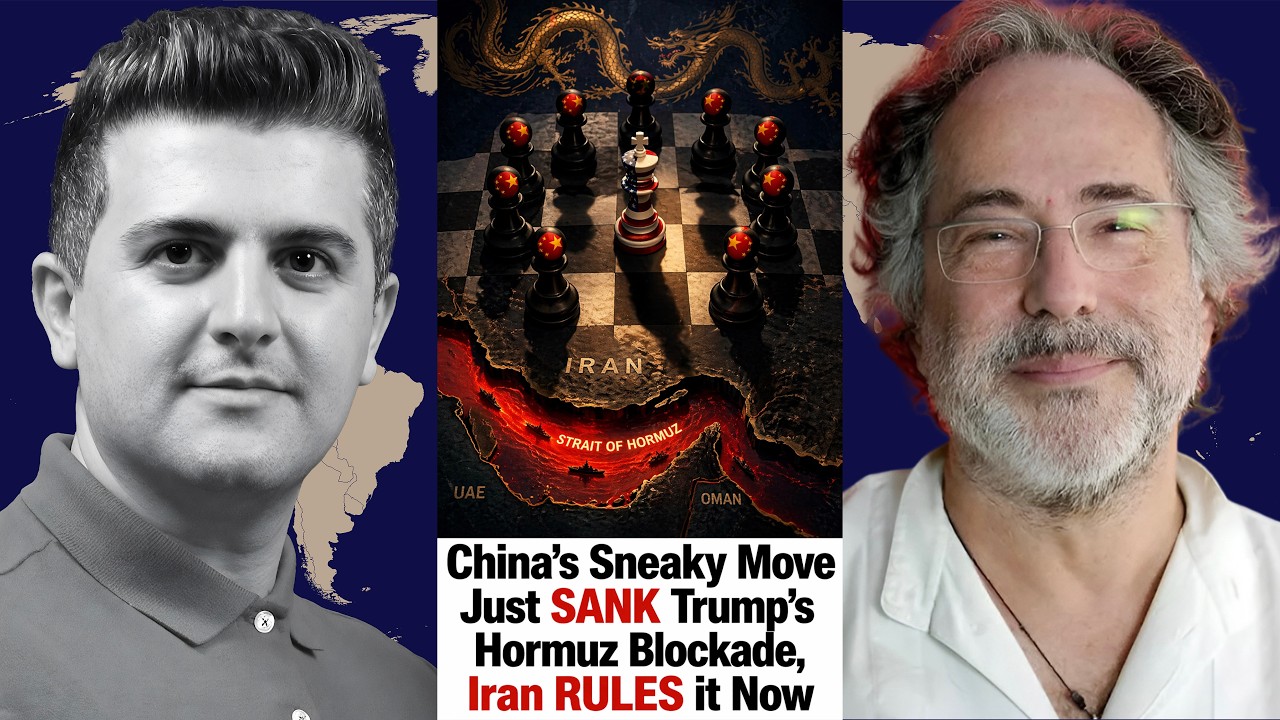
Pepe Escobar: “Total Failure”: Trump’s Blockade Just Backfired Disastrously
"Pepe Escobar argues that the US blockade against Iran, spearheaded by Donald Trump, has utterly failed and backfired, accelerating global economic chaos and challenging US geopolitical dominance."

Alex Krainer: US STRIKES Iran – Iran RETALIATES Against Kuwait, Bahrain & Jordan!
"Amidst escalating US-Iran conflict and Iranian retaliation against regional US allies, this episode argues that US foreign policy is deeply controlled by an 'Anglo-Zionist conspiracy' led by the Rothschild banking dynasty, prioritizing Israeli interests over American ones."

The Fat Electrician Vs Tactically Acquired | Unsubscribe Podcast 267
"This episode features military content creators discussing current geopolitical hotspots, advanced weaponry, and the surprising psychological warfare tactics of modern conflict, alongside their personal journeys building online communities."

Patrick Henningsen: Hezbollah JUST Fired Back at Israel - Iran Vows to “Crush” All Attacks
"Patrick Henningsen argues that the US and Israel initiated an illegal war against Iran, driven by Trump's incompetence and Israeli influence, leading to an inevitable escalation with severe global economic repercussions."