BREAKING: Khamenei Moved to a Bunker — U.S. Forces Close In as Strike Talk Grows | TBN Israel
YouTube · cSSIkSSWS6k
Quick Read
Summary
Takeaways
- ❖Iran's Supreme Leader reportedly moved to a fortified bunker in Tehran due to fears of a US strike.
- ❖The US has deployed a significant military force to the Middle East, including the USS Abraham Lincoln carrier strike group, F-15E squadrons, and Ohio-class submarines like the USS Georgia with 150 Tomahawk missiles.
- ❖US-Israel coordination meetings occurred at IDF headquarters to prepare for a potential US strike on Iran and its aftermath.
- ❖The 'Rafa project' in Gaza, funded by the UAE ($1.88 billion), plans 100,000 housing units with biometric data collection, digital wallets, and non-Hamas education.
- ❖Israel demands the return of hostage Oron Gilli as a prerequisite for 'Phase B' of the Gaza ceasefire and resists external timelines for the Rafa crossing reopening.
- ❖Hezbollah's Secretary General Naim Kasim issued a message to operatives, preparing them for a 'major confrontation' led by the US and supported by Israel.
- ❖Al-Golani regime forces made rapid advances in northeast Syria, capturing strategic assets and shifting the balance of power, raising Israeli alert levels.
Insights
1US Military Deployment Signals Imminent Strike on Iran
The United States has deployed a substantial military force to the Middle East, including the aircraft carrier USS Abraham Lincoln with F-35C and F/A-18E Super Hornet aircraft, multiple destroyers equipped with Tomahawk missiles, F-15E squadrons, refueling aircraft, and submarines like the USS South Dakota and USS Georgia (armed with ~150 Tomahawk missiles). This deployment, including a command ship (Mount Whitney), is assessed by analysts as preparation for a 'very serious move' and a 'campaign,' not just a show of presence. The delay in action is attributed to the time needed to fully deploy forces and reinforce regional air defense systems (Patriot and THAAD) to counter potential Iranian missile responses.
Description of USS Abraham Lincoln, F-15E deployments, KC-135/KC-46A refueling aircraft, Mount Whitney command ship, USS South Dakota, USS Georgia submarines, and reinforcement of Patriot/THAAD systems at Al Udeid base in Qatar. ( - , - )
2Iran's Supreme Leader Reportedly Moves to Fortified Bunker
Reports from inside Iran indicate that Supreme Leader Ayatollah Ali Khamenei moved to a fortified underground facility in Tehran with a connected tunnel system, out of fear of an American strike. His son, Massoud, is reportedly managing communication channels with government bodies. While the host cautions about verifying these reports in real-time, the mere mention of such a possibility suggests a high level of concern within Iran's leadership.
Reports of Supreme Leader moving to an underground shelter in Tehran, his son Massoud receiving control authorities and serving as a communication channel. ( - , - , - , - )
3Gaza Reconstruction Plan: The 'Rafa Project' with Biometric Control
US envoys Steve Witkoff and Jared Kushner met with Israeli Prime Minister Netanyahu to discuss 'Phase B' of the Gaza ceasefire, including a 'Rafa project' for reconstruction. This plan, reportedly funded by the UAE with $1.88 billion, envisions 100,000 permanent housing units in southern Rafa, forming a controlled community. Key conditions include security checks, biometric data collection, digital wallets using shekels to prevent money flow to Hamas, and a non-Hamas curriculum provided by the UAE. This is framed as a 'power experiment' and a model for control without Hamas, with Israel's role limited to clearing dangerous infrastructure and maintaining an operational presence until an international stabilization force (ISF) steps in.
Meetings between US envoys and Netanyahu, discussion of 'Phase B', $1.88 billion UAE funding, 100,000 housing units, biometric data collection, digital wallets, non-Hamas curriculum, Israel's role, and the concept of an ISF. ( - , - , - , - , - )
4Israel's Stance on Gaza: Hostages, Rafa Crossing, and Anti-Hamas Clans
Israel insists on the return of the hostage Oron Gilli as a clear demand for 'Phase B' of the Gaza ceasefire, viewing it as proof that Hamas cannot manipulate the timeline. Israel is also resisting external pressure to quickly reopen the Rafa crossing, tying its control to security screening and preventing Hamas from rebuilding its weapons pipelines. Reports suggest Israel is also engaging in 'tactical cooperation' with armed clans in Gaza that oppose Hamas, providing drones, intelligence, weapons, food, and evacuating wounded fighters to Israeli hospitals. This is seen as a test of challenging Hamas from within Gazan society, though risks of these groups facing elimination are acknowledged.
Israel's demand for Oron Gilli's return, resistance to Rafa crossing timeline, reports of Israel helping anti-Hamas clans with drones, intelligence, weapons, food, and medical evacuation. ( - , - , - , - , - )
5Hezbollah Prepares for Major Confrontation Amidst Israeli Strikes
Hezbollah's Secretary General Naim Kasim released a message to operatives, preparing them for a 'major confrontation' led by the US and supported by Israel, while praising Iran's Supreme Leader. This is interpreted as an attempt to strengthen morale and signal readiness. Israel, meanwhile, continues 'mowing the grass' with enforcement strikes in Lebanon and Syria, enforcing red lines and preparing for the scenario where an American strike on Iran triggers Hezbollah to join the campaign to prove loyalty to the Islamic Revolution. Concerns exist that collected Hezbollah weapons were not destroyed but stored.
Israeli airstrikes near Elanser and Duris in Lebanon, Naim Kasim's message to Hezbollah operatives about a 'major confrontation,' praise for Ali Khamenei, Israeli rejection of Lebanese army's disarmament claims, and IDF's 'mowing the grass' strategy. ( - )
6Al-Golani Regime Advances in Syria, Shifting Regional Power
Heavy fire was reported in the Aleppo area as Al-Golani regime forces rapidly pushed out Kurdish militias in northeast Syria, capturing new territories and strategic assets like oil fields and a central dam on the Euphrates. This swift territorial change, aided by Arab factions switching sides from the Syrian Democratic Forces (SDF), alters the balance of power, accelerates US discussions about withdrawal from Syria, and puts Israel on high alert. The host questions if the regime will stop at clear lines or continue pushing, potentially leading to further confrontation.
Reports of heavy fire in Aleppo, Al-Golani regime forces pushing out Kurdish militias, capture of oil fields and Euphrates dam, Arab factions switching sides from SDF. ( - , - )
Bottom Line
The 'Rafa project' in Gaza, with its biometric data collection, digital wallets, and non-Hamas curriculum, represents a novel 'power experiment' designed to establish control and governance without Hamas, potentially serving as a model for post-conflict reconstruction in other contested territories.
This initiative goes beyond traditional humanitarian aid, integrating advanced surveillance and financial control mechanisms to reshape societal structures, posing questions about sovereignty, privacy, and the long-term effectiveness of externally imposed governance models.
For entities interested in post-conflict stabilization and governance, this project offers a real-world case study in implementing high-tech control mechanisms alongside reconstruction efforts, providing insights into both its potential benefits for security and its challenges regarding local acceptance and ethical implications.
Lessons
- Monitor the deployment and readiness of US military assets in the Middle East, particularly the USS Abraham Lincoln carrier strike group and submarine movements, as indicators of potential US action against Iran.
- Track developments in the 'Rafa project' in Gaza, including the implementation of biometric oversight, digital currency controls, and the role of international stabilization forces, to understand new models of post-conflict governance and reconstruction.
- Observe the diplomatic negotiations surrounding the Gaza ceasefire's 'Phase B,' specifically Israel's insistence on hostage returns and control over the Rafa crossing, as these factors will dictate the pace and nature of regional de-escalation or renewed conflict.
Quotes
"When you bring a command ship, you bring it to run a campaign, not to show presence."
"The assessment is that Hamas will not agree to disarm on its own terms or on its own at all."
"Phase B is a power move, not a humanitarian slogan."
Q&A
Recent Questions
Related Episodes

BREAKING: Iran Threatens To END Talks; U.S. Vows Retaliation; Hezbollah Collapsing? | TBN Israel
"Iran is leveraging Hezbollah and the Strait of Hormuz to manipulate US negotiations, while Israel asserts its right to dismantle Hezbollah's eroding but still dangerous infrastructure in Lebanon, independent of international talks."

Patrick Henningsen: Hezbollah JUST Fired Back at Israel - Iran Vows to “Crush” All Attacks
"Patrick Henningsen argues that the US and Israel initiated an illegal war against Iran, driven by Trump's incompetence and Israeli influence, leading to an inevitable escalation with severe global economic repercussions."
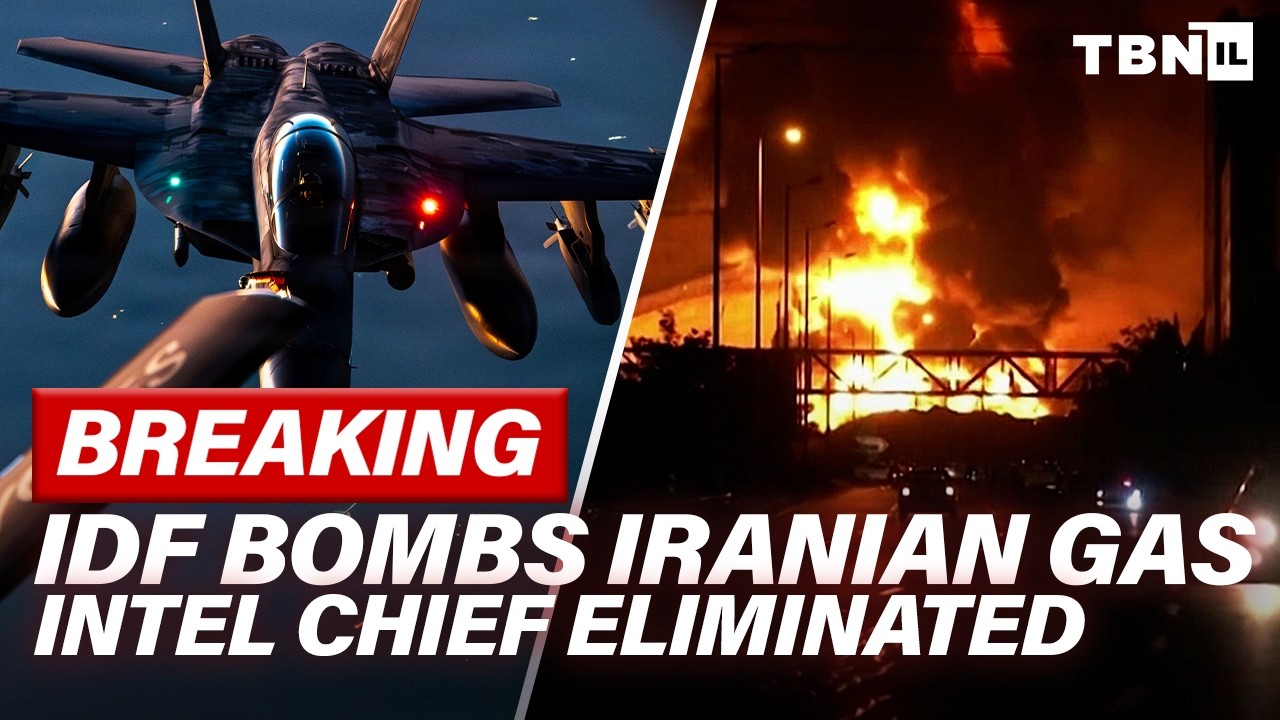
BREAKING: Israel BOMBS Major Iran Gas Site; Top Mullah ELIMINATED; Iran Vows VENGEACE | TBN Israel
"Israel and the United States have escalated their 'Roaring Lion War' against Iran, striking its largest gas facilities, eliminating key intelligence and military figures, and disrupting missile production, while Iran threatens a broader energy war in the Gulf."
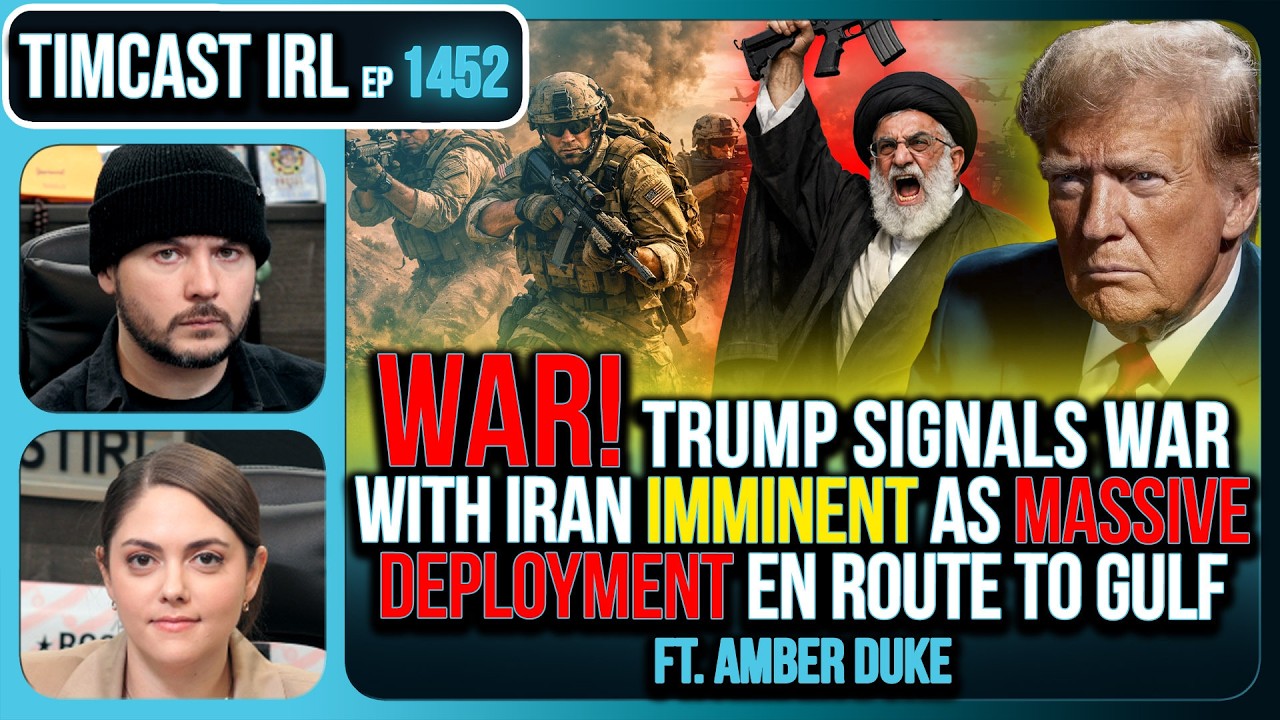
WAR! US War With Iran FEARED As MASSIVE Deployment Heading To Gulf | Timcast IRL #1452 w/ Amber Duke
"Amidst a massive US naval deployment to the Gulf, hosts discuss the high probability of war with Iran, speculating on Trump's motivations, the use of advanced covert weapons, and the strategic use of media leaks as psychological operations."