
Gil's Arena Was WRONG About The Hornets Pistons Fight
YouTube · cXDxmZl4IAM
Quick Read
Summary
Takeaways
- ❖The 7-game suspension for Miles Bridges in the Hornets-Pistons fight was significantly lower than many analysts predicted, ranging from 10 to 25 games.
- ❖The hosts argue that the current suspension lengths do not effectively deter fighting, contrasting with the stricter penalties enforced during the David Stern era.
- ❖The 'coming off the bench' rule, historically meant to incur the harshest penalties, resulted in only a few extra games compared to on-court participants.
- ❖Unlike other sports (soccer, hockey, baseball) where fighting penalties might be less severe or handled differently, the NBA faces unique criticism for player altercations.
- ❖A significant portion of modern NBA players are perceived to lack experience in physical altercations, making severe penalties less relevant for deterrence.
- ❖When an NBA player is suspended without pay, the lost salary reduces the team's salary cap obligation, effectively saving the team money.
- ❖For certain league fines (e.g., drug policy), players could historically pay personally to the league to prevent their team from finding out.
Insights
1NBA Suspensions for Fighting Deemed Insufficient Deterrent
The hosts express strong disagreement with the NBA's 7-game suspension for Miles Bridges, arguing it's too lenient and fails to deter on-court fighting. They contrast this with their predictions (10-25 games) and the league's historical stance, particularly after the 'Malice at the Palace' incident, where penalties were much harsher to 'break a habit.' The current approach is seen as not effectively stopping aggressive behavior.
Host's prediction of 10-25 games (), argument that the league 'didn't do that' (deter behavior) (), reference to David Stern's strict era (, ).
2The 'Coming Off the Bench' Rule's Diminished Impact
A core NBA rule states that players coming off the bench during an altercation receive harsher penalties to prevent escalation. However, in the Hornets-Pistons incident, the player who came off the bench received only a few more games than those already on the court. This suggests the rule's intended deterrent effect has significantly weakened, making the penalty for escalating a situation less severe than historically anticipated.
Discussion of the rule's origin after the Detroit Pistons incident (, ), comparison to Greg Anthony's 5-game suspension in the early 90s (), and the argument that the player 'basically got three games for coming on the floor' ().
3Financial Mechanics of NBA Suspensions Benefit Teams
Contrary to common belief, when an NBA player is suspended without pay, the money is not collected by the league or redistributed. Instead, the team simply does not have to pay that portion of the player's salary, which directly reduces their salary cap obligation. This creates a scenario where teams financially benefit from player suspensions, especially for players who might be considered 'enforcers' and whose actions lead to fines.
Discussion about where fine money goes (), the host's explanation: 'It's just a check I don't write. So my salary cap goes down.' (), and the assertion that 'when the NBA suspends the guy, that helps the team out' ().
4Discrepancy in League vs. Team Fines and Disclosure
The podcast reveals a nuanced system for NBA fines: team-issued fines (e.g., missing a bus) are handled internally, while league-issued fines (e.g., technical fouls, drug policy violations) are paid directly to the league. Historically, players could pay league fines personally to prevent their team from being informed, suggesting a form of 'blackmail' or privacy option within the league's disciplinary structure.
Distinction between technicals/league fines and in-house team fines (), and the host's anecdote about paying a $25,000 drug policy fine personally to avoid the team finding out (, ).
Lessons
- NBA team owners might implicitly tolerate or even encourage 'enforcer' behavior, as player suspensions without pay can reduce the team's salary cap burden.
- Players should be aware of the distinct financial pathways for league vs. team fines, as some league fines could historically be handled privately to avoid team disclosure.
- Analysts and fans should temper expectations for severe NBA penalties for on-court altercations, as the league's current disciplinary approach appears less punitive than in past eras, even for escalating incidents like coming off the bench.
Quotes
"I just thought he was going to get... from what I thought the league was trying to implement is so to deter this behavior further. Um, this didn't do that."
"If you come off this bench, you're going to get it worse than anybody on the court."
"When the NBA suspends the guy, that helps the team out. They don't have to write the check."
"You can write them a personal check so the team don't find out that you're in the system."
Q&A
Recent Questions
Related Episodes
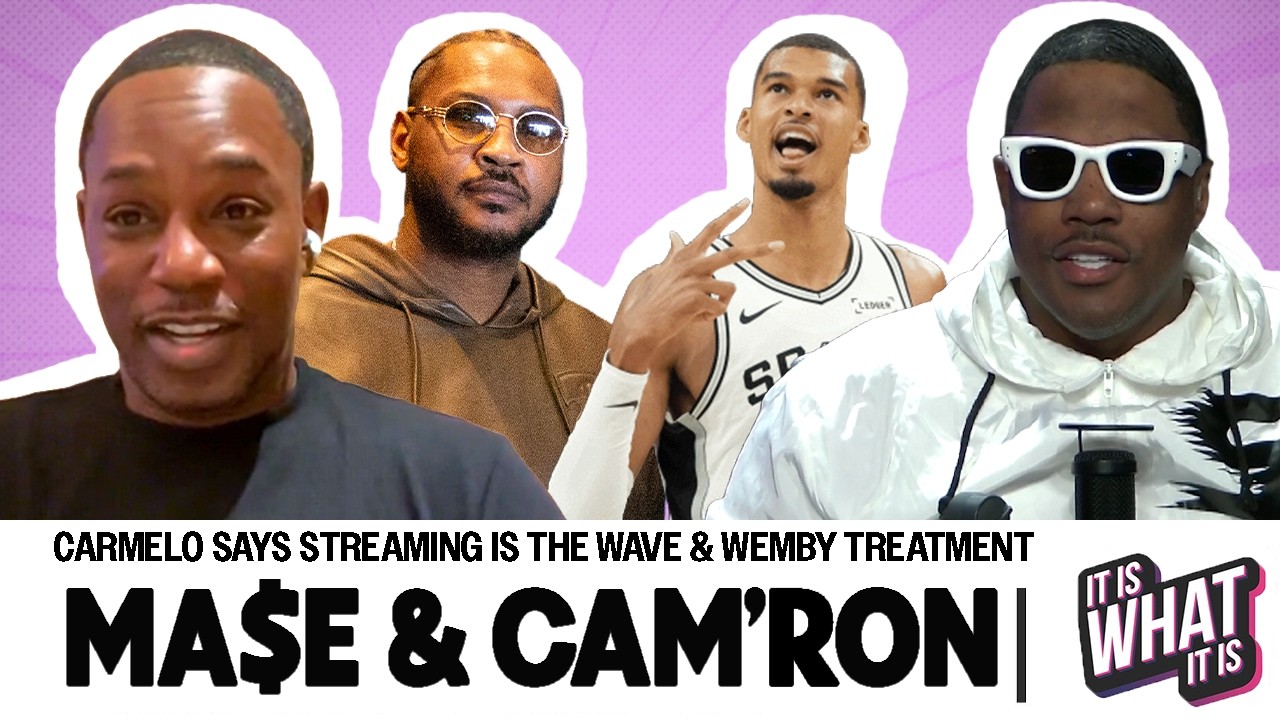
IS WEMBY GETTING SPECIAL TREATMENT FROM THE NBA, CARMELO SAYS PLAYERS SHOULD STREAM & IS UTAH LIT?!
"Carmelo Anthony's radical proposal for NBA players to stream post-game instead of traditional press conferences sparks a debate on player autonomy, league regulations, and brand management, while the NBA's handling of Wemby's ejection raises questions of favoritism."

Wemby's HISTORIC Night Blows Away Gil's Arena
"Wemby's explosive 40-point game against the Lakers' bench squad sparks debate on player records and minutes management, while LeBron's historic All-NBA streak ends, highlighting the brutal demands of longevity."

Unc Ocho & Iso Joe react to USA tops Australia for B2B World Cup wins, Spurs keeping Fox | Nightcap
"The hosts break down the USA Men's National Team's World Cup performance, the San Antonio Spurs' looming salary cap crunch with their young stars, and the ongoing debate about the NBA's next global face."

The Pat McAfee Show Live | Wednesday June 17th 2026
"This episode covers the global impact of the World Cup, the Carolina Hurricanes' Stanley Cup victory, the controversial NFL supplemental draft, and the UFC's historic Freedom 250 event at the White House, highlighting sports' unifying power and star performances."