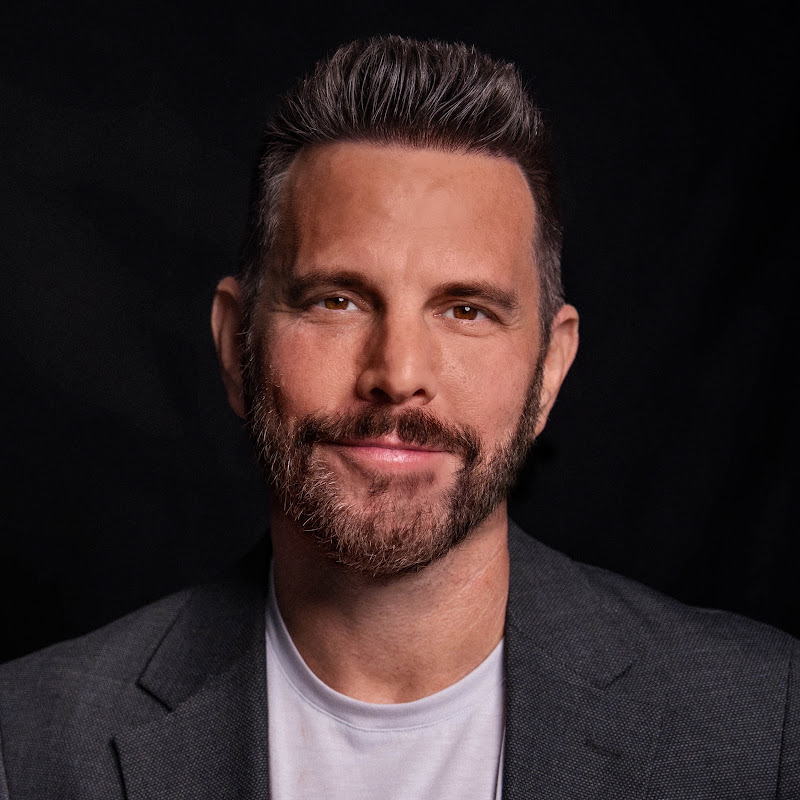
Proof the US Just Passed the Point of No Return | Michael Malice
YouTube · c_6hDZ4eo4o
Quick Read
Summary
Takeaways
- ❖Political tribalism has reached a point where both sides view the other's success as the end of the country.
- ❖The left is explicitly reclaiming 'socialism' due to a perceived existential threat from the right.
- ❖Gen X is largely absent from political leadership, with power transitioning from Boomers to younger, often more radical, generations.
- ❖Humans are driven by compelling narratives, not just facts, which explains the success of emotionally resonant political messaging.
- ❖Social media algorithms are designed to keep users agitated, a tactic perfected during the COVID-19 pandemic.
- ❖Trump's political style, while effective in some ways, often creates unnecessary international antagonism.
- ❖Democrats are seen as strategically allowing Republicans to self-destruct, benefiting from a binary political system.
Insights
1Escalating Political Tribalism and Existential Threat Perception
Both major political tribes in the US increasingly believe that one more term of the opposing team will lead to the destruction of the country as they know it. This extreme animus creates a dangerous environment where things could spiral out of control legally and extralegally.
Malice states, 'We're at a point where both political tribes generally think, maybe not incorrectly, that one more term of the opposing team is going to be the end of this country as we know it. They might be both wrong. They might be both right. But that's a scary place to be when you have this level of animus because things can quickly spiral out of control both in a legal sense and in an extralegal sense.'
2Gen X's Political Underrepresentation
There is a noticeable absence of Gen X leadership in American politics, with the political landscape seemingly transitioning directly from Boomers to younger generations like Millennials and Gen Z. This creates a generational gap in political representation.
Rubin asks, 'Have the Gen Xers failed us here just that the the gerontocracy and the 80-year-olds held on so long and now we seem to be handing everything to the young kids?' Malice responds, 'We're like the dad who left to get cigarettes and never came home. I think we're largely underrepresented.'
3Democrats' Strategic Silence
The Democratic Party has adopted a shrewd strategy of allowing internal Republican divisions and infighting to play out publicly, knowing that in a binary political system, this self-destruction will ultimately benefit them by default.
Malice observes, 'I think the Democrats have been very smart and I'm kind of shocked. Maybe it was Pelosi who I think is the smartest strategist strategic thinker that they have who told them sit down and shut up and let the Republicans have a circular firing squad and we have a binary political system. So when the Republicans all destroy themselves, we're going to pick up the slack.'
Bottom Line
Social media algorithms, refined during the COVID-19 pandemic, are intentionally designed to keep users in a state of constant agitation, rather than merely reflecting existing divisions.
This suggests that the pervasive online drama and polarization are not just organic societal phenomena but are actively engineered and amplified by platform design, making it harder for individuals to disengage or find peace.
Developing platforms or tools that actively counter algorithmic agitation, promote calm, or filter for constructive dialogue could address a significant societal pain point. Educating the public on these algorithmic designs could also empower users to manage their digital consumption more consciously.
The perceived political stalemate and lack of consensus in Washington, particularly regarding issues like inflation, contribute significantly to a widespread sense of hopelessness and 'wandering in the desert' among the populace.
This pervasive hopelessness makes people susceptible to any leader who speaks with an 'air of certainty,' even if their claims are unfounded, as emotional reassurance trumps rational analysis in times of uncertainty.
Political messaging that focuses on clear, decisive, and emotionally resonant solutions, even if simplistic, will likely gain traction. For leaders, projecting confidence and a clear path forward, regardless of complexity, is critical for public support in a disillusioned electorate.
Key Concepts
Narrative-Seeking Animals
Humans are fundamentally driven by compelling stories and narratives, rather than purely by facts and statistics. This means that an emotional story about economic inequality (e.g., 'I can't put food on the table because Elon Musk became a trillionaire') can resonate more deeply and gain more support than statistical arguments against policies like rent control or the failures of communist economies.
Algorithmic Agitation
Social media platforms, having learned from the constant engagement during the COVID-19 pandemic, now employ algorithms designed to keep users in a perpetual state of agitation. This continuous exposure to drama, outrage, and conflict maximizes screen time and engagement, regardless of the psychological toll on individuals.
Lessons
- Prioritize personal well-being by disengaging from constant online political drama and focusing on improving your own life, recognizing that you have one shot to make it great.
- Understand that political discourse is often driven by narratives and emotional resonance, not just facts. When engaging, consider the story being told and how it appeals to human psychology.
- Be aware of how social media algorithms are designed to keep you agitated; consciously limit exposure to content that promotes constant conflict and seek out more constructive or recreational online activities.
Notable Moments
Discussion of Gen X's political absence, with Malice humorously stating, 'We're like the dad who left to get cigarettes and never came home.'
Highlights a unique generational gap in political power, where Gen X is largely overlooked as leadership transitions from Boomers to younger generations, suggesting a potential missed opportunity or a deliberate disengagement.
Malice's advice to focus on making one's life the best it can be, rather than fixating on political 'out-groups' or online drama.
Offers a counter-narrative to the pervasive political obsession, advocating for individual agency and mental health over constant engagement in societal conflicts that may be beyond one's immediate control.
Quotes
"We're at a point where both political tribes generally think, maybe not incorrectly, that one more term of the opposing team is going to be the end of this country as we know it."
"I think Gen Xers in general, we put aside all the racist stuff. We put aside the homophobia. Like, we did all that stuff. We We really were a very good special generation..."
"I think you're correct. I think it's it's it's kind of odd that politics is going from boomer to like the generation after us. We're like the dad who left to get cigarettes and never came home."
"I think it's also because people on the right don't understand as well as people on the left that human beings aren't truth seeeking animals. We are narrative seeeking animals."
"I always say I love this I hate the government because I love my country, right?"
"God, grant me the serenity to accept the things I cannot change, courage to change the things I can, and wisdom to know the difference."
Q&A
Recent Questions
Related Episodes

A major shift is happening right now
"Donald Trump is losing his grip on the Republican party and movement, evidenced by internal dissent and a broader political landscape grappling with a collapse of accountability and truth."

HANTAVIRUS PANDEMIC PANIC, Human To Human Spread Feared | Timcast IRL
"Tim Pool and his guests dismiss the Hantavirus panic as media desperation, pivot to discussing escalating political polarization, the rise of technocracy, and the weaponization of social issues."

"Fighting Solves EVERYTHING!" Who's To Blame For Political Violence? + Maria Machado On Trump
"This episode dissects the escalating political violence in the US, with panelists fiercely debating the role of partisan rhetoric and media in radicalization, alongside an interview with Venezuelan opposition leader Maria Machado on US intervention and her country's future."

🚨 TOTAL F*CKING CHECKMATE 😂😂😂
"The host argues that Trump's 'ceasefire' with Iran was a calculated '5D chess' move to orchestrate a global energy market reshuffle, while simultaneously lambasting 'woke' domestic policies and the 'freefall' of anti-Trump conservative figures."