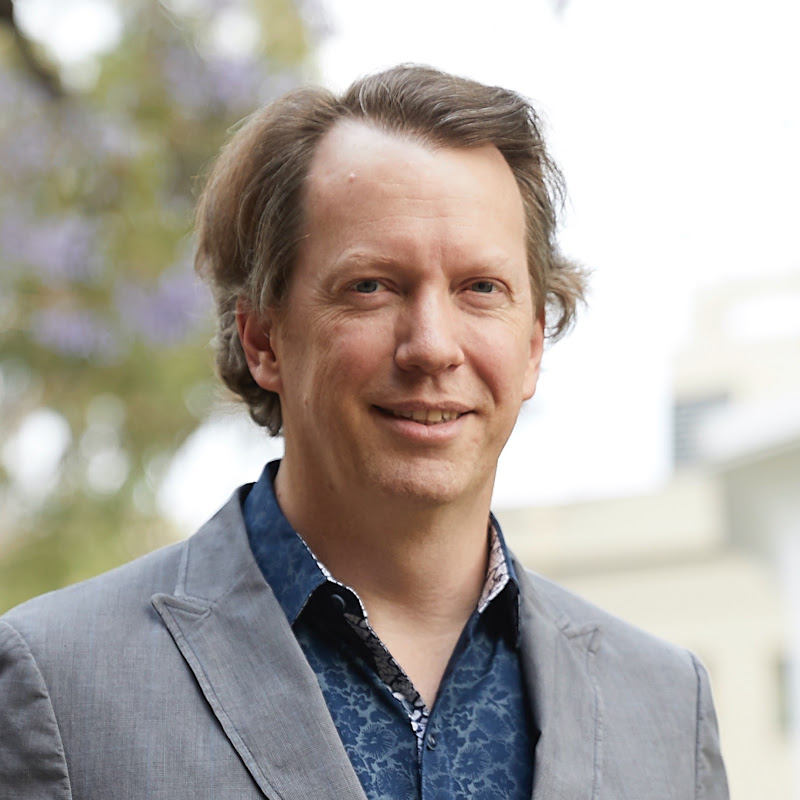
Solo: Vacuum Energy and the Cosmological Constant | Mindscape 358
YouTube · cp3YwL6WsJg
Quick Read
Summary
Takeaways
- ❖Fundamental physics has seen few experimental surprises since the 1970s, making the 1998 discovery of cosmic acceleration a significant exception.
- ❖Einstein introduced the cosmological constant in 1917 to achieve a static universe, a philosophical preference influenced by Ernst Mach and a puzzle in Newtonian gravity.
- ❖Lemaître reinterpreted the cosmological constant as the energy density of the vacuum, a concept indistinguishable mathematically from modifying Einstein's equations.
- ❖Quantum field theory predicts that empty space should possess a 'zero-point energy,' which, when summed across all modes, leads to an infinite or arbitrarily large vacuum energy.
- ❖The 'cosmological constant problem' highlights a 10^122 discrepancy between the theoretically expected vacuum energy (Planck scale) and the observationally constrained value.
- ❖Early theoretical attempts to solve this problem, including supersymmetry, wormholes, and self-tuning mechanisms, ultimately proved unsuccessful or inconsistent.
- ❖The 1998 discovery of the universe's accelerating expansion, primarily from Type 1a supernovae, confirmed a non-zero cosmological constant, fitting well with other data like the CMB.
- ❖This discovery introduced the 'coincidence problem': why are matter density and vacuum energy comparable precisely in our current epoch, given their vastly different evolution?
- ❖The anthropic principle, suggesting we observe a universe hospitable to life within a multiverse of varying cosmological constants, remains the leading, albeit controversial, explanation for the observed value.
- ❖A constant cosmological constant implies an eternally accelerating, emptying, and cooling universe, leading to a desolate future.
Insights
1Einstein's Introduction of the Cosmological Constant
In 1917, Einstein introduced the cosmological constant into his equations of general relativity to achieve a static universe, influenced by philosophical ideas like Mach's principle and a puzzle in Newtonian gravity. His initial equations predicted an expanding or contracting universe, which contradicted the prevailing astronomical view of a static cosmos.
Einstein's original work on relativistic cosmology, influenced by Ernst Mach, aimed to create a static universe model. His equations without the constant implied an evolving universe (expanding or contracting).
2Lemaître's Vacuum Energy Interpretation
Georges Lemaître, a pioneer of the Big Bang theory, realized in the 1930s that the cosmological constant could be mathematically moved from the geometry side of Einstein's equations to the matter side, interpreting it as the energy density of empty space, or 'vacuum energy.' This means the cosmological constant is not just a modification of gravity but a fundamental property of the vacuum itself.
Lemaître's mathematical manipulation of Einstein's equations, demonstrating the equivalence of the cosmological constant and vacuum energy with negative pressure (tension).
3Quantum Field Theory and Infinite Vacuum Energy
Quantum field theory (QFT) predicts that even empty space possesses 'zero-point energy' due to the quantum fluctuations of fields. When these contributions are summed across all possible wavelengths (modes), the vacuum energy appears infinite or arbitrarily large. While renormalization allows physicists to set this energy to any desired value for particle physics calculations, it poses a severe problem when gravity is considered, as gravity couples to absolute energy density.
The quantization of simple harmonic oscillators, which are analogous to modes in quantum field theory, yields a zero-point energy of 1/2 h-bar omega. Summing these for all modes in QFT leads to an infinite vacuum energy.
4The Cosmological Constant Problem: 10^122 Discrepancy
The 'cosmological constant problem' refers to the enormous discrepancy between the vacuum energy predicted by effective field theory (up to the Planck scale) and the maximum value allowed by cosmological observations. This difference is a factor of 10^122, making it the largest mismatch between theory and experiment in physics. If the vacuum energy were this large, the universe would have expanded too rapidly for any structure to form.
Yakov Zeldovich's work in the 1960s connecting QFT vacuum energy to the cosmological constant. The factor of 10^122 discrepancy when comparing Planck scale predictions to observational limits.
5Discovery of Cosmic Acceleration and Non-Zero Cosmological Constant
In 1998, two independent astrophysics groups, using Type 1a supernovae as 'standardizable candles,' discovered that the universe's expansion is accelerating, not decelerating. This unexpected finding confirmed the existence of a non-zero, positive cosmological constant (or 'dark energy') that constitutes about 70% of the universe's energy density. This result was later corroborated by cosmic microwave background data.
Results from two competing astrophysics groups in 1998 (High-Z Supernova Search Team and Supernova Cosmology Project) using Type 1a supernovae to measure the expansion rate.
6The Coincidence Problem
The 'coincidence problem' highlights the puzzling fact that the energy density of vacuum energy (cosmological constant) and matter are of comparable magnitude in the present epoch of the universe. Since matter density dilutes as the universe expands while vacuum energy remains constant, their densities were vastly different in the past and will be vastly different in the future. Our existence in this 'special' time raises questions about fine-tuning or the anthropic principle.
The differing scaling laws of matter density (decreases with expansion) and vacuum energy density (constant) over cosmic time, leading to their comparable values only in the present era.
Bottom Line
The failure of diverse theoretical approaches (supersymmetry, wormholes, self-tuning) to naturally explain the small, non-zero cosmological constant suggests a fundamental misunderstanding of gravity at quantum scales or a breakdown of the effective field theory paradigm.
This persistent failure indicates that the solution likely requires entirely new physics beyond current models, potentially involving concepts like finite Hilbert space dimensionality or a radical re-evaluation of spacetime itself.
Developing a successful theoretical framework that naturally predicts the observed cosmological constant would revolutionize fundamental physics, unifying quantum mechanics and gravity in an unprecedented way.
The 'Hubble tension'—a discrepancy between local and early-universe measurements of the Hubble constant—suggests that the current standard cosmological model (Lambda-CDM) might be incomplete, hinting at new physics beyond the cosmological constant.
This tension, if confirmed, could be the next major experimental surprise in cosmology, driving the development of new dark energy models or modifications to general relativity.
Precise measurements of the Hubble constant and other cosmological parameters are critical to either resolve this tension or definitively point towards new physics, opening new avenues for theoretical and observational research.
Key Concepts
Effective Field Theory
A framework in physics that allows for the description of physical phenomena at a particular energy scale without needing a complete understanding of physics at higher energy scales. It bundles unknown high-energy effects into parameters of the low-energy theory. In the context of the cosmological constant, this framework predicts a value hilariously larger than observed, indicating a potential breakdown or a profound missing piece in our understanding.
Anthropic Principle
The idea that the observed values of physical constants are constrained by the requirement that they must be compatible with the existence of conscious life. Applied to the cosmological constant, it suggests that if a multiverse exists where this constant varies, we would naturally find ourselves in a region where its value is small enough to allow for galaxy and star formation, and thus life, even if the 'natural' value is much larger.
Lessons
- Approach fundamental scientific problems with open-mindedness, as historical examples like Einstein's cosmological constant show how initial assumptions can be overturned by data.
- Recognize that even well-established theories like quantum field theory can harbor profound inconsistencies (e.g., infinite vacuum energy) when combined with other fundamental principles (e.g., gravity), signaling areas for future breakthroughs.
- Understand that scientific progress often involves a cycle of theoretical speculation, experimental verification, and the re-evaluation of foundational principles when discrepancies arise, as seen in the long quest to understand cosmic acceleration.
Notable Moments
Einstein's 'greatest blunder' in introducing the cosmological constant to force a static universe, only for the universe's expansion to be discovered later.
This highlights the interplay between theoretical prejudice and empirical evidence, showing how even brilliant minds can be swayed by prevailing beliefs, and how scientific progress often corrects initial missteps.
The COBE satellite's 1992 discovery of anisotropies in the cosmic microwave background (CMB).
This provided the first direct evidence of tiny ripples in the early universe, which eventually grew into galaxies and large-scale structure, setting the stage for more precise CMB measurements that would later confirm the cosmological constant.
The independent discoveries of cosmic acceleration by two Type 1a supernova teams in 1998.
This was a truly surprising and decisive experimental result, confirming the existence of a non-zero cosmological constant and fundamentally altering our understanding of the universe's evolution and ultimate fate.
Quotes
"There is a leading candidate, the cosmological constant as proposed by Einstein many, many years ago, but there's other ideas as well."
"You can think of the cosmological constant as the amount of energy in the vacuum, aka the vacuum energy. And he talked about the different properties of this vacuum energy. It's constant, it never changes by hypothesis."
"The lesson is not that there's an infinite amount of energy in empty space in quantum field theory. The lesson is that there's an arbitrary amount of energy in empty space in quantum field theory."
"The difference, the discrepancy between the effective field theory prediction for the vacuum energy and what you actually observe it to be is just so hilariously large that you don't need very precise observations. The most dramatic way of saying it is if you run your effective field theory, you put your ultraviolet cutoff all the way up at the Planck scale, and you compare it to our limitations, um let's say in the 1980s, before we actually found the vacuum energy, how much bigger is the predicted vacuum energy than the limit? The answer is the famous factor of 10 to the 122 times bigger."
"If the cosmological constant's too too big, it blows galaxies apart. If it's negative, it collapses the universe very quickly. So, there's a small window, relatively speaking, and to his eternal credit, he made these predictions in the 1980s before the cosmological constant was discovered and he said look the natural expectation if this anthropic principle is on the right track is that there is a non-zero value for the cosmological constant that we will eventually discover cuz there's no reason no symmetry for it to be exactly zero. It turned out to be right and he was more or less in the ballpark of the correct answer."
Q&A
Recent Questions
Related Episodes
Solo: Theories of Dark Energy | Mindscape 359
"Sean Carroll explores the theoretical landscape of dark energy, dissecting dynamical models like quintessence and phantom energy, and modified gravity, while reflecting on their naturalness, experimental implications, and his personal contributions to the field."

Basement: Daniel Whiteson | Dark Matter, Dark Aliens, Dark Physics
"A particle physicist from CERN challenges our fundamental understanding of reality, suggesting physics might be an invention, not a discovery, and explores the profound implications of dark matter, alien intelligence, and the universe's deepest mysteries."
The Hardest Questions in Physics | World Science Festival
"Leonard Susskind, a co-founder of string theory and a former plumber, shares his unique approach to physics, focusing on resolving fundamental conflicts between established principles like general relativity and quantum mechanics."
Mindscape Ask Me Anything, Sean Carroll | May 2026
"Sean Carroll tackles a wide array of listener questions, from the detectability of antimatter and the nuances of anthropic reasoning to the weaponization of rationality and the profound implications of consciousness and mortality, all while sharing personal reflections on sports fandom and the impact of AI on education."