“Abso-fu**ng-lutely NOT!” Justice Department gets SHUT DOWN in court
YouTube · dP2l3bKO9s0
Quick Read
Summary
Takeaways
- ❖The Department of Justice, under Janine Piro and Pam Bondi, sought felony indictments against six members of Congress for a video reminding military members to disobey unlawful orders.
- ❖The grand jury in Washington D.C. rejected the DOJ's request, acting as a bulwark against perceived prosecutorial abuse.
- ❖Military members have a fundamental duty to disobey unlawful orders, a principle taught in officer training and codified in military justice.
- ❖Prosecutors who abuse their power by pursuing baseless indictments can face personal civil liability and disbarment.
- ❖Presidential pardons only apply to federal criminal prosecutions, not civil lawsuits or professional disciplinary actions like disbarment.
- ❖Members of Congress are protected by the First Amendment and the Speech or Debate Clause for statements made in their official capacity.
Insights
1DOJ's Failed Attempt to Indict Congress Members
The Department of Justice, under the leadership of Janine Piro (US Attorney for D.C.) and Pam Bondi, attempted to secure felony indictments against six members of Congress, including Senators Kelly and Slotkin. The alleged 'crime' was creating a public service announcement video reminding military members of their duty to disobey unlawful orders, a principle taught in military training and codified in the Uniform Code of Military Justice. This action was reportedly instigated by Donald Trump, who labeled the statements as sedition.
Host Brian Tyler Cohen and guest Glenn (former federal prosecutor) discuss the DOJ's actions and the grand jury's response. Glenn states, 'they actually just tried to indict six members of Congress who committed no crimes' () and 'Donald Trump said, 'I want them prosecuted. They committed sedition.'' ()
2Grand Jury Rejects Indictment Request
A grand jury in Washington D.C., composed of ordinary citizens, unanimously rejected the DOJ's request for felony indictments against the members of Congress. The guest frames this as the grand jurors acting as the 'conscience of the community' and a 'firewall' against gross prosecutorial abuse.
Glenn states, 'the grand jurors took one look at that request to indict these six members of Congress and said, 'Abso f***ing-lutely not. No. Go away, Janine.'' () and 'the grand jury is standing up for the rule of law' ().
3Personal Liability and Disbarment for Abusive Prosecutors
Prosecutors who engage in actions outside the scope of their official duties, such as attempting to indict innocent individuals at the behest of a vindictive president, lose their governmental immunity. They can face personal civil lawsuits for millions of dollars for civil rights violations and be referred to their state bar councils for disbarment due to gross abuse of power and ethical misconduct.
Glenn states, 'it was never within the scope of my official duties to prosecute the innocent based on a request by a vindictive president.' () and 'I hope to hell these six members of Congress will sue them for violations of their civil rights' (). He also suggests, 'refer them to their state bar council so they can be disbarred' ().
4Limitations of Presidential Pardons
Presidential pardons are narrowly applied, exclusively covering federal criminal prosecutions. They do not extend to state court prosecutions, civil lawsuits seeking financial and reputational damages, or professional disciplinary actions such as disbarment by state bar associations.
Glenn explains, 'presidential pardons apply really only in one place... They only apply to federal criminal prosecutions.' () and 'No presidential pardon applies to that kind of a civil lawsuit. No presidential pardon applies to somebody like for example Rudy Giuliani... who was disbarred in New York' ().
5Congressional Protections Against Prosecution
Members of Congress are protected by the First Amendment's free speech rights and the Speech or Debate Clause of the Constitution. These protections shield them from prosecution for statements made in furtherance of their official duties, making it legally impossible to successfully prosecute them for sharing information like the duty to disobey unlawful orders.
Glenn states, 'that is a gross violation of the First Amendment free speech rights. It's probably a violation of the speech or debate clause, which protects members of Congress for saying things like this in furtherance of their work' () and 'the case would be dismissed based on speech or debate clause protection' ().
Bottom Line
The ease with which any citizen can file a bar complaint against an attorney for ethical misconduct, without needing specific legal standing.
This democratizes accountability for legal professionals, allowing public oversight beyond formal legal proceedings. It means individuals like Janine Piro and Pam Bondi could face professional consequences initiated by any concerned citizen.
Educate the public on how to utilize state bar complaint processes to hold attorneys, especially those in positions of power, accountable for ethical breaches.
The potential for the Trump administration to pursue alternative vindictive actions, such as misdemeanor charges or tax audits, after failing to secure felony indictments.
This indicates a persistent pattern of weaponizing government agencies against perceived political enemies, even when direct legal avenues are exhausted. It highlights the need for vigilance against subtle forms of political retaliation.
Develop mechanisms or advocacy groups focused on monitoring and exposing politically motivated administrative actions (e.g., IRS audits, regulatory harassment) against public figures or critics.
Key Concepts
Grand Jury as a Firewall
The grand jury, composed of regular citizens, serves as an essential check and balance, acting as a 'firewall' or 'guard rail' against prosecutorial overreach and politically motivated indictments, preventing the prosecution of innocent individuals.
Lessons
- Any individual can file a complaint against an attorney for ethical misconduct with their respective state bar council, without needing formal legal standing.
- Members of Congress who are targeted by politically motivated prosecutions should pursue civil lawsuits against the involved prosecutors for civil rights violations, seeking personal financial liability.
- Advocate for stronger protections and consequences for government officials who abuse their positions to weaponize the justice system against political opponents.
Notable Moments
The grand jury's emphatic rejection of the DOJ's indictment request, described as saying 'Abso f***ing-lutely not.'
This moment symbolizes the grand jury's crucial role as an independent check on prosecutorial power, preventing a politically motivated abuse of the legal system.
Quotes
"It was never within the scope of my official duties to prosecute the innocent based on a request by a vindictive president."
Q&A
Recent Questions
Related Episodes
NC Mom Sues Hospital For Negligence. Black NFL Coaches Win Major Ruling. Drug Test Scandal Exposed
"This episode exposes systemic failures and racial disparities across healthcare, professional sports, and politics, featuring a mother's harrowing hospital negligence lawsuit, a landmark NFL discrimination ruling, and alarming findings on flawed drug tests criminalizing new mothers."
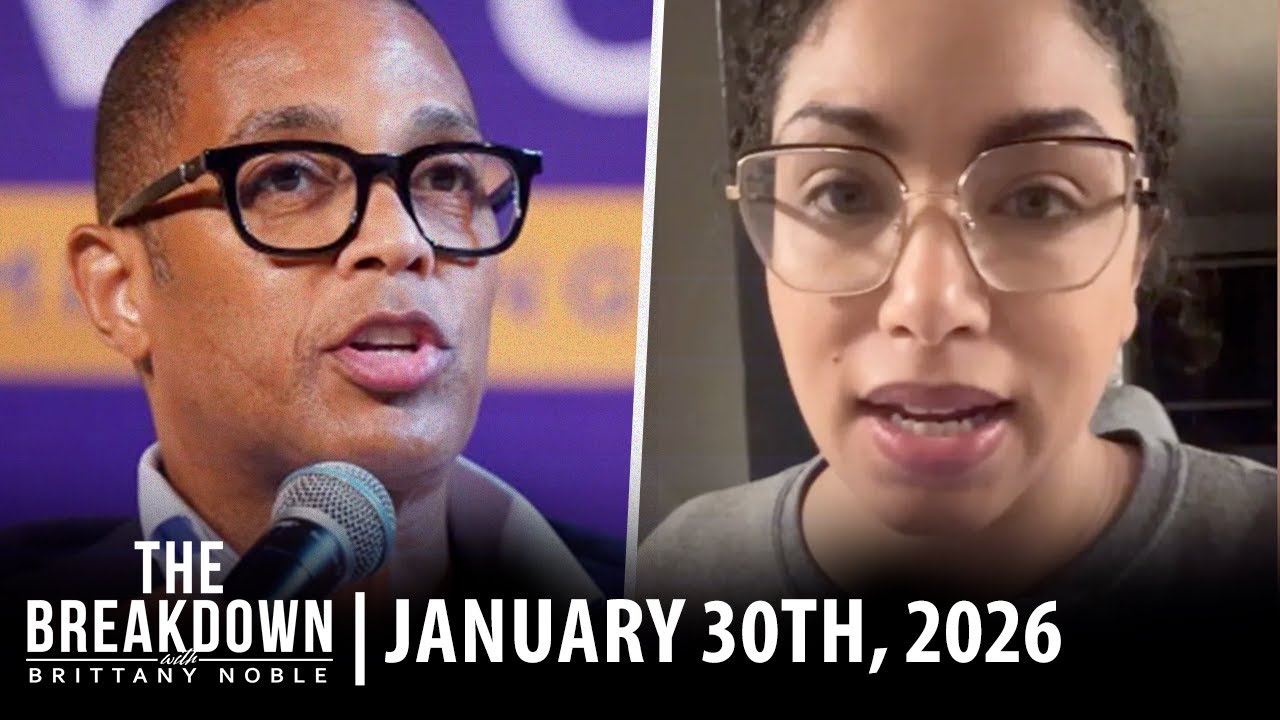
rump’s DOJ arrests journalists Don Lemon, Georgia Fort
"Federal agents arrested prominent journalists Don Lemon and Georgia Fort for covering a church protest, sparking widespread condemnation and raising critical questions about First Amendment rights and the weaponization of the Justice Department."
Don Lemon, Georgia Fort Arrested Over Church Protest. Press Freedom on the Line Under Trump.
"The Trump administration's arrest of journalists Don Lemon and Georgia Fort for covering a church protest is framed as a direct assault on press freedom and a calculated distraction from the release of damaging Epstein files."

LIVE: Trump HIDES FROM PUBLIC as US SOLDIER KILLED!!! 6/2/2026
"The host exposes alleged government cover-ups regarding military casualties, Trump's unexplained public absence, and questionable political appointments, arguing these reflect a 'regime of loser babies' and a failing foreign policy."