
Col. Larry Wilkerson: Israel Might Not Survive This… END EVERYTHING… Israel & Iran Nuclear Scenario
YouTube · dQCTCUR9WHs
Quick Read
Summary
Takeaways
- ❖The official narrative regarding the Charlie Kirk assassination is widely disputed by experts, with evidence suggesting a cover-up and an incorrect shooter/weapon identification.
- ❖US sanctions since 2000 are estimated to have caused 38 million deaths, half of which are children and women, exceeding the death tolls of historical dictators like Stalin or Hitler.
- ❖Iran's 'second tier' of targets includes critical oil infrastructure in Saudi Arabia and other Gulf states, capable of destroying 8-12 billion barrels/day capacity, leading to global economic collapse.
- ❖Israel is experiencing significant military casualties in Lebanon, with its armored corps suffering unexpected losses due to Hezbollah's tactics and IDF tactical errors.
- ❖The Israeli economy is not running due to massive military call-ups (700,000 people), exacerbating the country's turmoil.
- ❖US Treasury Secretary's claim of retaking control of the Strait of Hormuz is dismissed as 'pipe dreaming' due to insufficient naval capacity against a well-armed Iran.
- ❖The US administration is accused of 'torpedoing diplomacy' twice by bombing targets in the middle of negotiations.
- ❖Arab states like Saudi Arabia and UAE are pressuring the US to continue the war with Iran, driven by fear of their own people and Iran's potential post-US empowerment.
Insights
1Disputed Narrative of Charlie Kirk's Assassination
Experts, including Larry Johnson and Ray McGovern, consistently doubted the official account of Charlie Kirk's assassination, believing the asserted shooter, rifle, and bullet were incorrect. Recent Daily Mail reports further suggest the bullet didn't match the rifle, reinforcing suspicions of a cover-up. The guest believes the administration is either incompetent or actively hiding the truth, possibly due to Kirk's shift against the war with Iran and his criticism of 'Jewish-American billionaires.'
Daily Mail report on bullet mismatch; views of Larry Johnson, Ray McGovern; guest's personal knowledge of rifles; comparison to JFK assassination cover-up.
2Iran's Devastating 'Second Tier' Targeting Threat
Following 'first tier' strikes that destroyed Bahrain's largest refinery, Iran possesses a 'second tier' list of targets. If executed with similar accuracy and devastation, these strikes on Saudi Arabian pipelines and Rostanura-type facilities (delivering 8-12 billion barrels/day) would 'wreck the world economy,' leading to a global recession or depression. This would cause severe oil, helium, and chip material shortages, impacting global allies like Taiwan and potentially benefiting Russia.
Destruction of Bahrain's refinery; 'second tier' target list including Saudi pipelines and Rostanura facilities; analysis of global economic impact.
3Israel's Unsustainable War and Internal Turmoil
Israel is in 'turmoil,' with its population living in bomb shelters and experiencing significant military casualties, particularly among its armored forces in Lebanon. Hezbollah's tactics of eliminating lead and rear tanks in columns, combined with the IDF's lack of tactical distance, are causing high losses. The call-up of 700,000 reservists has crippled the Israeli economy. The country is described as a 'single-party state' with no 'levitating force,' and internal divisions are evident with Orthodox Jews refusing service.
Fox News report on Israelis in bomb shelters; reports of IDF armored losses in Lebanon; 700,000 reservists called up; internal reports of 5,817 hospital casualties (with only 137 officially remaining); reports of IDF units assisting settlers in West Bank.
4Risk of Israeli Nuclear Escalation
If Israel faces a desperate situation, the use of nuclear weapons remains a threat. To decisively influence the situation against Iranian missile capabilities, Israel would likely need to target numerous underground and mountainous facilities, potentially requiring 'at least 50' nuclear weapons. Such an act would constitute 'letting the genie out of the bottle' and invite retaliation from multiple regional powers, especially if advanced Russian S500 air defense systems are deployed in Iran.
Military assessment of nuclear weapon efficacy; reports of S500 deliveries to Iran with Russian operators.
Bottom Line
The US military's reliance on Air Force leadership for overall strategy leads to a fundamental misunderstanding of ground warfare and its human cost.
This disconnect results in 'bloodthirsty' air campaigns (likened to the IDF's actions in Lebanon) and ill-conceived ground operations, like an airborne invasion of Car Island, which would lead to massive American casualties for 'no reason.'
Military reform advocating for ground combat leadership in joint chief roles, or a re-evaluation of strategic planning to prioritize ground realities over technological capabilities.
The US is perceived globally as 'the Empire' that the world hates, due to its aggressive foreign policy, sanctions, and perceived 'evil' actions, rather than as a force for 'justice and truth.'
This perception undermines US diplomatic efforts, fuels anti-American sentiment, and isolates the US on the global stage, making it harder to build alliances or achieve strategic objectives.
A radical shift in US foreign policy towards non-interventionism, diplomacy, and humanitarian aid, coupled with a public acknowledgment of past harms, could rebuild international trust and soft power.
Key Concepts
Sith Lord and Darth Vader Analogy
Colonel Wilkerson frames Donald Trump as the 'Sith Lord' and Pete Hegseth as 'Darth Vader' (without the redeeming features of a Jedi Knight) to describe the current US administration's perceived tyrannical and destructive foreign policy, with the US as the 'Empire' and the rest of the world as the 'rebel force'.
The CNN Effect (or Fox Effect)
Drawing on Colin Powell's concept, Wilkerson explains how a single tactical episode, captured and broadcast by media (like a US aircraft carrier sinking or paratroopers dying in flames), can drastically shift public opinion and support for a war, potentially forcing a rapid withdrawal.
Lessons
- Scrutinize official narratives and media reports on geopolitical conflicts, especially those involving military action, for potential misinformation or cover-ups.
- Evaluate investment strategies for exposure to global economic shocks, particularly those related to oil supply disruptions and potential global depressions.
- Advocate for diplomatic solutions and de-escalation in international conflicts, recognizing the potential for catastrophic human and economic costs of military intervention.
- Question the motives behind military interventions, especially when financial interests of political figures or defense contractors are involved.
Notable Moments
Discussion of the Charlie Kirk assassination and the alleged cover-up, drawing parallels to the JFK assassination.
Highlights a deep distrust in government narratives and suggests a pattern of official deception regarding politically inconvenient deaths.
The guest's strong condemnation of US sanctions, claiming they have killed 38 million people since 2000.
Presents a shocking statistic that challenges the perceived 'humanitarian' aspect of sanctions and frames US foreign policy as potentially more destructive than historical dictatorships.
Critique of the Israeli military and its current state, describing it as 'bloodthirsty' and 'unliming their tanks and running.'
Contradicts the common perception of the IDF as an invincible force and suggests significant operational and morale issues, impacting regional stability.
Quotes
"There's no way this guy shot Charlie Kirk. And he certainly didn't shoot him from the position they're asserting he shot him from. And the rifle in all of its configurations, if you will, is impossible to have been the launcher of the round that killed him. So the question is, what are they hiding? And who are they hiding?"
"This administration has given a new name to lie and deceit. There's no question about it. Led by the chief man. He's the biggest liar of them all."
"Since 2000, we have killed 38 million people with our sanctions. 38 million people, half of whom are children, women. 38 million people. Add into that Libya, Syria, Afghanistan, Iraq, Somalia. I'd bet our toll is over Joseph Stalin's, over Mao Zedong's, and probably over Hitler's in terms of people the empire has killed."
"They're missing the point, though. They're missing the point. Those Israelis want Netanyahu to wipe out the Palestinians and wipe out the Iranians. That's the solution they want. They don't understand that that solution is impossible to achieve and that they're the ones going to be wiped out."
"We are the Empire and everyone else out there is Princess Leia and Han Solo and the Millennium Falcon and justice and truth and the galactical way, the prime imperative, as Star Trek would put it. That's who we are. We're the people the world hates."
Q&A
Recent Questions
Related Episodes

Alex Krainer: US STRIKES Iran – Iran RETALIATES Against Kuwait, Bahrain & Jordan!
"Amidst escalating US-Iran conflict and Iranian retaliation against regional US allies, this episode argues that US foreign policy is deeply controlled by an 'Anglo-Zionist conspiracy' led by the Rothschild banking dynasty, prioritizing Israeli interests over American ones."

Iran Update: Israel’s Newest Bombing Campaign, the Oncoming War With China and How to Avoid It
"Colonel Wilerson reveals how the US and Israel are actively bombing China's strategic infrastructure in Iran, escalating a covert economic war that Beijing intends to win without direct military conflict by dismantling the dollar's global dominance."

Patrick Henningsen: Hezbollah JUST Fired Back at Israel - Iran Vows to “Crush” All Attacks
"Patrick Henningsen argues that the US and Israel initiated an illegal war against Iran, driven by Trump's incompetence and Israeli influence, leading to an inevitable escalation with severe global economic repercussions."
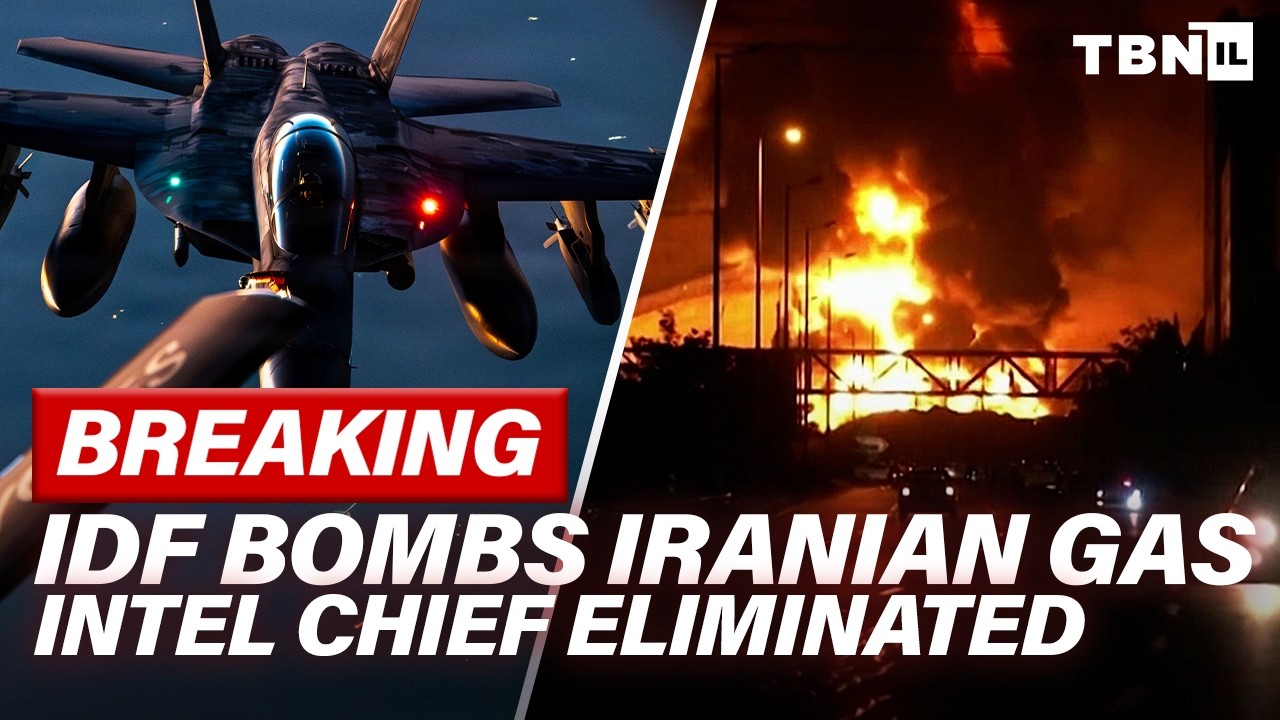
BREAKING: Israel BOMBS Major Iran Gas Site; Top Mullah ELIMINATED; Iran Vows VENGEACE | TBN Israel
"Israel and the United States have escalated their 'Roaring Lion War' against Iran, striking its largest gas facilities, eliminating key intelligence and military figures, and disrupting missile production, while Iran threatens a broader energy war in the Gulf."