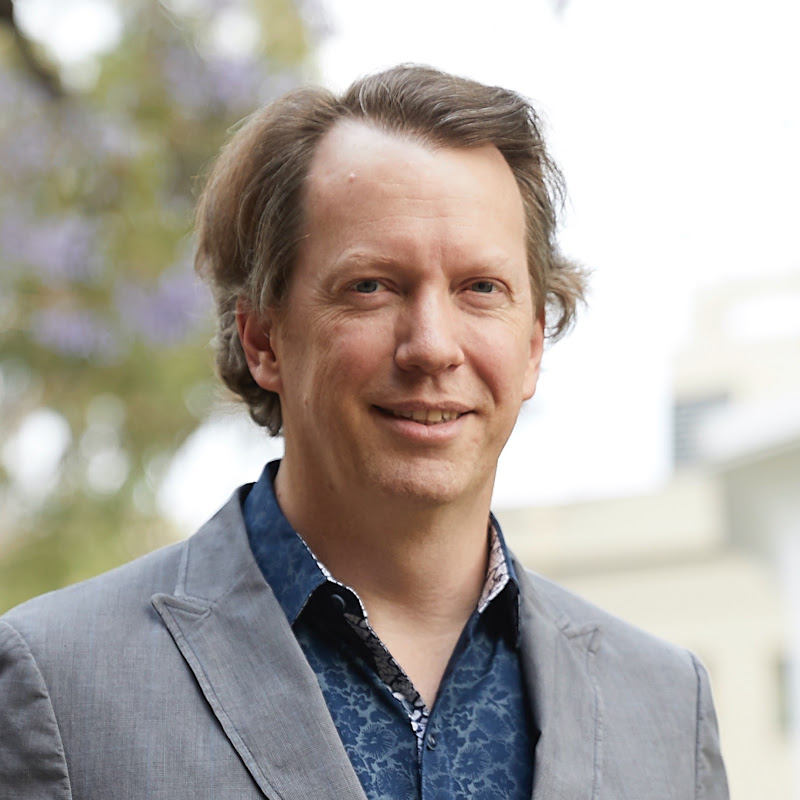
Christian List on Free Will and Levels of Reality | Mindscape 354
YouTube · eBDE8S9S98M
Quick Read
Summary
Takeaways
- ❖The free will debate is often confused by not distinguishing between microphysical and agential levels of description.
- ❖A system can be deterministic at a micro-level (e.g., particle physics) but indeterministic at a macro-level (e.g., human choices or coin flips).
- ❖Christian List proposes three criteria for free will: intentional agency, alternative possibilities, and causal control over actions.
- ❖These criteria are 'portable' and could apply to non-human entities like chimpanzees, advanced AI, and organized corporate groups.
- ❖Attributing free will to AI and corporations is crucial for establishing frameworks of responsibility and liability, without necessarily implying consciousness.
Insights
1Free Will is Level-Specific, Not Tied to Microphysical Determinism
The philosophical debate on free will is often misdirected by focusing solely on whether fundamental physics is deterministic. Christian List argues that determinism or indeterminism is a property relative to a specific level of description. A system can be deterministic at a microphysical level (e.g., atoms) but indeterministic at a higher, macroscopic level (e.g., a person making a choice or a coin flip). This 'emergent indeterminism' is a real phenomenon, not just an epistemic limitation.
Sean Carroll's initial observation that determinism/indeterminism is orthogonal to free will, and Christian List's elaboration on how systems can exhibit different deterministic/indeterministic behaviors across various levels of description, from particle physics to macro-states. (, , )
2Explanatory Autonomy of Higher Levels: The 'Nerdy Argument'
Higher-level descriptions (e.g., psychology, sociology) are not explanatorily reducible to lower-level ones (e.g., physics), even if higher-level properties supervene on lower ones. List presents a combinatorial argument: given that languages are countable but the possible sets of micro-states (which define macro-properties) are uncountably infinite, it's highly improbable that every macro-property would be describable by the lower-level language. This suggests that higher-level concepts and explanations have genuine autonomy.
List's detailed 'nerdy argument' explaining that countable languages cannot describe the uncountably infinite possible subsets of even countably infinite micro-states, implying that macro-properties are unlikely to be reducible to micro-level descriptions. (, )
3Three Conditions for Free Will: Agency, Alternatives, Control
Christian List proposes a three-part checklist for assessing whether a system possesses free will: 1) Intentional Agency: The system must be an intentional agent, where viewing it as such is explanatorily indispensable. 2) Alternative Possibilities: There must be genuine alternative choices available to the agent at its level of description. 3) Causal Control: The agent's mental states (desires, intentions) must causally control the resulting actions, distinguishing them from mere reflexes or underlying physical processes.
List explicitly states these three conditions: intentional agency, alternative possibilities (agential), and causal control (mental causation) over actions, providing examples like lifting a bottle versus a knee-jerk reflex. (, , , )
4Free Will Can Extend to AI and Group Agents (Without Consciousness)
The criteria for free will are 'portable' and can be applied to non-human entities. If an AI system or a corporate entity (like a firm or nation) satisfies the three conditions of intentional agency, alternative possibilities, and causal control, then it can be said to possess free will in a functionalist sense. This attribution does not require the entity to be phenomenally conscious, as free will and consciousness are distinct concepts.
List discusses applying the criteria to chimpanzees, AI, and corporate entities (firms, nations), highlighting that these entities can be viewed as intentional agents with choices and causal control. He explicitly states that free will is not the same as consciousness, meaning corporate entities can have free will without being conscious. (, , , )
Key Concepts
Levels of Description
The idea that the world can be understood and described at various levels of granularity (e.g., particle physics, chemistry, biology, psychology, sociology), each with its own concepts, laws, and emergent phenomena. Properties like determinism or indeterminism are 'level-specific'.
Non-Reductive Physicalism
The philosophical position that while all higher-level phenomena supervene on physical reality (meaning no change at a higher level without a change at a lower level), the higher-level explanations and concepts are not reducible to lower-level ones. They possess explanatory autonomy due to combinatorial complexity and the specific utility of coarse-graining.
Intentional Stance (Dennett's Modified)
An approach to understanding and predicting the behavior of complex systems by treating them as rational agents with beliefs, desires, and intentions. List extends this by arguing that if taking the intentional stance is 'explanatorily indispensable' for understanding a system, it is strong evidence that the system genuinely possesses intentional agency, rather than merely being interpretable as such.
Emergent Indeterminism
The concept that a system can exhibit genuinely indeterministic behavior at a higher level of description, even if its underlying microphysical level is deterministic. This indeterminism is not merely epistemic (due to lack of information) but an objective feature of the system at that emergent level.
Lessons
- When discussing complex phenomena like free will, always clarify the 'level of description' to avoid category errors between microphysical and macroscopic realities.
- Evaluate the agency of AI systems and corporate entities based on their functional characteristics (intentionality, choice, control) rather than solely on human-centric notions like consciousness, to better assign responsibility.
- Recognize that emergent properties at higher levels of reality can be genuinely real and not merely 'epistemic' or reducible to their constituent parts, informing how we model and interact with complex systems.
Quotes
"Compatibilism is just the idea that even if there's determinism at the lower level, you can still talk very fruitfully and should talk very fruitfully about free will at higher levels, the level of people and their their actions."
"My claim is that once we carefully draw the distinction between levels, this opens up new space for for defending free will in a more interesting way."
"The distinction between determinism and indeterminism is really very much a level relative, a level specific distinction."
"If our best descriptions even from a scientific perspective of certain microscopic phenomena lead us to treat these phenomena as behaving indeterministically... then we should just say, well, that's as scientifically well supported as anything we say in particle physics and we should just take it at face value."
"The indispensibility of taking the intentional stance towards a particular system is strong evidence that we are really dealing with an intentional agent."
Q&A
Recent Questions
Related Episodes
Mindscape Ask Me Anything, Sean Carroll | June 2026
"Sean Carroll fields a diverse range of listener questions, from the hypothetical Pope Leo XIV's stance on AI to the intricacies of quantum cyclic universes, the philosophy of free will, and the future of science and society."
Andrea Wulf on Enlightenment, Nature, Romanticism, and Modernity | Mindscape 356
"Historian Andrea Wulf explores how 18th-century thinkers like Georg Forster, Alexander von Humboldt, and the Jena Circle fundamentally reshaped our understanding of nature, humanity, and the individual, laying the groundwork for modernity and environmentalism."

Solo: Looking Quantum Mechanics in the Eyeball | Mindscape 355
"Sean Carroll argues that fundamental reality in quantum mechanics is an abstract vector in Hilbert space, and familiar concepts like space and locality are emergent properties, not fundamental."
Mindscape Ask Me Anything, Sean Carroll | May 2026
"Sean Carroll tackles a wide array of listener questions, from the detectability of antimatter and the nuances of anthropic reasoning to the weaponization of rationality and the profound implications of consciousness and mortality, all while sharing personal reflections on sports fandom and the impact of AI on education."