
Dark New Details Uncovered in Sheriff Mickey Stines Judge Killing
YouTube · eF5peCGmj6Y
Quick Read
Summary
Takeaways
- ❖Former Sheriff Mickey Steines is charged with murder for shooting Judge Kevin Mullins, captured on surveillance video.
- ❖Steines' defense plans an insanity plea and an argument of extreme emotional disturbance.
- ❖His aunt, Sherry Steines, testified about his erratic behavior, paranoia, and sleeplessness in the days leading up to the shooting.
- ❖Steines was reportedly taking multiple Benadryl and melatonin gummies without effect and obsessively monitoring his home security cameras.
- ❖Hours before the shooting, Steines FaceTimed his aunt, asking to speak to his mother who had been deceased for 2.5 years.
- ❖The defense claims Steines genuinely believed his wife and daughter had been taken and were in danger.
- ❖Prosecutors questioned why the aunt didn't alert authorities or his wife about his concerning mental state.
- ❖Legal analysis suggests proving insanity is difficult due to signs of premeditation (shooting in private chambers), but extreme emotional disturbance is a more viable defense for a lesser charge.
Insights
1Evidence of Extreme Mental Distress Before the Shooting
Mickey Steines' aunt, Sherry Steines, testified that in the 24 hours before the shooting, he was profoundly paranoid, sleepless for what he claimed was seven days, fidgety, and obsessively checking his home security cameras for threats to his wife and daughter. He attempted to self-medicate with multiple doses of over-the-counter Benadryl and melatonin, which had no effect. Crucially, just before the incident, he FaceTimed his aunt asking to speak to his mother, who had been dead for two and a half years, indicating a severe disconnect from reality.
Sherry Steines described Mickey as 'psychotic,' 'paranoid,' and 'scared to death,' stating he hadn't slept in 7 days and was watching his security cameras around his house, worried about his wife and daughter. She also recounted the FaceTime call where he asked to speak to 'Mommy Bones,' his deceased mother. (, , , , )
2Defense Strategy: Focus on Steines' State of Mind, Not the Act Itself
Steines' defense attorneys, Jeremy and Carrie Bartley, acknowledge the shooting is not a 'whodunit' as it was caught on video. Instead, their strategy centers on proving Steines' mental state at the time, arguing his 'mind and soul' did not commit the crime. They contend he was operating in an 'altered mental state,' experiencing delusions and a 'very real fear' that his family was in danger, aiming for an insanity defense or a lesser charge of manslaughter due to extreme emotional disturbance.
Jeremy Bartley states, 'The question is not the body. The question in this case is the mind.' He emphasizes, 'we believe that Mr. Steines was under the belief that his wife and daughter were in danger.' (, , )
3Challenges of the Insanity Defense vs. Extreme Emotional Disturbance
Legal analyst Dave Aronberg explains that an insanity defense, requiring proof of a medical condition and not knowing right from wrong, is difficult. He points to Steines leading the judge into private chambers for the shooting as evidence of premeditation, suggesting Steines knew his actions were wrong. Aronberg believes a more realistic defense is 'extreme emotional disturbance,' which could lead to a lesser conviction of manslaughter, aligning with the defense's claim that Steines believed his family was taken.
Dave Aronberg states, 'to try to get someone acquitted by reason of insanity, you have to show that they have an established medical condition and they didn't know the difference between right and wrong. Very difficult to prove, especially when the sheriff went into the secret chambers... That shows premeditation.' He adds, 'I think that's really the more realistic play' for extreme emotional distress. (, , )
4Societal Stigma and Missed Diagnosis in Mental Health
The defense highlights the significant stigma surrounding mental health, particularly for men and public officials in regions like Eastern Kentucky. They suggest this stigma, combined with a brief doctor's visit where Steines was accompanied by staff, may have prevented a full and transparent disclosure of his symptoms, leading to a misdiagnosis (only being advised to take over-the-counter sleep aids) instead of proper mental health intervention.
Carrie Bartley notes, 'as a public official and with the stigma that surrounds mental health still, especially in areas like Eastern Kentucky, I think it would be difficult for anyone, particularly a public official, to potentially be completely transparent.' Jeremy Bartley adds, 'was there a diagnosis that was missed the day prior to the shooting? Sure.' (, , )
Lessons
- Recognize that a defendant's mental state at the time of a crime can be a primary focus in legal defense, shifting the narrative from 'whodunit' to 'why did they do it.'
- Understand the distinction between an insanity defense (not knowing right from wrong) and extreme emotional disturbance (leading to a lesser charge like manslaughter), as courts often view these differently.
- Be aware of the societal stigma surrounding mental health, particularly for public figures, and how it can impede individuals from seeking or receiving appropriate care, potentially leading to tragic outcomes.
Quotes
"The question is not the body. The question in this case is the mind."
"You can be both paranoid and there can also be somebody chasing you."
"If he really were totally insane and didn't know the difference between right and wrong, he would have shot him out in public and not led him in the back where there'd be no witnesses."
Q&A
Recent Questions
Related Episodes

Hell On Wheels: Mackenzie Shirilla's Double Murder Crash
"A seemingly accidental car crash that killed two young men in Strongsville, Ohio, was meticulously uncovered by investigators to be a deliberate act of double murder by the 17-year-old driver, Mackenzie Shirilla, amidst a tumultuous relationship and a shocking lack of remorse."
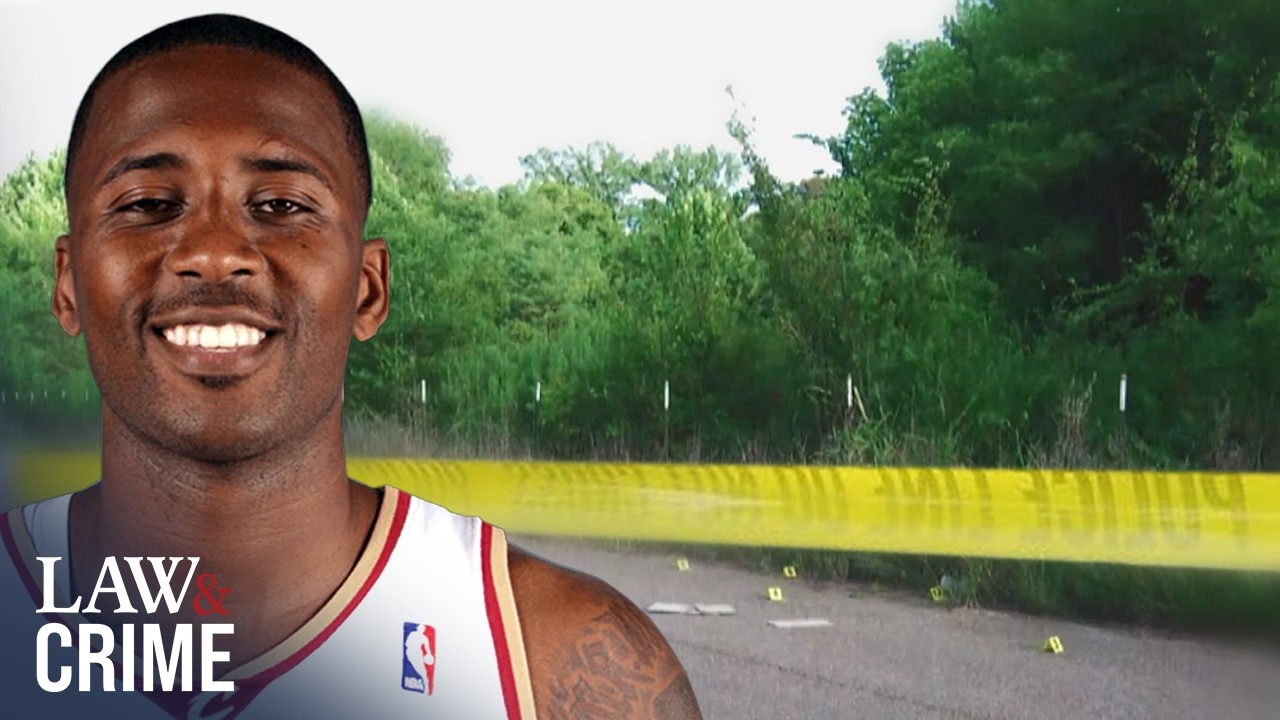
Killer Cases: NBA Star Lured to Execution In Rural Tennessee
"The decade-long cold case of NBA star Lorenzen Wright's murder was cracked through a persistent mother, a jailed informant, and a covert police operation that recovered the murder weapon from a lake and exposed a conspiracy driven by greed."

Sadhguru - Stop Letting Your Mind DESTROY You | SRS #315
"Sadhguru challenges conventional wisdom on 'being in the moment' and stress, arguing that mastering the mind requires understanding its sophisticated design and consciously directing one's internal chemistry for profound well-being."

🚨 THEY F*CKED AROUND FOR THE LAST TIME 😭😭😭
"This episode unleashes a torrent of highly opinionated commentary on the US-Iran deal, Israel's role, and a scathing critique of 'leftist' policies and immigration, particularly highlighting the UK grooming gang report as evidence of Western societal decay."