
BREAKING: Trump Launches WAR In Iran Again - U.S. Military Strikes IRGC
YouTube · eNRBc5rcei8
Quick Read
Summary
Takeaways
- ❖The US military launched major strikes on IRGC positions in Iran following the downing of a US AH-64 Apache helicopter by a suicide drone.
- ❖President Trump used 'distraction tactics' by downplaying the helicopter incident before authorizing strikes, according to the host.
- ❖US strikes targeted strategic locations including Qeshm Island, Bandar Abbas, Minab, Sirik, and Bandar Jask, hitting naval bases, air defense, radar, coastal missile batteries, and water reservoirs.
- ❖The host asserts these strikes were 'strategic' to degrade Iran's defense systems, not merely 'proportional' retaliation.
- ❖The IRGC responded by launching Fatah 360 ballistic missiles and Shahed drones, primarily at US forces in Iraq and potentially Arab states.
- ❖Iran's leadership exhibited confusion, with conflicting statements on responsibility for the helicopter attack and denial of new nuclear deal proposals.
- ❖The IDF head, Eyal Zamir, publicly stated recent attacks in Iran were a 'prelude to a stronger, more severe blow.'
- ❖The IRGC is facing financial pressure from US blockades, leading them to accelerate drug dealing operations in Europe and South America.
- ❖Israel eliminated a senior Hezbollah commander, Wissam Abu Ridda, in a drone strike in Lebanon, indicating ongoing regional conflict despite ceasefire talks.
Insights
1US Strikes are Strategic, Not Proportional
The host argues that the US military's strikes on IRGC positions were not a 'proportional response' to the downing of a single helicopter. Instead, by targeting air defense systems, radar installations, coastal missile batteries, and even water infrastructure, the US is conducting 'strategic strikes' designed to dismantle Iran's defense capabilities and prepare for future actions. This aligns with a pattern observed in 2024 between Israel and Iran.
The US military targeted Qeshm Island (air defense, missile batteries, port), Bandar Abbas (air defense, strategic defense centers), Minab (coastal missile battery), Sirik (naval base, water reservoirs), and Bandar Jask (naval base). US officials confirmed targeting 'air defenses and radar installations.' The host cites IDF head Eyal Zamir's statement that recent attacks were a 'prelude to a stronger, more severe blow.'
2IRGC Internal Disarray and Financial Desperation
The Iranian regime exhibits a lack of central leadership and internal confusion, with different officials issuing contradictory statements regarding military actions. Furthermore, facing severe financial pressure from US blockades, the IRGC has resorted to illicit activities like drug dealing to fund its operations, accelerating these efforts in Europe and South America.
After the US helicopter downing, one Iranian government faction denied responsibility, while another (Majed Arokhchi) asserted the right to target foreign forces. The IRGC also denied agreeing to a 15-year uranium enrichment freeze, contradicting US reports. The host mentions Polish government interceptions of large heroin shipments linked to IRGC's new revenue streams, and their long-standing drug and money laundering operations in South America.
3Escalation Beyond Tit-for-Tat
The US has broken from the typical 'tit-for-tat' escalation model by launching a second wave of attacks after an initial round, indicating a more aggressive and sustained military campaign. This suggests a deliberate strategy to maintain pressure and achieve broader objectives beyond immediate retaliation.
The host initially expected a pause after the first US strikes, followed by IRGC retaliation, then a US counter-strike. However, the US military launched a 'second wave of attacks' across Iran, hitting locations like Jask and Qeshm again, specifically targeting more defense batteries and radars. This 'changed the game' from a predictable exchange.
Bottom Line
The IRGC's perceived 'leverage' in regional conflicts stems from its ability to inflict damage on countries that 'care about their people' (e.g., UAE, Bahrain, Kuwait, Saudi Arabia, Israel), as these nations are more sensitive to casualties and damage than the IRGC itself.
This dynamic creates an asymmetric warfare environment where the IRGC can disproportionately influence regional stability and decision-making by threatening civilian populations or critical infrastructure, even with limited resources.
Understanding this leverage point could inform counter-strategies that focus on robust defense systems for vulnerable nations, international pressure campaigns against IRGC's tactics, or internal destabilization efforts within Iran to reduce the regime's capacity for such threats.
The host suggests that the only way to bring down the Iranian regime is through internal conflict and division, rather than solely external military strikes, once the regime's military capabilities are sufficiently weakened.
This implies that external military action, while necessary to degrade the regime's power, is a preparatory step for an internal uprising or collapse, rather than a direct means of regime change.
This perspective highlights the importance of supporting internal opposition movements and fostering divisions within the regime, alongside external pressure, to achieve long-term change in Iran. Intelligence gathering on internal dynamics becomes critical.
Key Concepts
Foreplay Before the Final Blow
This model describes a phased escalation of conflict where initial, seemingly limited military actions (like strategic strikes on defense systems) serve as a deliberate precursor to a larger, more decisive confrontation. It suggests that current events are not isolated incidents but part of a calculated strategy to weaken an adversary before delivering a 'final blow.'
Distraction Tactics
This model refers to a political or military strategy where a leader or entity deliberately downplays an incident or makes misleading statements to divert attention, create confusion, or manage expectations, only to then execute a significant, often contrasting, action. The host attributes this to President Trump's handling of the helicopter incident and subsequent strikes.
Lessons
- Monitor official statements from the US and Iran, but critically analyze them for underlying strategic intentions, as 'proportional response' rhetoric may mask deeper objectives.
- Pay close attention to the types of targets hit in military engagements; strikes on air defenses, radar, and infrastructure often signal a strategic degradation effort rather than simple retaliation.
- Recognize that internal divisions and financial pressures within a regime (like the IRGC's drug dealing) can be significant indicators of vulnerability and potential future instability.
Notable Moments
The host corrects himself about helicopter pilots 'ejecting,' clarifying they landed safely but the helicopter was destroyed, highlighting the fast-paced, live nature of the news.
This moment demonstrates the real-time, unscripted environment of the broadcast, where information is rapidly processed and sometimes misspoken, then corrected, giving a sense of immediacy to the unfolding events.
The host reveals that the US military is now targeting water reservoirs in Sirik, cutting off drinking water supply in an IRGC-occupied area.
This marks a significant escalation beyond military targets, indicating a willingness to impact civilian infrastructure in areas controlled by the IRGC, which could have humanitarian implications and further destabilize the region.
The host mentions the upcoming World Cup and the potential for Iranian dissidents to 'infiltrate' stadiums with 'sun and lion' flags and cause 'drama' during games involving Iran's national team.
This highlights how geopolitical conflicts can spill over into international cultural events, turning sporting arenas into platforms for political protest and potentially creating security challenges for host nations.
Quotes
"These were not retaliations. They they they the strikes had nothing to do with punishment. These are strategic strikes. They are hitting the defense systems of the Islamic Republic."
"If they do stupid things, we will end up in something where we have to wipe out their entire infrastructure."
"The recent attack in Iran on the IRGC was just a prelude to a stronger, more severe blow."
"The only way you can bring down the regime is from within. There needs to be internal conflict, and it's happening already. The division, the infighting, and everything else. But it has to get to the boiling point."
Q&A
Recent Questions
Related Episodes

Patrick Henningsen: Hezbollah JUST Fired Back at Israel - Iran Vows to “Crush” All Attacks
"Patrick Henningsen argues that the US and Israel initiated an illegal war against Iran, driven by Trump's incompetence and Israeli influence, leading to an inevitable escalation with severe global economic repercussions."
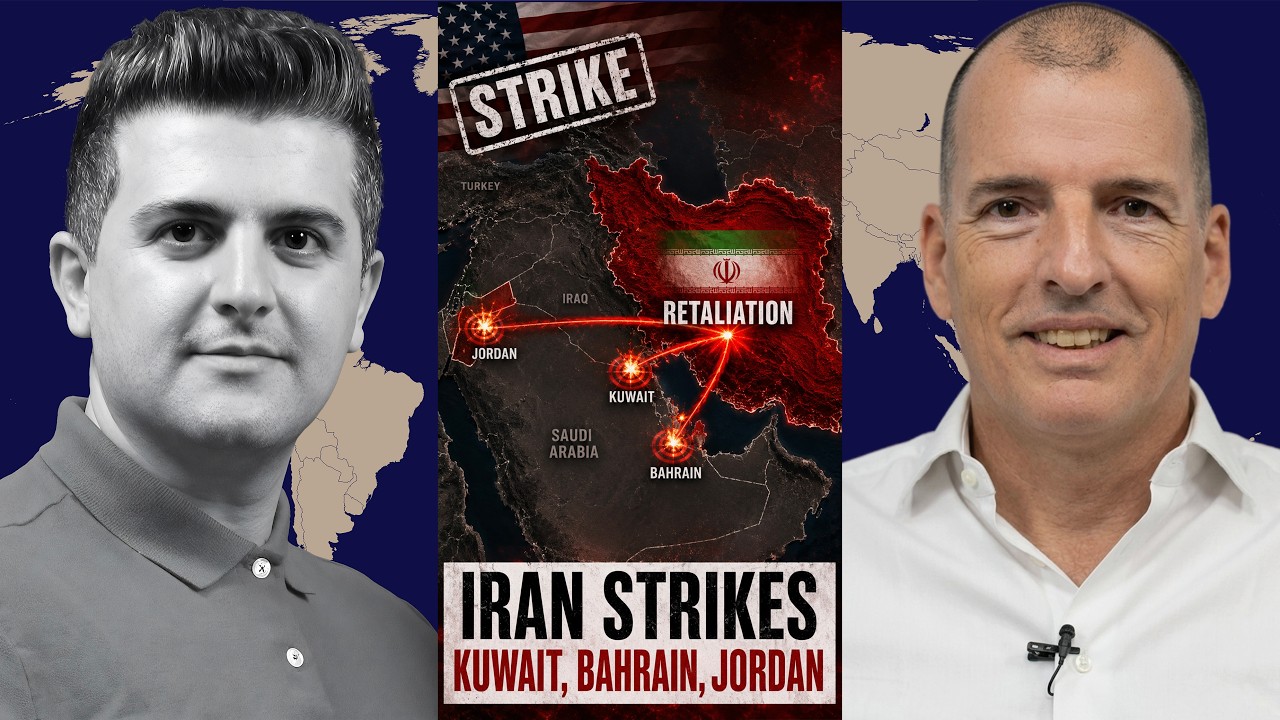
Alex Krainer: US STRIKES Iran – Iran RETALIATES Against Kuwait, Bahrain & Jordan!
"Amidst escalating US-Iran conflict and Iranian retaliation against regional US allies, this episode argues that US foreign policy is deeply controlled by an 'Anglo-Zionist conspiracy' led by the Rothschild banking dynasty, prioritizing Israeli interests over American ones."

LIVE: Trump HIDES FROM PUBLIC as US SOLDIER KILLED!!! 6/2/2026
"The host exposes alleged government cover-ups regarding military casualties, Trump's unexplained public absence, and questionable political appointments, arguing these reflect a 'regime of loser babies' and a failing foreign policy."
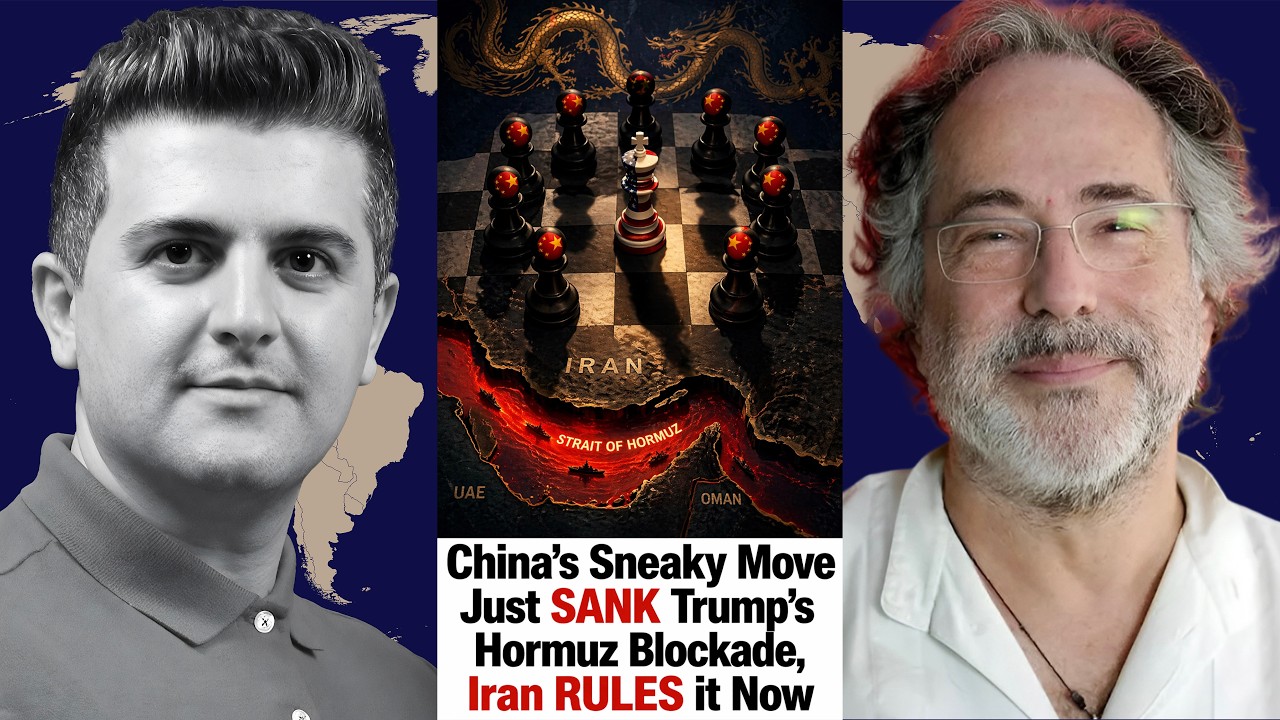
Pepe Escobar: “Total Failure”: Trump’s Blockade Just Backfired Disastrously
"Pepe Escobar argues that the US blockade against Iran, spearheaded by Donald Trump, has utterly failed and backfired, accelerating global economic chaos and challenging US geopolitical dominance."