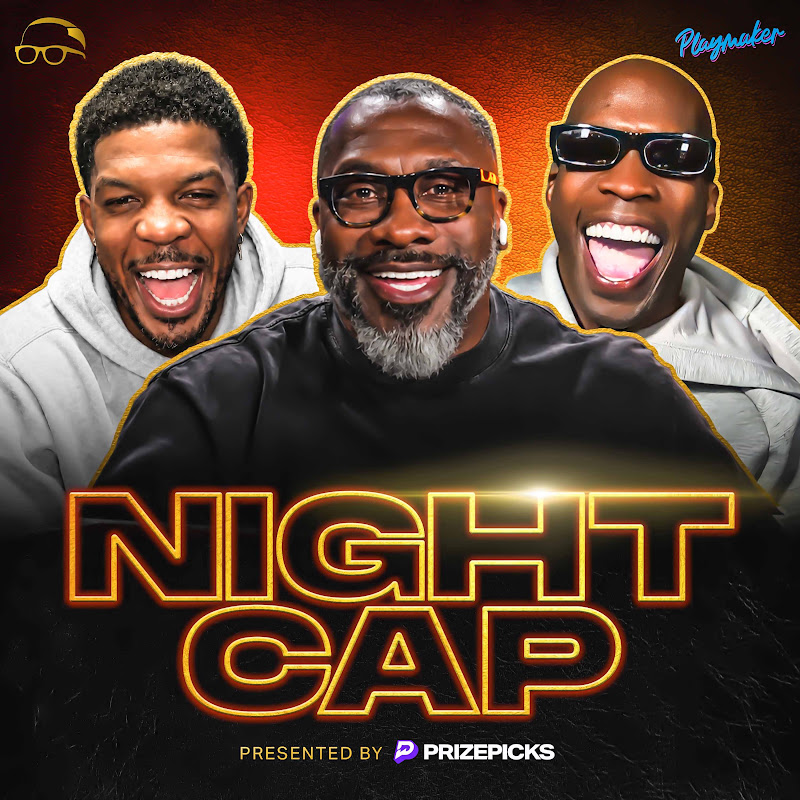
Unc, Ocho and Iso react to Joey Porter rips Big Ben & debate how to fix the All Star Game | Nightcap
YouTube · eomZRUtiA6w
Quick Read
Summary
Takeaways
- ❖A Super Bowl victory, while significant, does not automatically elevate a quarterback to 'top 10' status, as seen with Brad Johnson and Trent Dilfer; situational success plays a large role.
- ❖Joey Porter Sr.'s public criticism of Ben Roethlisberger reveals long-standing issues with his character and teammate relations, previously protected by team success.
- ❖NBA suspensions for on-court altercations, like the Pistons-Hornets fight, are a 'slap on the wrist' and a bad look for the league, despite Draymond Green's argument about fan hypocrisy.
- ❖The NBA's 65-game minimum for postseason awards is inadvertently penalizing star players due to injuries, impacting their eligibility and potentially diminishing the awards' prestige.
- ❖Player-team relationships can sour over 'petty' issues, as seen with Jonathan Kuminga and the Warriors, where perceived disrespect and differing role expectations lead to trade demands.
- ❖Kevin Durant's non-physical playing style and ability to play off-ball could extend his career for another five years, even at 37.
- ❖Jean Simmons' critique of hip-hop in the Rock & Roll Hall of Fame reflects a narrow, genre-exclusive view that ignores cultural impact and historical influences.
Insights
1Sam Darnold's Super Bowl Win Sparks Debate on QB Valuation
The Seahawks' Super Bowl victory with Sam Darnold at quarterback prompted a discussion on how a championship affects a player's perceived greatness. While Darnold had an 'unbelievable season' and a significant turnaround from being a 'reclamation project,' the hosts caution against immediately elevating him to 'Pantheon great' status. They cite examples like Brad Johnson and Trent Dilfer, who won Super Bowls but were never considered top-tier quarterbacks, emphasizing that a championship is a team victory and individual performance needs to be assessed over an extended period.
Chad Ochocinco and Joe Johnson agree that it's 'prisoners of the moment' thinking to immediately rank Darnold among top QBs like Mahomes or Burrow. Shannon Sharpe states, 'Brad Johnson won a Super Bowl and they never said he was a top 10 quarterback. Trent Dilfer won a Super Bowl and they never said he was a top 10 quarterback.'
2Joey Porter Sr. Exposes Ben Roethlisberger's 'Foul' Teammate Behavior
Joey Porter Sr.'s comments on Cam Hayward's podcast revealed that Ben Roethlisberger was a 'foul' teammate and person, despite his on-field success and Super Bowl wins. This public revelation, coming after Roethlisberger criticized Mike Tomlin, broke a long-standing 'brotherhood' code among former Steelers players who had previously shielded his true character. The hosts confirm that many insiders were aware of these issues, highlighting the difference between being a great teammate and a good person.
Joey Porter Sr. states, 'He broke the brotherhood... The stuff that Seven did that we don't talk about is crazy. Like out of anybody should talk, he should never grab a microphone and really talk Steeler business... his ass is foul of all foul. He's not a good teammate.' Shannon Sharpe adds, 'Everybody knew some of the things that were going on that didn't get reported.'
3NBA's 65-Game Rule Undermines Player Awards and Fan Experience
The NBA's new rule requiring players to participate in 65 games to be eligible for postseason awards is creating significant problems. It penalizes star players who suffer injuries, potentially disqualifying them from MVP or All-NBA honors, even if they perform exceptionally when healthy. This rule, intended to combat 'load management' and ensure stars play, is now seen as detrimental to both player recognition and fan engagement, as it removes top talent from award contention.
Bill Simmons' critique is cited: 'How many more games can players miss before they're disqualified from postseason awards? Anthony Edwards can only miss seven games. Kawhi can only miss four. Victor Wembanyama can only miss four. Steph Curry can only miss two. Nikola Jokic can only miss one. Giannis and LeBron have already been eliminated.' Shannon Sharpe notes, 'It put a lot of the stars out of contention.'
4Player-Team Relationship Breakdown: The Kuminga 'Food' Incident
The departure of Jonathan Kuminga from the Warriors was rooted in a 'petty' and deteriorating relationship, exacerbated by differing views on his role and perceived disrespect. Management's complaints, including his associates taking 'too much food' from the family room, highlighted a deeper organizational frustration. This illustrates how even minor issues can become significant in a strained player-team dynamic, especially when a player feels undervalued or their development is mismanaged.
Anthony Slater reported, 'Someone around Jonathan Kuminga was reportedly taking too much food from the Warriors family room... The gripes between the player and the organization... have become petty.' Kuminga 'viewed himself as a future All-Star and wanted more on-ball opportunities,' while Steve Kerr 'viewed him as a fast run fast jump high athlete without a requisite skill to lead.'
5Kevin Durant's Game Style Favors Career Longevity
Kevin Durant's playing style, characterized by mid-range shooting and off-ball movement rather than highly physical, rim-attacking play, is conducive to a longer career. Unlike players with more physically demanding games like LeBron James, Durant's approach minimizes wear and tear, allowing him to maintain high-level performance well into his late 30s. His consistent shooting remains a premium skill in the modern NBA.
Shannon Sharpe notes, 'His game is not physical like that. LeBron's game... to dominate and to all you know finishing at the rim and falling on the on the floor. That's not Kevin Durant's game.' Chad Ochocinco adds, 'His shooting is still going to always be a premium... with him being 6'10, 6'11, 7 foot, it's hard to guard that anyway.'
Bottom Line
The public perception of a player's character is often heavily influenced by team success, with winning teams shielding internal issues until a breaking point occurs.
This creates a false narrative for fans and media, obscuring the true locker room environment and potentially delaying necessary organizational changes.
For teams, proactive management of player character issues, even during periods of success, can prevent future public relations crises and foster a healthier team culture. For analysts, looking beyond win-loss records to internal dynamics provides a more accurate picture of team stability.
The NBA's attempt to mandate player participation for awards, while well-intentioned to combat load management, is creating unintended negative consequences by penalizing injured stars and devaluing prestigious awards.
This could lead to players pushing through injuries, risking long-term health, or further alienating stars from league initiatives, ultimately harming the product.
The league could explore alternative metrics for award eligibility that account for per-game dominance or impact, rather than solely relying on a game count, or create a separate 'impact player' award for those who miss significant time but still perform at an elite level.
Key Concepts
Production and Tolerance
In professional sports, a player's 'production' (on-field performance) directly correlates with the organization's 'tolerance' for their off-field or locker room issues. High production leads to higher tolerance for 'BS,' while lower production quickly diminishes it.
The Game of Inches
Success in highly competitive sports like the NFL is often decided by minimal margins. A single false step, hesitation, or minor mistake can be the difference between winning and losing, emphasizing precision and execution.
Auditioning for 31 Teams
Athletes should view their performance not just for their current team but as an ongoing audition for every other team in the league. Consistent high-level play creates opportunities elsewhere, regardless of the current team's situation or perception.
Lessons
- For athletes: Cultivate a strong reputation as both a good player and a good person; your character can be shielded by success but will be exposed if performance declines or loyalty is questioned.
- For team management: Understand that player value is a combination of on-court production and off-court conduct; a high-performing player with poor character can still be a long-term liability.
- For aspiring professionals: Recognize that every performance is an 'audition' for future opportunities, not just for your current employer, and your 'tape' (performance record) is your ultimate resume.
Notable Moments
Chad Ochocinco recounts a furious halftime rant during a playoff game against the Steelers, where he ripped out his IV, bleeding, and screamed at coaches for not involving him in the offense after Carson Palmer's injury.
This anecdote vividly illustrates the intense emotional investment and competitive fire of professional athletes during high-stakes games, and how frustration can boil over when they feel their contribution is being limited, even against team protocol.
Quotes
"If you got anything to say about my quarterback, you got anything to say about my defense, you got anything to say about our O-line, and you got anything to say about the city of Seattle, I got two words for you, f*** you."
"He broke the brotherhood... The stuff that Seven did that we don't talk about is crazy. Like like out of anybody should talk, he should never grab a microphone and really talk Steeler business... his ass is foul of all foul. He's not a good teammate."
"You can be a good teammate and a crappy person. You could be a crappy person and a good teammate."
"It's not my music. I don't come from the ghetto. It doesn't speak my language. I said in print many times, hip-hop does not belong in the Rock and Roll Hall of Fame, nor does opera symphony orchestras. It's called the Rock and Roll Hall of Fame."
Q&A
Recent Questions
Related Episodes
The Pat McAfee Show Live | Wednesday May 13th 2026
"Pat McAfee and guests dive into the latest in sports, from NBA playoff drama and NFL international expansion debates to Ronda Rousey's MMA return and college football buzz, all while sharing wild behind-the-scenes stories from the Disney upfronts."

Unc, Ocho & Iso react to Cavs beat Hawks, Cade returns, JJ Redick drama brewing w/ Lakers | Nightcap
"The hosts dissect critical NBA playoff races, the financial implications of player contracts, and the brewing internal drama within the Lakers, offering strong opinions on player power and team management."

Luka & The Lakers CAN WIN The NBA Finals
"The Lakers' recent surge and Luka's MVP-level play ignite a fierce debate on their playoff ceiling, while the controversial waiving of Cam Thomas exposes the brutal realities of NBA contract negotiations and team perception."

The Pat McAfee Show Live | Tuesday June 23rd 2026
"Pat McAfee and guests dissect the seismic Giannis trade to Miami, the NFL's firm stance on gambling, Windham Clark's US Open triumph, and the USMNT's World Cup momentum, all while celebrating the Kachuk brothers' reunion."