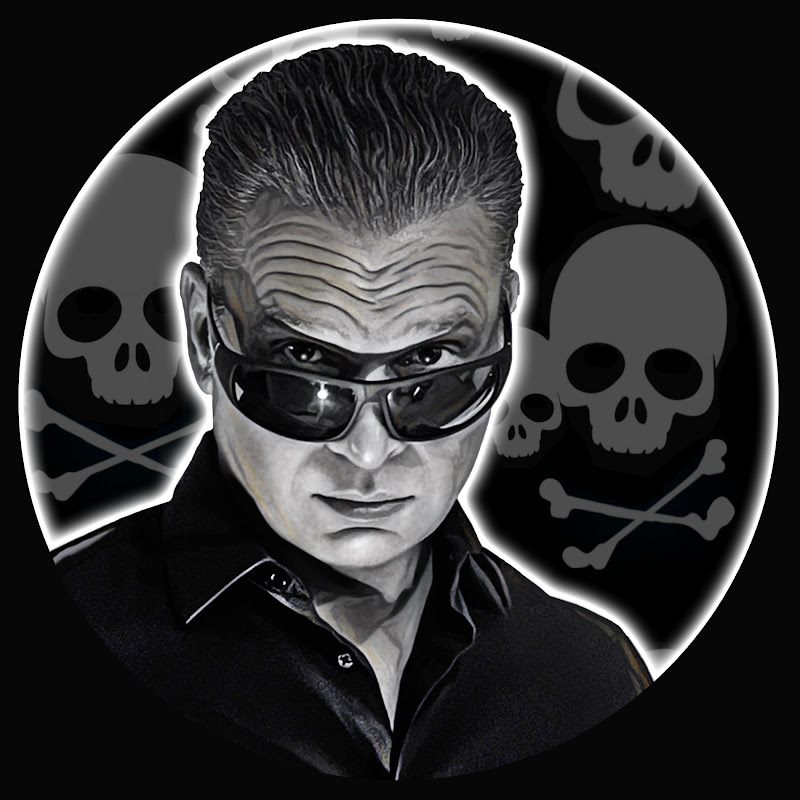
Whistleblower Cop Exposes Corruption | Corcoran Gladiator Fights
YouTube · euqDEWF1cMo
Quick Read
Summary
Takeaways
- ❖Corcoran State Prison officers orchestrated 'gladiator fights' by integrating rival gangs on small yards, leading to predictable and often lethal confrontations.
- ❖Officers justified lethal force by articulating perceived threats, often shooting inmates with Mini-14 rifles that caused explosive damage or full metal jackets that ricocheted.
- ❖Richard Caruso, a correctional officer, refused to use lethal rounds, opting for 'knee knockers' (wooden blocks) despite pressure from colleagues to 'send a message' with real bullets.
- ❖Caruso secretly gathered evidence, including incident reports and photos, after his attempts to report corruption internally were dismissed, realizing the corruption reached the Director of Corrections and potentially the Governor's office.
- ❖His decision to inform his warden about contacting the FBI led to a dramatic confrontation between state and federal agents at his home, with the FBI asserting federal jurisdiction.
- ❖Caruso faced death threats, property damage, and social ostracization from the correctional officer community for exposing the truth.
- ❖Inmates, including a Mexican Mafia leader, offered Caruso protection within the prison walls, recognizing his sacrifice to stop the killings, while his own colleagues placed a hit on him.
- ❖Media attention from the Los Angeles Times and 60 Minutes became Caruso's primary protection, as federal and state agencies were unwilling to safeguard him.
- ❖Caruso's testimony at state Senate hearings, combined with federal investigations, led to significant policy changes at California prisons, including ending yard fights, revising shooting policies, and implementing psychological evaluations for new hires.
- ❖Despite being offered a federal prison sentence based on a fabricated memo from the Department of Corrections, Caruso's secretly recorded conversations with FBI agents proved his innocence and exposed the FBI's attempt to 'play' him.
- ❖He received a $1.7 million settlement from the state of California, the largest for a whistleblower at that time, after Governor Davis intervened.
- ❖Caruso's story influenced prison movie narratives, with elements appearing in 'Felon,' 'Snitch,' and 'Sons of Anarchy'.
Insights
1Orchestrated Violence and Lethal Force Justification
Corcoran State Prison officers intentionally created 'gladiator fights' by integrating rival gangs on small exercise yards, knowing these confrontations were inevitable. Officers then used lethal force, often with high-powered weapons, justifying it by articulating a perceived threat of 'great bodily injury' to cover up the staged violence. This system was designed to assert control and 'send a message' to inmates.
The speaker explains the 'integrated yard program' where 'different races and gangs that had been at war with each other for years' were put on small yards together. He states, 'officers took it upon themselves sometimes to set those fights up and then cover them up.' He details how an officer disrespected by an inmate would be in the gun position during that inmate's yard time, ready to shoot. He describes the justification: 'all they going to have to do is articulate, well, I felt great bodily injury is about to occur... Therefore, I shot him with an a mini 14.'
2Whistleblower Protection Through Media Exposure
When official channels (internal command, FBI, state investigators) failed to protect the whistleblower and even attempted to discredit or imprison him, sustained media attention from major outlets like the Los Angeles Times and 60 Minutes became his most effective safeguard. This public exposure deterred further direct harm and ensured accountability.
After facing threats and being abandoned by state and federal agencies, Caruso was contacted by LA Times reporter Mark Arax. Arax told him, 'Nobody in California knows who you are or what you did. And if something happens to you or your family, Richard, nobody's going to know. Let me tell your story to California and give you some kind of assurance.' Caruso later agreed to an interview with 60 Minutes, stating, 'I had the blessing of the national media at my disposal.'
3Inmate Loyalty and Protection for a Whistleblower
Paradoxically, the most dangerous inmates, including leaders of the Mexican Mafia, offered protection to the whistleblower within the prison system. They recognized his sacrifice in exposing the corrupt practices that led to the killing of their 'people,' viewing him as an ally against a common enemy (corrupt guards), even as his own colleagues put a hit out on him.
After Caruso's story broke, a Mexican Mafia leader named Benjamin Peters Toppo told him, 'Nothing's going to happen to you, Caruso.' Caruso realized, 'the people that everyone thinks are the bad guys are now going to be the ones that are that are going to protect me... my family wanted to basically kill me and the people that I hated in the beginning were the ones that were going to protect me.' Years later, an ex-inmate with Mexican Mafia ties in Los Angeles recognized Caruso and publicly praised him, saying, 'This man sacrificed everything to stop the killings of our people. And we'll never forget that he did that for us.'
4Systemic Resistance to Accountability
Both state and federal agencies demonstrated a strong institutional bias towards protecting the system rather than pursuing justice. This manifested as attempts to discredit the whistleblower, force his retirement, and even offer him a prison sentence based on false information, all to avoid opening 'Pandora's box' of further lawsuits and liabilities.
The state attempted to medically retire Caruso and sent agents to his police academy graduation to tarnish him. The US Attorney, after years of working with Caruso, offered him '4 to 6 years in federal prison' based on a fabricated memo from the Department of Corrections. Caruso's attorney called this 'quid pro quo,' where the feds would get the eight officers but also 'get Caruso.' The federal trial jury was also stacked with people connected to prisons to ensure a 'not guilty' verdict.
Bottom Line
The 'integrated yard program' at Corcoran was a thinly veiled mechanism for officers to orchestrate violence between rival gangs, allowing them to justify lethal force and maintain a sense of absolute power over inmates.
This reveals a deliberate, systemic abuse of authority where prison staff actively created dangerous scenarios, rather than merely responding to them, turning correctional facilities into arenas for 'gladiator fights' and extrajudicial killings.
Investigative journalists and oversight bodies should scrutinize 'integration' or 'rehabilitation' programs in high-security prisons for hidden agendas that might exploit inmate rivalries for control or perverse incentives.
The whistleblower's decision to inform his warden about contacting the FBI, motivated by loyalty, inadvertently allowed the state to preemptively mobilize against him, highlighting a critical vulnerability in whistleblowing strategy.
This demonstrates that even well-intentioned actions within a corrupt system can backfire, as institutional loyalty often supersedes individual justice, turning allies into unwitting informants for the very system being exposed.
Whistleblower advocacy groups should emphasize strict protocols for initial contact with external agencies, advising against informing internal superiors until robust external protections are firmly in place, to prevent pre-emptive counter-measures.
The California Department of Corrections, and even the FBI, attempted to discredit and imprison the whistleblower on false charges, indicating a coordinated effort to protect the institution from the financial and reputational fallout of widespread corruption.
This illustrates that the threat to whistleblowers often comes not just from the immediate perpetrators of corruption, but from higher-level institutional forces that prioritize damage control and liability mitigation over truth and justice.
Legal frameworks for whistleblowers need stronger, independent oversight mechanisms to prevent federal agencies from colluding with state entities to suppress information or retaliate against truth-tellers, ensuring genuine protection and accountability.
Key Concepts
Drinking the Kool-Aid
Refers to blindly accepting the beliefs or ideology of a group, even when those beliefs are harmful or unethical. Caruso describes how many officers 'drank the Kool-Aid' of the California Department of Corrections, becoming desensitized to violence and corruption, believing they were doing a 'great job' despite the atrocities.
Situational Awareness (Prison Context)
The critical need for constant vigilance and understanding of one's environment and potential threats, particularly in a high-stakes setting like a maximum-security prison. The host emphasizes that guards must be polite to lifers who have nothing to lose, and that power dynamics shift based on inmate custody levels. Caruso's placement in the kitchen alone with knives highlights the extreme vulnerability when this awareness is compromised by malicious intent from within the system.
Lessons
- When exposing systemic corruption, prioritize external agencies (e.g., FBI) and maintain strict confidentiality, avoiding internal reporting until external protections are secured.
- Leverage mainstream media and public attention as a crucial layer of protection, as it can deter retaliation and force accountability when official channels fail.
- Document all interactions and evidence meticulously, including recording conversations with investigators, as this can be vital in countering attempts to discredit or falsely accuse you.
Notable Moments
Caruso's realization that the 'integrated yard program' was a deliberate setup for inmate fights and shootings, leading him to collect evidence.
This marked his transition from a loyal officer to a whistleblower, driven by moral conviction against systemic violence.
The dramatic confrontation at Caruso's home between FBI agents and state investigators, where the FBI asserted federal jurisdiction over the evidence.
This moment underscored the high stakes and the institutional conflict over the corruption, highlighting the immediate danger Caruso faced.
The Mexican Mafia leader, Benjamin Peters Toppo, informing Caruso that he would be protected within the prison, despite a hit being placed on him by guards.
This was a profound reversal of expectations, demonstrating that honor and a sense of justice can exist even among those deemed 'the worst of the worst,' and that the 'enemy' can shift.
Mike Wallace of 60 Minutes personally calling Caruso's elderly father to reassure him of his son's safety and the media's support.
This humanized the media's role in protecting whistleblowers and showed a rare personal commitment from a high-profile journalist, building trust crucial for the story's release.
The US Attorney offering Caruso 4-6 years in federal prison based on a false memo, only to back down when presented with Caruso's secret recordings of FBI agents.
This exposed the depth of institutional corruption, where even federal prosecutors were willing to sacrifice a whistleblower to protect the state, and demonstrated the power of documented evidence.
Governor Davis's office calling Caruso to offer a personal attorney and order the Department of Corrections to settle his civil lawsuit for $1.7 million.
This marked the ultimate vindication of Caruso's actions, demonstrating that political will, when aligned with public pressure, can force systemic change and provide restitution for whistleblowers.
Quotes
"It's all about power. It's about respect. We want them to know we're running this. You're not running anything."
"All I'd have to do is articulate that to justify me shooting a lethal round up in that tower that I'm working in."
"It's almost like SS officers standing in Ashawitz watching people walk into gas chambers and no one's speaking up. You become part of it."
"If something happens to you or your family, Richard, nobody's going to know. Let me tell your story to California and give you some kind of assurance."
"We know what you did. Nothing's going to happen to you, Caruso."
"This is Mike Wallace from 60 Minutes and we're here and we're going to watch Richie's back the whole way through."
"My client has been a hero. My client never did that. Furthermore, I've heard you, Agent Murphy, on the phone telling him about a high-speed chase and about how you would have thrown everything in the dumpster, calling him a hero, calling never been a target of any investigation over all these years, asking him to steal stuff out of the prison. You used him."
"I'm nobody out here. I'm somebody in there. It's too hard out here. I'm somebody in there."
"This man sacrificed everything to stop the killings of our people. And we'll never forget that he did that for us."
Q&A
Recent Questions
Related Episodes
DeSantis Map Sued in Florida. Tennessee Targets Black District. FBI Raids Louise Lucas
"This episode exposes aggressive Republican gerrymandering efforts in Florida and Tennessee, a politically charged FBI raid on a Virginia Democratic leader, and disproportionate death penalty sentences against Black individuals in Tarrant County, Texas, framing them as a systemic assault on Black political power and civil rights."
NC Mom Sues Hospital For Negligence. Black NFL Coaches Win Major Ruling. Drug Test Scandal Exposed
"This episode exposes systemic failures and racial disparities across healthcare, professional sports, and politics, featuring a mother's harrowing hospital negligence lawsuit, a landmark NFL discrimination ruling, and alarming findings on flawed drug tests criminalizing new mothers."

NC Targets DEI. Trump Blocks Housing Bill. Minority Banks Face New Rules. Kohen Wiley Protests
"This episode exposes how current political actions, from changes in minority bank definitions to attempts to regulate college athlete earnings and block foreign aid, are systematically undermining Black economic power, voting rights, and social justice."

Black Men Created America’s First Paramedics. Freedom House’s Hidden History
"Discover the untold history of Freedom House, where Black men in Pittsburgh founded America's first paramedic service in 1966, revolutionizing emergency medicine despite facing pervasive systemic racism and institutional sabotage."