Larry Johnson & Col. Wilkerson: China JUST Said NO to Trump! Iran’s Hammer Falls on Strait of Hormuz
YouTube · gBADeqy_nKg
Quick Read
Summary
Takeaways
- ❖China gave Donald Trump a dismissive reception, sending low-level officials and prioritizing other diplomatic news, indicating a lack of importance placed on his visit.
- ❖China explicitly rejected Trump's requests regarding Iran, telling him to 'go pound sand' and framing the US as the problem in the region.
- ❖A new security architecture is being negotiated in the Persian Gulf, led by China, Russia, Iran, and Pakistan, with the goal of expelling US military presence.
- ❖The ongoing blockade of the Strait of Hormuz is causing a global economic crisis by disrupting the supply of five critical commodities: oil, liquid natural gas, urea, sulfur, and helium.
- ❖Iran has started allowing ships through the Strait of Hormuz under its own terms, shifting the perception that the US is now the primary blockader.
- ❖Saudi Arabia and Qatar hold the key to potential US military operations against Iran, as their refusal to host US bases would severely limit US capabilities.
- ❖The US's focus on Iran's nuclear program is presented as a 'red herring' or excuse to destroy the Islamic Republic, rather than a genuine concern about proliferation.
Insights
1China's Deliberate Snub of Trump
China sent clear signals of disrespect and disinterest during Donald Trump's visit. This included keeping Tajik flags up before his arrival, relegating his meeting to a sidebar in state media, and sending second-level officials to greet him at the airport, a stark contrast to the reception given to leaders like Putin or Kim Jong-un. This indicates China did not view the meeting as important and was sending a message about the US's diminished standing.
Tajik flags still adorning light posts upon Trump's arrival, China Daily's main headline featuring Tajikistan talks with Trump as a sidebar, Xi Jinping sending second-level people to greet Trump at the airport, unlike for Putin or Kim Jong-un.
2China's Rejection of US Demands on Iran
China explicitly told Trump to 'go pound sand' regarding his requests about Iran. This firm rejection highlights China's independent foreign policy and its growing alignment with Iran, viewing the US as the primary destabilizing force in the region rather than Iran.
Larry Johnson's source in the White House confirming Xi Jinping told Trump to 'go pound sand' on Iran requests.
3Emerging Gulf Security Architecture to Expel US
Behind the scenes, China, Russia, Iran, and Pakistan are actively planning a new security architecture for the Persian Gulf. This initiative aims to expel the US military presence from the region, create non-aggression pacts, and incentivize Saudi Arabia and Qatar to distance themselves from the United States. Pakistan is playing a leading role due to its bilateral security treaty with Saudi Arabia.
Larry Johnson's source with access to Pakistan's intelligence service, comments by Putin and Wang Yi about a new security architecture for the Gulf, focus on Qatar and Saudi Arabia due to their critical commodity production.
4Strait of Hormuz Blockade: Global Economic 'Gut Punch'
The ongoing disruption of the Strait of Hormuz, approaching 80 days, is causing a severe global economic crisis. It is blocking the flow of five essential commodities: oil, liquid natural gas (LNG), urea, sulfur, and helium. These shortages are beginning to manifest in consumer markets, with impacts on industries like agriculture (fertilizer, diesel) and automotive (motor oil). China, understanding this, is positioned to suffer less than the rest of the world.
Colonel Wilkerson's Iowa farmer contact reporting fertilizer and diesel shortages, Larry Johnson detailing shortages of motor oil at Costco and Walmart, Toyota issuing bulletins about alternative oil weights.
5Iran's Shifting Stance on Nuclear Weapons
While Iran's Shia theology traditionally views indiscriminate killing (and thus nuclear weapons) as a sin, Colonel Wilkerson suggests that Iran's military leadership (IRGC) may now be pursuing nuclear weapons as a deterrent. This shift is influenced by the perceived betrayal of the JCPOA by the US and the 'Gaddafi experience' (disarming led to his demise), seeing nuclear weapons as essential for survival in a dangerous region.
Colonel Wilkerson's assessment of the IRGC's rational approach and the lessons from North Korea and Gaddafi, contrasting with Larry Johnson's emphasis on Shia theology.
Bottom Line
The US is now perceived as the primary blockader of the Strait of Hormuz, not Iran, as Iran has begun allowing compliant ships through.
This narrative shift undermines US diplomatic efforts and international legitimacy, potentially isolating the US further in the region and globally.
Nations seeking to bypass US sanctions or influence could align with Iran's terms for passage, further normalizing Iran's control over the Strait and challenging US naval dominance.
The economic impact of the Strait of Hormuz blockade is a 'slow-motion gut punch' that will force the US to 'cave' when the full rage of shortages becomes undeniable.
This suggests that economic pressure, rather than military or diplomatic means, will ultimately dictate US policy in the Gulf, potentially leading to a forced withdrawal or significant concessions.
Companies and nations that can secure alternative supply chains or develop substitutes for the affected commodities will gain a significant competitive advantage as global shortages intensify.
Key Concepts
Thucydides Trap
The concept, referenced by the speakers, describes the historical pattern where a rising power (China) challenges an established power (US), often leading to conflict. The podcast suggests China is navigating this transition by allowing the US to 'kill itself' through self-destructive policies.
Sherpa Work in Diplomacy
This diplomatic term refers to the extensive preparatory work done by lower-level diplomats to iron out details and agreements before high-level meetings between principals. Its absence in Trump's China visit signaled a lack of serious negotiation or Chinese interest.
Lessons
- Monitor global commodity prices and supply chain disruptions, particularly for oil, LNG, urea, sulfur, and helium, as shortages are expected to worsen.
- Observe diplomatic and military movements in the Persian Gulf for signs of the proposed new security architecture taking shape, especially regarding US base access in Saudi Arabia and Qatar.
- Analyze statements from China, Russia, and Iran for further indications of their coordinated efforts to challenge US hegemony and reshape regional alliances.
Notable Moments
Colonel Wilkerson highlights the Chinese diplomatic choreography during Trump's visit, noting Xi Jinping's deliberate lack of advancement to meet Trump, making Trump walk across the room.
This seemingly minor detail is a significant diplomatic signal of disrespect and a clear indication of China's perceived superiority and Trump's diminished status.
Larry Johnson reveals that a White House source confirmed Xi Jinping told Trump to 'go pound sand' regarding Iran.
This direct rejection underscores China's firm stance against US interventionist policies in the Middle East and its growing confidence to defy US demands.
Larry Johnson details the five critical commodities from the Persian Gulf (oil, LNG, urea, sulfur, helium) and their global economic importance, explaining how their disruption is a 'gut punch'.
This provides concrete evidence of the widespread economic consequences of the Strait of Hormuz blockade, moving beyond abstract geopolitical discussions to tangible impacts on global industries and consumers.
Colonel Wilkerson and Larry Johnson debate Iran's nuclear intentions, with Wilkerson suggesting Iran's military may now pursue nuclear weapons for deterrence, while Johnson emphasizes Shia theology's prohibition against indiscriminate killing.
This internal disagreement among experts highlights the complexity and uncertainty surrounding Iran's strategic calculations, which are critical for understanding future regional stability.
Quotes
"He said she basically told Trump with respect to requests Trump made about Iran to go pound sand."
"The Chinese are absolutely superb in choreographing visits and other things too."
"If the straight of Hormuz were open, we'd all be better off. So if you want help opening the straight of Hormuz, here it is. Lay off the Iranians, let them control the straight, you know, that sort of thing."
"The one who's blockading now the straight of Hormuz is the United States."
"China's position in its grandest scheme is do nothing to stop the suicide."
"The entire idea behind this new security architecture is to to expel the US military presence from the Persian Gulf because the only reason it's there is to attack Iran."
"The amount of propaganda that's put out about it, is just it's absurd because you realize it was a it was a robust agreement."
"I think they have a undisclosed facility deep underground. And I think they are very capable of now making a warhead, matching it with one of their faster missiles and somehow, as the North Koreans did, announcing it."
"Benjamin Netanyahu. He is out to stir the pot to get other people to to cause disruption within the Gulf Arabs as much as possible."
"A dying elephant can thrash a lot of grass again. And the Jewish influence may be dying, but it can still thrash a lot of grass. And Donald Trump is grass that's thrashable."
Q&A
Recent Questions
Related Episodes
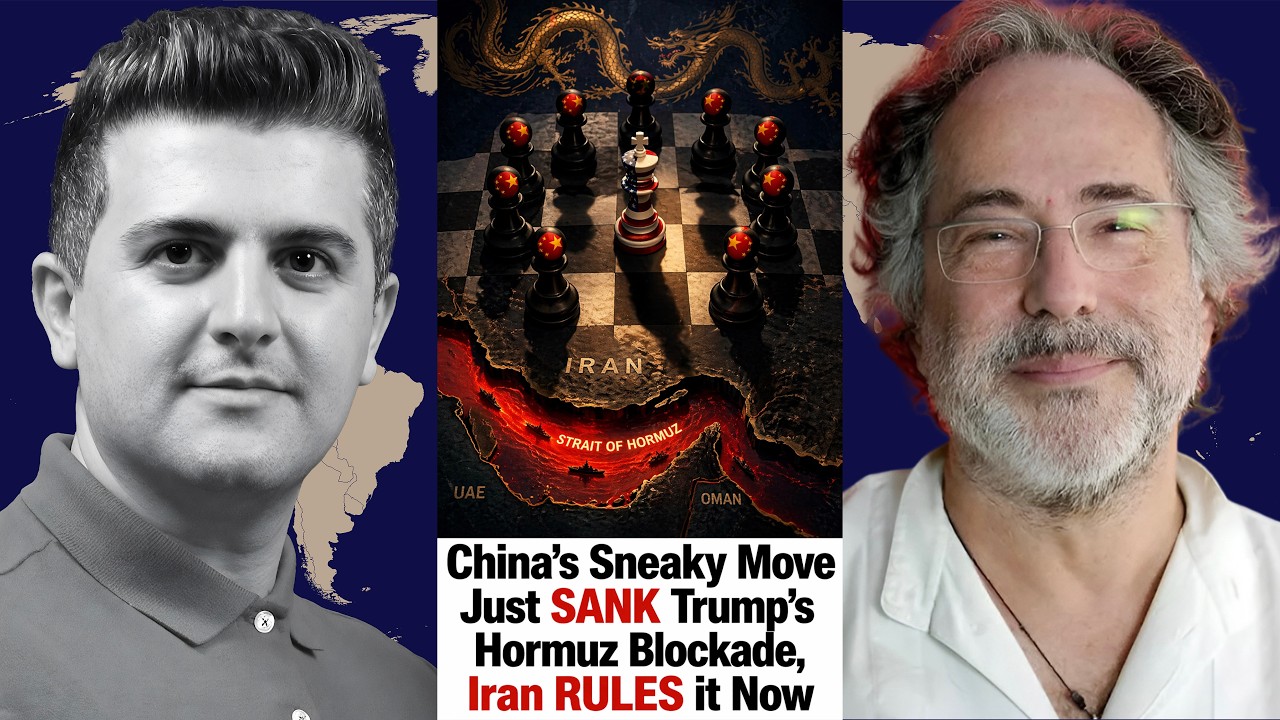
Pepe Escobar: “Total Failure”: Trump’s Blockade Just Backfired Disastrously
"Pepe Escobar argues that the US blockade against Iran, spearheaded by Donald Trump, has utterly failed and backfired, accelerating global economic chaos and challenging US geopolitical dominance."

🚨 TOTAL F*CKING CHECKMATE 😂😂😂
"The host argues that Trump's 'ceasefire' with Iran was a calculated '5D chess' move to orchestrate a global energy market reshuffle, while simultaneously lambasting 'woke' domestic policies and the 'freefall' of anti-Trump conservative figures."
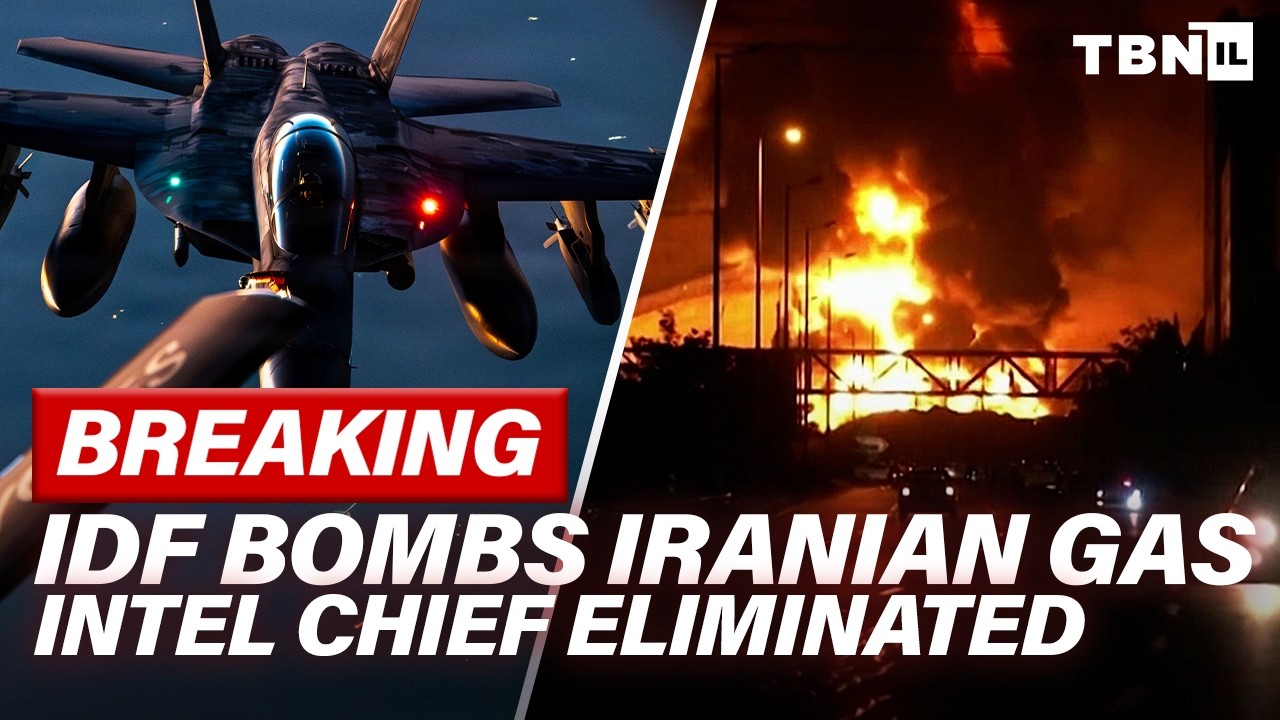
BREAKING: Israel BOMBS Major Iran Gas Site; Top Mullah ELIMINATED; Iran Vows VENGEACE | TBN Israel
"Israel and the United States have escalated their 'Roaring Lion War' against Iran, striking its largest gas facilities, eliminating key intelligence and military figures, and disrupting missile production, while Iran threatens a broader energy war in the Gulf."

Patrick Henningsen: Hezbollah JUST Fired Back at Israel - Iran Vows to “Crush” All Attacks
"Patrick Henningsen argues that the US and Israel initiated an illegal war against Iran, driven by Trump's incompetence and Israeli influence, leading to an inevitable escalation with severe global economic repercussions."