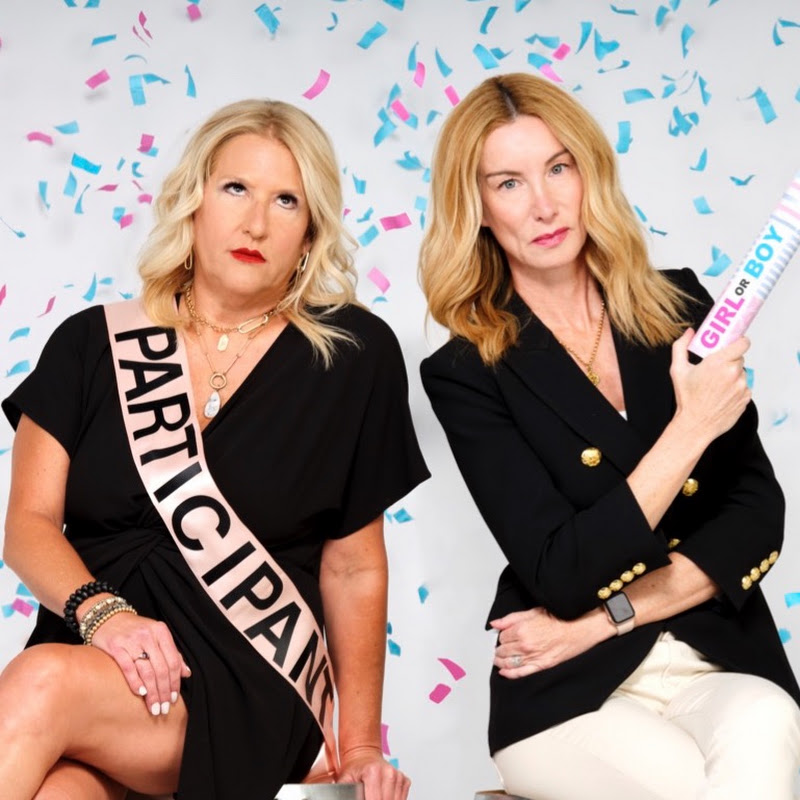
Creeps for Christ
YouTube · gLa56FqXiU0
Quick Read
Summary
Takeaways
- ❖Unsolicited marketing texts are a form of 'text terrorism' and 'forced capitalism.'
- ❖The internet has designated 'Jessica' as the new 'Karen' for long, self-righteous rants about minor inconveniences.
- ❖Minimizing someone's strong emotions about injustice is an insidious form of abuse, especially for progressives in conservative environments.
- ❖White culture's tendency to excuse other white people's racism and dehumanization contributes to a lack of accountability for figures like Donald Trump.
- ❖Evangelical purity culture is criticized for hypersexualizing children, creating unhealthy sexual boundaries, and fostering shame, which is linked to a broader tolerance for child abuse.
- ❖Demanding event invitations that require guests to pay or bring multiple gifts are seen as narcissistic and exploitative.
Insights
1The Rise of 'Text Terrorism' and 'Forced Capitalism'
Restaurants and businesses are increasingly using phone numbers collected for transactional purposes (e.g., waitlist texts) for unsolicited marketing. This 'bait and switch' tactic is described as 'text terrorism' and a form of 'forced capitalism,' where consumers are bombarded with unwanted solicitations, leading to a desire to 'go off the grid' or refuse to share personal contact information.
A host recounts giving her phone number to a restaurant for a waitlist text, only to receive promotional texts days later. She states, 'I don't want your business to email me about it. I want it to be my decision. The constant terrorism through our devices after they've mined our information to shle their [__] on us. I've completely had it.'
2Minimization of Feelings as a Form of Abuse
When individuals express strong emotions about injustice or human suffering, those who minimize or dismiss these concerns are engaging in a form of abuse. This is particularly prevalent for progressive individuals in conservative environments, where their genuine distress is often met with dismissiveness, making them feel isolated or 'crazy.' This minimization is seen as an extension of the original abuse.
A host states, 'One of the undertalked about forms of abuse are the people who when you are feeling massive emotions about injustice, minimize your concerns.' Another listener review says, 'When everyone around me tells me to calm down or asks, why are you so upset about what is happening in this country? I turn on you guys and suddenly I'm surrounded by like-minded women who know just how screwed up this all is.'
3Evangelical Purity Culture's Link to Sexual Shame and Abuse
The hosts argue that white evangelical Christian culture, through practices like purity rings and 'daddy-daughter balls,' hypersexualizes children at a young age and instills profound sexual shame. This environment, where a child's sexuality is treated as the parents' or church's business and autonomy is removed, is seen as a 'child sex cult' that normalizes unhealthy sexual boundaries and contributes to a culture where child abuse is excused or covered up.
A host describes evangelical culture: 'It is the weirdest child sex cult on the planet.' Another host recounts her mother asking if she was 'worthy of the white dress' before her wedding, despite living with her partner. They discuss purity ceremonies where fathers 'marry' their daughters and 'keep her virginity until he gives it to her husband,' calling it 'exploitation and manipulation and ownership of little girls.'
4The 'Jessica' Trope: The New 'Karen' for Millennial Grievances
The internet, particularly TikTok and Reddit, has shifted from using 'Karen' to 'Jessica' as shorthand for a specific type of millennial woman. This 'Jessica' is characterized by posting lengthy social media rants about minor inconveniences, always being convinced of her own righteousness, and frequently using phrases like 'I'm not trying to be rude, but...'.
A host states, 'A very specific millennial name has been declared as the new Karen... According to Tik Tok, Reddit, and the broader internet, Jessica is now shorthand for a for a very specific type of person. They post long rants about minor inconveniences on social media, are always deeply convinced they're in the right, even when they're not. They say things like, 'I'm not trying to be rude, but...''
Bottom Line
The 'resistance to Stanley Cups' and 'performative hydration' reflects a broader opposition to maximalist American consumer culture.
This highlights a cultural pushback against trends that emphasize excessive consumption and public display of mundane activities, suggesting a desire for simplicity and authenticity over performative lifestyle choices.
Brands could find success by marketing products that emphasize minimalism, practicality, and anti-performative values, catering to a segment of consumers tired of 'maximalist American things.'
The observation that 'nice people made the best Nazis' suggests that a cultural emphasis on politeness and avoidance of conflict can inadvertently enable or perpetuate injustice.
This challenges the conventional wisdom that 'niceness' is always a virtue, implying that a refusal to confront uncomfortable truths or 'rock the boat' can be more dangerous than direct opposition.
This insight could inform leadership training or social justice movements, emphasizing the importance of courage and confrontation over passive compliance in the face of moral wrongs.
Key Concepts
Minimization as Abuse
The concept that dismissing or downplaying someone's sincere feelings, especially about injustice or human suffering, constitutes a real and insidious form of emotional abuse. This often occurs when progressive individuals express concern in environments where those concerns are not shared or are actively suppressed.
Righteous Indignation
The idea that anger and outrage are not only justified but necessary when confronted with human rights violations and injustice. This model advocates for prioritizing standing up for the marginalized over maintaining politeness or social comfort, especially within cultures that tend to 'call out their own' less frequently.
Lessons
- Refuse to provide personal contact information (phone numbers, email addresses) to businesses for transactional purposes if you suspect it will be used for unsolicited marketing, even if it means inconvenience.
- Actively challenge individuals who minimize or dismiss genuine emotional responses to injustice, recognizing that such minimization is a form of abuse.
- Prioritize standing up for human rights and the marginalized, even if it requires being 'impolite' or disrupting social comfort, rather than excusing harmful behaviors for the sake of civility.
- Be critical of event invitations that place undue financial or logistical burdens on guests, such as requiring gifts, contributions, and monetary donations for the host's personal gain.
Notable Moments
Jennifer's subway encounter with a fan, where she acknowledges being 'much nicer than my online caricature in person,' but justifies her on-air anger due to human rights violations.
This moment humanizes the host while reinforcing the podcast's core mission of expressing righteous indignation against perceived injustices, highlighting the emotional toll of engaging with difficult political and social issues.
Pumps recounts her mother asking if she was 'worthy of the white dress' before her wedding, despite living with her fiancé, as an example of evangelical sexual shaming.
This highly specific personal anecdote serves as powerful evidence for the hosts' critique of purity culture, illustrating how deeply ingrained and invasive sexual shaming can be, even into adulthood.
Quotes
"I'm all for regulated capitalism that keeps people safe... What I don't like is forced capitalism where it's forced upon you."
"One of the undertalked about forms of abuse are the people who when you are feeling massive emotions about injustice, minimize your concerns."
"Human rights are non-negotiable. We care about human beings more than we do people. And I care about being impolite to stand up for the marginalized more than I do your feelings. [__] your feelings."
"We are not the party of pedophile protectors. That's the MAGAC Christians. The MAGAC Christians are the pedophile protectors."
"These grown ass creepy preachers talking to a little Pumps about her future sex life. That is [__] up."
Q&A
Recent Questions
Related Episodes

¡Exc! Marlene Calderón demanda a Gloria Trevi y asegura que sigue hablando con Sergio Andrade
"Marlene Calderón details her harrowing 9-year ordeal as a victim of the Sergio Andrade clan, exposing Gloria Trevi's complicity and her ongoing fight for justice against powerful figures."

Asmongold definitely isn’t gay - H3 After Dark #64
"The H3 crew dives into a chaotic mix of cringe TikToks, personal high school lesbian drama, AI masturbation consultants, and a viral cop interaction, all while dissecting online misogyny and Madonna's unexpected Kick stream."
Jimmy Kimmel Gets Emotional Admitting Political Differences w/ Adam Carolla
"Dave Rubin, Dr. Drew, and Sage Steele discuss how personal relationships can transcend political divides, critique LA's failed homelessness policies, and debunk media-fueled public health scares, all while sharing personal stories of overcoming financial struggles."

Jasmine Crockett Detonates. Roland Destroys MAGA Lies. Activists Confront Racist. Best of #RMU
"This episode exposes Republican hypocrisy on white supremacy, systematically debunks MAGA political lies, and highlights a new NAACP initiative leveraging Black athletic power to combat voting rights suppression in Southern states."