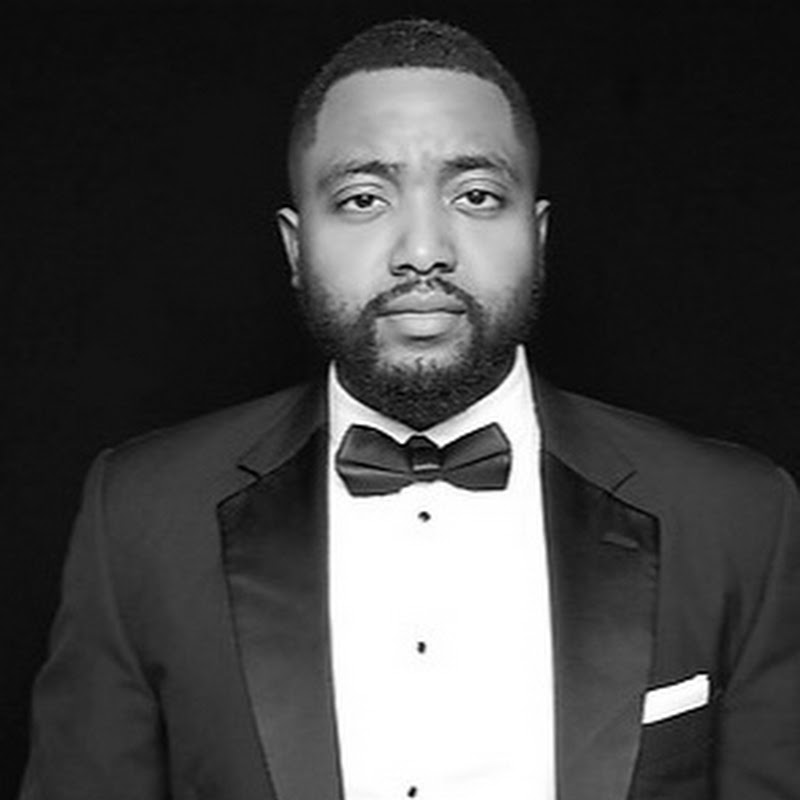
WOKE BLACK Sheriff DECLARES PUBLIC LYNCHING After Republican Humiliates Him With Simple Questions!
YouTube · gLqj0Cv1h7c
Quick Read
Summary
Takeaways
- ❖Mecklenburg County Sheriff Gary McFaten was unable to identify the three branches of government or which branch his office falls under during a House Oversight Committee hearing.
- ❖The Sheriff contradicted himself on enforcing state laws, particularly regarding ICE detainers, despite swearing an oath to follow the law.
- ❖GOP lawmakers described McFaten as 'combative and resistant,' while Democrats called the hearing 'political theater.'
- ❖Following his testimony, McFaten and his allies claimed the questioning was a 'public lynching,' a claim the host vehemently rejects.
- ❖The host praises the committee's questioning style for allowing the sheriff to speak, thereby exposing his lack of knowledge and inconsistencies.
Insights
1Sheriff McFaten's Lack of Basic Civics Knowledge
During an oversight committee hearing, Sheriff Gary McFaten of Mecklenburg County was unable to identify the three branches of government or correctly state that his office operates under the Executive branch. He also incorrectly identified his primary function as 'care and custody' rather than executing or enforcing the law.
The committee member explicitly asked, 'What branch of government do you operate under?' to which McFaten initially responded 'Mecklenburg County' and then 'Constitution of the United States,' before incorrectly stating 'Judicial' when prompted (-). He also defined his primary function as 'Care and custody of those in my custody' (-).
2Contradictory Stance on Law Enforcement and Immigration
Sheriff McFaten was confronted with a direct quote attributed to him: 'We do not have a role in enforcement whatsoever. We do not have to follow the rules and the laws that are governed by our lawmakers in Raleigh.' He claimed this was taken out of context regarding immigration law, but refused to elaborate on the context when given multiple opportunities, despite state law (House Bill 318 and previously House Bill 10) mandating compliance with ICE detainers.
A committee member read the direct quote (-) and asked McFaten to reconcile it with his oath. McFaten repeatedly stated it was 'out of context of an immigration law' (, , ) but declined to provide further explanation when offered (-, -). He also stated, 'I don't think that a detainer is state law,' despite being informed it is 'settled state law' (-).
3Host's Rejection of 'Public Lynching' Claim
Following the hearing, Sheriff McFaten and his supporters characterized the committee's questioning as a 'public lynching.' The host of the podcast vehemently rejects this claim, arguing that the sheriff's own inability to answer basic questions and his contradictory statements led to his embarrassment, not racial bias.
McFaten stated, 'It was the public lynching of a black sheriff' (-). The host countered, 'You lynched yourself with the way that you answer those questions' (-), and urged officials to 'stop crying racism' when embarrassed (-).
Lessons
- Public officials must possess a foundational understanding of government structure and their constitutional duties to effectively serve their constituents.
- Leaders in oversight roles should adopt questioning strategies that prioritize clarity and allow subjects to fully explain their positions, as this can be more revealing than confrontational tactics.
- When facing scrutiny, officials should take responsibility for their statements and actions, providing clear explanations rather than deflecting or claiming misrepresentation without offering context.
Notable Moments
The committee member's calm, persistent questioning style, which allowed Sheriff McFaten to speak freely, ultimately highlighting his inconsistencies and lack of knowledge.
This approach, praised by the host, demonstrated how effective oversight can be without resorting to combative or theatrical tactics, allowing the subject's own words to reveal their competence or lack thereof.
Sheriff McFaten's repeated refusal to provide context for his controversial statements about not enforcing certain laws, despite being given multiple opportunities.
This refusal suggested an inability or unwillingness to clarify his position, reinforcing the perception of evasiveness and potentially undermining his credibility as a law enforcement official.
Quotes
"We do not have a role in enforcement whatsoever. We do not have to follow the rules and the laws that are governed by our lawmakers in Raleigh."
"It was the public lynching of a black sheriff. I I hate to say that it was I had people call me to say it was a public lynching."
"You lynched yourself with the way that you answer those questions."
Q&A
Recent Questions
Related Episodes

Top U.S. & World Headlines — January 15, 2026
"This report details escalating global and domestic tensions, including US military withdrawals and threats against Iran, widespread ICE abuses across the US, and significant political and humanitarian crises in Gaza and Venezuela."

Mamdani CELEBRATES NYC Rent Freeze, This Will DESTROY The City | Timcast IRL
"New York City's rent freeze, celebrated by Mandami, is framed as a socialist 'land grab' that will devastate the city's housing market and economy, while a FIFA Pride Match in Seattle sparks outrage from conservative nations."

Trump Dirt REVEALED: Iran, Zohran, Pardons, Deportations
"Journalists Maggie Haberman and Jonathan Swan reveal how Donald Trump operates in his second term, detailing his inner circle, policy priorities, and the surprising checks on his executive power."

Casey Putsch Takes On Vivek Ramaswamy & ENTIRE GOP ESTABLISHMENT In OH Gov Race!
"Ohio gubernatorial candidate Casey Putsch fiercely challenges Vivek Ramaswamy and the GOP establishment, accusing them of being out of touch, beholden to corporate interests, and actively undermining the American dream through detrimental policies on education, housing, and immigration."