
Richard D. Wolff & Michael Hudson: What Is Occurring Is Really WORLD WAR III
YouTube · gPZebpXamVo
Quick Read
Summary
Takeaways
- ❖Richard Wolff argues the US attack on Iran is primarily political theater orchestrated by Donald Trump to divert attention from the Epstein scandal and a deteriorating domestic economy.
- ❖Michael Hudson asserts the war's core purpose is US control over Iran's oil, echoing the 1953 coup, and views it as the start of World War III.
- ❖Iran's stated long-term goal is to permanently remove the United States from the Middle East, including ending Israel's presence.
- ❖The US strategy, including regime change and partitioning Iran, has failed, as Iranian and Iraqi Kurds refused to attack Iran.
- ❖The conflict is forcing a global realignment, with European economies suffering from energy pressures and Asian allies like South Korea and Japan facing severe disruptions due to the Strait of Hormuz blockage.
- ❖Russia is pivoting its oil and gas supplies to BRICS nations, Africa, and South America, strengthening long-term relationships outside the Western sphere.
- ❖Iran aims to isolate OPEC from the US dollar, demanding Arab countries disinvest from US assets and remove US military bases.
- ❖The speakers predict the collapse of Arab monarchies, similar to post-World War I Europe, replaced by governments more sympathetic to Iran or focused on nationalization.
- ❖The United Nations is deemed ineffective, leading to a likely restructuring or creation of a new international organization without US veto power.
- ❖The host, Nema, believes Iran has the capacity and resolve to withstand the military assault and continue fighting until the US is driven out of the region, citing historical deception by the US and 46 years of sanctions.
Insights
1US War on Iran as Domestic Political Theater
Richard Wolff argues that the US decision to attack Iran lacks clear strategic objectives and is instead a piece of political theater. Its primary purpose is to distract the American public from pressing domestic issues, specifically the Epstein scandal and a worsening economic situation characterized by rising deficits, job losses, and inflation.
Wolff states, 'The two biggest problems Mr. Trump faced... were number one the endless scandal of Epstein and number two a bad economic situation getting worse.' He concludes, 'We're going to war because war pushes Epstein off of the headlines. It pushes the bad economy to the sideline.'
2The Iran Conflict as the Start of World War III for Oil Control
Michael Hudson contends that the war in Iran is not merely a regional conflict but the beginning of World War III, driven by the US's long-standing objective to control Iran's oil, similar to the 1953 overthrow of the Iranian regime. This control extends to dominating the entire global oil trade and isolating nations not aligned with US interests, such as Russia and Venezuela.
Hudson states, 'The purpose of the war is very clear. It's the same purpose that led the United States to overthrow the Iranian regime in 1953. It's all about oil.' He adds, 'This is really the start of World War III.'
3Iran's Strategy: Exhaustion and Expulsion of US from Middle East
Iran's declared strategy is a long-term war aimed at driving the United States permanently out of the Middle East, including ending Israel's presence. Iran has deliberately used older missiles and drones to deplete US and Israeli air defense systems, planning to deploy heavier weaponry once these defenses are exhausted. This strategy was demonstrated in previous conflicts.
Ayatollah Khamenei stated the goal includes 'ending Israel.' Iran has 'held back its big bombs because it's wanted the Israel and the American military bases and OPEC countries to expend all of their air defense systems... against the Iranian drone attacks.'
4Failure of US Regime Change and Partition Plans for Iran
The US strategy, based on assumptions of a short war, regime change, and the partitioning of Iran into ethnic units (e.g., backing the Kurds), has failed. Trump believed bombing the leadership would incite an Iranian uprising for a pro-US government, but this did not materialize. Iraqi and Iranian Kurds have explicitly refused to attack Iran, undermining the US's 'divide and conquer' approach.
Trump 'thought that that would be a Yelen-like figure who would let American companies come in and develop Iranian oil.' Also, 'in the last few days, you've had the Iraqi and the Iranian Kurds sent notes to the Nu Ayatollah. We are not going to attack Iran.'
5Global Economic Realignment and De-dollarization
The war is forcing a global economic restructuring. The blockage of the Strait of Hormuz is severely impacting oil and natural gas supplies, particularly for South Korea and Japan, threatening their industries and GDP. Europe is also experiencing energy pressures. Russia is redirecting its oil and gas exports to BRICS, African, and South American countries, strengthening new alliances. Iran's long-term aim is to isolate OPEC from the US and the dollar, compelling Arab countries to disinvest from US assets and remove US military bases.
Blocking the Strait of Hormuz 'causes not only a blockage of oil but a blockage of natural gas. And the main victims of all of this are South Korea and Japan.' Iran's aim is 'to isolate OPEC from the United States and from the dollar.'
6Decline of the American Empire and Emergence of a New World Order
Both speakers emphasize that the conflict visibly accelerates the decline of the American empire. The demand from Iran to remove the US from the Middle East, coupled with the inability of the UN to prevent the war, signals a shift towards a new international system. This new order will likely feature a restructured UN or a new organization without US veto power, new financial and trading systems, and new military alliances, leaving the US and the West increasingly isolated.
Wolff states, 'This war is a literal chapter in the decline of the empire.' Hudson adds, 'The US is the great creator of chaos, the US is the great threat to the world.'
Bottom Line
The current crisis, coupled with the perceived obsolescence and corruption of Gulf monarchies, creates fertile ground for new political movements advocating nationalization of resources, diversified economies, civil liberties, and a re-aligned foreign policy away from US dependence.
This suggests a potential for significant internal political upheaval in the Gulf states, driven by popular discontent and the strategic vulnerabilities exposed by the war.
For regional powers like Iran, Russia, and China, this presents an opportunity to foster relationships with emerging, more independent governments in the Gulf, further eroding US influence.
The US's weaponization of the dollar and financial system through sanctions, intended to enforce its global dominance, is paradoxically accelerating the global move away from the dollar and US financial systems.
This self-inflicted wound undermines the very economic pillars of the American empire, as countries seek alternative currencies and financial mechanisms to avoid vulnerability to US sanctions.
Nations like Russia, China, and the BRICS bloc can capitalize on this by developing and promoting alternative financial infrastructure and trade mechanisms that bypass the dollar, thereby strengthening their own economic spheres.
Key Concepts
Decline of Empire
The systemic erosion of a dominant global power's influence, military reach, and economic leverage, leading to challenges from rising powers and internal instability. The US-Iran conflict is presented as a 'literal chapter' in the American empire's decline, making its visibility more dramatic.
Scorched Earth Policy (Imperial Retreat)
A strategy employed by a retreating imperial power to divide and destabilize territories it is forced to leave, creating fragmented states and exacerbating internal conflicts to prevent unified opposition or the rise of a new dominant power. This is exemplified by the British creation of small, easily manipulated Gulf states instead of a unified Arab entity.
Lessons
- Recognize that major geopolitical conflicts, like the US-Iran war, can be driven by domestic political considerations as much as, or more than, stated foreign policy objectives.
- Understand that the weaponization of economic tools, such as sanctions and control over global financial systems, can backfire, accelerating the decline of a dominant power's influence.
- Anticipate significant global economic and political realignments, including shifts in energy trade, the rise of new international alliances, and the potential for de-dollarization, requiring a re-evaluation of long-term investment and strategic planning.
Quotes
"We're going to war because war pushes Epstein off of the headlines. It pushes the bad economy to the sideline or off the headline. And instead it focuses all the attention on the commander-in-chief as he discusses the flames and the bombs and the the whole theatric of a war."
"I think that the purpose of the war is very clear. It's the same purpose that led the United States to overthrow the Iranian regime in 1953. It's all about oil."
"We are living through the decline of the American empire... This war is a literal chapter in the decline of the empire."
"The US is the great creator of chaos, the US is the great threat to the world."
"A leader of Iran is in the position to say America out and it is serious and the United States sooner or later is going to have to deal with that demand because they've started a war that at this point looks like it will not end until that demand is met."
Q&A
Recent Questions
Related Episodes
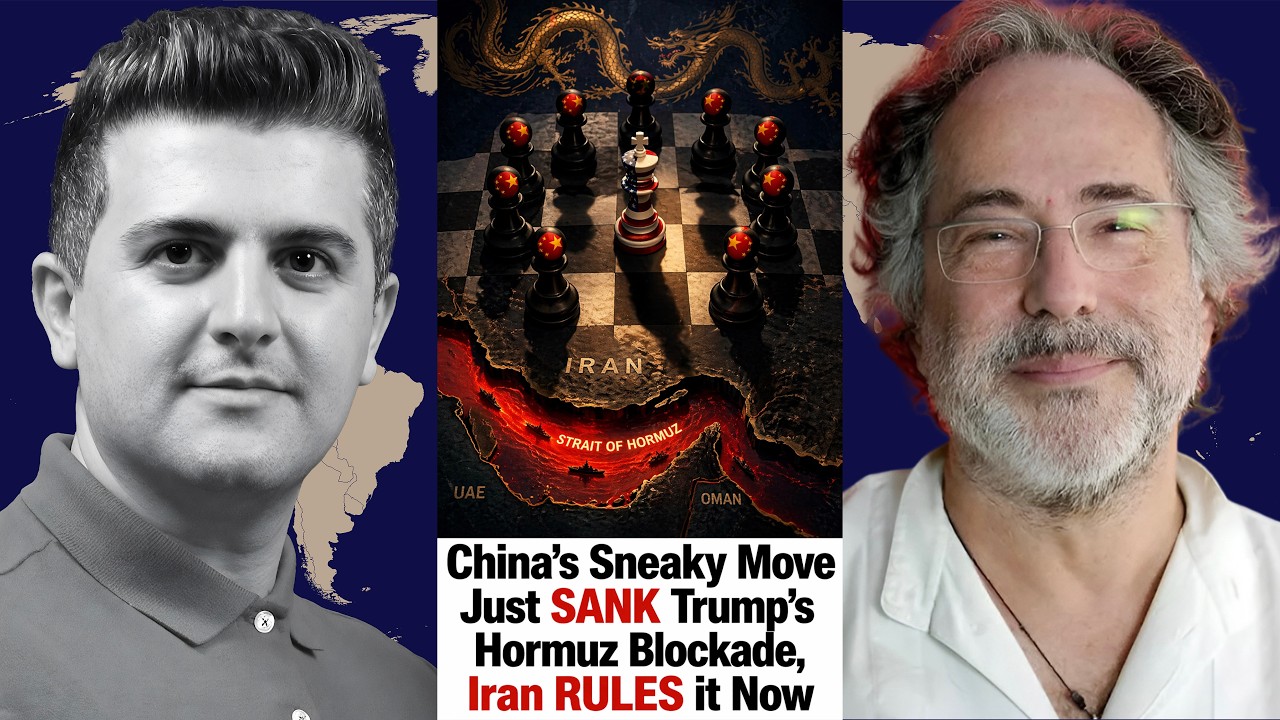
Pepe Escobar: “Total Failure”: Trump’s Blockade Just Backfired Disastrously
"Pepe Escobar argues that the US blockade against Iran, spearheaded by Donald Trump, has utterly failed and backfired, accelerating global economic chaos and challenging US geopolitical dominance."

Alex Krainer: US STRIKES Iran – Iran RETALIATES Against Kuwait, Bahrain & Jordan!
"Amidst escalating US-Iran conflict and Iranian retaliation against regional US allies, this episode argues that US foreign policy is deeply controlled by an 'Anglo-Zionist conspiracy' led by the Rothschild banking dynasty, prioritizing Israeli interests over American ones."

LIVE: Trump HIDES FROM PUBLIC as US SOLDIER KILLED!!! 6/2/2026
"The host exposes alleged government cover-ups regarding military casualties, Trump's unexplained public absence, and questionable political appointments, arguing these reflect a 'regime of loser babies' and a failing foreign policy."

Patrick Henningsen: Hezbollah JUST Fired Back at Israel - Iran Vows to “Crush” All Attacks
"Patrick Henningsen argues that the US and Israel initiated an illegal war against Iran, driven by Trump's incompetence and Israeli influence, leading to an inevitable escalation with severe global economic repercussions."