Lemon LIVE at 5 | Donald Trump: Racist In Chief
YouTube · gnmLWJUL2jc
Quick Read
Summary
Takeaways
- ❖Donald Trump posted an AI video depicting the Obamas as monkeys, which Don Lemon and his panel immediately labeled as unequivocally racist.
- ❖The Trump campaign's excuses, such as it being a 'joke from The Lion King' or a low-level staffer's mistake, were dismissed as 'lazy' and 'incompetent' lies.
- ❖Hassan Piker introduced the concept of 'permissible racism,' suggesting this incident crossed a line even for some Republicans, potentially serving as a 'wakeup call' for some voters.
- ❖The panel criticized the normalization of such behavior, arguing it allows for the spread of other political lies and undermines democratic institutions.
- ❖There was a strong call for Democratic leaders like Hakeem Jeffries to move beyond verbal condemnation to more aggressive, actionable opposition against Trump's 'fascist tyranny.'
- ❖The discussion emphasized the importance of community organizing and translating individual apologies or discontent into collective action to protect vulnerable groups and advance progressive policies.
- ❖Some panelists expressed skepticism about the sincerity of apologies from former Trump voters, stressing that true change requires active participation and not just regret.
Insights
1Trump's AI Video: 'Flat-Out Racist' and Undefendable
Don Lemon and the panel assert that Donald Trump's AI-generated video depicting the Obamas as monkeys is unequivocally racist, with 'no other way to put it.' They dismiss the White House press secretary Caroline Leavitt's defense of it as a 'joke from The Lion King' or an erroneous post by a 'low-level staffer' as 'vile' and 'incompetent,' especially given Trump's previous statements about controlling his social media.
Don Lemon: 'Donald Trump posted an AI video depicting the Obamas as monkeys... That is just plain old racism.' () Akilah Hughes: 'This is explicit racism... the oldest American racism is comparing black people to apes and monkeys.' () Katie Fang: 'Caroline Levit can give this like half-ass explanation... and then are we just supposed to move on in the news cycle when they blame some unidentified staffer.' ()
2The 'Permissible Racism' Threshold and Political Strategy
Hassan Piker suggests a 'permissible racism' theory, where some anti-black actions are so extreme that even other racists find them unacceptable. He argues that this incident, unlike Trump's past actions, might serve as a 'wakeup call' for some Americans who previously overlooked his racism. Katie Fang adds that this type of 'economy of racism' allows Trump to 'throw red meat to his base' while simultaneously distracting from other political lies, like claims of a stolen election.
Hassan Piker: 'I have this theory of, uh, of permissible racism... when you do it, even other racist white people will go, 'Oo, that's a little bit too much for me.'' () Katie Fang: 'This frames the way that everything is rolling out in this country these days... racism is a part of everything.' () 'It forces a lot of people will go and watch that video. They'll see the [__] and lies in the conspiracy about a stolen election and about machines that have been hijacked.' ()
3Call for Aggressive Action and Community Organizing
Panelists express deep frustration with the lack of decisive action from Democratic leadership and the public's desensitization. Charles Coleman emphasizes that the deletion of the video means nothing without an apology and that the public's 'unrelenting response' is paramount. Hassan Piker and Akilah Hughes call for Democrats to 'fight back in more aggressive ways' and for individuals to translate apologies into 'action' and 'organizing' at the community level, focusing on universal issues like healthcare and living wages rather than conceding on 'culture war narratives.'
Charles Coleman: 'The one thing that did not occur from this administration... was never an apology.' () 'Our response in this moment is the most is of paramount importance and it must be unrelenting.' () Hassan Piker: 'I want Hakeem Jeff to to fight back against Donald Trump.' () 'If this is his turning point... and he takes this energy uh from apologies to action, then that's great.' () 'Offer them uh something to vote for for the first time ever, instead of taking a defensive position.' ()
Bottom Line
Donald Trump's base of support for 'unvarnished vulgar white supremacist sentiment' is diminishing to around 20% of 'diehard ultra MAGA loyalists,' who engage in 'vice signaling' because they have 'nothing else to look forward to.'
This suggests that while a core group remains committed to extreme rhetoric, the broader electorate may be more susceptible to persuasion if presented with a strong, material-focused alternative.
Democrats should focus on organizing around the 80% of the country by addressing 'material realities' and universal issues rather than trying to appease the shrinking, reactionary base, thereby launching a stronger opposition.
The 'economy of racism' allows political figures to use racist acts as a 'smart delivery vehicle' to simultaneously 'throw red meat' to their base and propagate other political lies, such as claims of a stolen election, by driving viewership to the content.
This highlights a strategic, rather than merely emotional, dimension to racist political messaging, where outrage itself becomes a tool for broader disinformation campaigns.
Counter-strategies must address not only the racist content but also the underlying disinformation narratives it carries, preventing the 'news cycle' from moving on without fully debunking all aspects of the message.
The Democratic Party's 'disapproval rating is also incredibly high' due to perceived 'inability to address the things that Donald Trump is saying and doing and mount a serious defense.'
This indicates that simply being 'not Trump' is insufficient; voters are frustrated with a lack of proactive, aggressive political engagement and a failure to deliver on core issues.
Democrats need to adopt a more 'hardball' approach, actively challenging Trump's agenda, and championing progressive policies like Medicare for All or a living wage, which appeal to a broad base, including those who might otherwise be swayed by divisive rhetoric.
Lessons
- Demand accountability from political leaders: Push elected officials to move beyond verbal condemnation of racist acts and implement concrete actions or policies.
- Translate outrage into action: For those expressing regret or anger over political events, actively participate in community organizing, advocacy, or support for progressive causes.
- Support universal policies: Advocate for policies like universal healthcare and a living wage, which address the 'material realities' of all Americans, potentially uniting diverse groups against divisive rhetoric.
Quotes
"What happened here is just it's just flatout racist. No other way to put it."
"This is explicit racism. I don't think that it's even a new form of racism. It's actually kind of the oldest American racism is comparing black people to apes and monkeys."
"This is exactly the America that we have been telling people exist and has existed since 1776."
"That guy's apology is great. It makes us feel like we were we had the right mindset all along, right? But in my opinion, those apologies are hollow if he's not actually standing out on the streets alongside his the rest of his community."
"Stop waiting for other people. Because if at this point they have not come and they have not shown up, they're not coming."
Q&A
Recent Questions
Related Episodes

🚨 LEFTISTS ARE F*CKING SEETHING 😂😂😂
"The host aggressively celebrates perceived 'wins' for the right-wing, from global conflicts and domestic politics to cultural shifts, framing them as a 'humiliation' for the 'leftist world order' and a testament to Donald Trump's influence."
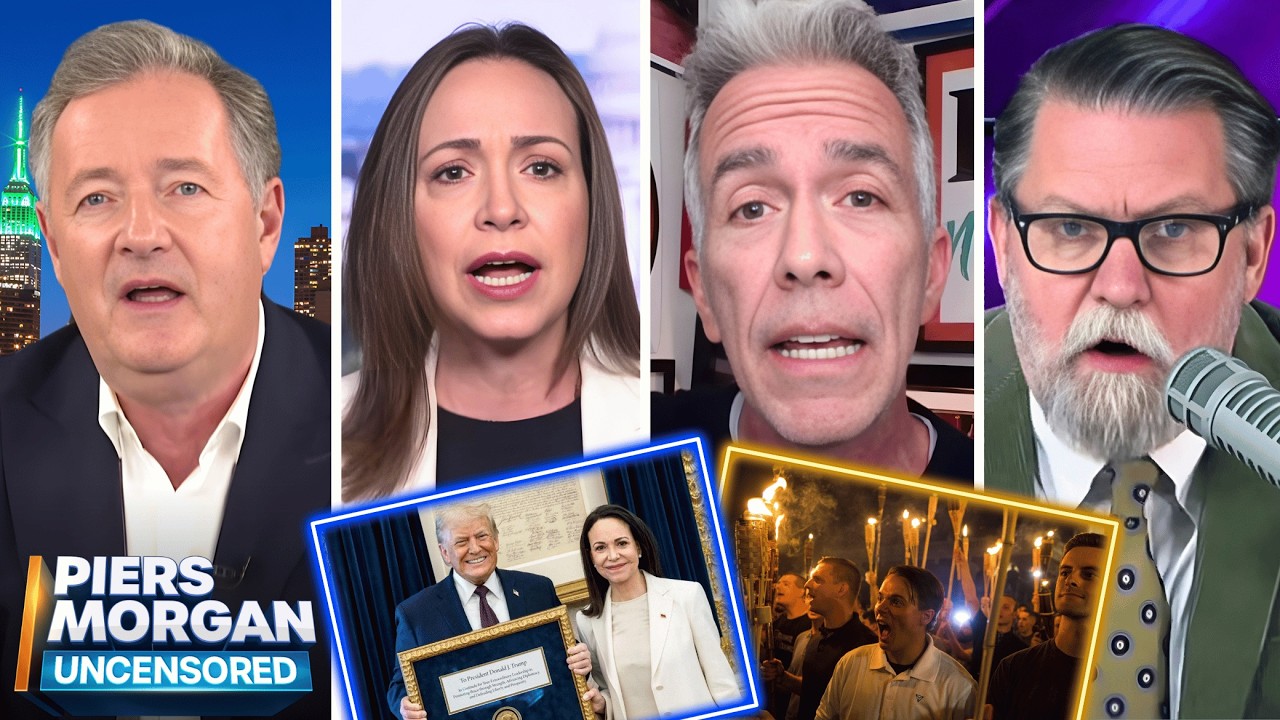
"Fighting Solves EVERYTHING!" Who's To Blame For Political Violence? + Maria Machado On Trump
"This episode dissects the escalating political violence in the US, with panelists fiercely debating the role of partisan rhetoric and media in radicalization, alongside an interview with Venezuelan opposition leader Maria Machado on US intervention and her country's future."

IHIP News: Stephen Miller CRACKING Under Pressure As His EVIL Plan BLOWS UP In His FACE!
"Paula Ramos, an Emmy-winning journalist, dissects the complex political landscape of Latino voters, revealing how right-wing tactics exploit cultural conservatism and the psychological impact of anti-immigrant rhetoric, even on those who support Trump."

HOT TOPICS | Is Donald Trump Destroying MAGA?!
"Don Lemon declares the MAGA movement is collapsing, citing Donald Trump's escalating political missteps, economic failures, and alienation of his core base and former allies."