Trump SPUTTERS NONSENSE At Iran Amid WAR SPIRAL
YouTube · gr27GCD5W0c
Quick Read
Summary
Takeaways
- ❖Iran and the US agreed on 'guiding principles' for a nuclear deal, but explicit 'red lines' complicate progress.
- ❖The hosts suggest Netanyahu's true aim is to 'smash Iran' into smaller, failing states, not just prevent nuclear weapons.
- ❖Trump's public negotiation rhetoric is seen as unserious, focusing on 'all the different things that you want' without specific detail.
- ❖A significant US military buildup near Iran is noted, making previous deployments seem minor.
- ❖The hosts speculate Trump might end a potential Iran war by declaring a swift, decisive victory, similar to past conflicts, regardless of actual outcomes.
- ❖Hamas explicitly did not agree to unilateral disarmament as part of the Gaza ceasefire, only to a cessation of hostilities.
- ❖Hamas is open to disarmament only within the context of a national Palestinian self-determination process and a Palestinian-led police force.
- ❖Israel demands Hamas disarm 60,000 AK-47s in unoccupied Gaza before reconstruction, a demand framed as disproportionate by the hosts.
- ❖Trump's foreign policy approach is characterized by inconsistent moments of clarity mixed with deference to figures like Netanyahu.
Bottom Line
In the event of a US-Iran conflict, Iran has threatened to strike American bases, aiming to kill hundreds of US troops as a deterrent. This scenario places hundreds of Afghan refugees, currently stuck in diplomatic limbo at a US base in Qatar, at extreme risk as 'sitting ducks.'
This highlights a critical, overlooked humanitarian vulnerability in US military deployments and foreign policy decisions. The lives of non-combatants, particularly those displaced by previous conflicts, are directly imperiled by escalating tensions and military posturing.
Policymakers and humanitarian organizations should prioritize the relocation and secure housing of vulnerable populations in conflict zones or near military installations to prevent them from becoming unintended casualties in geopolitical conflicts.
Trump's foreign policy is marked by extreme inconsistency, oscillating between 'moments of clarity' where he understands complex security needs (e.g., the need for a Palestinian police force) and moments where he completely defers to allies like Netanyahu, stating 'do whatever you want.'
This unpredictable leadership style makes international diplomacy and conflict resolution exceptionally difficult, as partners and adversaries cannot rely on a consistent US stance. It empowers hardline allies to pursue maximalist agendas, knowing US support might be unconditional.
Analysts and foreign governments must develop strategies to navigate a US foreign policy that lacks a consistent ideological or strategic framework, potentially requiring more robust multilateral alliances and independent diplomatic initiatives to mitigate instability.
Lessons
- Scrutinize official statements on international negotiations for explicit 'red lines' and underlying motivations, as these often reveal the true obstacles to peace.
- Recognize that 'peace deals' can be marketed as wins even if they lack substance or rely on unrealistic conditions, particularly when political figures prioritize public image over genuine resolution.
- Understand that demands for disarmament in conflict zones are often complex and conditional, frequently tied to broader political aspirations like self-determination and security guarantees, rather than simple capitulation.
Notable Moments
Discussion of Netanyahu's alleged long-term goal of 'smashing Iran' and breaking it into smaller, failing states to control resources and weaken regional influence.
This reframes the entire Iran nuclear deal debate, suggesting that for some actors, the nuclear program is a pretext for a much larger geopolitical objective, making genuine disarmament negotiations almost impossible.
The hosts highlight Trump's 'flippant' and vague statements regarding Iran negotiations, such as 'No nuclear weapons, no missiles, no this, no that, all the different things that you want.'
This demonstrates a lack of serious engagement with the complexities of international diplomacy, suggesting that for Trump, negotiations are more about projecting strength and achieving perceived 'wins' than detailed policy outcomes.
The revelation that Hamas never agreed to unilateral disarmament as part of the Gaza ceasefire, only to a cessation of hostilities, and demands a Palestinian-led police force as a prerequisite for disarming.
This clarifies a critical misunderstanding or misrepresentation of the ceasefire terms, indicating that Israel's demands for disarmament are not aligned with Hamas's agreed-upon conditions, thus hindering reconstruction and prolonging conflict.
Quotes
"What he cares about is smashing Iran. Like he wants it as weak as possible and preferably if he can broken up into little like failing stateless Allah like Libya or or Syria."
"It's got to be a good deal. No nuclear weapons, no missiles, no this, no that, all the different things that you want."
"Hamas very explicitly never agreed to disarm as part of the ceasefire. They agreed to cease fire. That was it."
"Unless you're like completely blinkered by propaganda, how how is that remotely an objectionable position? Like you you like unless you're an abolish the police type."
"He'll have moments of clarity and then moments where he's like, 'Yeah, whatever, Netanyahu, do whatever you want.'"
Q&A
Recent Questions
Related Episodes

🚨 THEY F*CKED AROUND FOR THE LAST TIME 😭😭😭
"This episode unleashes a torrent of highly opinionated commentary on the US-Iran deal, Israel's role, and a scathing critique of 'leftist' policies and immigration, particularly highlighting the UK grooming gang report as evidence of Western societal decay."
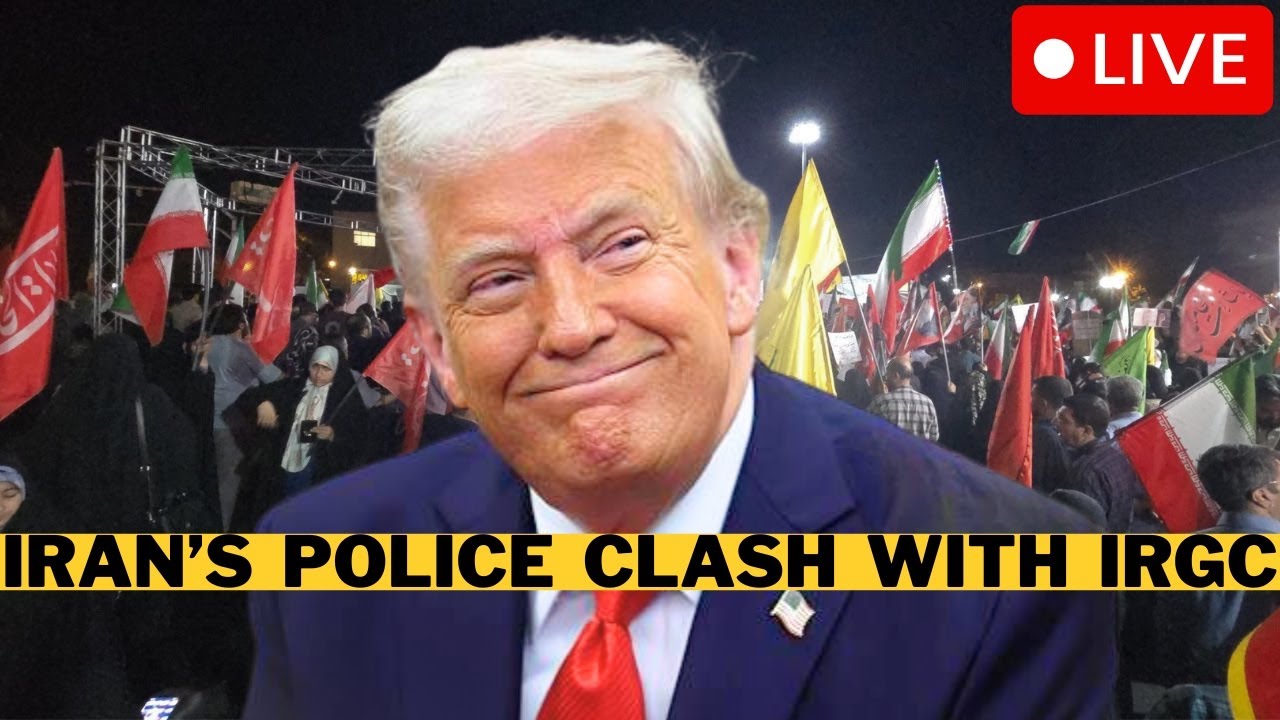
BREAKING: Protests ERUPT In Iran Over IRGC Surrendering To Trump - Infighting Clashes In Tehran
"Iran is experiencing severe internal infighting and protests as hardline IRGC elements clash with government figures over a perceived 'surrender' to the US, while mainstream Western media misrepresents the situation."
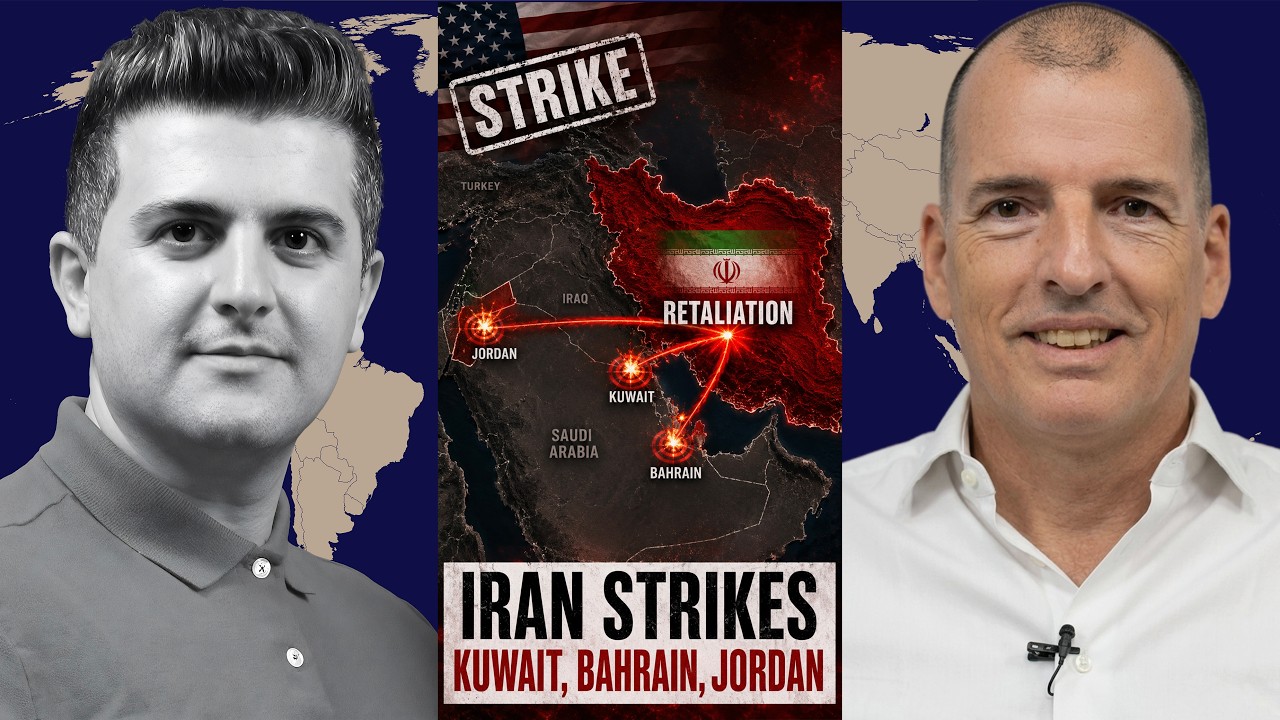
Alex Krainer: US STRIKES Iran – Iran RETALIATES Against Kuwait, Bahrain & Jordan!
"Amidst escalating US-Iran conflict and Iranian retaliation against regional US allies, this episode argues that US foreign policy is deeply controlled by an 'Anglo-Zionist conspiracy' led by the Rothschild banking dynasty, prioritizing Israeli interests over American ones."

Trump's HEATED Call + AOC's Data Center Deep Dive | PBD #804
"This episode dissects the week's most impactful events, from Trump's contentious call with Netanyahu and Elon Musk's path to trillionaire status, to the societal implications of AI-driven job displacement and AOC's unexpected political alignment on data center concerns."