BREAKING: Trump RAGE QUITS Presser, ENDS IT for INSANE Reason!
YouTube · hJ2w9Win-uA
Quick Read
Summary
Takeaways
- ❖Donald Trump cancelled a bipartisan housing bill signing to pressure Congress into passing his 'Save America Act,' leaving Republicans discombobulated.
- ❖JD Vance is portrayed as an inauthentic, 'lab-made politician' whose lack of genuine human mannerisms and shifting views make him unsuitable for a presidential run.
- ❖Mike Johnson's 'communist takeover' warning rings hollow while Republicans control all branches of government and face public dissatisfaction.
- ❖Hunter Biden's analysis of recent New York primary wins for progressive candidates highlights voter demand for authenticity and conviction over triangulating establishment figures.
- ❖Tucker Carlson's ideology is critiqued for its squishiness and dangerous undertones, including a preference for feudalism over democratic systems.
- ❖White nationalist Nick Fuentes expresses a preference for living in diverse, liberal cities over deep red areas, exposing hypocrisy among right-wing figures.
- ❖The declining popularity of the baby name 'Donald' suggests a growing historical aversion, akin to 'Adolf,' despite the differing scales of atrocities.
Insights
1Trump's Legislative Hostage-Taking and GOP Disarray
Donald Trump abruptly cancelled a bipartisan housing bill signing, a rare instance of cross-party cooperation, to demand the passage of his 'Save America Act.' This move left Republicans, including those actively touting the housing bill, completely unaware and discombobulated, hindering their ability to claim legislative achievements before the midterms.
Trump's statement: 'Today's housing news conference and signing is here hereby cancelled until such time as we pass the desperate needed save America act.' (). Republican Representative French Hill was unaware of the cancellation while touting the bill ().
2JD Vance: The 'Lab-Made Politician' Lacking Authenticity
The host argues that JD Vance is a manufactured politician, lacking genuine charisma and normal human mannerisms. His political career, heavily influenced and funded by Peter Thiel, is seen as a calculated ascent rather than an authentic expression of belief, evidenced by his shifting views and awkward public interactions, which could undermine his 2028 presidential aspirations.
Host's description: 'This is a labmade politician.' (). 'He's shifted his views all over the place. He used to think Trump might be America's Hitler.' (). Clip of awkward interaction with wife Usha () and 'donut shop' clip ().
3Trump's Dictatorial Self-Perception Drove the Iran War
According to the book 'Regime Change,' Trump views himself as the most powerful leader in history, comparing himself to dictators like Alexander the Great, Genghis Khan, Hitler, Mao, and Stalin. His obsession with 'actual usage' of power, rather than just theoretical might, led him to initiate the Iran war, believing it would solidify his image as a strongman, despite running against foreign interventions.
Trump's list of historical figures () and the book's authors stating, 'The only point was power and and the point was he has power. But it was something he wanted us to understand a slightly more subtle point which was in the in the document which was it's not just that I control the US military... It's that I'm willing to use the power.' ().
4Voter Demand for Conviction Over Caution in Democratic Primaries
Recent New York congressional primaries, where progressive candidates backed by 'Mumani' defeated incumbents, demonstrate a strong voter preference for candidates with clear convictions and 'energetic visions' for change. This indicates a rejection of the Democratic establishment's 'status quo mumbo jumbo' and 'triangulators' who avoid taking hard stances on issues like rent, healthcare, and Gaza.
Hunter Biden's analysis: 'Conviction beats caution. The candidates who said hard things about rent, about who pays for what, about Gaza, they won. The triangulators lost.' (). Candidate Lander: 'New Yorkers are fed up with a status quo that's not working for them.' ().
5Tucker Carlson's Feudalism Endorsement Reveals Problematic Ideology
Despite occasionally criticizing Trump, Tucker Carlson's underlying ideology is revealed as deeply problematic, exemplified by his assertion that 'feudalism worked and our current system doesn't.' This statement, made during a discussion about powerful people acknowledging responsibility, suggests a longing for a hierarchical system with legally binding social classes, contradicting democratic principles.
Tucker Carlson: 'That's why feudalism worked and our current system doesn't.' (). The host's interpretation: 'Meaning long ago, you had kings, lords, and peasants, and that was the structure... and he goes that's why that worked in our current system of equal rights democratic say doesn't work.' ().
Bottom Line
Right-wing media figures and politicians often choose to live in diverse, liberal urban centers (e.g., Austin, Miami, Chicago) despite publicly railing against 'blue states' and 'liberal governance.'
This reveals a significant hypocrisy, suggesting that even those who advocate for conservative or white nationalist ideologies prefer the cultural, economic, and social amenities found in liberal-governed areas, undermining their own political rhetoric.
Progressive movements can highlight this discrepancy to expose the performative nature of some right-wing criticism and challenge narratives that demonize liberal urban environments, potentially swaying voters who value quality of life and diverse communities.
The declining popularity of the baby name 'Donald' to its lowest point in American history, mirroring the fate of 'Adolf,' indicates a significant cultural and historical rejection of the name's association with Donald Trump.
This suggests a long-term cultural impact of Trump's presidency, where his actions and persona have rendered his first name undesirable for new generations, signifying a broader societal judgment that transcends political affiliation.
This trend can serve as a subtle, yet powerful, indicator of public sentiment and historical perception, offering a unique data point for cultural analysts and political strategists to understand the lasting legacy of a controversial figure.
Lessons
- Critically evaluate political messaging for authenticity and consistency, especially when politicians shift stances or promote seemingly contradictory ideologies.
- Recognize that legislative actions (or inactions) can be driven by personal political ambition rather than public good, as seen with Trump's housing bill cancellation.
- Support candidates who articulate clear policy proposals and demonstrate conviction, rather than those who 'triangulate' or offer vague promises, aligning with observed voter preferences in recent primaries.
Notable Moments
JD Vance's awkward public interactions, including a robotic knee tap to his wife and a repetitive 'how long have you been here?' question at a donut shop, are highlighted as evidence of his lack of authenticity.
These moments are used to illustrate the host's argument that Vance is a 'lab-made politician' whose calculated persona lacks the genuine human connection voters increasingly crave, potentially limiting his political future.
Mike Johnson delivers a 'trembling with rage' warning about a 'communist takeover' of the republic, in response to progressive primary wins in New York.
This moment is framed as hypocritical and ineffective fear-mongering, given that Republicans currently control all branches of the federal government and are struggling to deliver popular legislative achievements, making their 'against' message less potent.
Nick Fuentes, a white nationalist, is shown expressing a preference for living in Chicago, a diverse, liberal city, over deep red, conservative areas like Oklahoma City.
This exposes a significant hypocrisy among some right-wing figures who publicly condemn liberal environments but privately prefer their amenities and cultural diversity, suggesting their ideological positions may not align with their personal living choices.
Trump makes bizarre comments at a rally, including fantasizing about a 'cute' young man 'getting pounded' and making up financial statistics like '44% growth in 13 months' for 401ks.
These moments are presented as further evidence of Trump's erratic behavior and potential cognitive decline, contributing to a perception of instability and dishonesty that could impact public trust and his political viability.
Quotes
"Today's housing news conference and signing is here hereby cancelled until such time as we pass the desperate needed save America act, which I consider to be a national emergency. Thank you for this matter, President DJT."
"Donald Trump is the most powerful man who's ever existed on the planet... it goes on to compare him to all those people you named, some of the great monsters of history, you know, the most ruthless dictators and conquerors of history. And there was no moral dimension to it. The only point was power and and the point was he has power. But it was something he wanted us to understand a slightly more subtle point which was in the in the document which was it's not just that I control the US military... It's that I'm willing to use the power."
"Authenticity is measurable. Voters can smell a focus group from a mile away. Endorsements from the current Democrat Democratic leadership now read like warnings... Conviction beats caution. The candidates who said hard things about rent, about who pays for what, about Gaza, they won. The triangulators lost."
"I actually like liberals. I actually I actually like living near and around liberals. I I like living around them. They're cultured, you know. I don't want to eat barbecue all the time."
Q&A
Recent Questions
Related Episodes
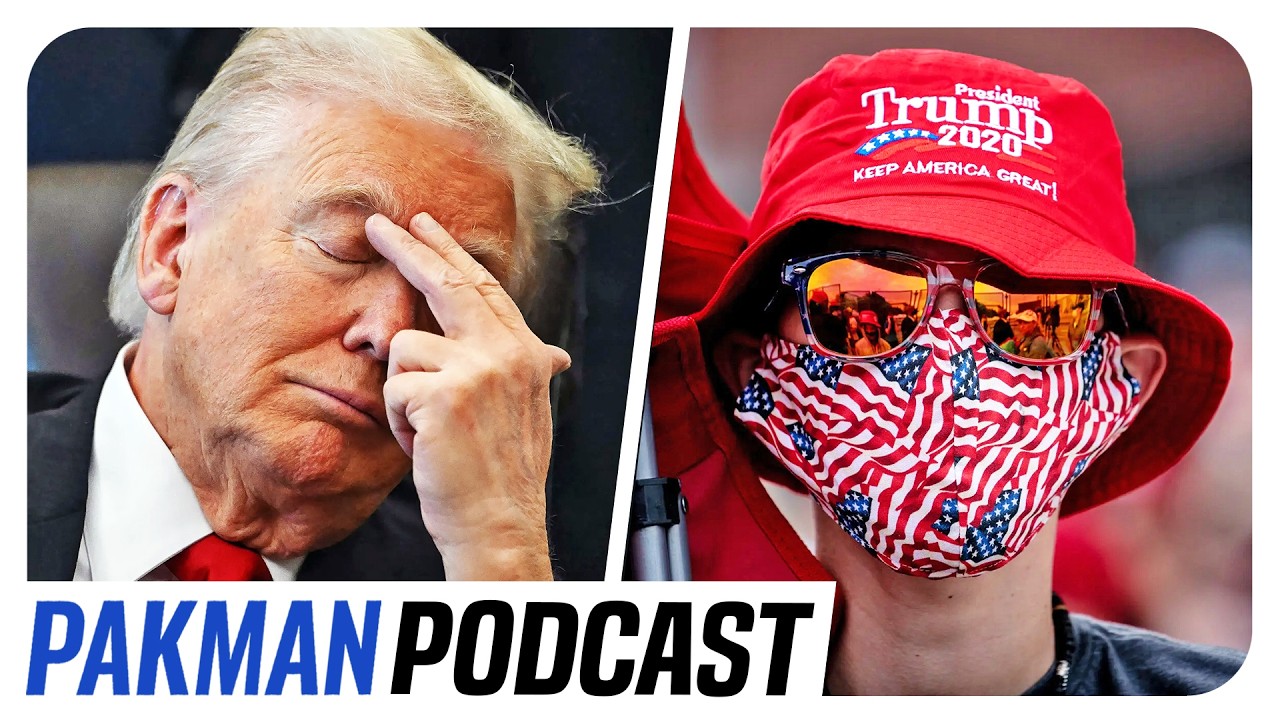
What happens to Trump voters when Trump is gone?
"The David Pakman Show explores the contentious path forward for Trump voters after his political era, exposing alleged corruption, economic misrepresentation, and the necessity of media literacy."

🚨 LEFTISTS ARE F*CKING SEETHING 😂😂😂
"The host aggressively celebrates perceived 'wins' for the right-wing, from global conflicts and domestic politics to cultural shifts, framing them as a 'humiliation' for the 'leftist world order' and a testament to Donald Trump's influence."

🚨 TOTAL F*CKING CHECKMATE 😂😂😂
"The host argues that Trump's 'ceasefire' with Iran was a calculated '5D chess' move to orchestrate a global energy market reshuffle, while simultaneously lambasting 'woke' domestic policies and the 'freefall' of anti-Trump conservative figures."
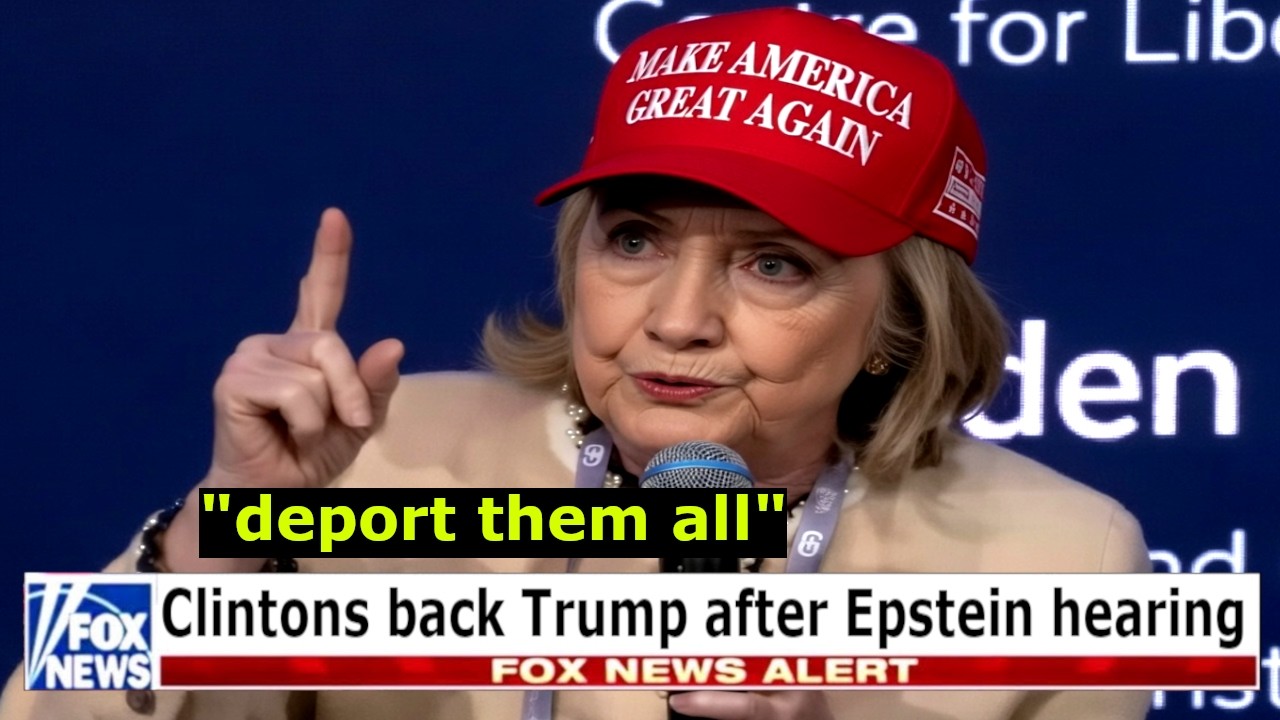
🚨 WTF!! NO ONE F*CKING SAW THIS COMING.. 😂😂😂
"The host reacts with shock and strong opinions to Hillary Clinton's unexpected stance on deportation, AOC's perceived incompetence, and Marco Rubio's 'diabolical' speech advocating for national sovereignty and Western civilization."