
Larry Johnson: The Fight Israel & EU Can't Win: Total Humiliation Ahead
YouTube · hnJ6FxMCMI4
Quick Read
Summary
Takeaways
- ❖Claims of an imminent US ground invasion of Iran are unfounded; military planning indicators show de-escalation, not preparation for war.
- ❖US amphibious assault ships and Marine Expeditionary Units in the CENTCOM area are part of existing deployments, not new build-ups for Iran.
- ❖The US military's crisis action teams (CATs) for the region have stood down from 24/7 operations to normal business hours, indicating no invasion is planned.
- ❖Logistically, a ground invasion of Iran is impractical and would require millions of soldiers and massive, vulnerable staging areas that do not exist.
- ❖US forces, including the 75th Ranger Battalion and 82nd Airborne, are actively withdrawing from the region.
- ❖A recent Memorandum of Understanding (MOU) formally recognizes Iran's control over the Strait of Hormuz, granting it authority to ensure safe passage and impose tolls after 60 days.
- ❖Washington has no military option to resolve issues in the Strait of Hormuz; its only option is diplomatic, which has already been settled by the MOU.
- ❖Israel's aggressive stance and expansionist goals are increasingly driven by religious zealots, who now constitute the dominant political force.
- ❖RFK Jr.'s claims about a 'genocide against Jews and Christians' in the Middle East are disputed, with examples of Jewish communities thriving in Iran and Christian communities under attack by Zionists in the West Bank.
- ❖The phrase 'Death to America' in Persian is often a political objection to US government policies, not a literal call for the death of American people.
- ❖A pan-Islamic military force, including countries like Egypt, Turkey, Iran, and Pakistan, could create a formidable deterrent against Israeli aggression.
- ❖European countries like France, attempting to assert colonial-era influence in the Strait of Hormuz, are operating under outdated assumptions of power.
Insights
1No US Ground Invasion of Iran Imminent
Larry Johnson refutes claims of an impending US ground invasion of Iran, citing concrete military indicators. He notes that US military crisis action teams (CATs), which operate 24/7 during invasion preparations, have stood down to normal business hours. Furthermore, US forces, including the 75th Ranger Battalion and 82nd Airborne, are actively withdrawing from the region, not building up. Logistically, a ground invasion would require millions of troops and massive, vulnerable staging areas, none of which are present.
Deactivation of military crisis action teams (CATs) from 24/7 to 8-5, Monday-Friday operations; withdrawal of 75th Ranger Battalion and 82nd Airborne; absence of large-scale troop assembly points.
2Iran's Formal Control Over Strait of Hormuz
A recent Memorandum of Understanding (MOU) has formally acknowledged Iran's authority over the Strait of Hormuz. According to the MOU, Iran is responsible for ensuring the safe passage of commercial vessels and will charge a toll after a 60-day grace period. This effectively eliminates any military option for Washington regarding the Strait, leaving only diplomatic channels, which have already resulted in Iran's recognized control.
Paragraph five of the MOU identifies Iran as the sole country responsible for assuring safe travel through the Strait of Hormuz; Oman's notification to Europeans about upcoming tolls.
3Religious Zealotry Driving Israeli Policy
Johnson argues that Israel's current policies are increasingly motivated by religious zealotry rather than secular Zionism. He claims that the non-Ashkenazi, more religious factions have become the dominant political force, promoting a 'Torah-based vision' that seeks to 'exterminate anyone who's not Jewish from the region.' This shift explains the perceived intransigence and aggressive actions.
The 'Ashkenazi influence' in Israel, which was more secular, has been reduced to a minority view, replaced by 'religious zealots' promoting a 'Torah-based vision.'
4Critique of RFK Jr.'s 'Genocide' Claims
Johnson directly challenges RFK Jr.'s assertion of an 'ongoing genocide against Jews and Christians' in the Middle East outside of Israel. He points to the presence of Jewish communities in Tehran and Christian communities in the West Bank that are under attack by Zionist settlers, not Islamic teachings. He frames RFK Jr.'s narrative as 'nonsensical propaganda' designed to justify Israel's genocidal policies.
Existence of Jews in Tehran and a subway station dedicated to Virgin Mary in Tehran; Christian population in the West Bank under attack by Zionist settlers.
Bottom Line
The US's historical pattern of intervention and regime change, often disguised as promoting democracy, is primarily driven by a desire for economic access and control over resources, rather than genuine welfare for local populations.
This perspective suggests that US foreign policy is inherently self-serving and exploitative, leading to instability and resentment rather than lasting peace. Understanding this motivation is crucial for predicting future US actions and for regional actors to formulate effective counter-strategies.
Nations seeking true sovereignty and stability should prioritize internal development and regional alliances that can resist external economic and political pressures, rather than relying on or accommodating US 'assistance.'
The 'Death to America' chant in Iran is a cultural expression of political objection to US government actions, not a literal threat against American people, highlighting a significant cultural misunderstanding in Western interpretation.
Misinterpreting such expressions fuels animosity and justifies aggressive policies, preventing genuine diplomatic engagement. A nuanced understanding could de-escalate tensions and open pathways for communication.
Western policymakers and media should invest in deep cultural and linguistic expertise to avoid misinterpretations that lead to conflict, fostering more accurate public discourse and informed policy decisions.
Lessons
- Challenge narratives of imminent military conflict in the Middle East by seeking evidence of actual military movements and de-escalation indicators, such as the deactivation of crisis action teams.
- Recognize that geopolitical power dynamics are shifting, with countries like Iran asserting control over strategic assets like the Strait of Hormuz, and adjust analyses of global trade and energy security accordingly.
- Critically evaluate claims of religious or ethnic 'genocide' by examining specific evidence and considering alternative motivations, such as political or territorial expansion, to avoid falling for propaganda.
Quotes
"If you're getting ready to do a ground invasion, you don't do normal routine. You do 24/7 around the clock ready to for that. So, that's number one indication there's no ground war coming."
"On the MOU, there's only one country identified as having control over the Strait of Hormuz to ensure the safe passage of ships and that is Iran."
"Israel wants to exterminate anyone who's not Jewish from the region, you know, from the river to the sea, so to speak."
"The Jewish the Zionist vision that this land is ours. God gave this land to us and to nobody else. It is it is the land of the Jews. It's not for Palestinians. It's not for Christians. It's not for Muslims. It's the land of the Jews because that's what it says in the Torah. That's about as religious as you can get."
"They're not they're calling they're not calling for the death of Americans as persons. They're they're calling for an end to this corrupt system that is the government of America."
Q&A
Recent Questions
Related Episodes

Patrick Henningsen: Hezbollah JUST Fired Back at Israel - Iran Vows to “Crush” All Attacks
"Patrick Henningsen argues that the US and Israel initiated an illegal war against Iran, driven by Trump's incompetence and Israeli influence, leading to an inevitable escalation with severe global economic repercussions."
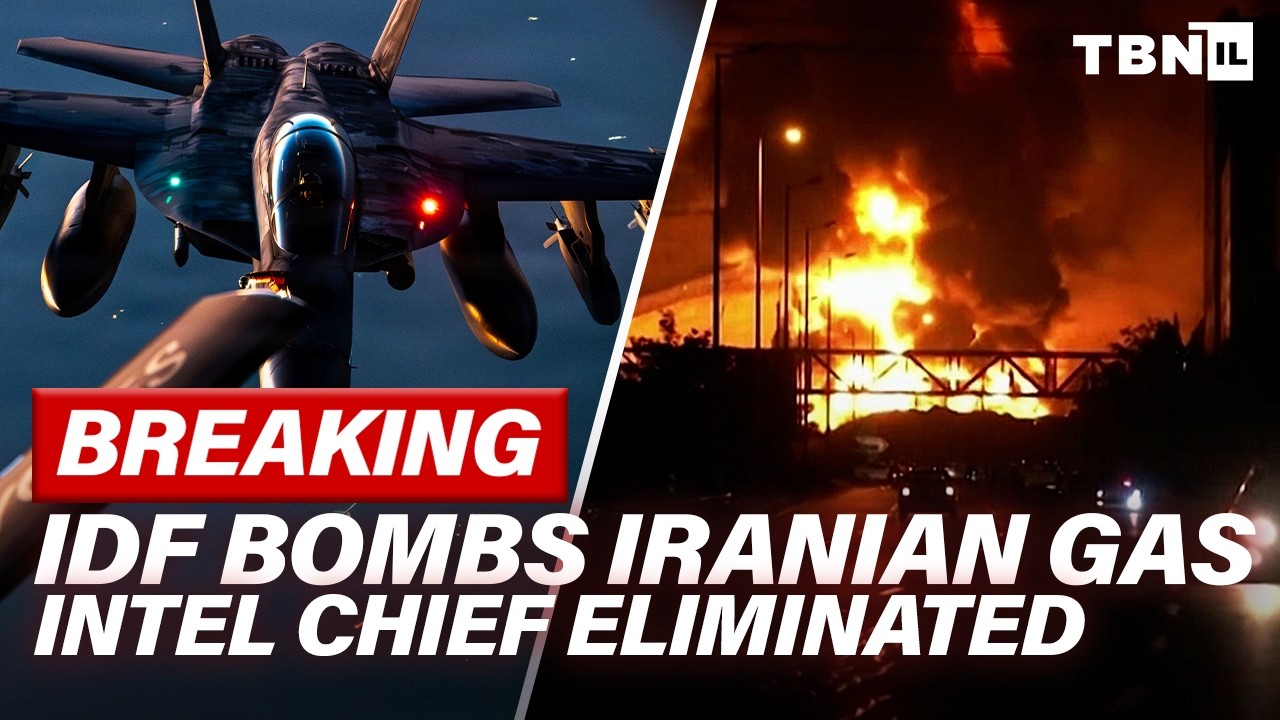
BREAKING: Israel BOMBS Major Iran Gas Site; Top Mullah ELIMINATED; Iran Vows VENGEACE | TBN Israel
"Israel and the United States have escalated their 'Roaring Lion War' against Iran, striking its largest gas facilities, eliminating key intelligence and military figures, and disrupting missile production, while Iran threatens a broader energy war in the Gulf."

BREAKING: Iran Threatens To END Talks; U.S. Vows Retaliation; Hezbollah Collapsing? | TBN Israel
"Iran is leveraging Hezbollah and the Strait of Hormuz to manipulate US negotiations, while Israel asserts its right to dismantle Hezbollah's eroding but still dangerous infrastructure in Lebanon, independent of international talks."

Alex Krainer: US STRIKES Iran – Iran RETALIATES Against Kuwait, Bahrain & Jordan!
"Amidst escalating US-Iran conflict and Iranian retaliation against regional US allies, this episode argues that US foreign policy is deeply controlled by an 'Anglo-Zionist conspiracy' led by the Rothschild banking dynasty, prioritizing Israeli interests over American ones."