Nobel Prize-Winning Economist Joseph Stiglitz Slams Trump’s Myths About Tariffs, Affordability
YouTube · i2TgtFfbjJQ
Quick Read
Summary
Takeaways
- ❖Former President Trump claimed his tariffs were paid by foreign countries, caused no inflation, and boosted the economy.
- ❖Nobel laureate Joseph Stiglitz asserted that tariffs are paid by American consumers, increasing household costs by $1,000-$1,700.
- ❖Stiglitz highlighted that manufacturing jobs decreased and overall job growth was weak under Trump, contradicting the former president's statements.
- ❖Trump's tax cuts were identified as the 'most regressive in history,' disproportionately benefiting the wealthy and leading to cuts in Medicaid.
- ❖The trade deficit in goods actually increased under Trump, despite tariffs intended to reduce it.
Insights
1Tariffs are Paid by Americans, Not Foreigners
Contrary to former President Trump's assertion that tariffs are paid by foreign countries, Joseph Stiglitz states that American consumers bear the cost. He estimates that the average family pays between $1,000 and $1,700 in extra money due to these tariffs.
Stiglitz directly refutes Trump's claim that tariffs had no effect on inflation, stating, 'The tariffs are paid by Americans. They're not paid by the foreigners.' He adds, 'the average family is paying somewhere between $1,000 and $1,700 in extra money because of the tariffs.'
2Manufacturing Jobs and Overall Job Growth Declined Under Trump
Despite Trump's claims that tariffs would bring back manufacturing jobs and that his economic record was strong, Stiglitz points out that manufacturing jobs were down during his presidency. He also notes that overall job growth was significantly weaker compared to subsequent administrations, with most new jobs concentrated in the healthcare sector, unrelated to tariff policies.
Stiglitz states, 'manufacturing jobs are down in the United States... when they were up under President Biden.' He adds that the previous year was 'one of the slowest growth in jobs ever in recent memory, about a quarter of what it was under President Biden.' He specifies that 'more than 100% of the jobs that were created were in the health care sector.'
3Tax Cuts Were Regressive and Harmed Affordability
Stiglitz characterizes Trump's tax cut as the 'most regressive' in history, disproportionately benefiting millionaires, billionaires, and corporations. He argues that this came at the expense of the poor, citing a near trillion-dollar cut in Medicaid, which directly impacts affordability and access to healthcare for vulnerable populations.
Stiglitz explains that Trump's tax cut 'was the most regressive tax cut. That is to say, the benefits went to the millionaires, the billionaires, the corporations, and those at the bottom paid the price. They paid the price with almost a trillion dollar cut in Medicaid.'
4Tariffs Failed to Reduce the Trade Deficit
One of the stated goals of Trump's tariffs was to eliminate the large trade deficit in goods. However, Stiglitz highlights that the trade deficit actually increased, indicating a failure of the policy to achieve its stated objective.
Stiglitz notes, 'in spite of the tariffs that were supposed to eliminate the huge trade deficit in goods, the trade deficit in goods is actually up.'
Lessons
- Scrutinize economic claims from political leaders by cross-referencing with independent economic analysis and data, especially regarding who truly bears the cost of policies like tariffs.
- Understand that 'affordability' is a critical economic issue for many Americans, often reflecting declining real incomes and the impact of regressive policies.
- Recognize that stated policy objectives (e.g., bringing back manufacturing jobs, reducing trade deficits) may not align with actual outcomes, necessitating a focus on empirical evidence over rhetoric.
Quotes
"The tariffs are paid by Americans. They're not paid by the foreigners."
"The average family is paying somewhere between $1,000 and $1,700 in extra money because of the tariffs."
"His policies have failed even in the areas where he said in the objectives that he set forth."
Q&A
Recent Questions
Related Episodes
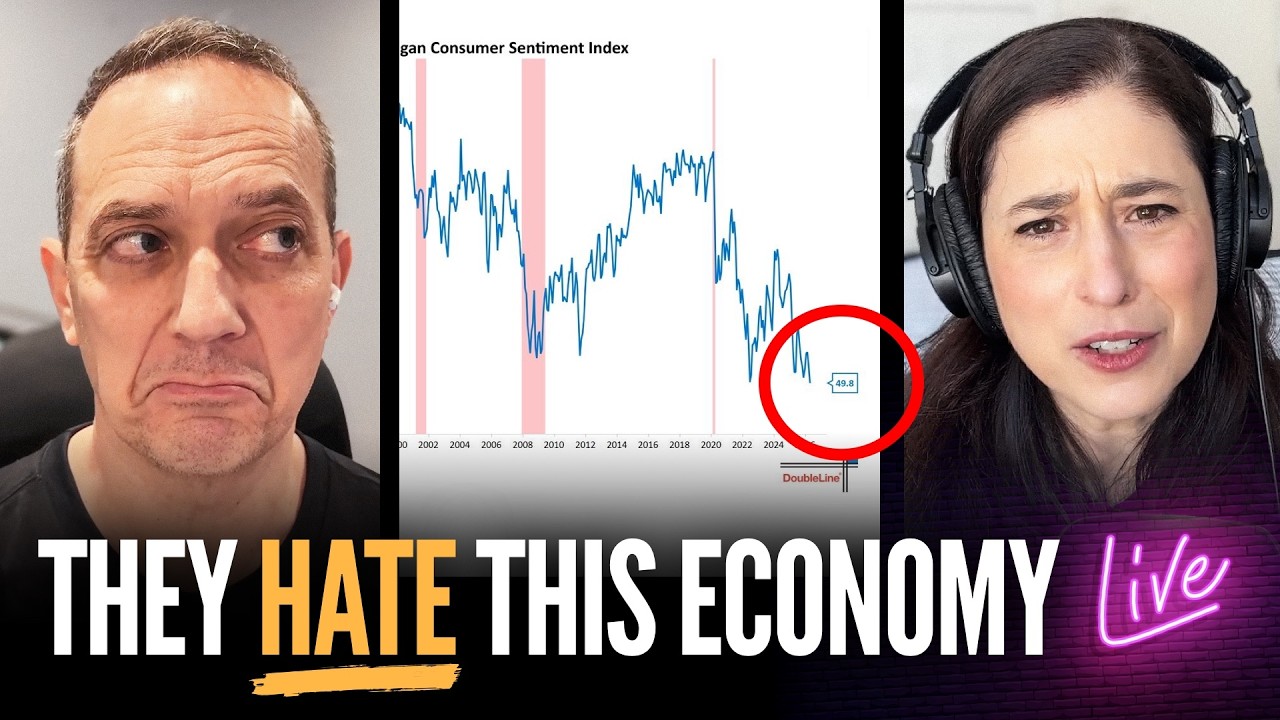
BREAKING: Worst Consumer Sentiment in History; DOJ Drops Criminal Probe of Chair Powell | Receipts
"This episode dissects the political weaponization of the Department of Justice against the Federal Reserve Chair and the partisan distortion of consumer confidence data, highlighting the erosion of independent institutions and free markets."
SHOCK BREAKING: SHOCKED TRUMP STORMS OUT OF SUPREME COURT IN RAGE!
"This episode dissects Donald Trump's contentious Supreme Court appearance regarding birthright citizenship, the growing disillusionment of right-wing figures like Alex Jones with Trump, and the political fallout from Kristi Noem's husband's alleged cross-dressing scandal."
Reality distortion has become the norm
"David Pakman dissects the pervasive political reality distortion, highlighting Donald Trump's consistent pattern of fabricating facts, exhibiting cognitive decline, and undermining democratic institutions."

Colleges Cut DEI Ties. Supreme Court Blocks Trump Tariffs. Roy Cooper Senate Bid
"Roland Martin and guests detail the ongoing attacks on DEI initiatives in universities, the Supreme Court's ruling against Trump's tariffs, and the enduring legacy of Reverend Jesse Jackson Sr., emphasizing the need for Black community mobilization and economic empowerment."