
OFF CAMPUS 1x7 & 1x8 SEASON FINALE Reaction! | This Show Gets Deep! | Ella Bright | Belmont Cameli
YouTube · ioBtzI2dNFE
Quick Read
Summary
Takeaways
- ❖The hosts found the season finale, particularly episode 7, to be surprisingly deep and emotionally impactful.
- ❖Hannah's mother's handling of Hannah's guilt and trauma was praised as a strong example of parental support.
- ❖Garrett's violent reaction in the hockey game was seen as an understandable, albeit flawed, response to new, triggering information about Hannah's past.
- ❖The show effectively illustrates the difficulty of processing trauma and communicating truth, especially when both parties are in heightened emotional states.
- ❖The hosts discuss the unrealistic portrayal of 'hookup culture' and the 'bad boy' trope in media, advocating for more responsible storytelling.
- ❖The coach's calm approach to Garrett's suspension was highlighted as an effective communication strategy, prioritizing being heard over yelling.
- ❖The show's cliffhanger ending sets up intriguing new relationship and team dynamics for a potential second season.
Insights
1Parental Support in Trauma Recovery
Hannah's mother provided exceptional support by directly addressing Hannah's guilt over past trauma, emphasizing that the events were not her fault and that her family's struggles were not her burden. This approach was seen as a powerful model for comforting a child experiencing deep-seated guilt.
The hosts specifically praised Hannah's mom for her ability to comfort and reassure Hannah, stating, 'she knew right away and knew how to comfort her' and 'why do you feel guilty? Like, really, that at the heart of it, there's no reason for you to feel guilty at all.'
2The Complexity of Communicating Trauma in Relationships
The breakdown between Hannah and Garrett stemmed from Hannah's reluctance to share her full truth about Delaney due to past negative experiences, and Garrett's immediate, emotionally charged reaction to new, triggering information during a high-stakes hockey game. Both characters were operating from positions of heightened trauma and adrenaline, making effective communication impossible.
Jabby notes, 'she wasn't at the point before the game where she could talk to him like that.' Brandon adds, 'He's finding all this out and responding immediately cuz he's in he's in a a heated circumstance.'
3The Impact of Media on Relationship Expectations
The hosts discuss how shows, much like Disney films, can create unrealistic expectations about relationships, such as the prevalence of 'hookup culture' without emotional consequences or the ease of 'changing' a 'bad boy.' They advocate for media to include responsible elements, like showing condom use, to provide a more balanced perspective.
Jabby compares it to Disney films, stating, 'Disney films have kind of messed us up... you're made to believe, oh, that's what it is.' Brandon notes the recent trend of 'having the condoms in the shot which I think is a really responsible way of handling this.'
4Effective Communication: Listening Over Yelling
The hockey coach's decision not to yell at Garrett after his on-ice fight, instead stating, 'I'm not going to yell at you because I want you to hear what I'm going to say,' was highlighted as a crucial lesson in communication. Yelling often puts people on the defensive, preventing them from truly listening or processing information.
Brandon praises the coach: 'I thought the coach handled that really well. I think sometimes yelling makes someone check out and not really pay attention as much.'
Key Concepts
The Pallet Cleanse (Post-Breakup)
The idea that after a long-term relationship, engaging in 'meaningless hookups' or intense self-distraction (like martial arts or creative pursuits) can serve as a 'pallet cleanse' to break dependence and fill the void, helping individuals transition out of serial monogamy. However, the hosts note the risk of one party catching feelings.
The Filtered Narrative
In conversations, individuals often filter what they hear through their own narrative and insecurities, leading them to interpret statements in a way that confirms their existing fears or desires, rather than truly understanding the speaker's intended message. This was applied to Garrett's reaction to Hannah's 'you scare me' comment.
Lessons
- When supporting someone through trauma, prioritize validating their feelings and directly addressing any guilt they may carry, rather than dismissing their pain.
- Recognize that effective communication requires both parties to be in a receptive emotional state; avoid introducing sensitive topics during high-stress or emotionally charged moments.
- Be mindful of how media consumption shapes your relationship expectations; critically evaluate portrayals of romance, casual sex, and personal change against real-world complexities.
- In difficult conversations, adopt a calm and measured tone to ensure your message is heard and processed, rather than triggering defensiveness.
Notable Moments
Hannah's mother's compassionate response to Hannah's breakdown, addressing her guilt and financial worries with unwavering support.
This scene was a standout for its realistic and empathetic portrayal of parental support in the face of a child's deep trauma and guilt, offering a powerful example for listeners.
Garrett's coach choosing to speak calmly to him after his on-ice fight, explaining that he wanted Garrett to truly hear his message.
This moment provided a valuable lesson in effective communication, demonstrating that a calm approach can be more impactful than anger when trying to convey important information.
The hosts' discussion about the unrealistic portrayal of 'hookup culture' and the 'bad boy' trope in media.
This conversation encourages critical thinking about media influence on personal expectations and relationships, promoting a more nuanced understanding of real-world dating dynamics.
Quotes
"She's had a lot of practice, but that doesn't mean she would be good at it, but she was good at it, you know, she knew right away and and and knew how to comfort her. But what she brought up was like the most important thing is why do you feel guilty? Like, really, that at the heart of it, there's no reason for you to feel guilty at all."
"I don't subscribe to the notion that art has to be painful. Allowing people into our truth that can even be healing."
"I'm not going to yell at you because I want you to hear what I'm going to say."
"It's aggravating if you're sad and they're not sad. That's normal."
"I think sometimes yelling makes someone check out and not really pay attention as much. Which is ironic, honestly. It's like sometimes you get quieter. That's the scary. Like if my mom yelled at me, it's like I I was at least aware of what was going on. But like if she got quiet on me, that would probably scare me more than anything."
Q&A
Recent Questions
Related Episodes
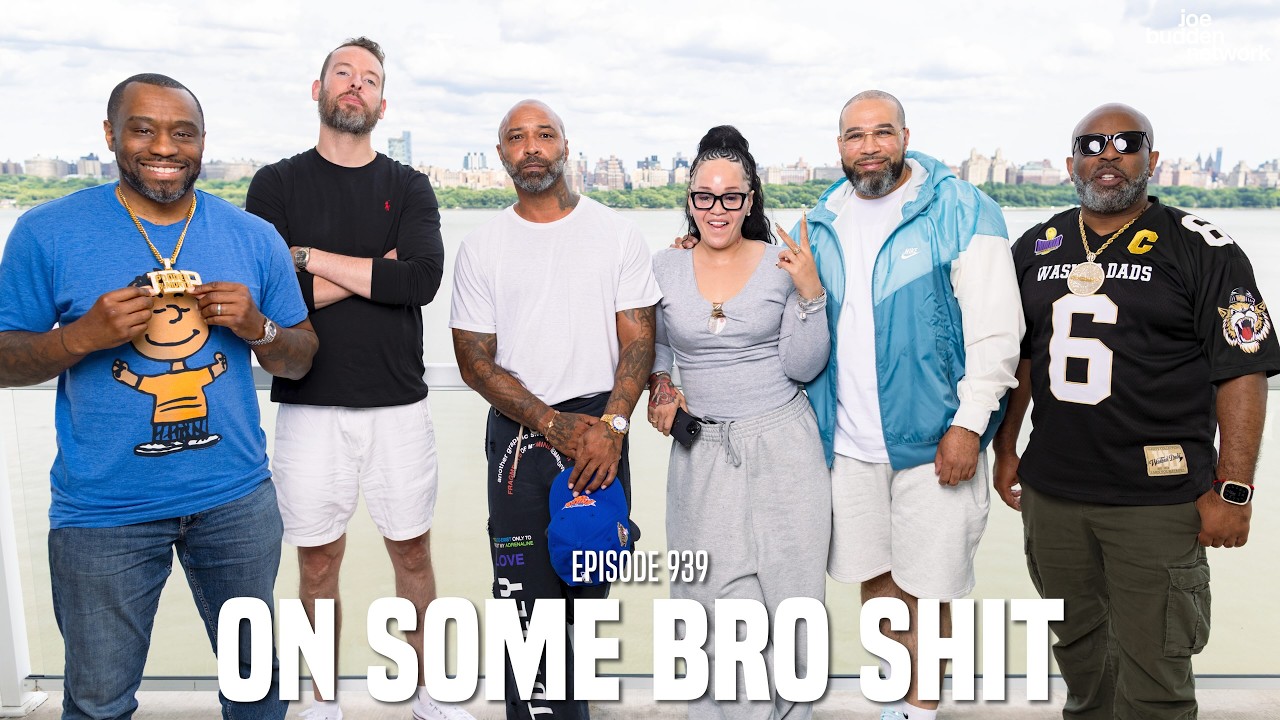
The Joe Budden Podcast Episode 939 | On Some Bro Shit
"The Joe Budden Podcast crew dives into personal grooming, the chaotic Knicks championship parade, the decline of unique cultural experiences, and controversial celebrity revelations, sparking lively debates on relationships, addiction, and public behavior."

HaHa Davis on Druski, Katt Williams, Kevin Hart, Jay-Z, Relationships, Fame & Social Media Comedy
"Comedian Haha Davis offers a candid look into the unpredictable world of social media fame, the complexities of modern relationships, and the personal journey of finding success while staying true to his Detroit roots."

The Most Ghetto Financial Audit
"A young Houston couple with two children faces a dire financial audit, revealing over $20,000 in debt, rampant overspending on non-essentials, and a marriage held together only by children and fear of child support."

Demands and Ultimatums | “48 Hours" Full Episodes
"This episode explores three distinct murder cases, each driven by escalating demands and ultimatums within complex relationships, revealing how personal conflicts can spiral into deadly outcomes."