
🚨 BREAKING: Israel Launch ATTACK On IRGC Hezbollah - Khamenei In Meltdown
YouTube · irT1OfP9eqk
Quick Read
Summary
Takeaways
- ❖The Israeli Defense Forces (IDF) launched fresh attacks on IRGC-backed Hezbollah bases in southern Lebanon, preventing troop rebuilding.
- ❖One Israeli target was embedded within civilian areas, with the IDF claiming advanced warnings were given to minimize harm.
- ❖Israeli Prime Minister Netanyahu warned of 'unbearable consequences' for attackers and held urgent, secret meetings with opposition leader Lapid, indicating a national emergency.
- ❖Iranian Supreme Leader Ali Khamenei publicly blamed Zionists and the US for orchestrating recent events, which the host characterized as a 'meltdown'.
- ❖A joint military exercise between the US Navy destroyer USS Delbert D. Black and the Israeli naval INS Aliat was conducted in the Red Sea, preparing for potential Iranian aggression.
- ❖IRGC military leaders issued threats against the US, stating 'no American will be safe,' while simultaneously seeking negotiations.
- ❖Iran's demand for all US military assets to withdraw from the Middle East is a major obstacle to potential US-Iran talks.
- ❖Internal Iranian sources suggest willingness to concede on enriched uranium, but official leadership denies this, highlighting internal divisions.
- ❖The host believes US-Iran negotiations are 'pointless' and a 'distraction' because they do not address Israel's red lines, particularly Iran's ballistic missile program.
Insights
1Israeli Escalation Against Hezbollah
The Israeli Defense Forces (IDF) conducted new attacks on IRGC-backed Hezbollah bases in southern Lebanon, including one target embedded in civilian areas, after issuing advanced warnings. These strikes also eliminated a Hezbollah operative on a highway in Ansara. The objective is to prevent Hezbollah from rebuilding its forces near Israeli territory.
IDF launched attacks on Hezbollah bases in southern Lebanon (), one target embedded within civilian areas (), advanced warnings given to civilians (), eliminated another Hezbollah operative on a highway in Ansara ().
2Netanyahu's Warnings and Emergency Meetings
Israeli Prime Minister Benjamin Netanyahu issued strong warnings, stating, 'whoever attacks will face unbearable consequences.' He held emergency security cabinet meetings and an urgent, secret meeting with opposition leader Lapid, suggesting a serious national emergency and the need for national unity.
Netanyahu stated, 'whoever attacks will face unbearable consequences' (), emergency security cabinet meeting last night (), urgent secret meeting with opposition leader Lapid (), 'necessity right now for basic national unity in Israel' ().
3Khamenei's 'Meltdown' and Accusations
Iranian Supreme Leader Ali Khamenei posted 'crazy nonsense' on social media, accusing Zionists and the United States of orchestrating recent events and deploying all CIA and Mossad resources, yet claiming they were 'defeated.' The host interprets this as a 'meltdown' and 'talking nonsense.'
Ali Khamenei 'not happy' (), 'posting crazy nonsense all day' (), 'orchestrated by Zionists and the United States' (), 'CIA and Mossad deployed all of their resources' (), host's interpretation: 'gone insane or is he just talking nonsense' ().
4US-Israel Military Cooperation Amidst Tensions
A joint military exercise was conducted between the US Navy destroyer USS Delbert D. Black and the Israeli naval INS Aliat as part of ongoing cooperation with the US Fifth Fleet in the Red Sea. This drill aims to prepare both nations for potential Iranian aggression, ensuring extra defensive support beyond Israel's existing systems.
Joint military exercise conducted between USS Delbert D. Black and INS Aliat (), part of cooperation with US fifth fleet in the Red Sea (), 'primarily to prepare both the American side and Israel in an event of the Islamic Republic going a little bit cray' ().
5IRGC's Mixed Signals on Negotiations
The IRGC is sending contradictory messages: military leaders issue threats like 'No American will be safe' while, 'behind the scenes, beg for a deal and negotiations.' This dual strategy is seen as ineffective and childish by the host, especially as US military assets continue to be deployed to the region.
IRGC sending mixed signals (), Chief of Staff to Islamic military said 'we are now fully prepared for war. No American will be safe' (), 'at the same time behind the scenes, beg for a deal and negotiations' (), 'it's not really the best way to start negotiations' ().
6Stalled US-Iran Negotiation Demands
Potential US-Iran talks are stalled by Iran's demand for all US military assets to withdraw from the Middle East. The host considers this a 'big ask' and unlikely to be met. Furthermore, while some Iranian sources hint at concessions on enriched uranium, official leadership contradicts this, and Israel's red line on ballistic missiles remains untouched, making a comprehensive deal improbable.
Iran wants 'all US military assets to move away from Iran and the Middle East' (), 'unlikely that the talks could even start' (), some sources 'willing to give up our enriched uranium' (), but official leadership said 'nobody has said anything about giving up our enriched uranium' (), 'Islamic Republic don't want the ballistic missile program to be touched' (), 'Israelis would be pushing hard on ballistic missiles' ().
7China's Role in Regional Surveillance
The Chinese Communist Party has deployed a spy ship near the USS Abraham Lincoln outside the Gulf of Oman, closely monitoring US military movements. This action provides 'extra support' to IRGC drones, which are also actively monitoring US vessels, creating a complex surveillance environment.
IRGC's drones are confident because 'they got extra support from the crazies in Beijing' (), 'Chinese Communist Party have deployed a spy ship near the USS Abraham Lincoln' (), 'Beijing is closely monitoring the US military movements' ().
Bottom Line
The host views current US-Iran negotiations as a deliberate 'distraction' tactic by Iran to buy time, rather than a genuine effort towards peace or significant change.
This perspective suggests that external observers should not place high hopes on these talks yielding substantive results beyond temporary de-escalation or limited nuclear agreements, as core issues remain unaddressed.
Analysts and policymakers should focus on the underlying geopolitical dynamics and military posturing, rather than being swayed by the public narrative of diplomatic progress, anticipating continued tension and potential for escalation.
The US is unlikely to launch a military campaign against Iran without a 'PR opportunity' or a clear geopolitical trigger, even if military options are on the table.
This implies that despite escalating tensions and military readiness, a direct US invasion or large-scale strike is not imminent unless a specific event provides international justification, preventing a 'random' attack during diplomatic talks.
Understanding this 'PR opportunity' constraint allows for better prediction of potential intervention windows, suggesting that provocations or significant shifts in the regional landscape would be necessary precursors to direct military action.
Lessons
- Monitor the specific demands and concessions in US-Iran negotiations, particularly regarding Iran's ballistic missile program, as this is a key Israeli red line that could determine the talks' success or failure.
- Recognize the IRGC's dual strategy of issuing threats while simultaneously seeking negotiations; this indicates a lack of genuine commitment to peace and a tactic to gain leverage.
- Pay attention to the coordination between the US and Israel, including joint military drills and high-level security meetings, as these signal a unified front against regional threats and a readiness for potential escalation.
Notable Moments
The host's sarcastic commentary on Ali Khamenei's social media posts, describing them as 'crazy nonsense' and a 'meltdown,' highlighting the perceived irrationality of the Iranian leader's statements.
This moment sets the tone for the host's critical and opinionated analysis of Iranian leadership, framing their actions as desperate or illogical rather than strategic, influencing the audience's perception.
The host's dismissal of US-Iran negotiations as 'pointless' and a 'distraction,' even if a limited nuclear deal is signed, because it wouldn't address the fundamental threats posed by the IRGC or Israel's security concerns.
This challenges the conventional view of diplomacy as a primary solution, suggesting that such talks are merely a facade or a time-buying mechanism, and that underlying conflicts will persist regardless.
Quotes
"More challenges await us ahead of us we are alert we are on high alert and prepared for any development we are monitoring what is happening and are prepared for any scenario moreover whoever attacks will face unbearable consequences for them."
"The Israeli defense forces are preparing for several possibilities and we must be alert and constantly ready for decisive action in a multi-theat war."
"The recent edition was orchestrated by Zionists and the United States. I was informed through a certain channel... that the CIA and Mossad deployed all of their resources into the field? Nevertheless, they were defeated."
"We are now fully prepared for war. No American will be safe."
"We will not tolerate unsafe IRGC actions including overflight of US military vessels engaged in a uh in flight operations low or altitude or armed overflight of US military assets when intentions are unclear."
"Iran's enriched uranium will not be transferred to any country."
"If you do not behave wisely with Iran, you will regret it."
Q&A
Recent Questions
Related Episodes
BREAKING: Protests ERUPT In Iran Over IRGC Surrendering To Trump - Infighting Clashes In Tehran
"Iran is experiencing severe internal infighting and protests as hardline IRGC elements clash with government figures over a perceived 'surrender' to the US, while mainstream Western media misrepresents the situation."

BREAKING: Iran Threatens To END Talks; U.S. Vows Retaliation; Hezbollah Collapsing? | TBN Israel
"Iran is leveraging Hezbollah and the Strait of Hormuz to manipulate US negotiations, while Israel asserts its right to dismantle Hezbollah's eroding but still dangerous infrastructure in Lebanon, independent of international talks."

🚨 THEY F*CKED AROUND FOR THE LAST TIME 😭😭😭
"This episode unleashes a torrent of highly opinionated commentary on the US-Iran deal, Israel's role, and a scathing critique of 'leftist' policies and immigration, particularly highlighting the UK grooming gang report as evidence of Western societal decay."
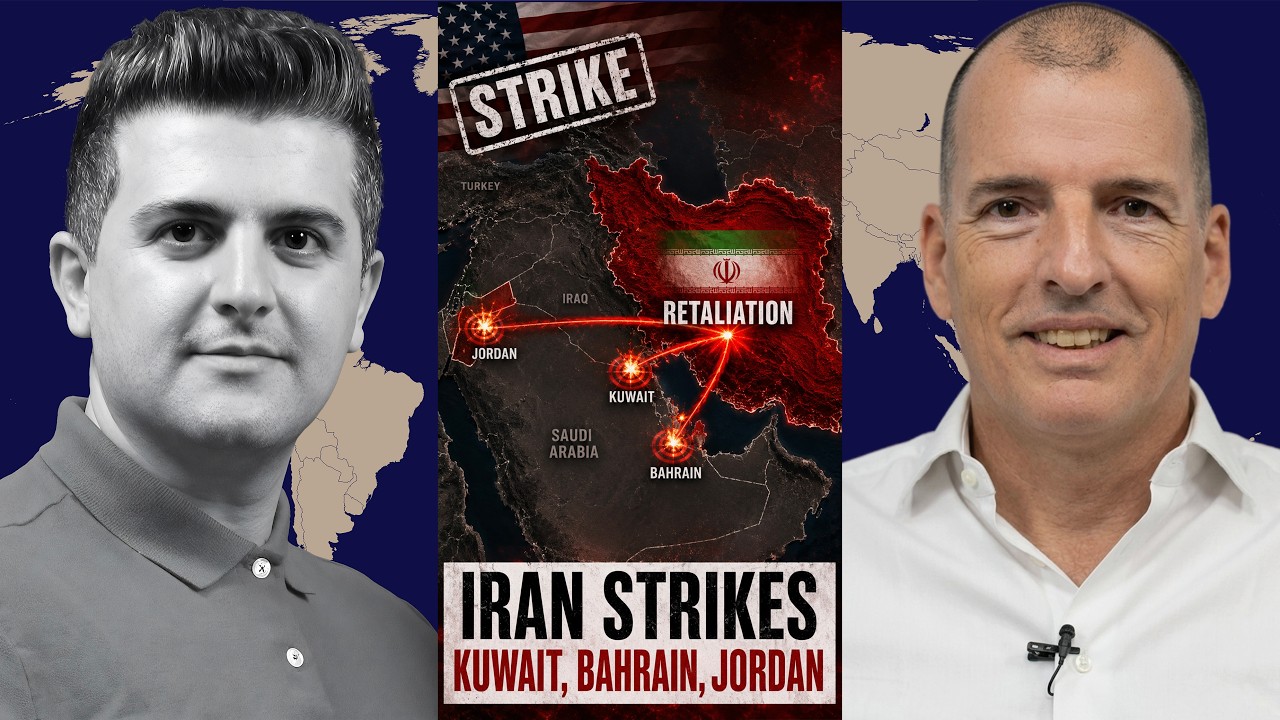
Alex Krainer: US STRIKES Iran – Iran RETALIATES Against Kuwait, Bahrain & Jordan!
"Amidst escalating US-Iran conflict and Iranian retaliation against regional US allies, this episode argues that US foreign policy is deeply controlled by an 'Anglo-Zionist conspiracy' led by the Rothschild banking dynasty, prioritizing Israeli interests over American ones."