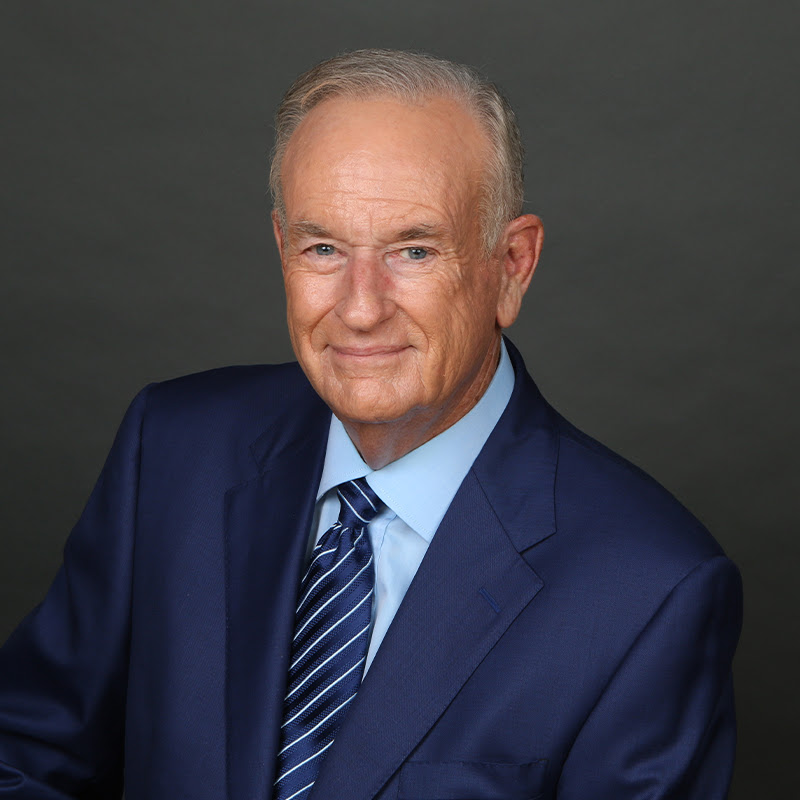
Jonathan Turley & Bill O'Reilly on the Future of America
YouTube · jMjPrP64Rvc
Quick Read
Summary
Takeaways
- ❖Academia has seen a significant decline in conservative and libertarian faculty, creating ideological echo chambers.
- ❖Jonathan Turley introduces the concept of 'new Jacobins' – professors, journalists, and lawyers advocating for radical systemic changes, echoing the French Revolution's architects of terror.
- ❖Younger generations are increasingly embracing socialist and communist ideas without historical context of their failures.
- ❖The corporate media and social media contribute to intolerance by reinforcing monolithic viewpoints and amplifying rage.
- ❖AI and robotics are projected to cause massive job displacement, potentially leading to a 'kept citizenry' subsidized by the government, with profound political implications.
- ❖Turley has been 'shunned' in academia for his dissenting views but has not experienced ideological pressure at Fox News.
Insights
1Ideological Purging in Academia
Universities, particularly law schools, have systematically purged conservative, Republican, and libertarian voices over the past 30 years. This has resulted in departments with virtually no intellectual diversity, where students from conservative backgrounds find no faculty who share their views. This homogeneity creates an echo chamber that stifles robust debate and critical thinking.
Recent surveys show many departments lack a single conservative or Republican. Yale faculty reportedly contributed no money to the Republican party. Harvard's faculty has only a handful of conservatives, and its student body is less than 9% conservative, despite the country being equally divided.
2The Rise of the 'New Jacobins'
Jonathan Turley identifies a contemporary movement he calls the 'new Jacobins' within academia and media. These individuals, often professors and journalists, advocate for radical changes to the U.S. system, such as declaring the Constitution a failure or packing the Supreme Court. Turley draws a historical parallel to the French Revolution's Jacobins, who initially championed rights but ultimately became architects of terror, suggesting a similar trajectory of dismantling foundational elements.
The dean of Berkeley Law School stated the U.S. Constitution is a failure. The New York Times publishes law professors advocating to 'break the system down' or 'get rid of the Supreme Court.'
3AI and Robotics Creating a 'Kept Citizenry'
The advent of AI and robotics is predicted to cause unprecedented job loss, leading to a significant portion of the population becoming economically dependent on government subsidies. This shift from a capitalist, self-reliant workforce to a 'kept citizenry' will fundamentally alter the political landscape, potentially driving further shifts towards collectivist ideologies.
Turley's book, 'Rage in the Republic,' explores how a massive job loss due to AI/robotics could lead to a subsidized populace, changing political and economic structures. He references the 1930s Great Depression and FDR's policies as a historical precedent for such a shift.
Bottom Line
The 'warmth of collectivism' touted by some modern politicians, like Mandami, is appealing to young people who lack historical memory of failed socialist governments, making them susceptible to ideologies that promise leisure and government support without understanding the economic consequences.
This historical amnesia, coupled with a monolithic educational system, accelerates the shift towards socialist policies, potentially leading to economic collapse as seen in past examples like Mitterrand's France.
Educators and communicators have an opportunity to provide historical context and economic literacy to younger generations, offering a counter-narrative to collectivist promises by highlighting the real-world outcomes of such systems.
The vilification of dissenting voices, particularly those appearing on 'outlier' news outlets, stems from an increasing intolerance fostered by echo chambers in media and academia, where exposure to opposing views is minimized.
This intolerance leads to personal attacks, threats, and attempts to 'shun' individuals, rather than engaging in robust debate, further polarizing society and eroding the ability to find common ground.
Promoting platforms and spaces for civil discourse across ideological divides, and encouraging individuals to actively seek out diverse perspectives, can help break down these echo chambers and foster greater understanding and tolerance.
Key Concepts
The New Jacobins
A concept introduced by Jonathan Turley, drawing a parallel between modern academics, journalists, and lawyers advocating for radical systemic change (e.g., dismantling the Constitution, packing the Supreme Court) and the Jacobins of the French Revolution who, despite initially championing rights, became architects of the Reign of Terror. This model highlights how intellectual movements can shift from advocating for reform to seeking revolutionary destruction of existing systems.
Echo Chamber Effect
The phenomenon where individuals are exposed only to information and opinions that confirm their own, especially in an online environment or ideologically homogenous institutions like academia. This leads to increased intolerance for opposing views, as dissenting voices are eliminated, and a false sense of consensus is created.
Lessons
- Actively seek out and engage with diverse viewpoints, especially those that challenge your own, to avoid ideological echo chambers.
- Critically evaluate information from academic institutions and media outlets for potential ideological biases and lack of intellectual diversity.
- Educate yourself and others on the historical outcomes of different political and economic systems, particularly socialism and collectivism, to counter historical amnesia among younger generations.
Notable Moments
Jonathan Turley recounts being 'shunned' in academia since testifying in the Clinton impeachment, and later receiving hundreds of death threats after opposing Donald Trump's second impeachment. He explains that 'shunning' involves academics trying to take away everything meaningful to an intellectual, like publication opportunities and conference invitations.
This personal account illustrates the severe professional and personal consequences faced by academics who hold contrarian or non-orthodox views, highlighting the intense pressure to conform within certain institutional environments.
Quotes
"Many departments don't have a single conservative or republican or libertarian. Yale reached sort of nirvana stage not long ago where they found that not a single faculty member at Yale contributed to the Republican party."
"The Jacabins began as professors, journalists, lawyers who talked about due process and the rights of man. And then they became architects of the terror. And what the book suggests is we're hearing those voices again."
"The faculty at Harvard has only a handful of conservatives or Republicans and the student body's less than 9% in a country that's divided equally and where the majority of judges are conservative. And he immediately said, 'Well, we're Harvard. We're an elite university. We don't have to look like America.'"
"We are looking at a massive job loss that we have never encountered before. And that means we're going to have a lot of people that may be on a subsidy of the government. And the book looks at how that would change us politically, not just economically."
"It was James Madison who was the pious logic. So Payne knew what it would take to move a people to rebellion. And it was Madison that knew what it would take to move a revolution to a republic."
Q&A
Recent Questions
Related Episodes

HANTAVIRUS PANDEMIC PANIC, Human To Human Spread Feared | Timcast IRL
"Tim Pool and his guests dismiss the Hantavirus panic as media desperation, pivot to discussing escalating political polarization, the rise of technocracy, and the weaponization of social issues."

“I’d Rather DIE Than Bend The Knee!” Megyn Kelly, Scott Galloway & More On Super Bowl Show
"This episode dissects the extreme political and cultural polarization in America, from the Super Bowl halftime show controversy to economic activism and political memes, revealing deep societal divides."

“You’re A JOKE!” Trump Shooting Debate & Free Speech ‘Hypocrisy’ | With Cenk Uygur & Glenn Beck
"Piers Morgan and guests debate the political implications of King Charles's US visit, the Secret Service's failures in protecting Donald Trump, the surge in political violence, and the controversial figure of Tommy Robinson."

"CATASTROPHIC Failure!" Trump Dinner Assassination Attempt & Royal Visit | With Kari Lake
"Piers Morgan and Kari Lake dissect the catastrophic security failure during an assassination attempt on Donald Trump at the White House Correspondents Dinner, blaming media rhetoric while also discussing King Charles III's high-stakes US visit."