
Nate Bargatze Eats His Last Meal
YouTube · jPH4l2zKFAE
Quick Read
Summary
Takeaways
- ❖Nate Bargatze's 20-year career taught him that a 'long route' to success builds essential experience and resilience, enabling him to perform on major stages like SNL with confidence.
- ❖His self-deprecating, clean comedy style is a conscious choice to avoid making audiences uncomfortable, fostering a universally welcoming environment for laughter.
- ❖Bargatze critiques the entertainment industry's reliance on social media metrics, arguing they often misrepresent true audience demand for content like family-friendly movies.
Insights
1The Value of the 'Long Route' to Success
Bargatze emphasizes that his 20-year journey in comedy, characterized by a slow build-up rather than a quick rise, was crucial for his current success. This extended period allowed him to gain extensive experience, develop material, and learn to manage nerves, making him better prepared for major milestones like performing on SNL or starring in a movie.
He states, 'I'm grateful that it took this long. Cuz when you see when people get stuff too quick... I had to go through the whole system. But that set me up so much better for where I'm at right now. Like the first time I did SNL, I did uh I was doing an arena the night before. So I was able to go have go to do SNL for the first time with 20 years of experience.'
2Comedy as a Service: Avoiding Audience Discomfort
Bargatze's comedy style is intentionally self-deprecating and avoids targeting audience members. This conscious choice stems from a desire not to make anyone feel bad or uncomfortable, aiming for a universally enjoyable experience where people can laugh with or at him without judgment.
He explains, 'I just don't ever I didn't ever want to make anybody feel bad. I just never wanted to make someone uncomfortable... I didn't feel comfortable like, you know, being like, 'What's up with you, man?'... you're kind of being mean to this person and then everybody's laughing at that person.'
3Skepticism Towards Social Media Metrics in Entertainment
Bargatze expresses doubt about the entertainment industry's over-reliance on social media views and followers as indicators of audience demand. He points out that massive online engagement doesn't always translate to real-world ticket sales or sustained interest in specific content types, suggesting a disconnect between digital 'views' and actual consumer behavior.
He questions, 'How do you have teenagers go watching Friends now? And they're going through the whole series. How can you like there's all this I I just it doesn't I can't wrap my head around it cuz I'm just like and this is I don't even know inside data. I'm just looking at like the rankings.' He later adds, 'I don't see where it translates into ticket sales.'
4The Purpose of Comedy: Providing Relief and Connection
Following a significant career milestone and a local tragedy, Bargatze realized his deeper purpose in comedy was to provide relief for people across all walks of life. He aims to create a 'Nateland' world where his humor transcends beliefs and backgrounds, allowing everyone to find common ground in laughter.
Reflecting on performing after a school shooting, he says, 'just for them to have the relief of uh you know I mean they the weight of the world on the town... And so getting to meet them and all this and just, you know, knowingly that they uh, you know, they're like, it's the first time they've laughed... I thought of Nateland and like the Natan world that I'm trying to build where it was like all right this has to be I have to be I need to be a relief for people and on all spectrums.'
Bottom Line
Some comedy clubs have successfully monetized audience members' desire to be 'roasted' or featured in crowd work by creating a 'splash zone' with higher ticket prices for front-row seats.
This highlights a counter-intuitive market demand: people are willing to pay more for a potentially uncomfortable or spotlighted experience, if framed as exclusive or desirable. It flips the traditional fear of crowd work into a premium offering.
Event organizers can explore creating 'interactive premium zones' for various performances or experiences, catering to audiences who seek unique, personalized, or even challenging engagement, rather than just passive consumption.
The entertainment industry's decision-makers are 'addicted to social media' and mistakenly believe high online views directly reflect broad audience desires for content, leading to a disconnect with what the general public actually wants (e.g., family-friendly comedies, comfort TV).
This suggests a potential misallocation of resources and creative focus within Hollywood, where content is tailored to perceived 'viral' trends rather than timeless, widely appealing formats. It creates a void for 'normal' entertainment.
Independent studios or creators can capitalize on this gap by consistently producing 'comfort' or 'family-friendly' content that appeals to a broad, often overlooked audience, potentially finding significant success outside mainstream industry trends.
Opportunities
No Onions Restaurant
A restaurant concept that specifically caters to people who dislike onions and tomatoes, offering a menu where these common ingredients are entirely absent or only present in highly processed forms like ketchup. The focus would be on 'normal' food without these specific allergens/dislikes.
Key Concepts
The Long Route Advantage
Success achieved through a prolonged, incremental journey, rather than a quick rise, builds a stronger foundation of experience, resilience, and self-awareness. This allows individuals to handle high-pressure situations and maintain authenticity when major opportunities arise.
Service-Oriented Creativity
Approaching one's craft with the primary goal of serving the audience or the 'thing' itself, rather than personal ego or gain. This philosophy prioritizes universal appeal, comfort, and providing a positive experience, leading to broader connection and impact.
Lessons
- Cultivate a 'long route' mindset in your career: embrace gradual growth and continuous learning, as sustained effort builds resilience and prepares you for larger opportunities.
- Prioritize audience comfort and universal appeal in your creative or service endeavors; a non-confrontational approach can foster broader connection and loyalty.
- Be critical of vanity metrics, especially in digital marketing; understand that high engagement numbers don't always translate to real-world impact or genuine demand for your product or service.
Notable Moments
Nate Bargatze's daughter was intentionally born in Tennessee, not New York, to avoid a 'New York birth certificate' and ensure she started life without a perceived 'leg up' over her father.
This humorous anecdote reveals Bargatze's deep-seated value for 'normalcy' and equality within his family, reflecting his broader comedic persona and life philosophy.
Bargatze used a VHS highlight reel of Vanderbilt's 5-6 football season for a community college speech class, delivering a funny, unprepared presentation that earned him an A.
This early experience demonstrates his innate ability to find humor in 'normal' or even 'losing' situations and his natural talent for engaging an audience, foreshadowing his comedic career.
Quotes
"I don't think I I think about it that much. When you have a kid, that's the one that's like you're so scared."
"I think in general, you should be a service uh to whatever you're trying to do."
"I do not know what is in this special sauce, but I know that eating it makes me a man."
"If I can get one thing, if I can make one thing great, then I think you can, it's easier to make other things great cuz you know the process that it takes."
"I think the best thing that could happen to you as a kid is to root for a team that is not good."
Q&A
Recent Questions
Related Episodes

Larry David Rants About Hating the Beach, Talks Wild Elmo Encounter and Curb Your Enthusiasm
"Larry David details his deep disdain for beaches, boats, and social niceties, recounts throttling Elmo on live TV, and shares his unique approach to honesty in all aspects of life, from therapy to parenting."

PATREON EXCLUSIVE | The Human Experience (feat. Eric Benet and T.I) | The Joe Budden Podcast
"Eric Benét and T.I. offer candid insights into the evolving music industry, the challenges of maintaining authenticity, and their personal philosophies on career longevity, health, and societal changes."
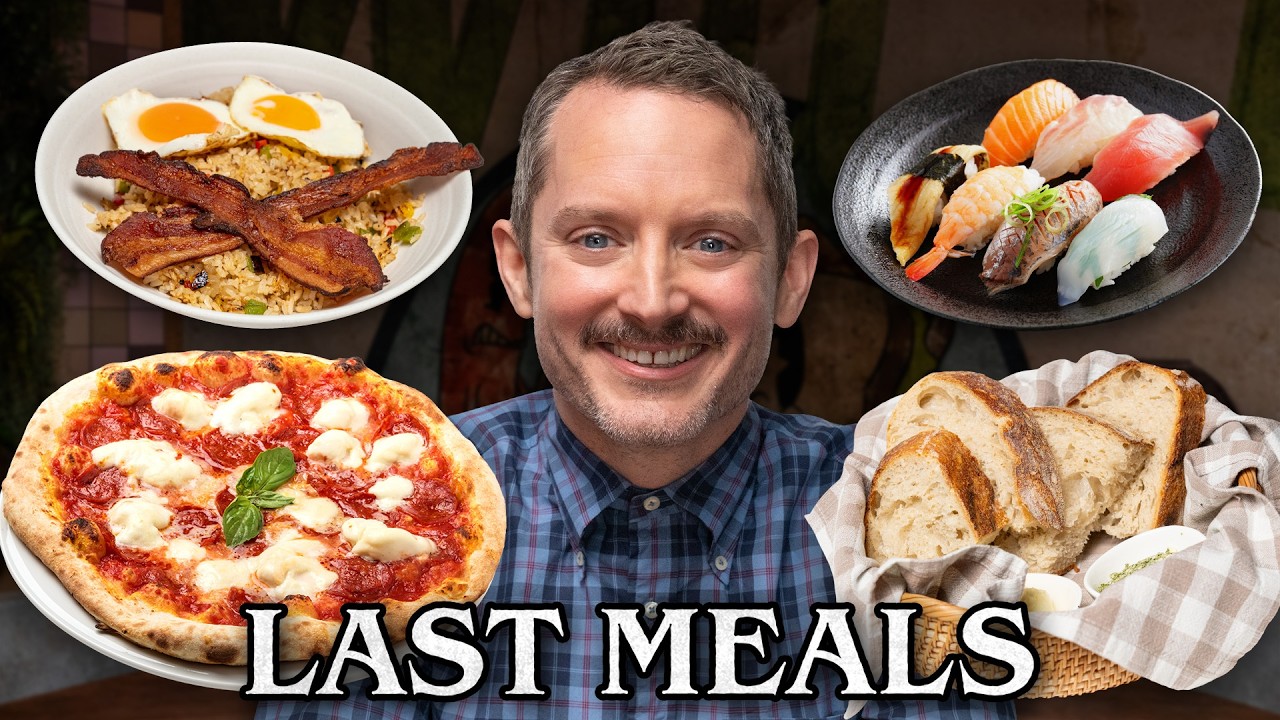
Elijah Wood Eats His Last Meal
"Elijah Wood reflects on his unconventional career path, the philosophy behind his genre film production company, and the profound influence of his mother's humility lessons, all while sharing his ultimate last meal."

Nicky Smokes And Mintzy Have Just Asserted Dominance Over Brandon | The Yak 6-25-26
"Barstool's internal drama escalates as Mintzy and Nikki Smokes form a 'New World Order' faction, while Ron Deutsch delivers an astounding 11-second, five-beer chug."