
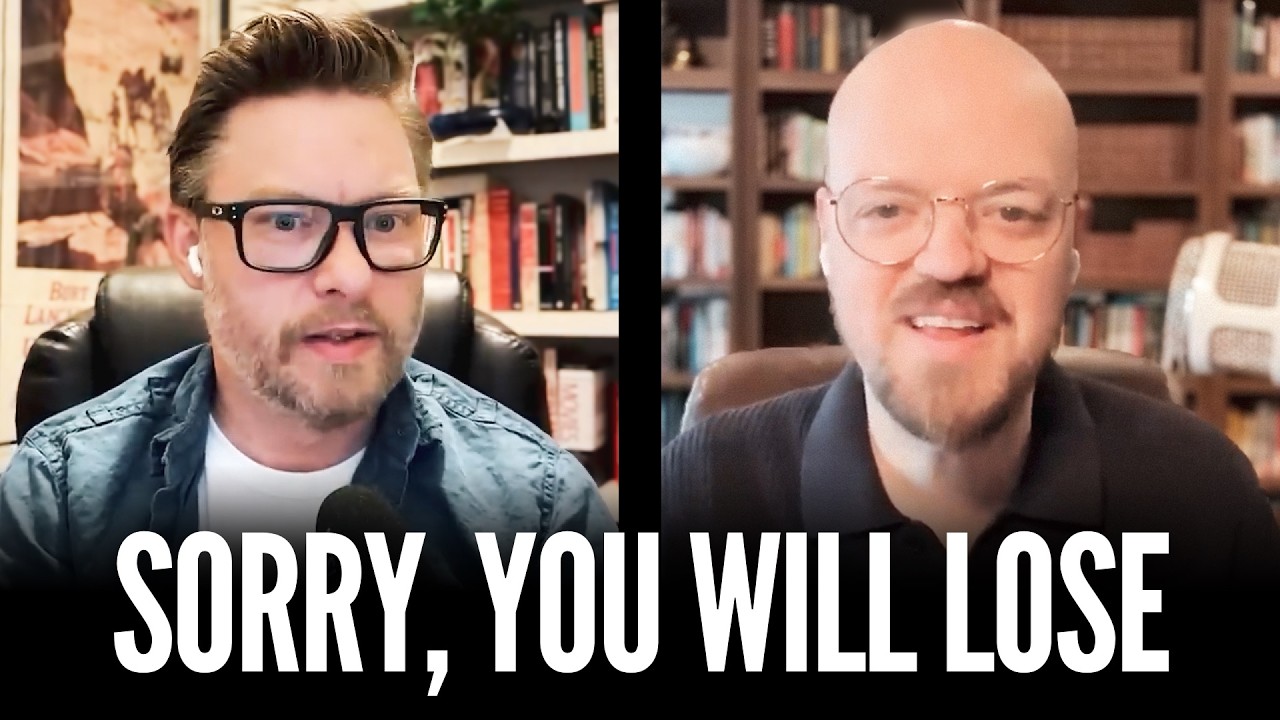
Former Fanduel CEO Admits Ads Are A LIE
YouTube · jSxZUw923gs
Quick Read
Summary
Takeaways
- ❖Former FanDuel CEO admitted their advertising is untruthful, suggesting customers can win when the system ensures they cannot over time.
- ❖Parlay bets are the most profitable engine for gambling companies, generating 60% of revenue from 30% of bets, with a house hold of 30% compared to a traditional 5%.
- ❖Micro bets exploit fan optimism by 'shading the odds' on positive outcomes, effectively taxing casual bettors.
- ❖The proliferation of prop bets has increased the risk of sports corruption, as individual players can easily influence specific outcomes for profit.
- ❖Most national sports media personalities and outlets are financially tied to gambling companies, leading to a 'conspicuous silence' on the dangers of betting and rising addiction rates.
- ❖Problematic gambling rates have surged from 1-2% to 6-8% in legalized states, leading to higher bankruptcy, worse credit scores, and increased domestic violence.
- ❖The industry's business model relies on limiting successful bettors ('sharps') and massively exploiting 'whales' (gambling addicts) who contribute 60-70% of total revenue.
Insights
1Industry Executives Admit Deception
A former CEO of FanDuel openly stated that the company's advertising is untruthful, suggesting customers can win when, in reality, the system is designed to prevent consistent winning. Another high-ranking FanDuel executive compared the annihilating effect of parlays on customers to making warships more lethal.
The former CEO of FanDuel admitted their advertising is 'untruthful' and that 'they're suggesting that you can win, but you can't.' A high-up at FanDuel described parlays as 'annihilating customers,' reminiscent of making warships more lethal.
2Parlays and Micro Bets as Profit Engines
Parlays, which combine multiple bets for a higher payout, are the most profitable product for online sportsbooks. They constitute 30% of bets but generate 60% of revenue, with the house holding 30% of every $100 wagered, significantly higher than the traditional 5% margin. Micro bets exploit fan psychology by shading odds for positive outcomes, effectively 'taxing the casuals' who are predisposed to hope for their team's success.
30% of bets are parlays, generating 'about 60% of revenue.' The house holds 'about $30 in revenue' for every $100 bet on parlays, compared to a 'traditional margin for sports betting' of '$5 for every hundred wagered.' A micro betting executive stated they 'shade the odds' so 'positive outcomes pay out less,' calling it 'taxing the casuals.'
3Media Complicity and Censorship
Almost all national sports media personalities and outlets have direct financial partnerships with gambling companies. This creates a conflict of interest, leading to a 'conspicuous silence' on the dangers of betting, rising addiction rates, and potential corruption scandals. Figures like Bill Simmons, despite a reputation as a truth-teller, become 'tongue-tied' when discussing fixing scandals due to sponsor ties.
The host notes that 'a single national sports personality who is not in league with the gambling companies' is hard to find. Former ESPN reporter Henry Abbott is quoted saying sports media is 'being bribed by all this advertising dollars' to 'not say anything that would either embarrass these sports books or embarrass the leagues.'
4Exploitation of 'Whales' and Limiting Winners
The online gambling industry cannot operate if winners are allowed to bet freely. Instead, they limit successful bettors while massively exploiting 'whales' – problem gamblers who lose tens of thousands weekly. These 'whales' make up only 2% of customers but generate 60-70% of revenue and are showered with extravagant VIP perks, which are immediately revoked if they start winning or reduce their betting activity.
About '2% of customers make up 60 or 70% of revenue.' A single customer, a 'whale' who lost 'over a hundred million dollars,' significantly boosted Points Bet's revenue. VIP perks are 'ruthless' and 'disappear' as soon as a customer 'pulls back a little bit' or 'starts winning,' as demonstrated by an Ohio VIP losing Steelers game tickets for placing 'smart bets.'
Bottom Line
The online sports betting industry's primary revenue driver is a small percentage of 'whale' customers, who are essentially gambling addicts, rather than a broad base of casual bettors.
This reveals a business model fundamentally reliant on exploiting addiction, contradicting narratives of sports betting as harmless entertainment. It shifts the focus from broad market appeal to targeted exploitation of vulnerable individuals.
Policymakers and regulators could implement stricter controls on VIP programs and customer profiling to protect vulnerable individuals, potentially re-evaluating the legality of business practices that disproportionately target and profit from problem gamblers.
The industry actively limits successful bettors, demonstrating that their advertised 'winning' potential is a facade and that the system is designed to prevent consistent profitability for informed players.
This directly contradicts the marketing narrative that encourages users to believe they can outsmart the system. It exposes the inherent unfairness and the house's control over who can participate profitably.
Consumer advocacy groups could push for transparency requirements regarding how platforms identify and limit winning accounts, enabling users to make more informed decisions about the true odds and potential for long-term success.
Lessons
- Be skeptical of sports gambling advertisements that promise easy wins; industry executives themselves admit these claims are untruthful.
- Avoid parlays and micro bets, as they are engineered with significantly worse odds than traditional bets and are designed to maximize company profits by exploiting psychological biases.
- Recognize that sports media coverage may be compromised due to financial ties with gambling companies, leading to a lack of critical reporting on the industry's harms.
Quotes
"Their advertising is untruthful. They're suggesting that you can win, but you can't."
"We recognize that fans are predisposed to think positive outcomes will happen... and we're going to shade the odds... so that those positive outcomes pay out less. We're kind of taxing the casuals."
"Not to be condescending, but I think maybe 5% of customers understand that [parlays are sucker bets]."
"The bribe is we'll give you millions and millions of dollars and in exchange don't say anything that would either embarrass these sports books or embarrass the leagues for partnering with them and profiting so handsomely from this betting explosion."
Q&A
Recent Questions
Related Episodes
Why Almost EVERY Gambler Loses Money (w/ McKay Coppins)
"A journalist's experiment as a 'degenerate gambler' reveals how online sports betting has fundamentally altered sports culture, eroded integrity, and created a pervasive, addictive environment designed for everyone to lose money except the house."

Joe Rogan Experience #2498 - Brendan Schaub
"Joe Rogan and Brendan Schaub dive into controversial UFC fight outcomes, the economics of fighter pay, the pervasive impact of social media, and their shared passion for high-performance cars."

Imelda se trata de justificar y culpa a todos - Ninel también pierde hijo | Javier Ceriani
"Javier Ceriani exposes alleged domestic violence, substance abuse, and legal corruption surrounding Imelda Tuñón and the late Julián Figueroa, drawing parallels to Ninel Conde's custody battle and revealing Eduardo Verastegui's controversial past."

Amanda Knox and John Ramsey - Megyn Kelly's "Double Feature" of Fascinating Interviews
"This episode features two individuals, Amanda Knox and John Ramsey, whose lives were irrevocably altered by tragic crimes and subsequent wrongful accusations, revealing systemic failures in justice and media manipulation."