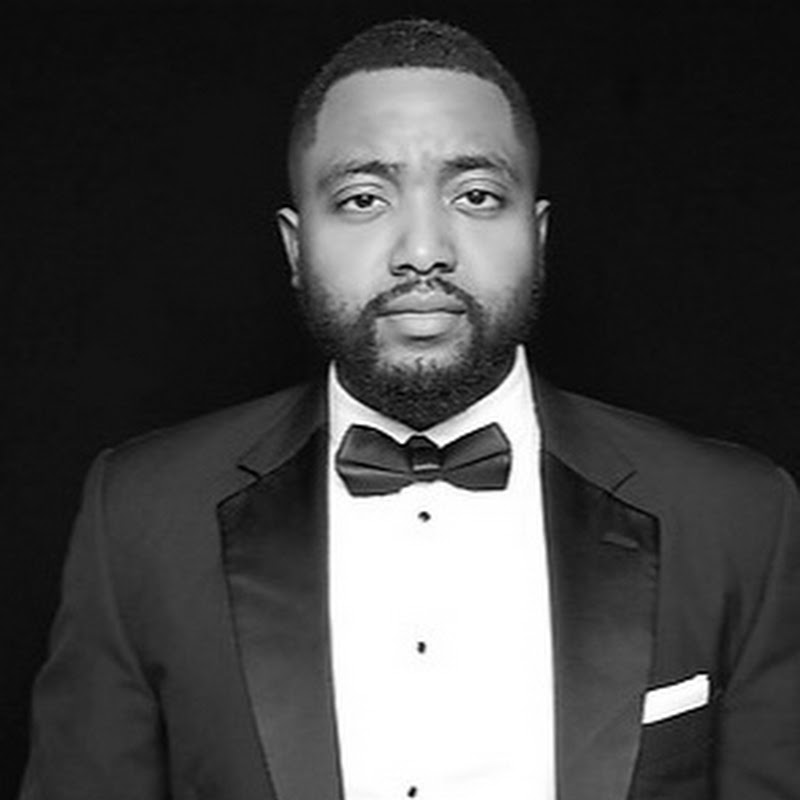
Don Lemon ARRESTED While Covering Grammys As Trump DOJ HUNTS DOWN Woke Activists For Church Invasion
YouTube · jT0cThqDRVs
Quick Read
Summary
Takeaways
- ❖Former CNN anchor Don Lemon was reportedly arrested by federal agents in Los Angeles while covering the Grammy Awards, in connection with a church protest in St. Paul, Minnesota.
- ❖The host celebrates the arrests, crediting the Trump Department of Justice and Pam Bondi for pursuing charges despite earlier judicial setbacks.
- ❖Other individuals, including a school board member and an online personality, were also arrested for their alleged roles in the church incident.
- ❖The host argues that the arrests demonstrate that First Amendment rights are not absolute and do not justify infringing on others' rights, such as freedom of worship.
- ❖It is speculated that the DOJ secured indictments through a grand jury, suggesting substantial evidence beyond initial probable cause assessments.
Insights
1Don Lemon's Arrest and Legal Background
Don Lemon was reportedly arrested by federal agents in Los Angeles, connected to an anti-ICE protest at a church in St. Paul, Minnesota. Previously, federal attempts to secure an arrest warrant were rejected by a magistrate judge, a higher judge, and an appeals court. The host suggests the DOJ likely proceeded by securing an indictment from a grand jury, which is seen as a more robust legal pathway.
Confirmation from US Justice Department, news clips reporting the arrest, host's discussion of previous judicial rejections (, , )
2The 'Journalist' vs. 'Protester' Distinction
The host strongly asserts that Don Lemon and others involved were not merely 'journalists' exercising First Amendment rights by filming, but were actively participating in and supporting a 'mob' that infringed on the First Amendment rights of churchgoers. The host believes the DOJ likely gathered additional evidence, possibly through communications with already arrested co-conspirators, to prove Lemon's role as a protester rather than a neutral observer.
Host's commentary: 'You're on camera supporting it. You're on camera justifying it... clearly as a part of the mob.' (), 'they probably got a lot more evidence after they initially arrested the three people' ()
3Limits of First Amendment Rights
A core argument is that constitutional rights, including freedom of speech and press, are not absolute. They end where other people's rights begin. Invading a church to disrupt worship is presented as an infringement on freedom of religion, and therefore not a protected First Amendment activity. The arrests are framed as a 'hard lesson' for those who misunderstand this fundamental principle.
Host's explanation: 'You do not have a first amendment right to invade a church... You do not have a first amendment right to take away somebody else's first amendment right.' (), 'your rights end where other rights begin.' ()
Bottom Line
The host interprets the arrests as a strategic victory for the Trump DOJ, demonstrating their ability to secure indictments against 'liberal' figures even in politically challenging jurisdictions like Minneapolis, suggesting the evidence is 'airtight' due to the difficulty of such an outcome.
This implies a perceived shift in legal enforcement where politically aligned figures previously thought immune are now facing consequences, potentially setting a precedent for how 'activist' actions are prosecuted.
Conservative legal groups or political strategists could leverage this case to argue for stricter enforcement against protests deemed disruptive or infringing on others' rights, using it as a model for future legal challenges.
The host believes that the arrests of initial co-conspirators provided the DOJ with additional evidence, likely communications, that solidified the case against Don Lemon, moving him from a perceived journalist to an active participant.
This highlights the investigative strategy of 'flipping' initial arrestees to build a stronger case against higher-profile targets, suggesting a coordinated effort by federal authorities.
Legal defense teams for activists should be acutely aware of the potential for communication records to be used as evidence, especially when individuals claim journalistic immunity while participating in protests.
Key Concepts
Rights + Responsibility = Liberty
The host posits that true liberty arises from exercising rights with responsibility, ensuring they do not infringe upon the rights of others. Without responsibility, rights lead to anarchy and chaos, as exemplified by the church protest.
Lessons
- Understand that, from this perspective, constitutional rights are not absolute and are limited by the rights of others; actions infringing on others' rights, like disrupting religious worship, may not be constitutionally protected.
- Recognize the distinction between neutral journalism and active participation in protests, as federal authorities may scrutinize this difference when considering charges related to public disturbances.
- Be aware that legal processes, even after initial rejections by judges, can proceed through grand jury indictments, especially if new evidence or a different legal strategy is employed.
Notable Moments
The host's celebratory reaction to the news of Don Lemon's arrest, expressing personal happiness and a sense of vindication.
This sets the tone for the entire episode, framing the event as a significant 'win' for a particular political viewpoint and against perceived 'woke' activism.
A clip of another individual being arrested, claiming to be a journalist and citing First Amendment rights, while federal agents present an indictment from a grand jury.
This moment provides a direct, real-time example of the conflict between perceived journalistic rights and law enforcement actions, reinforcing the host's argument about the limits of such rights.
Quotes
"We got him. We finally got him. We got Donna Lemonade. Don Lemon has been arrested. I cannot tell you guys how much it makes me happy when I wake up in the morning."
"No, you do not have a first amendment right to invade a church, right? You do not have a first amendment right to take away somebody else's first amendment right."
"You cannot have liberty without responsibility. Rights plus responsibility is how you get liberty. Right? When people have just rights with no responsibility... you don't get liberty. You get anarchy and chaos."
Q&A
Recent Questions
Related Episodes

CNN And Liberal Media LOSE THEIR MINDS Over Don Lemon Arrest As DEVASTATING INDICTMENT GETS UNSEALED
"The host dissects the Don Lemon indictment, arguing it proves Lemon was an active co-conspirator in a church protest, not a passive journalist, and predicts his conviction despite 'liberal media' claims of racism and press freedom violations."

Trump DOJ REACHES NEW LOW Trying to SAVE Trump
"Professor Aziz Huck dissects the foundational principles of the rule of law, revealing how modern political partisanship and the Justice Department's 'weaponization fund' challenge core constitutional mechanisms and legal predictability."

SCOTUS Hands Trump THIRD MASSIVE WIN | Timcast IRL w/ Brett Weinstein
"The Supreme Court's redistricting rulings and the Hantavirus narrative expose deep political hypocrisy and the dangers of unchecked power in media and medicine, highlighting the ongoing battle for truth and individual liberty."

HANTAVIRUS PANDEMIC PANIC, Human To Human Spread Feared | Timcast IRL
"Tim Pool and his guests dismiss the Hantavirus panic as media desperation, pivot to discussing escalating political polarization, the rise of technocracy, and the weaponization of social issues."