Global Investors Are Quietly Dumping U.S. Assets
YouTube · jzmyzxReK04
Quick Read
Summary
Takeaways
- ❖US consumer confidence has hit a 14-year low, lower than during the initial months of the pandemic.
- ❖This low confidence is partly attributed to partisan political lenses and the universal frustration caused by inflation, rather than just the rate of price changes.
- ❖Major companies like Amazon, UPS, Citi, Pinterest, Nike, and Meta have announced significant layoffs, reflecting a trend of slowing job growth and net job losses.
- ❖Despite tariff threats, most were not implemented, but the uncertainty still deters long-term capital investment.
- ❖International allies (EU, UK, Canada, South Korea) are actively seeking closer trade relations with China and India, diversifying away from the US.
- ❖Companies have been absorbing tariff costs, betting on the Supreme Court striking them down and mandating rebates; a contrary ruling would be economically disastrous.
- ❖The president's desire to dictate business decisions (e.g., factory locations, personnel) creates a 'command economy' dynamic, where powerful corporate leaders become supplicants.
- ❖A 'sell America' trade is emerging, with countries like India, Denmark, and Sweden dumping US treasuries, signaling a diversification away from the dollar due to perceived US instability.
Insights
1Consumer Confidence at 14-Year Low Amidst Partisan Economic Perception
The consumer confidence index has fallen to a 14-year low, even below levels seen during the initial months of the pandemic. This decline is not solely based on economic fundamentals but is significantly mediated by partisan lenses. Democrats, in particular, express greater dissatisfaction with the economy, channeling broader anger about political and social issues into their economic outlook. Inflation, unlike unemployment, creates a more universal sense of frustration and uncertainty across the population, contributing to this widespread pessimism.
Report on consumer confidence index at 14-year low (), lower than pandemic (). Katherine RPel's explanation of partisan lenses () and 'referred pain' (). Discussion on inflation's universal impact vs. unemployment's limited scope ().
2Widespread Layoffs Signal Slowing Job Growth Across Diverse Sectors
Recent weeks have seen significant layoff announcements across various sectors, including Amazon (16,000), UPS (30,000), Citi (1,000), Pinterest (700, 15% of workforce), Nike (775), and Meta (1,000 from metaverse initiative). This trend, which began in January 2025, indicates a slowing of job growth and, in several months, net job losses. While some frame these as 'restructurings' to shift resources, the reality is a tangible reduction in workforce across tech, retail, finance, and apparel.
Amazon (), UPS (), Citygroup (), Pinterest (), Nike (), Meta () layoff numbers. Host notes 'very real and observable trend which began in January of 2025 of job growth slowing' ().
3Erratic US Trade Policy Drives Global Allies to Seek New Partnerships
The unpredictability of US trade policy, characterized by frequent tariff threats that often don't materialize, creates significant uncertainty for businesses and international partners. While most tariff threats have not been fully implemented, the constant possibility prevents long-term capital investment and planning. This erratic behavior is pushing traditional US allies, such as the EU, UK, Canada, and South Korea, to actively forge closer trade and investment relationships with countries like China and India, effectively diversifying away from reliance on the US.
Bloomberg chart showing three-quarters of Trump's tariff threats were not carried out (). Host states, 'You can't make any kind of long-term planning with this president' (). EU signing deal with Modi in India (), Kier Starmer in China (), Macron inviting Chinese capital (), Canadian PM and South Korean president visiting China ().
4Companies Absorb Tariff Costs, Betting on Supreme Court Rebates
Despite existing tariffs, inflation has not been as severe as some predicted because many companies have chosen to absorb the costs rather than pass them fully onto consumers. This strategy is based on the expectation that the Supreme Court will eventually strike down these tariffs and mandate a rebate of the collected money. If the Supreme Court were to surprise everyone and uphold the tariffs or deny rebates, it would be 'economically disastrous' for these companies, forcing them to suddenly raise prices significantly or face severe financial strain.
Discussion that 'most of the tariffs never happened' () and companies 'betting that the Supreme Court is going to strike down these tariffs' (). Companies 'absorb the cost for now and bet that we're going to get a big fat refund check' (). Prediction of 'economically disastrous' outcome if Supreme Court doesn't rule as expected ().
Bottom Line
Global investors are increasingly engaging in a 'sell America' trade, dumping US treasuries and diversifying away from the dollar, driven by perceived political and economic instability in the US.
This trend signals a potential erosion of the US dollar's long-held status as the world's primary reserve currency and the perceived safety of US treasuries. It reflects a growing lack of faith among international investors in the US's political stability and its leaders' commitment to traditional economic objectives.
This shift creates opportunities for other nations to strengthen their currencies and financial systems as credible alternatives, and for investors to explore diversified portfolios less reliant on US assets. For the US, it necessitates a critical re-evaluation of its geopolitical and economic policies to restore confidence and maintain its global financial leadership.
The current US administration fosters a 'command economy' environment where powerful corporate leaders act as supplicants to the president, fearing weaponized state power (e.g., tariffs, antitrust suits).
This dynamic undermines the principles of a free market economy, where businesses typically operate based on market forces and regulatory frameworks. Instead, it introduces an element of political coercion, forcing companies to make decisions based on presidential favor rather than economic efficiency or long-term strategy. This creates an unpredictable and potentially corruptible business environment.
For businesses, understanding this dynamic means prioritizing political risk management and potentially engaging in proactive lobbying or appeasement strategies. For competitors outside the US, it highlights a potential competitive advantage if their home governments offer more stable and predictable regulatory environments, attracting investment that might otherwise go to the US.
Key Concepts
Partisan Economic Perception
Consumer confidence and economic sentiment are heavily influenced by political affiliation, leading individuals to rate the economy more negatively when the opposing party is in power, even if hard economic data suggests otherwise. This 'referred pain' redirects anger about broader political issues into economic survey responses.
Inflation vs. Unemployment Perception
Inflation, which affects everyone through higher prices, generates more universal frustration and a sense of uncertainty than unemployment, which impacts a smaller, albeit significant, portion of the population. This explains why public sentiment can remain low even when unemployment is contained.
The Bond Market as the Ultimate Authority
Despite political power, the bond market ultimately dictates economic realities. Its collective assessment of a country's stability and reliability influences interest rates and the value of assets, effectively holding political leaders accountable for their fiscal and geopolitical decisions. As James Carville famously said, 'I used to think that if there was reincarnation, I wanted to come back as the president or the pope or a .400 baseball hitter. But now I want to come back as the bond market. You can intimidate everybody.'
Cleanest of the Dirty Shirts
This metaphor describes the US dollar's status as the global reserve currency. While other currencies or assets might not be perfect alternatives, the dollar remains the preferred choice because it is perceived as the 'least bad' or most stable option among imperfect alternatives, despite its own challenges. However, this status is not immune to erosion if US stability declines significantly.
Lessons
- Businesses should re-evaluate their long-term capital investment strategies, accounting for high political uncertainty and the potential for erratic trade policy shifts.
- Investors should consider diversifying portfolios away from an over-reliance on US treasuries and dollar-denominated assets, exploring opportunities in more politically stable economies or alternative currencies.
- Policymakers in allied nations should continue to strengthen bilateral and multilateral trade agreements with diverse partners to reduce dependence on the US and mitigate risks from its unpredictable economic policies.
Quotes
"I thought I was going to be the most powerful man in the free world and it turns out that I work for the [expletive] bond market."
"When I die, I want to come back as the bond market because yeah, it's the most powerful being there is or whatever."
Q&A
Recent Questions
Related Episodes
PBS News Hour full episode, Feb. 20, 2026
"The Supreme Court struck down President Trump's sweeping global tariffs, prompting an immediate presidential counter-move with new tariffs and escalating tensions with Iran, while the EPA rolled back critical environmental protections."
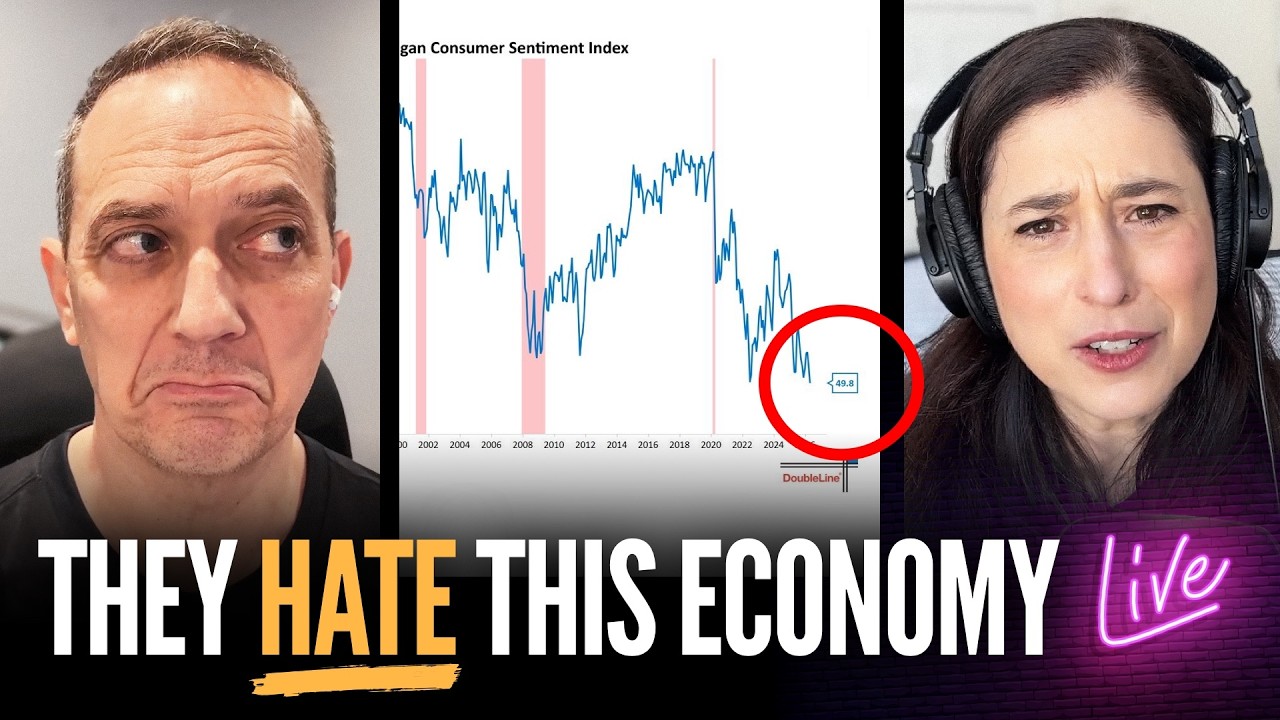
BREAKING: Worst Consumer Sentiment in History; DOJ Drops Criminal Probe of Chair Powell | Receipts
"This episode dissects the political weaponization of the Department of Justice against the Federal Reserve Chair and the partisan distortion of consumer confidence data, highlighting the erosion of independent institutions and free markets."

Trump’s Iran War Could Send Prices Soaring (w/ Kenneth Rogoff) | How to Fix It
"Harvard Professor Kenneth Rogoff details how escalating US debt, attacks on Federal Reserve independence, and geopolitical instability in the Middle East threaten the dollar's global reserve status and could trigger a domestic economic crisis."

Trump's Trade War Derailed By SCOTUS w/ Mark Joseph Stern | MR Live
"The Supreme Court significantly curtailed former President Trump's sweeping tariff authority, ruling his use of an emergency statute for broad taxation was unlawful, yet the financial benefits of these illegal tariffs are unlikely to reach the public."