BREAKING: TITLE | TBN Israel
YouTube · kNhw1UURwY4
Quick Read
Summary
Takeaways
- ❖Reports of US-Iran diplomatic progress are based on unofficial sources, with both sides selectively leaking information to shape perception.
- ❖The US approach under Trump is for a short, simplified Memorandum of Understanding, backed by a credible threat of military action.
- ❖Iran's regime appears fractured, with multiple factions speaking in different voices, raising doubts about who can genuinely commit to an agreement.
- ❖A key point of contention is the Strait of Hormuz: Iran wants to open it on its terms after a ceasefire, while the US demands immediate opening upon agreement.
- ❖Israel fears a 'phased agreement' would provide Iran economic oxygen and time to reorganize its nuclear program, ballistic missiles, drones, and funding for proxies like Hamas and Hezbollah.
- ❖Iran has secretly rebuilt ballistic missile production and critical systems, with estimates showing 2/3 of its missile launchers are still usable.
- ❖Iranian procurement networks use Gulf States' trade hubs and shell companies to acquire dual-use technology, like Chinese satellite communication equipment, to enhance military capabilities.
- ❖Iranian cyber espionage groups, like 'Screening Surfins,' conduct sophisticated campaigns against aerospace, defense, and communications companies in the US, Israel, and UAE using fake job offers and video call updates.
- ❖Hezbollah continues to operate explosive drones against IDF forces in southern Lebanon, demonstrating that a 'ceasefire' is a 'slow war' on the ground.
- ❖The nuclear issue, ballistic missiles, and proxy organizations are critical for Israel but are either delayed or not clearly addressed in the current US-Iran agreement discussions.
Insights
1Skepticism Over US-Iran 'Breakthrough'
Despite reports of diplomatic progress between the US and Iran, the TBN Israel hosts express significant skepticism, framing the situation as a potential strategic pause rather than a genuine peace agreement. They highlight that information is selectively leaked by both sides, and fundamental disagreements on key issues persist, making any 'breakthrough' highly ambiguous.
Trump's representatives are told 'Do not rush into a deal.' Iran states 'agreement is not close.' The hosts question if it's a 'smart agreement that weakens Iran or to a ceasefire that saves it at the last moment?'
2Iran's Internal Divisions and Negotiating Capacity
Mati Shashani suggests that the Iranian regime might be internally fragmented, with no single faction capable of speaking for the whole or reliably enforcing an agreement. This internal struggle could lead to an 'implosion' or 'explosion,' making negotiations inherently unstable and unreliable.
Mati Shashani states, 'The Iranian regime is speaking in multiple different voices... no one faction that can actually decide or speak for others.' He cites an Israeli expert, Benny Sabti, asking, 'How do you know that the Iranian regime has not already started falling apart?'
3Iran's Strategic Rebuilding and Procurement
Contrary to initial assessments of severe damage, Iran has begun rebuilding its ballistic missile production, repairing launchers, and manufacturing critical systems. It leverages trade hubs in Gulf States, like the UAE, and shell companies to procure advanced technology, including Chinese satellite communication equipment, to enhance its military capabilities.
Initial estimates of 90% destruction of Iran's defensive industrial base are now countered by a 'more complex picture' where 'some production lines were rebuilt' and 'roughly 2/3 of Iran's missile launchers still being usable.' An exposed operation details the purchase of 1.8 tons of Chinese satellite antenna equipment via a Dubai-based shell company for shipment to Iran.
4Sophisticated Iranian Cyber Espionage
Iran's espionage group 'Screening Surfins' (aka 'Iranian dream job') conducts advanced cyber campaigns against aerospace, defense, and communications companies in the US, Israel, and UAE. They use cunning methods like fake job offers, impersonating video call platforms, and malware with 'time bombs' and 'app domain manager hijacking' to disable computer defenses and ensure persistence.
The campaign involved 'fake job offers for senior software engineers' and impersonating 'a video call platform in the style of Zoom or Teams' to install malware. Identified malware included 'mini update' (permanent backdoor) and 'mini junk version two' (bypasses scanners). A 'time bomb' malware was programmed to activate after March 27, 2026.
5Israel's Dilemma: Deterrence vs. Diplomatic Constraints
Israel faces a critical dilemma: how to deter Hezbollah's ongoing attacks in Lebanon without igniting a broader regional conflict, especially when the US is pursuing an agreement with Iran. Aggressive responses could undermine US diplomatic efforts, but restraint risks allowing Hezbollah to strengthen and continue its 'slow war' tactics.
An IDF soldier was killed by a Hezbollah explosive drone in southern Lebanon, illustrating the 'heavy price of what is called a ceasefire.' Israeli cabinet discussions reveal arguments between demanding 'defensive solutions' (Netanyahu) and advocating for 'hitting buildings in Beirut and Tyre' (Chief of Staff Al Zamir) to create deterrence.
Bottom Line
The calendar, specifically the Hajj pilgrimage to Mecca, may have influenced the timing of diplomatic 'breakthroughs' between the US and Iran, suggesting a tactical pause to avoid regional escalation during a sensitive religious period.
This implies that some diplomatic movements are less about genuine progress and more about strategic timing to manage immediate risks, potentially masking underlying military readiness and unresolved tensions.
Analysts should consider seasonal or event-based factors when evaluating geopolitical shifts, as they can reveal temporary de-escalation tactics rather than fundamental changes in state relations.
The Iranian regime's supreme leader is reportedly hiding in an unknown location, communicating only through messengers due to fear of assassination, which significantly delays and complicates negotiations with the US.
This operational constraint on Iran's leadership creates communication bottlenecks, potentially leading to outdated messages and a lack of clear, unified decision-making, further destabilizing the negotiation process.
Understanding the internal security posture and communication limitations of adversary leadership can provide insights into the pace and reliability of diplomatic engagements, informing strategies for engagement or pressure.
Lessons
- Monitor official and unofficial statements from US, Iranian, and Israeli officials closely, recognizing that information is often strategically leaked to influence perception.
- Evaluate any proposed US-Iran agreement not just by its stated terms, but by its practical impact on Iran's military capabilities, especially its nuclear program, ballistic missiles, and proxy networks.
- Support organizations that provide on-the-ground intelligence and analysis from the Middle East to gain a more accurate understanding of the complex geopolitical landscape.
Quotes
"The big question is not whether there is a headline about an agreement. The big question is what Iran is really being forced to give up. Because in the Middle East, agreements are not tested by smiles, statements, or leaks. They're tested by the power that remains in the enemy's hands the day after."
"Is it possible that the Iranian regime is already internally fighting over control in the day after the Supreme Leader or the day after this war? And the answer to that is yes. We don't actually know who's controlling Iran."
"Iran bought technology through the Amiratis that could help it attack the Amiratis."
"If the agreement does not touch the nuclear program, the missiles and Iran's proxies, then maybe we will get temporary quiet, but not a real solution."
"The only question is the breakout time to file material. How long would it take Iran from the moment it decides to race towards a nuclear weapon to reach material and reach to 90% for one bomb? If the agreement does not extend that time in a significant and clear way, it does not achieve its goal."
Q&A
Recent Questions
Related Episodes

BREAKING: Iran Threatens To END Talks; U.S. Vows Retaliation; Hezbollah Collapsing? | TBN Israel
"Iran is leveraging Hezbollah and the Strait of Hormuz to manipulate US negotiations, while Israel asserts its right to dismantle Hezbollah's eroding but still dangerous infrastructure in Lebanon, independent of international talks."
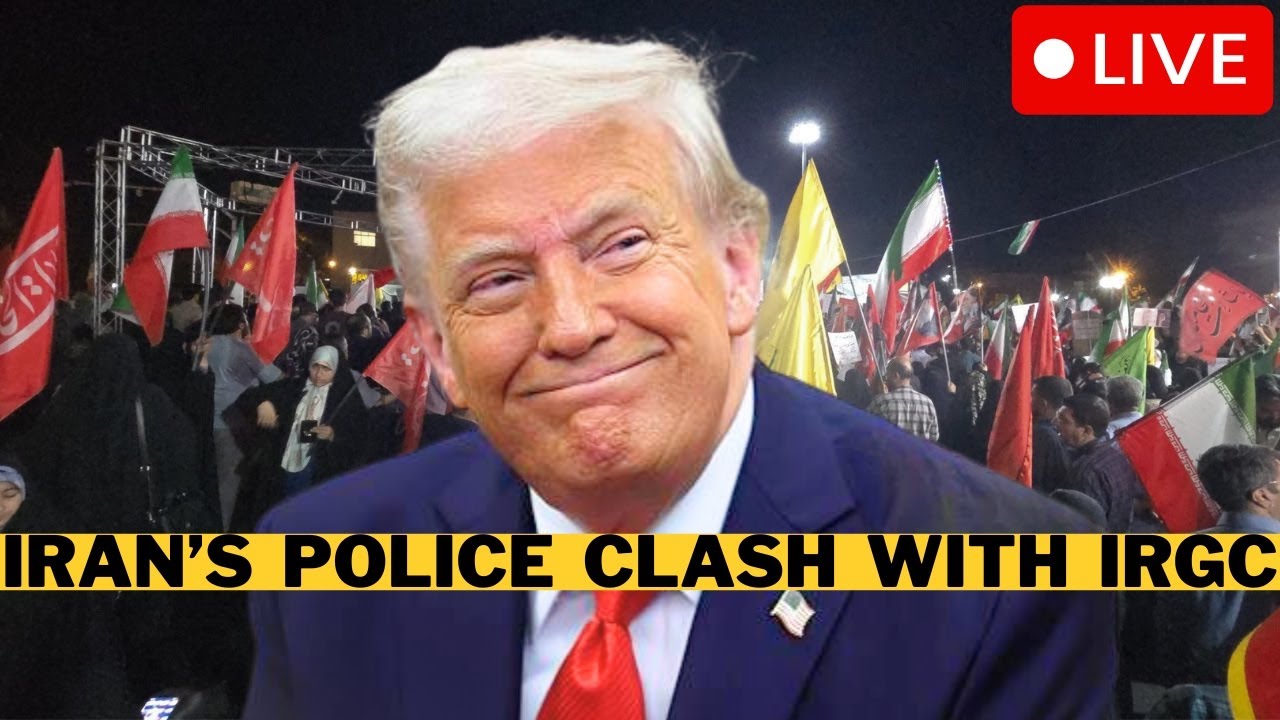
BREAKING: Protests ERUPT In Iran Over IRGC Surrendering To Trump - Infighting Clashes In Tehran
"Iran is experiencing severe internal infighting and protests as hardline IRGC elements clash with government figures over a perceived 'surrender' to the US, while mainstream Western media misrepresents the situation."

Patrick Henningsen: Hezbollah JUST Fired Back at Israel - Iran Vows to “Crush” All Attacks
"Patrick Henningsen argues that the US and Israel initiated an illegal war against Iran, driven by Trump's incompetence and Israeli influence, leading to an inevitable escalation with severe global economic repercussions."
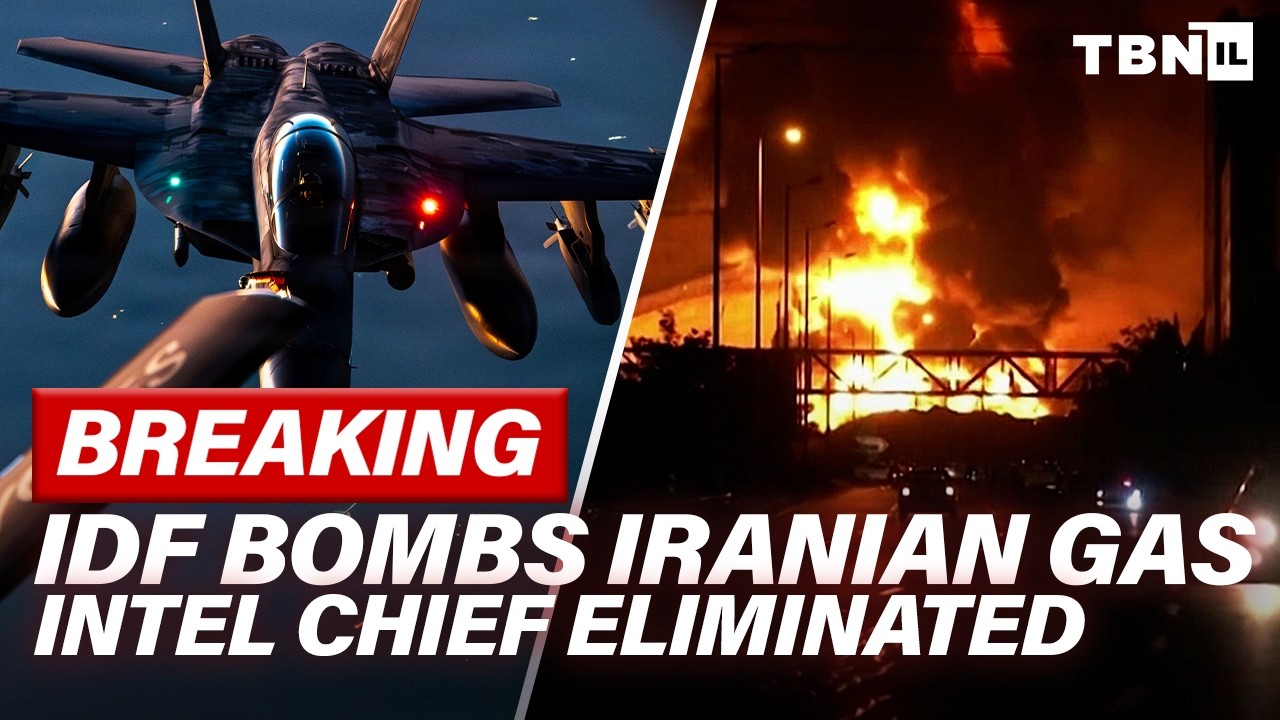
BREAKING: Israel BOMBS Major Iran Gas Site; Top Mullah ELIMINATED; Iran Vows VENGEACE | TBN Israel
"Israel and the United States have escalated their 'Roaring Lion War' against Iran, striking its largest gas facilities, eliminating key intelligence and military figures, and disrupting missile production, while Iran threatens a broader energy war in the Gulf."