'Iran Will Give Up NOTHING' Israel Bombs Iran As Lebanon War Smashes Trump Ceasefire
YouTube · kec7Ugy9g9A
Quick Read
Summary
Takeaways
- ❖A Trump-brokered ceasefire has failed, with Israel and Iran exchanging air strikes over Lebanon, intensifying the regional conflict.
- ❖President Trump is perceived as desperate to exit the war due to economic and political costs, but Israel's actions suggest it is not easily controlled by US directives.
- ❖Iran maintains a strong negotiating position, leveraging its resilience and control over strategic assets like the Strait of Hormuz, refusing to make concessions on its nuclear program or sovereignty.
Insights
1Ceasefire Breakdown and Escalation
A Trump-brokered ceasefire between the US and Iran has effectively collapsed. Israeli forces struck housing blocks in Beirut, claiming they were Hezbollah terrorist headquarters. Iran retaliated with strikes on Israel, leading to a direct exchange of fire and threatening to unravel the broader peace process. This escalation highlights the fragility of diplomatic efforts in the region.
The host states, 'both Israel and Iran have traded air strikes in a major violation of the ceasefire. The flash point is Lebanon.' He details IDF strikes in Beirut and Iran's subsequent firing on Israel.
2Divergent US-Israeli Objectives and Power Dynamics
President Trump's desire to end the war, driven by economic and political pressures, clashes with Israel's determination to continue military action against Hezbollah and Iran. Analysts suggest Israel holds greater power in the relationship, as its actions often defy Trump's directives, indicating a fundamental difference in strategic priorities.
Glenn Greenwald states, 'the Israelis are determined to keep the war going whereas President Trump wants to to end it. I think the fact that it's not ending is proof of who actually has the greater power in the relationship and it's not President Trump or the United States.'
3Iran's Strategic Patience and Leverage
Iran is not motivated to rush into a deal, understanding that Trump faces a ticking political clock with upcoming elections. Its resilience against military and economic pressure, coupled with its ability to disrupt global energy supplies through the Strait of Hormuz, provides significant leverage, allowing it to dictate terms or prolong negotiations.
Mohammad Marandi asserts, 'There will be no agreement until Trump accepts and implements Iran's conditions. There'll be no compromise. The Islamic Republic can wait until the Trump economy crumbles.' Glenn Greenwald adds, 'Iran now knows its most powerful weapons are shutting the Strait of Hormuz or firing off a few missiles at its neighboring Gulf states.'
4Israel's Regional Dominance Objective
Israel's primary goal is to eliminate any countervailing force to its dominance in the Middle East, viewing Iran as the only formidable country capable of deterring Israeli hegemony. This objective drives its military actions against Hezbollah and its resistance to a quick peace deal that might leave Iranian influence intact.
Glenn Greenwald explains, 'What Israel wants with Iran is the obliteration of any countervailing force to their dominance of the region. Iran is the only formidable party or country in that region that can provide any kind of deterrence or limitation to Israeli hegemony in the Middle East and they want that country destroyed.'
5Iran's Uncompromising Stance on Sovereignty and Nuclear Program
Iran firmly states it will not voluntarily surrender its enriched uranium or compromise its sovereignty. It views the conflict as an 'existential threat' and a 'war of survival,' committed to preserving its right to a peaceful nuclear program and resisting external demands that undermine its independence.
Mohammad Marandi declares, 'Iran is not going to hand over anything to the Americans. But the Iranians have already had a deal in 2015, the JCPOA. And in during the in that deal Iran gave lots of concessions. But Iran is not going to give up its nuclear program. Iran is not going to give up its sovereignty.'
Bottom Line
Israel's continued military actions in Lebanon, despite US calls for restraint, suggest that its strategic objectives for regional dominance outweigh its deference to US foreign policy, even under a supportive administration.
This dynamic implies that US leverage over Israel is limited, potentially hindering broader peace initiatives and forcing the US to choose between its own strategic interests and its alliance with Israel.
For other regional powers, this highlights an opportunity to exploit the visible cracks in the US-Israel relationship, potentially seeking alternative alliances or strengthening their own deterrent capabilities.
Iran's strategy of 'waiting out' Trump's political timeline, leveraging US domestic pressures and economic vulnerabilities, demonstrates a sophisticated understanding of Western political cycles and a long-term approach to geopolitical conflict.
This approach makes short-term, 'deal-making' diplomacy challenging and suggests that any resolution will require significant concessions from the US or a fundamental shift in its domestic political landscape.
Analysts and policymakers should recognize that Iran's resilience is not merely military but deeply political and economic, requiring a multi-faceted strategy that accounts for long-term endurance rather than quick wins.
Lessons
- Policymakers must acknowledge the divergent strategic goals of the US, Israel, and Iran to formulate realistic diplomatic and military strategies, rather than assuming aligned interests.
- To achieve de-escalation, the US may need to apply genuine leverage, such as withholding military support, to restrain Israeli actions in Lebanon, as current 'Truth Social' posts are insufficient.
- Analysts should prepare for a prolonged conflict, as Iran's demonstrated resilience and strategic patience indicate it will not yield to short-term pressure tactics, especially given upcoming US elections.
Notable Moments
Sharon Haskel, Israel's Deputy Minister of Foreign Affairs, deflects Piers Morgan's direct question about Israel obeying Trump's orders, emphasizing close cooperation but not explicit obedience.
This exchange highlights the perceived independence of Israeli foreign policy, even from its closest ally, and suggests that Trump's public statements about controlling Israel may not reflect the reality on the ground.
Rania Khalek details the human cost of the conflict in Lebanon, including the displacement of 14% of the population and the killing of Lebanese army soldiers by Israeli forces, challenging the narrative that Israel's actions are solely against Hezbollah.
This provides a critical counter-narrative to official Israeli statements, emphasizing the broader impact of the conflict on Lebanese civilians and governmental forces, complicating the justification for military actions.
Mohammad Marandi's uncompromising stance that Iran will 'give up nothing' and can wait for the 'Trump economy to crumble,' directly refuting Trump's claims of an imminent peace deal.
This statement from a Tehran University professor directly challenges the US narrative of impending victory or a quick resolution, underscoring Iran's strong resolve and long-term strategic outlook.
Quotes
"Iran may well lose its enriched uranium, but gain formal control of the whole new straight, an end to all sanctions, and the US commitment to preventing Israeli attacks on Hezbollah. The art of the deal, indeed."
"The fact that it's not ending is proof of who actually has the greater power in the relationship and it's not President Trump or the United States."
"The Israelis want basically permanent war because they want to keep everybody in the region weak and unable to ever pose a challenge to them either militarily or economically."
"Iran is not going to hand over anything to the Americans. But the Iranians have already had a deal in 2015, the JCPOA. And in during the in that deal Iran gave lots of concessions. But Iran is not going to give up its nuclear program. Iran is not going to give up its sovereignty."
"For us, this is war of survival. We have to win this war. And therefore, we will win the siege no matter how difficult it becomes."
Q&A
Recent Questions
Related Episodes

Patrick Henningsen: Hezbollah JUST Fired Back at Israel - Iran Vows to “Crush” All Attacks
"Patrick Henningsen argues that the US and Israel initiated an illegal war against Iran, driven by Trump's incompetence and Israeli influence, leading to an inevitable escalation with severe global economic repercussions."
BREAKING: Protests ERUPT In Iran Over IRGC Surrendering To Trump - Infighting Clashes In Tehran
"Iran is experiencing severe internal infighting and protests as hardline IRGC elements clash with government figures over a perceived 'surrender' to the US, while mainstream Western media misrepresents the situation."
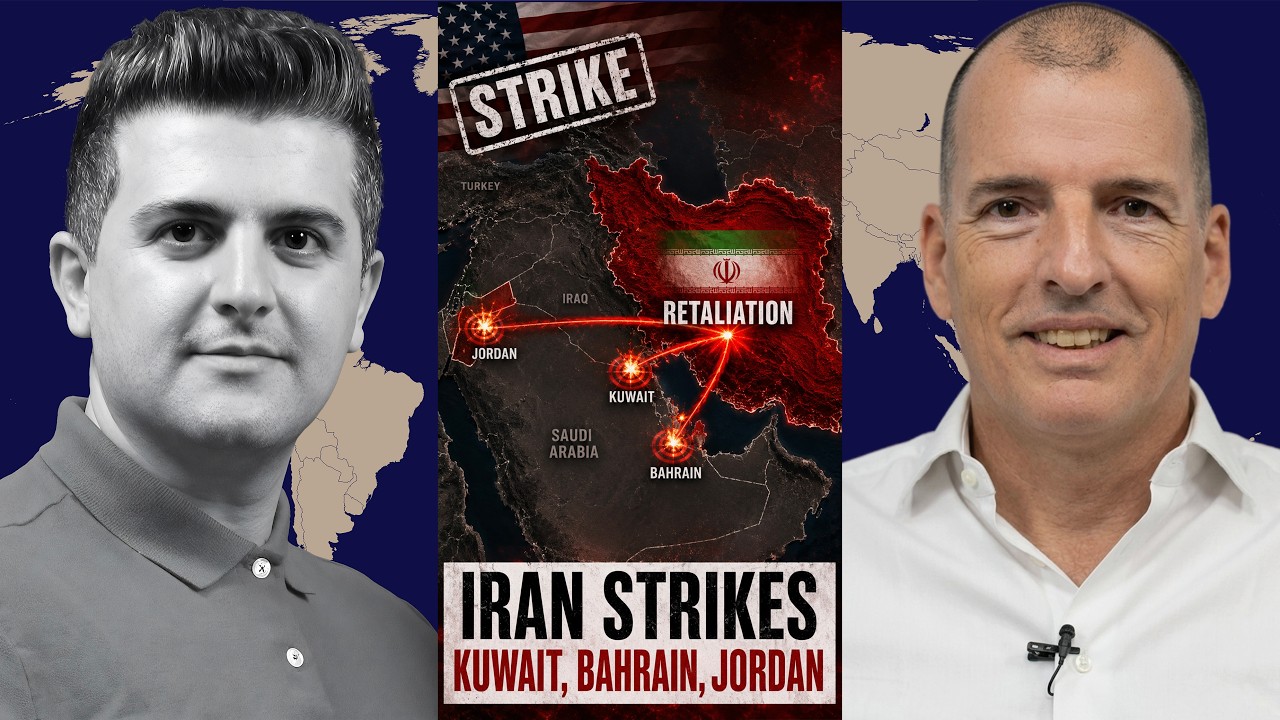
Alex Krainer: US STRIKES Iran – Iran RETALIATES Against Kuwait, Bahrain & Jordan!
"Amidst escalating US-Iran conflict and Iranian retaliation against regional US allies, this episode argues that US foreign policy is deeply controlled by an 'Anglo-Zionist conspiracy' led by the Rothschild banking dynasty, prioritizing Israeli interests over American ones."

LIVE: Trump HIDES FROM PUBLIC as US SOLDIER KILLED!!! 6/2/2026
"The host exposes alleged government cover-ups regarding military casualties, Trump's unexplained public absence, and questionable political appointments, arguing these reflect a 'regime of loser babies' and a failing foreign policy."