
LIVE Bernie Sanders TAX THE RICH Rally in NYC
YouTube · kfAG1h_a04I
Quick Read
Summary
Takeaways
- ❖New York is the most unequal state in the country, with 1 million New Yorkers at risk of losing healthcare and 200,000 losing SNAP benefits.
- ❖The top 1% in New York City earns 44% of all income, while the bottom 99% share 56%.
- ❖Billionaires like Elon Musk (3.3%), Jeff Bezos (1%), and Michael Bloomberg (1.3%) pay significantly lower effective tax rates than average workers or nurses.
- ❖A proposed 5% wealth tax on America's 938 billionaires could raise $4.4 trillion over 10 years, sufficient to provide $3,000 direct payments to most households, end homelessness, and expand Medicare.
- ❖Democratic leadership is criticized for acting like 'baby Republicans' and protecting wealthy donors, leading to the current economic disparities.
- ❖The argument that the rich will leave if taxed is dismissed as an 'extortionist' tactic by oligarchs who do not believe in democracy.
- ❖Public institutions like CUNY face decades of disinvestment and deferred maintenance, requiring transformative investment funded by taxing excessive wealth.
Insights
1Extreme Wealth Concentration and Disparate Tax Burdens
Bernie Sanders highlights the unprecedented level of wealth inequality in the US. The top 1% owns more wealth than the bottom 93%, and one individual (Elon Musk) owns more than the bottom 53% of American households. Despite this, billionaires pay significantly lower effective tax rates than average workers. For example, Elon Musk paid less than 3.3%, Jeff Bezos less than 1%, and Michael Bloomberg 1.3%, while average truck drivers pay 8.4% and registered nurses 13.3%. This disparity is attributed to a rigged tax code written by lobbyists for the wealthy.
Sanders states, 'The top 1% owns more wealth than the bottom 93%.' and 'One man, one person, Mr. Musk owns more wealth than the bottom 53% of American households.' He cites Elon Musk's effective tax rate of less than 3.3% versus an average truck driver's 8.4%.
2Impact of Federal Cuts on New York's Vulnerable Populations
New York State Senator Gustavo Rivera and CNA Aia Agaba detail the severe consequences of federal policy changes, particularly Medicaid cuts, on New Yorkers. Approximately 450,000 New Yorkers will lose health coverage by July, with an additional 200,000 at risk by January due to work requirements designed to kick people off the system. This will impact the entire healthcare ecosystem, including nursing homes where the vast majority of residents rely on Medicaid. These cuts are framed as a direct result of tax breaks given to the ultra-rich.
Rivera states, 'About 450,000 New Yorkers because of the changes that are happening at the federal level will all of a sudden no longer be eligible to receive health coverage.' Agaba adds, 'Trump and the Republicans cut $1 trillion in healthcare funding to give tax breaks to the ultra rich and to pump more money into ICE.'
3Proposed Wealth Tax and its Transformative Potential
Bernie Sanders introduced a bill for a 5% wealth tax on America's 938 billionaires, projected to raise $4.4 trillion over 10 years. This revenue could fund substantial social programs without significantly impacting the billionaires' remaining wealth. Examples include $3,000 direct payments to households making under $150,000 ($12,000 for a family of four), ending homelessness, building 7 million units of affordable housing, expanding Medicare to cover dental, vision, and hearing, universal childcare, and ensuring no educator makes less than $60,000 annually.
Sanders describes his bill: 'a 5% wealth tax on 938 billionaires in America' that 'would raise $4.4 trillion over a 10-year period.' He details its uses, including '$3,000 direct payment' and 'enough money to end homelessness in America.'
4Critique of Democratic Leadership and Call for Bold Action
Multiple speakers, including the initial speaker and Julio Cores, criticize current Democratic leadership, particularly Governor Kathy Hochul, for not being sufficiently progressive. They accuse Democrats of acting like 'baby Republicans,' protecting wealthy donors, and failing to learn lessons that led to past political failures. They demand that leaders 'show up and be a leader' by actively supporting and implementing policies to tax the rich, rather than daring voters to vote against them.
The initial speaker states, 'I am also tired of having to tell Democrats to stop trying to act like baby Republicans because acting like baby Republicans is the reason why we have Donald Trump in the first place.' Julio Cores adds, 'We're asking the governor to stand with the majority and not the rich donors.'
Bottom Line
Bernie Sanders warns that oligarchs like Musk and Bezos are pushing AI and robotics, which he predicts will be 'disastrous for the working class of this country.' This introduces a technological dimension to the class struggle, suggesting future economic challenges beyond traditional labor displacement.
This perspective implies that the economic pressures on the working class are not solely due to current tax policies or corporate greed but are exacerbated by emerging technologies controlled by the wealthy. It suggests a need for proactive policy responses to mitigate the societal impact of AI and automation on employment and wealth distribution.
Policymakers and activists could develop new frameworks for taxing automation or AI-driven profits to fund universal basic income or retraining programs, preparing for a future where traditional employment models are significantly disrupted. This also opens a dialogue for worker ownership models or public control over critical AI infrastructure to ensure equitable benefits.
A Lehman College student, Maddie Hassan, details how billionaires use legal loopholes by borrowing against the value of their stocks and net worth to access funds interest-free, effectively avoiding income taxes on their vast wealth.
This mechanism reveals a sophisticated method by which the ultra-rich maintain liquidity and fund their lifestyles without triggering taxable income events. It highlights a critical flaw in the current tax system that allows wealth to grow and be utilized without contributing to public revenue in the same way earned income does.
Legislators could target this specific loophole by implementing wealth taxes, mark-to-market taxation on unrealized capital gains for billionaires, or by re-evaluating the tax treatment of loans secured by appreciating assets, ensuring that wealth, regardless of its form, contributes its fair share to public services.
Key Concepts
Oligarchy vs. Democracy
Bernie Sanders and other speakers repeatedly frame the current economic and political system as an 'oligarchy' where a small number of wealthy individuals hold disproportionate power and wealth, undermining democratic principles. They argue that this concentration of power allows the rich to rig tax codes, influence media, and make campaign contributions that buy political influence, contrasting this with the ideal of a functioning democracy where the will of the majority (working people) prevails.
Class Warfare
The concept of 'class warfare' is explicitly invoked, drawing on Warren Buffett's quote that his class (the rich) is making war and winning. Speakers contend that the current economic system is designed to redistribute wealth from the working class to the ultra-rich, leading to the 'decimation' of the working class. The rally itself is presented as a counter-offensive in this ongoing class struggle, aiming to reclaim wealth and power for the majority through progressive taxation.
Lessons
- Advocate for progressive tax policies at local and state levels, specifically supporting measures to increase taxes on high-income earners and large corporations.
- Engage with local political campaigns and organizations like the Democratic Socialists of America (DSA) to build working-class power and elect representatives committed to economic justice.
- Challenge political leaders who prioritize wealthy donors over the needs of working-class constituents, demanding accountability and a shift towards policies that benefit the majority.
Quotes
"I am also tired of having to tell Democrats to stop trying to act like baby Republicans because acting like baby Republicans is the reason why we have Donald Trump in the first place."
"Everybody has to pay their fair share. Everybody has to do their civic responsibility to make sure this city and state can move forward. And we have to stop balancing the budget on the backs of people who have been broken by the system time and time again."
"The relentless greed of the ultra rich is making that dream more and more impossible."
"The rich don't got a job. They don't got jobs. They make money by capital gains, but that doesn't get taxed at the same rate as the as the income that you and I make. Ain't right."
"You can tell a lot about how a community, about how a society is based on how they treat their elders and the people that care for them."
"Our struggle is their profit. And it does not have to be that way."
"Never before in American history have so few people held so much wealth and so much power."
"One man, one person, Mr. Musk owns more wealth than the bottom 53% of American households."
"There's class warfare, all right, but it is my class, the rich class, that's making war, and we are winning."
"We can have democracy in this country or we can have great wealth concentrated in the hands of a few, but we cannot have both."
Q&A
Recent Questions
Related Episodes

Fisk Data Center Revolt. TX Mandates Bible Reading. Disaster Bias Rule Ends. Dem Socialist Takeover?
"This episode dissects the controversies surrounding Fisk University's data center, the Trump administration's dismantling of anti-discrimination disaster aid rules impacting Haitian immigrants, and the rise of Democratic Socialists in local elections, all framed through a lens of racial and political commentary."
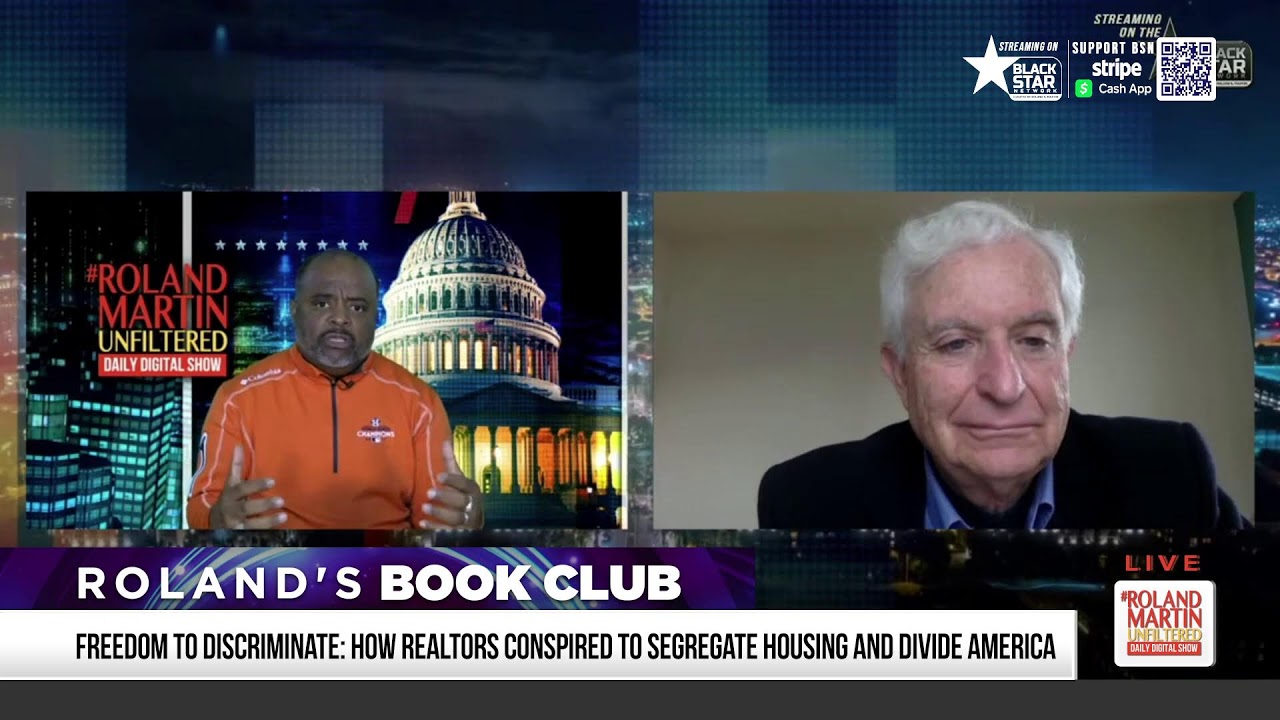
Freedom to Discriminate: Realtors Conspired to Segregate Housing & Divide America |#RolandsBookClub
"This episode exposes how American realtors deliberately invented and institutionalized housing segregation, shaping federal policy and ultimately redefining the concept of 'freedom' to fuel a political ideology that continues to divide the nation."

Tucker Carlson: Iran War Is The END Of Trump And MAGA
"The Young Turks hosts dissect Tucker Carlson's sharp criticisms of Donald Trump and the 'Iran War,' expose congressional cowardice regarding war powers, and detail the devastating human cost of military conflicts, all while advocating for a unified populist movement to dismantle political corruption."

Billionaire's WARNING: I'm SELLING. The Crash Is Already Here!
"Jeremy Grantham, a legendary investor who managed $165 billion, warns that the biggest investment bubble in history is about to burst, advising against US stocks and highlighting a looming fertility crisis driven by environmental toxins."