
PBS News Hour full episode, March 2, 2026
YouTube · lTl8gECoX7Y
Quick Read
Summary
Takeaways
- ❖The U.S. and Israel are in the third day of a war against Iran, with widespread airstrikes on Iranian targets and retaliatory attacks across the region.
- ❖Iran has expanded its attacks to energy infrastructure in Saudi Arabia and Qatar, and threatened to close the Strait of Hormuz, causing oil prices to rally 7%.
- ❖The U.S. State Department issued an unprecedented evacuation order for Americans from 14 Middle Eastern countries, impacting over a million people.
- ❖President Trump's administration presents conflicting war goals, ranging from limited military objectives to eventual regime change, causing confusion among officials and the public.
- ❖Public and some conservative MAGA voices express disapproval of the U.S. strikes, challenging Trump's 'America-first, no new wars' platform.
- ❖Lebanon's government has banned Hezbollah's military activities after the group launched attacks on Israel, leading to devastating Israeli counter-strikes in Beirut.
- ❖An Austin, Texas shooting is being investigated as a potential act of terrorism with ties to the U.S. war in Iran, as the accused wore Iranian flag apparel.
Insights
1Conflicting U.S. War Objectives and Timelines
President Trump's administration has presented varying and sometimes contradictory goals for the war with Iran. While the Pentagon and Secretary of Defense Pete Hegseth stated limited military objectives (destroying missile threat, navy, no nukes), Trump listed maximalist goals including 'annihilating their navy,' preventing nuclear weapons, and blocking regional proxies. He also offered varying timelines, from four to five weeks to 'whatever it takes,' and suggested both negotiations and an opportunity for Iranians to overthrow the government. Secretary of State Marco Rubio attempted to reconcile these by distinguishing between limited military operations and a long-term vision for a different Iranian regime, but U.S. officials acknowledge they don't have to choose between regime change and negotiation, despite Iran showing no willingness to talk.
Trump's statements (, , , , , , ), Hegseth (), Caine (), Rubio (, , ), Nick Schifrin's reporting (, , ).
2Unprecedented Mass Evacuation Order for Americans in Middle East
The U.S. State Department issued an unprecedented order for Americans to 'depart now' from 14 countries in the Middle East, including Bahrain, Egypt, Iran, Iraq, Israel, Jordan, Kuwait, Lebanon, Oman, Qatar, Saudi Arabia, Syria, UAE, and Yemen. This directive impacts over a million people and is considered an extraordinary measure, with many regional airports already closed, complicating commercial transportation options.
State Department tweet graphic (), former senior official's comments (, ), U.S. official's estimate of over a million people ().
3Significant Global Energy Market Disruption from Strait of Hormuz Threat
The conflict has severely impacted global energy markets, with oil and gas prices spiking. Iran vowed to shut down the Strait of Hormuz, a crucial choke point through which 20% of the world's oil and LNG is traded. Tanker traffic has slowed 'to almost nothing,' and Iranian drones have attacked energy infrastructure in Gulf states, damaging Saudi Arabia's largest oil refinery and halting Qatar's LNG production (20% of global supply). While the U.S. is relatively insulated due to its shale production, European and Asian gas markets are tightening.
Iran's vow (), Dan Pickering's analysis (, , , , , ), William Brangham's reporting ().
4Lebanese Government Outlaws Hezbollah's Military Wing
Following Hezbollah's renewed attacks on Israel, which led to devastating Israeli counter-strikes in Beirut, the Lebanese government, through Prime Minister Nawaf Salam, announced an unprecedented ban on Hezbollah's military and intelligence activities. This decision effectively designates Hezbollah's military wing as an outlawed group, marking a significant shift in Lebanon's internal politics where Hezbollah was previously recognized as part of the country's defenses.
Simona Foltyn's reporting (, , ).
Lessons
- Businesses with operations or personnel in the Middle East should immediately review and implement evacuation plans for employees and assess supply chain vulnerabilities due to regional instability and shipping disruptions.
- Energy sector investors and traders should monitor developments in the Strait of Hormuz and Gulf states closely, as continued disruption could lead to sustained high oil and LNG prices and impact global energy security.
- U.S. citizens residing or traveling in the 14 designated Middle Eastern countries should prioritize immediate departure using commercial transportation, as advised by the State Department, and stay informed on travel advisories.
Notable Moments
Three American F-16s were accidentally shot down by Kuwaiti air defense, and an Iranian ballistic missile evaded air defense on a Kuwaiti base, killing U.S. service members.
These incidents highlight the chaotic and dangerous nature of the escalating conflict, even for allied forces, and the limitations of air defense systems against sophisticated missile attacks.
An Austin, Texas shooting is under investigation as a potential act of terrorism with direct ties to the U.S. war in Iran, after the accused shooter, a naturalized U.S. citizen, wore Iranian flag apparel and killed two people.
This event suggests the potential for the overseas conflict to incite domestic violence and terrorism, raising concerns about internal security and the radicalization of individuals within the U.S.
Quotes
"We continue this mission with ferocious, unyielding resolve to crush the threat this terrorist regime poses to the American people."
"This operation is a clear, devastating, decisive mission, destroy the missile threat, destroy the navy, no nukes."
"The objectives of this operation are to destroy their ballistic missile capability and make sure they can't rebuild it and make sure that they can't hide behind that to have a nuclear program. That's the objective of the mission. That said, abundantly clear we would love for there to be an Iran that's not governed by radical Shia clerics."
"We're thinking about events and what's occurring in the country as well. And so in addition to the fact that this was a huge, complex scene, we're calling in those federal partners to take a look at that as well."
"To be free, one must be feared. And to be feared, one must be powerful. This increase in our arsenal attests to this."
Q&A
Recent Questions
Related Episodes

Patrick Henningsen: Hezbollah JUST Fired Back at Israel - Iran Vows to “Crush” All Attacks
"Patrick Henningsen argues that the US and Israel initiated an illegal war against Iran, driven by Trump's incompetence and Israeli influence, leading to an inevitable escalation with severe global economic repercussions."
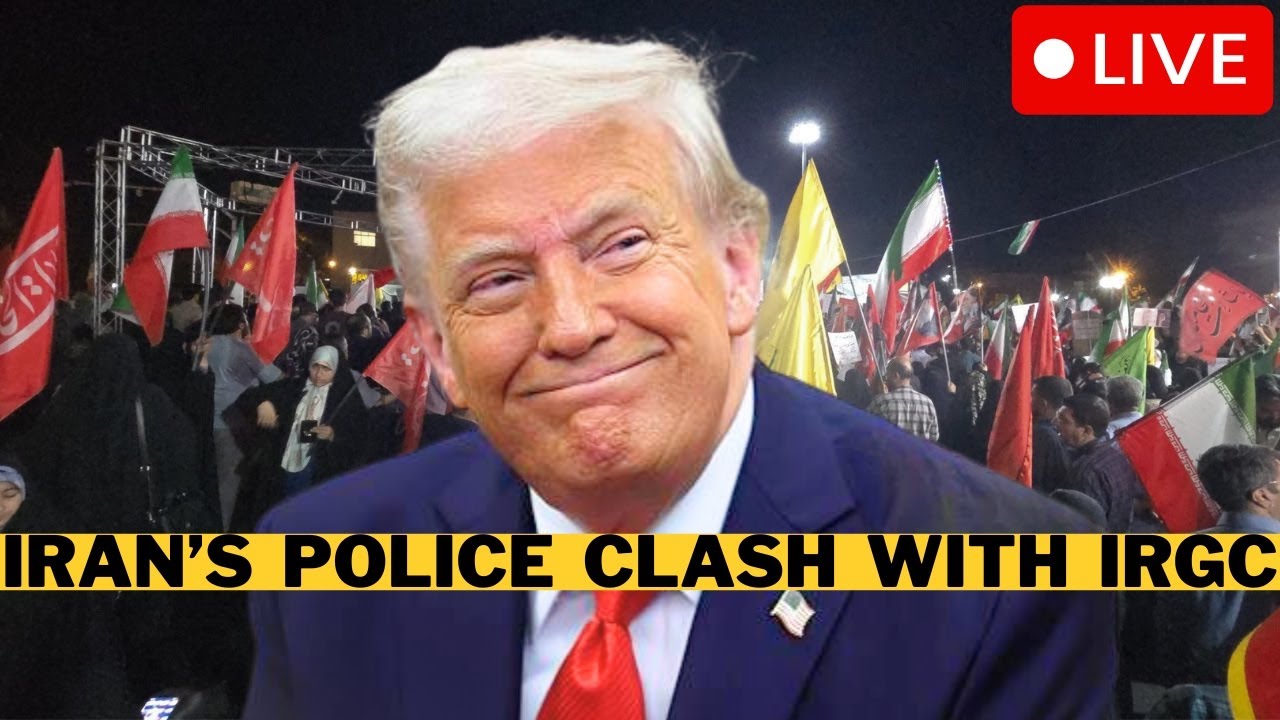
BREAKING: Protests ERUPT In Iran Over IRGC Surrendering To Trump - Infighting Clashes In Tehran
"Iran is experiencing severe internal infighting and protests as hardline IRGC elements clash with government figures over a perceived 'surrender' to the US, while mainstream Western media misrepresents the situation."
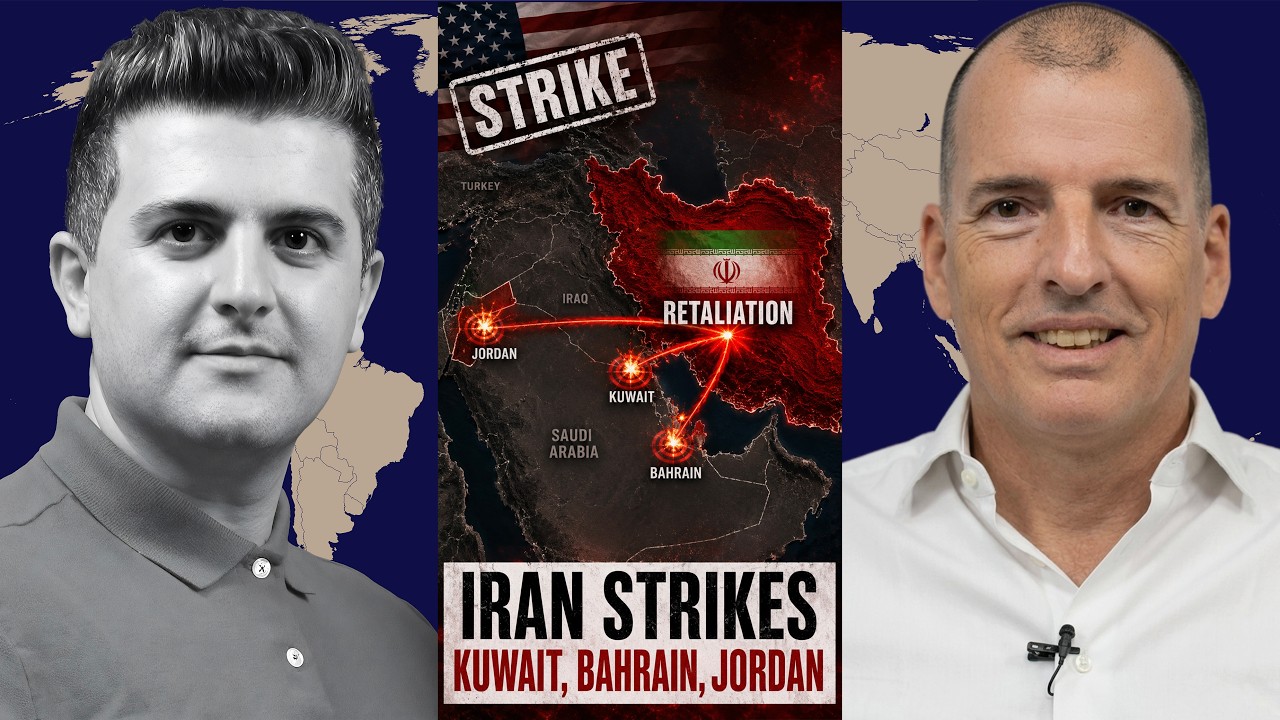
Alex Krainer: US STRIKES Iran – Iran RETALIATES Against Kuwait, Bahrain & Jordan!
"Amidst escalating US-Iran conflict and Iranian retaliation against regional US allies, this episode argues that US foreign policy is deeply controlled by an 'Anglo-Zionist conspiracy' led by the Rothschild banking dynasty, prioritizing Israeli interests over American ones."

🚨 TOTAL F*CKING CHECKMATE 😂😂😂
"The host argues that Trump's 'ceasefire' with Iran was a calculated '5D chess' move to orchestrate a global energy market reshuffle, while simultaneously lambasting 'woke' domestic policies and the 'freefall' of anti-Trump conservative figures."