What the Ship (Ep 144) | Inside the NTSB's Marine Backlog & Russia's Failing Fleet
YouTube · lXSQmetXhdk
Quick Read
Summary
Takeaways
- ❖The NTSB has 74 open marine accident investigations, some dating back to 2022, significantly more than any other transportation sector.
- ❖The NTSB board lacks marine-focused members, contributing to the backlog and aviation-centric bias.
- ❖Ukrainian attacks are targeting Russian commercial shipping in the Black Sea and critical infrastructure like the Kerch Strait ferry crossing.
- ❖A Russian frigate, the Admiral Grigorovich, was observed running low on fuel in the English Channel, relying on a repair ship for refueling.
- ❖Sanctions have stalled Russia's Arctic LNG carrier program, with South Korean shipyards holding undeliverable hulls.
- ❖Venezuelan crude exports have more than doubled, with the U.S. now the dominant destination, shortening oil supply routes.
- ❖Australian mining firm Fortescue is chartering 12 ammonia-capable bulkers, aiming to create a carbon-free 'green corridor' for shipping.
- ❖Global tanker rates, particularly for VLCCs outside the Strait of Hormuz, have spiked due to ongoing market uncertainty, mirroring the Red Sea situation.
Bottom Line
The NTSB's significant maritime investigation backlog, coupled with a board lacking marine expertise, creates a systemic vulnerability, delaying critical safety improvements and potentially contributing to future incidents.
This suggests a regulatory blind spot where maritime safety is deprioritized, leaving the industry exposed to recurring risks that could be mitigated by timely incident analysis. Companies should not solely rely on official reports for safety insights.
Private maritime safety consultancies or industry associations could step in to provide faster, independent analyses of incidents, offering actionable recommendations to members ahead of official NTSB reports.
The Russian frigate Admiral Grigorovich's apparent fuel shortage in the English Channel, forcing reliance on a repair ship for refueling, highlights the logistical strain and potential operational degradation of the Russian Navy under current geopolitical pressures.
This indicates a broader weakness in Russia's naval support infrastructure and its ability to sustain extended deployments, particularly in contested or distant waters. It suggests a potential overextension or resource scarcity.
Western intelligence and naval forces can leverage this insight to better understand Russian naval capabilities and vulnerabilities, informing strategic planning and deterrence efforts.
Fortescue's commitment to ammonia-capable bulkers and the development of an ammonia production facility in Australia's Pilbara region aims to establish a 'green corridor' for 5% of global cargo, creating a closed, carbon-free fuel and cargo system.
This initiative could set a precedent for regional, self-sustaining green shipping ecosystems, demonstrating a viable pathway for decarbonization in specific high-volume trade routes, despite inherent safety challenges with ammonia.
Companies involved in green hydrogen/ammonia production, maritime safety training, and specialized vessel design can find significant opportunities in replicating or supporting such 'green corridor' models globally. Investors should watch for similar regional initiatives.
Opportunities
Acquire stranded LNG carrier hulls from South Korean shipyards.
South Korean shipyards like Hanwha Ocean are stuck with six LNG carrier hulls originally for Russia, which cannot be delivered due to sanctions. These could be acquired by other nations or companies to rapidly expand LNG transport capacity.
Develop and provide specialized ammonia safety training and equipment for merchant marine crews.
With the rise of ammonia as a carbon-free fuel, there's a critical need for advanced training programs and safety equipment for crews to handle its thin margins and severe leak risks.
Invest in regional green fuel production and bunkering infrastructure.
The Pilbara region's plan to produce its own ammonia to fuel ships creates a closed-loop 'green corridor'. This model can be replicated in other high-volume trade hubs to provide localized, carbon-free bunkering services.
Lessons
- Monitor NTSB marine investigation progress and advocate for increased resources and marine-focused board members to accelerate safety report completion.
- Diversify oil and gas supply chain routes to mitigate risks associated with geopolitical hotspots like the Black Sea and Strait of Hormuz, leveraging shorter, more stable routes where possible (e.g., Venezuelan crude).
- Evaluate the feasibility and safety implications of transitioning to alternative green fuels like ammonia, investing in necessary crew training and infrastructure development for future-proofed shipping operations.
Notable Moments
The host highlights the NTSB's staggering backlog of 74 open marine investigations, some dating back to 2022, including cases with fatalities and significant fires.
This backlog demonstrates a systemic failure in timely accident analysis for the maritime sector, potentially delaying crucial safety improvements and leaving the industry vulnerable to recurring incidents.
A Russian frigate, the Admiral Grigorovich, was observed running critically low on fuel in the English Channel, requiring refueling from a repair ship not designed for at-sea replenishment.
This incident underscores the logistical challenges and potential operational degradation of the Russian Navy, likely exacerbated by sanctions and the ongoing conflict, impacting its ability to project power.
Fortescue's commitment to 12 ammonia-capable bulkers and the development of an ammonia production facility in Australia's Pilbara region aims to create a 'green corridor' for 5% of global cargo.
This represents a significant, concrete step towards decarbonizing a major global trade route, showcasing a model for regional green fuel production and consumption, despite the inherent safety challenges of ammonia.
Quotes
"The NTSB is very good in certain areas and not so good in other areas. For example, if we go over to hazardous material, there's a grand total of four open cases. If we head over to aviation, you'll see a grand total of 11 open cases... 74 open cases dating back to 2022 when it comes to the NTSB."
"One of the things the Russians are trying to do is develop that Arctic route more and they need specific vessels, particularly ice strengthened ships to do it. Reminder, come January 1st, 2027, Europe is saying they're cutting themselves off from Russian liquefied natural gas."
"Ammonia is carbon-free. There's no carbon in ammonia at all. One of the problems you have is that when the ships turn around and head back down the Port Hedland, many of them have to divert here to Singapore to refuel, and they're using standard diesel fuel."
Q&A
Recent Questions
Related Episodes

The Strait of Hormuz Ship Show: Week 16 Update
"Despite a US-Iran deal to reopen the Strait of Hormuz, Iran immediately reasserted control through a 'protection racket' of mandatory insurance and permits, creating a chaotic and high-risk environment for global shipping."
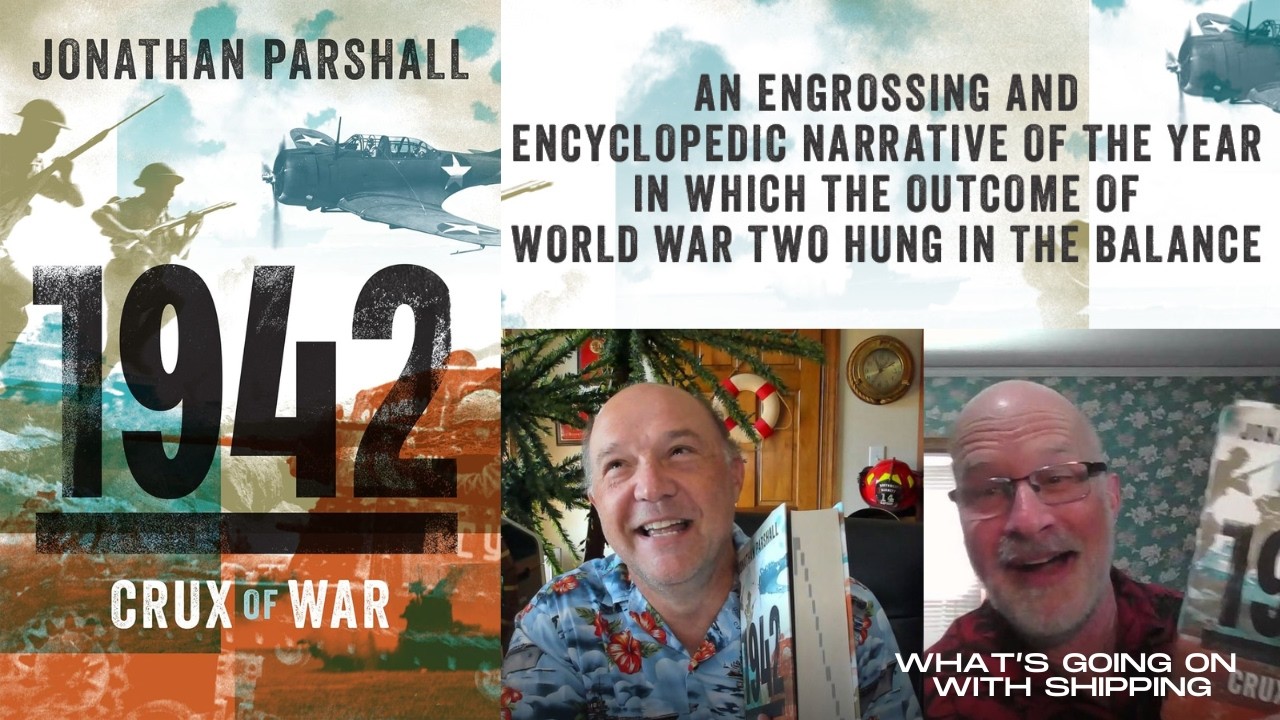
1942: Crux of War | A Conversation with Jon Parshall
"Historian Jon Parshall discusses his monumental book, '1942: Crux of War,' arguing that 1942 was a year of numerous inflection points, not singular turning points, that collectively shifted the tide of World War II."

US Strikes Tankers in Persian Gulf: Week 15 Blockade Recap
"The US military escalated its blockade against Iran by striking three non-compliant vessels in the Gulf of Oman, resulting in three Indian crew member deaths, while a secret US-escorted transit route for other Gulf oil shipments emerged amid complex geopolitical negotiations."
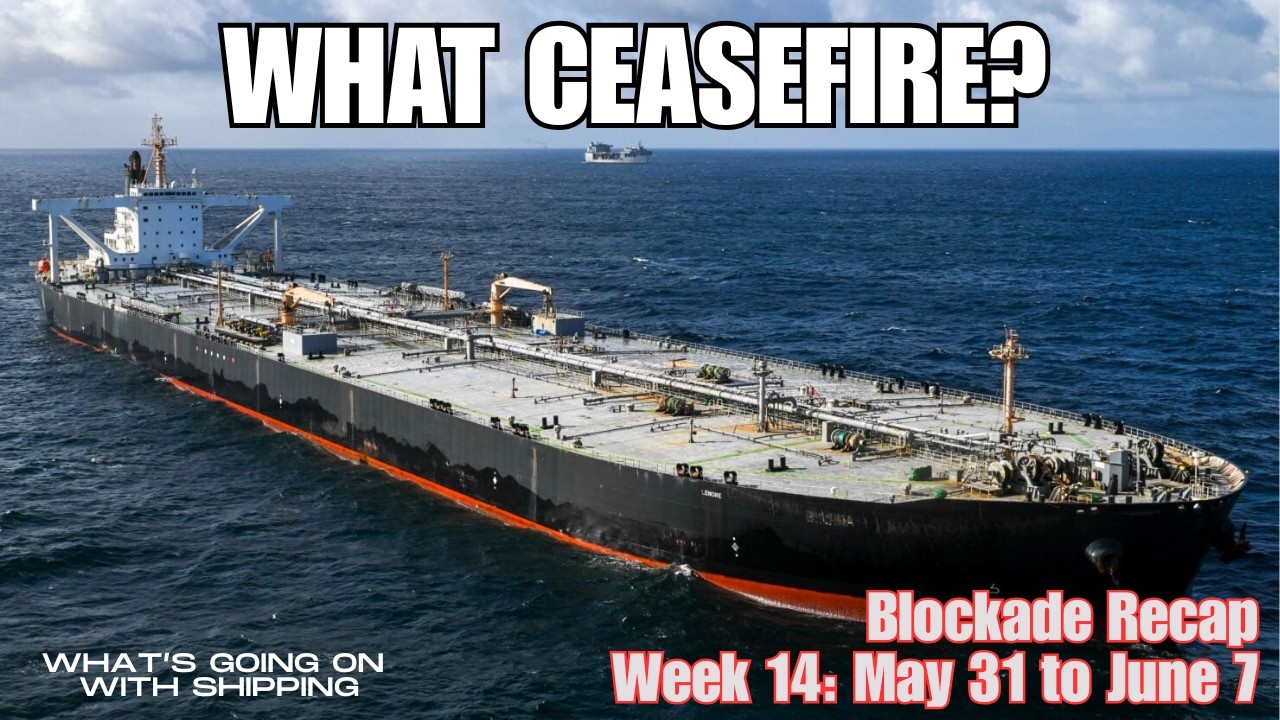
The Global Shipping Crisis: 14 Weeks of the Persian Gulf Blockade
"The ongoing 14-week blockade in the Persian Gulf has severely disrupted global shipping, causing massive spikes in freight rates, collapsing Iranian oil exports, and creating a precarious global energy supply chain."