
Trump Wants JAGs as Immigration Judges. That’s a Disaster. (w/ Margaret Donovan) | Command Post
YouTube · lZYyab_r49c
Quick Read
Summary
Takeaways
- ❖Reassigning hundreds of JAGs to civilian immigration roles would severely deplete military units of critical legal support.
- ❖Military lawyers are not trained for complex civilian immigration or felony prosecution, leading to high rates of legal errors and inefficiencies.
- ❖JAGs are bound by an oath to the Constitution and a duty to challenge unlawful orders, creating potential ethical conflicts under executive pressure.
- ❖The proposed policy would undermine the perceived neutrality of immigration judges and negatively impact recruitment for the JAG corps.
- ❖Juries and grand juries serve as a vital constitutional check on executive power, capable of rejecting politically motivated charges.
Insights
1Mass Reassignment of JAGs Would Cripple Military Units
General Hertling and Margaret Donovan emphasize that pulling hundreds of JAGs (potentially 600+) from military units would be catastrophic. These lawyers provide essential advice to commanders on unit discipline, UCMJ issues, and soldier welfare (wills, powers of attorney). Their absence would leave commanders without critical legal counsel, increasing the risk of procedural errors and unfair prosecutions, which could also impede commanders' careers.
General Hertling's article 'JAGs shouldn't be civilian prosecutors' and Margaret Donovan's statement that losing 20 out of 40 JAGs at a base like Fort Campbell would be 'catastrophic to a command.'
2JAGs Lack Training for Civilian Immigration and Felony Cases
While JAGs sometimes serve as Special Assistant US Attorneys (SAUSAs) for minor offenses (misdemeanors, DUIs) on military installations, they are not trained for the complexities of civilian federal felony or immigration law. A mass reassignment to these roles would lead to significant appellate issues, suppressed warrants, and 'no true bills' (grand juries refusing to indict) due to inexperience. This would slow down the system rather than expedite it.
Margaret Donovan's personal experience as a SAUSA prosecuting misdemeanors and her assertion that 'you're going to be doing felonies, you're going to be doing immigration... and the results are going to be exactly what you would think they would be if you asked a lawyer to begin practicing something that he or she had no history of practicing.'
3Ethical Conflicts and Recruitment Challenges for JAGs
JAGs take a solemn oath to the Constitution and are trained to possess a 'fortified spine' to challenge unlawful orders, even from commanders. Forcing them into roles as Article II (executive branch) immigration judges, who face pressure to align with executive policy (e.g., a judge dismissed for granting too many asylum cases), creates a profound ethical dilemma. Unlike civilian prosecutors, JAGs cannot easily resign without career repercussions. This policy would also deter new recruits who join the JAG corps for military legal work, not immigration judging.
Donovan states, 'JAGs are not a labor pool for DOJ' and 'you do not sign up to be a JAG because you want to be an immigration judge.' She also cites the dismissal of an immigration judge for granting too many asylum cases.
4JAGs are Critical for Lawful Combat Operations
JAGs are integral to combat operations, advising commanders in 'strike cells' on rules of engagement and the Law of Armed Conflict (military necessity, proportionality, prevention of unnecessary suffering, and distinction). They must distill complex legal advice rapidly in high-stress environments to ensure strikes are lawful and avoid unintended consequences, such as civilian casualties or targeting protected sites.
Margaret Donovan's experience advising on over a thousand kinetic operations in Iraq and Syria, and General Hurtling's example of a JAG advising on striking a mosque used for weapons storage.
Bottom Line
The executive branch's attempt to use military lawyers for civilian immigration enforcement highlights a broader recruitment crisis within the Department of Justice, which struggles to attract and retain federal prosecutors.
This indicates a systemic weakness in the civilian legal infrastructure, where the DOJ is unable to meet its staffing needs through conventional means, leading to politically expedient but operationally unsound solutions.
Policymakers should focus on addressing the root causes of DOJ recruitment and retention issues, rather than relying on unsustainable and detrimental transfers of military personnel.
Grand juries, composed of ordinary citizens, are emerging as a critical, albeit often overlooked, constitutional check on executive power, capable of rejecting politically motivated indictments.
In an era of perceived legislative and judicial gridlock, the 'no true bill' from a grand jury demonstrates that the 'people' retain a fundamental power to prevent what they deem unfair or unconstitutional prosecutions, as envisioned by the framers.
This underscores the importance of civic education regarding jury duties and rights, as informed citizens can act as a final safeguard against potential executive overreach.
Lessons
- Military commanders must actively advocate for retaining their JAGs, emphasizing their indispensable role in unit discipline, legal compliance, and operational effectiveness.
- The Department of Justice should prioritize robust recruitment and retention strategies for civilian federal prosecutors and immigration judges, rather than relying on temporary or ill-suited transfers from the military.
- Service members should be continually educated on the Uniform Code of Military Justice (UCMJ) principle that they are duty-bound to refuse patently unlawful orders, even in the absence of immediate legal counsel.
Notable Moments
A Washington D.C. grand jury refused to indict members of Congress who released a video advising soldiers to disobey illegal orders, demonstrating jury nullification.
This event showcases the power of grand juries as a constitutional check on executive power, preventing politically motivated prosecutions and affirming the public's role in the justice system, especially when other branches of government are perceived as inactive.
Quotes
"If an order is patently unlawful, then soldiers are not bound to follow it. In fact, they are they are duty bound to not follow it."
"You don't want to be a commander and have let's say a UCMJ issue, a disciplinary issue and not have a lawyer to turn to and ask if you're doing the right thing."
"The framers envisioned this... they built the Constitution thinking the people need to reserve some power here... You can invest power and authority with a grand jury under the Fifth Amendment to reject a charge."
Q&A
Recent Questions
Related Episodes

SHOCK Ruling on Trump Deportation PLOT + DEBUNKED Election WARRANT?!? | It's Complicated
"The Fifth Circuit Court's controversial ruling redefines 'seeking admission' for non-citizens, potentially allowing indefinite detention for millions, while a federal search warrant for 2020 election ballots is criticized as a 'test run' for future election interference."

Trump DOJ REACHES NEW LOW Trying to SAVE Trump
"Professor Aziz Huck dissects the foundational principles of the rule of law, revealing how modern political partisanship and the Justice Department's 'weaponization fund' challenge core constitutional mechanisms and legal predictability."
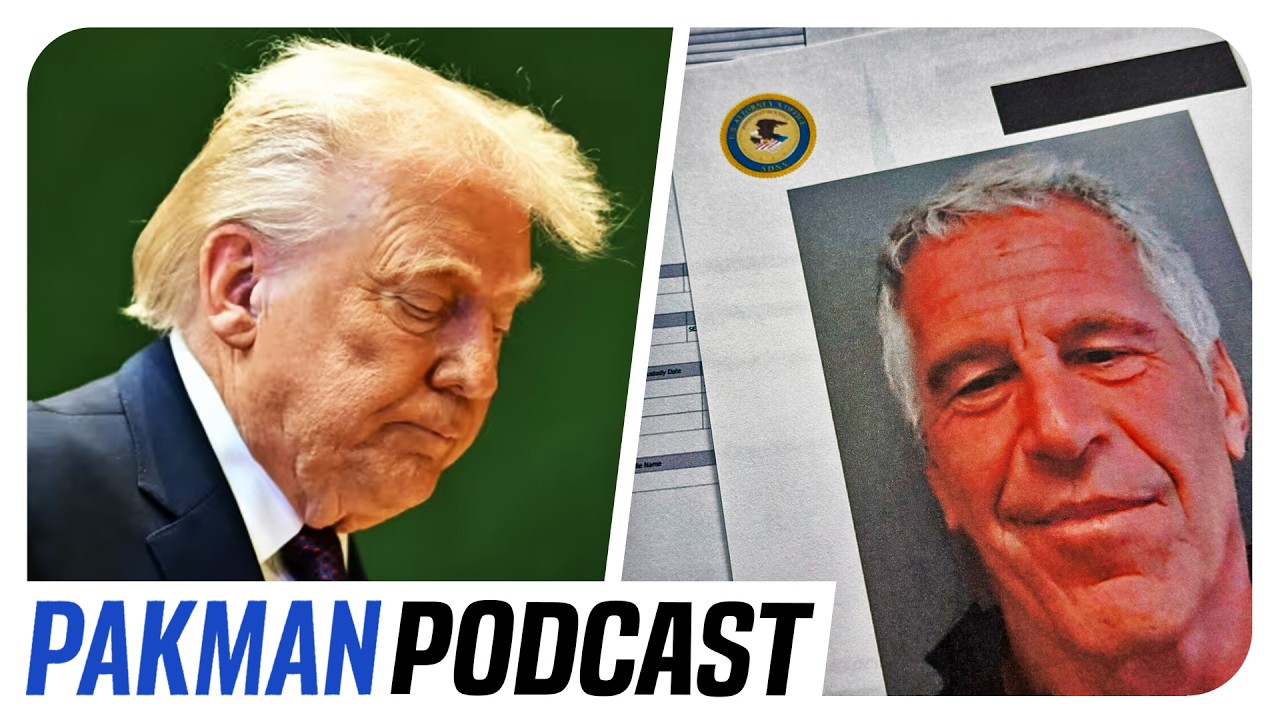
Texas panic rises as Epstein problem gets worse
"Republicans face unexpected challenges in Texas, escalating political fallout from Epstein files, and concerning revelations about ICE's militarization and training, all while navigating internal hypocrisy."

Trump Dirt REVEALED: Iran, Zohran, Pardons, Deportations
"Journalists Maggie Haberman and Jonathan Swan reveal how Donald Trump operates in his second term, detailing his inner circle, policy priorities, and the surprising checks on his executive power."