Iran Begs Trump to Stop After His Unexpected Shock Move Corners Them
YouTube · lao92ENptkg
Quick Read
Summary
Takeaways
- ❖The US military blockade of the Strait of Hormuz is costing Iran approximately $400 million daily, severely impacting its economy.
- ❖Iran offered a 5-year suspension of nuclear activity, which the Trump administration rejected, demanding a 20-year suspension.
- ❖Trump's actions are credited with creating an opportunity for rare direct talks between Israeli and Lebanese officials.
- ❖The host argues that Democrats suffer from 'Trump Derangement Syndrome,' causing them to oppose policies that would otherwise be beneficial.
- ❖Representatives Eric Swallwell and Tony Gonzalez resigned amidst scandals, with the host criticizing perceived Democratic cover-ups.
- ❖Trump's administration is credited with closing the US border and accelerating border wall construction without needing new congressional legislation, contrasting with previous administrations.
Insights
1Strait of Hormuz Blockade as Economic Leverage
The US military blockade of the Strait of Hormuz has created immense economic pressure on Iran, preventing it from exporting oil, its primary revenue source. This blockade is reportedly costing the Iranian regime $400 million daily ($13 billion monthly), forcing them to consider shutting off wells within two weeks due to storage limitations. This economic squeeze has significantly weakened Iran's negotiating position.
New York Times report on Iran's nuclear offer and US blockade; Jesse Waters' report on $400 million daily cost and 2-week oil storage limit.
2Trump's Decisive Foreign Policy and Middle East Reordering
The host argues that Trump's administration has played its hand 'perfectly' by using military pressure (destroying Iranian navy/air force) followed by an economic blockade, forcing Iran to negotiate on nuclear activities. This strategy is framed as a reordering of the world, making America a leading energy provider and isolating Iran, even prompting direct talks between Israel and Lebanon, which had not occurred in decades.
Host's commentary on Trump's strategy; Geraldo Rivera's praise for Trump's 'audacious, daring, creative, ballsy move'; New York Times report on Israel-Lebanon talks.
3Partisan Hypocrisy and Media Bias in Political Scandals
The host criticizes Democrats and mainstream media for allegedly covering up scandals involving Democratic politicians like Eric Swallwell (accused of sexual misconduct and ties to a Chinese spy) while quickly condemning Republicans. He contrasts Nancy Pelosi's denial of knowledge about Swallwell's issues with her past statements and highlights the media's delayed reporting on long-standing allegations. Conversely, he points to Republicans like Anna Paulina Luna immediately calling for Tony Gonzalez's resignation over an affair leading to a staffer's suicide, despite potential political costs.
Eric Swallwell's resignation statement; Anna Paulina Luna's comments on Democrats knowing about Swallwell; Nancy Pelosi's contradictory statements on Swallwell; Brian Stelter's 'astonishment' at media reporting; Tony Gonzalez's resignation statement and Republican calls for his resignation.
4Presidential Authority to Secure the Border Without Congress
The host asserts that securing the US border is a presidential duty that does not require congressional action, contrary to claims made by Democrats like Ro Khanna. He provides data showing zero illegal migrants released at the border in March 2026 under Trump, compared to nearly 80,000 in March 2024 under Biden. This is presented as evidence that Trump effectively closed the border on day one of his second term, and that Democrats intentionally kept it open for political gain (importing new constituents).
Ro Khanna's past statements on Biden's border efforts; Fox report on migrant release numbers (March 2026 vs. March 2024); Cato Institute stats on 99.9% reduction in legal entries under Trump.
Key Concepts
American Exceptionalism vs. Bipartisan Grievance Party
Ben Shapiro's framework suggests two emerging political factions in America: 'American Exceptionalists' who believe in America's inherent greatness and its potential for future greatness through hard actions, and the 'Bipartisan Grievance Party' who believe America was never great, requires fundamental rewriting of its bargain, and should retreat from global affairs due to past 'sins.' The host applies this model to current foreign policy debates.
Trump Derangement Syndrome
The host frequently uses this term to describe a 'clinical psychosis' among political opponents where their positions on issues are reversed or distorted solely based on Donald Trump's involvement, leading them to oppose policies they might otherwise support if implemented by someone else.
Lessons
- Recognize the ideological battle between 'American Exceptionalism' and the 'Bipartisan Grievance Party' and choose a side based on belief in the country's potential.
- Be skeptical of media narratives and political statements, especially when they appear to be driven by partisan opposition rather than objective analysis.
- Adopt a 'never quit' mindset, demonstrating flexibility and persistence in pursuing goals, even when faced with significant obstacles, mirroring the host's interpretation of Trump's approach to governance.
Notable Moments
Discussion of JD Vance's role in Iran negotiations and his alignment with Trump's hardline stance despite initial skepticism.
This moment highlights the internal dynamics within the Trump administration and Vance's public support for Trump's foreign policy, countering narratives of internal disagreement.
The host's strong criticism of Joy Reid and Tom Friedman for 'Trump Derangement Syndrome,' arguing they prioritize opposing Trump over achieving beneficial policy outcomes.
This exemplifies the host's core argument about partisan bias influencing political commentary and decision-making, even at the expense of national interest.
Video of three of Eric Swallwell's accusers speaking out on CBS, claiming his resignation is 'just the beginning' of their fight for justice.
This provides direct testimony from individuals alleging harm, underscoring the severity of the accusations against Swallwell and the ongoing nature of the legal and public challenges he faces.
Quotes
"Trump knows he has all the cards here, right? The Iranians have no cards. They quite literally have nothing."
"The Iranians can't outlast us. The world's turning to us for energy."
"America is breaking down into two parties, not the Democratic Party and the Republican party. Two new parties, the American Exceptionalists and the Bipartisan Grievance Party."
"What I will say, Brett, is that I 100% agree with the president on the fact that Iran can't have a nuclear weapon."
"Nothing would improve the region more than the replacement of this regime with a regime in Iran that was focused on enabling its people to realize their full potential."
"I truly believe that they saw a future political benefit and let millions of people into United States, they see him as maybe future Democratic voters."
Q&A
Recent Questions
Related Episodes

🚨 THEY F*CKED AROUND FOR THE LAST TIME 😭😭😭
"This episode unleashes a torrent of highly opinionated commentary on the US-Iran deal, Israel's role, and a scathing critique of 'leftist' policies and immigration, particularly highlighting the UK grooming gang report as evidence of Western societal decay."
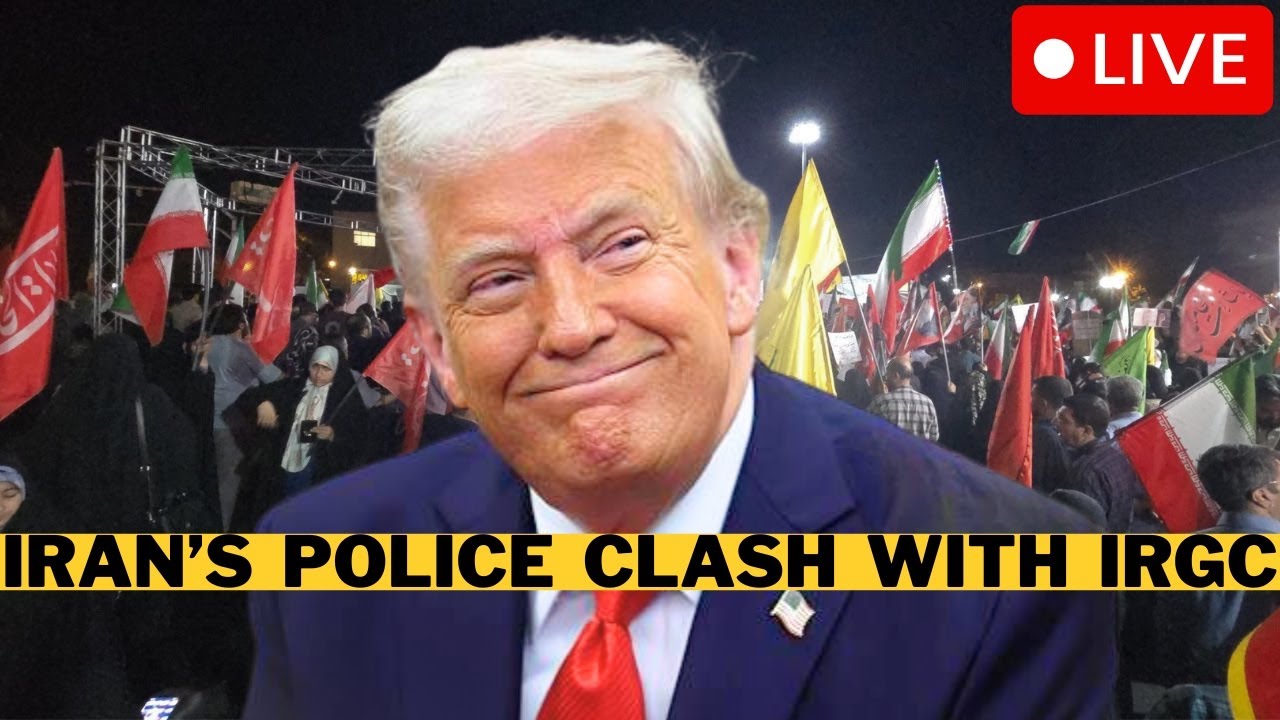
BREAKING: Protests ERUPT In Iran Over IRGC Surrendering To Trump - Infighting Clashes In Tehran
"Iran is experiencing severe internal infighting and protests as hardline IRGC elements clash with government figures over a perceived 'surrender' to the US, while mainstream Western media misrepresents the situation."
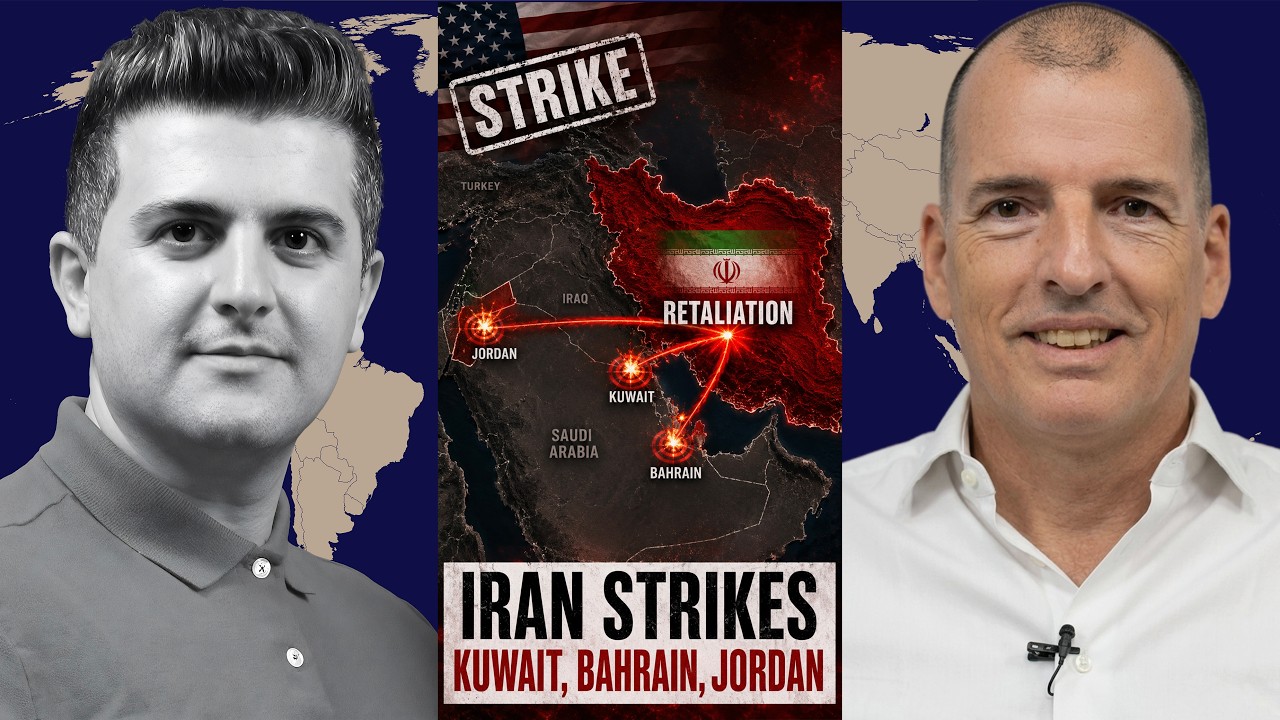
Alex Krainer: US STRIKES Iran – Iran RETALIATES Against Kuwait, Bahrain & Jordan!
"Amidst escalating US-Iran conflict and Iranian retaliation against regional US allies, this episode argues that US foreign policy is deeply controlled by an 'Anglo-Zionist conspiracy' led by the Rothschild banking dynasty, prioritizing Israeli interests over American ones."

Iran Update: Israel’s Newest Bombing Campaign, the Oncoming War With China and How to Avoid It
"Colonel Wilerson reveals how the US and Israel are actively bombing China's strategic infrastructure in Iran, escalating a covert economic war that Beijing intends to win without direct military conflict by dismantling the dollar's global dominance."