
Stanford Neuroscientist: Can’t Remember Your Dreams? Your Brain May Be Warning You!
YouTube · m-nnyNZ0TQ0
Quick Read
Summary
Takeaways
- ❖The primary purpose of dreaming is to defend the visual cortex from takeover by other senses during periods of darkness.
- ❖Brain plasticity allows you to continuously reshape your brain, but this requires actively seeking challenges and novelty.
- ❖The 'Ulysses contract' is a powerful tool to pre-commit to desired behaviors and overcome internal conflicts.
- ❖Social interaction is one of the most demanding and beneficial activities for brain health, building cognitive reserve.
- ❖AI can act as a 'motorcycle for the mind,' accelerating learning and problem-solving if used for 'virtuous friction' (challenging thought) rather than 'vicious friction' (busy work).
- ❖To maximize AI's benefit, ask it to challenge your ideas and point out your blind spots, fostering critical thinking and creativity.
- ❖The human need for novelty and authentic connection means AI will likely lead to a renaissance in live, in-person experiences and deeper human relationships.
Insights
1The Evolutionary Purpose of Dreaming
Dreams serve as a defense mechanism for the visual cortex. Because humans live on a planet that rotates into darkness, the visual part of the brain is at a disadvantage during sleep. Random activity is blasted into the visual system every 90 minutes during REM sleep to prevent other senses (like hearing and touch) from taking over this neural territory, as demonstrated by experiments where normally sighted people's visual cortices began responding to sound and touch after just 60 minutes of blindfolding.
If you go blind, the visual cortex gets taken over by hearing and touch. Harvard experiments showed this takeover happening after 60 minutes of blindfolding normally sighted people. The purpose of dreaming is to defend the visual territory from takeover from the other senses.
2Brain Plasticity and Lifelong Adaptability
The human brain is highly plastic and adaptable, a key evolutionary advantage that allows us to learn from past generations and innovate. While the brain's neural connections peak around age two, its ability to change doesn't disappear; it simply changes less because it has successfully built an internal model of the world. However, adults can still drive significant brain changes by actively seeking challenges and novelty, forcing the brain to update its models.
Human brains are 'half-baked' at birth, absorbing everything. We have much more plasticity than other animals. Plasticity doesn't diminish as much as it becomes less necessary because the brain has 'right answers' for operating in the world. Seeking challenge, novelty, and pushing oneself to do things not done before is key.
3The 'Team of Rivals' in Your Brain
Individuals are not singular entities but a 'team of rivals'—multiple competing neural networks with different drives and suggestions. This internal 'neural parliament' constantly votes on behavior, explaining why people often act against their own long-term interests or experience regret. Understanding this internal conflict is crucial for self-management.
You are a team of rivals. You've got all these neural networks that have different drives making different suggestions to you. You are arguing with yourself. The way your 'ship of state' moves depends on the vote of the neural parliament at any time.
4Building Cognitive Reserve Through Challenge and Social Interaction
To maintain cognitive health and stave off conditions like dementia, it's vital to keep the brain active by constantly seeking new and difficult challenges. This builds 'cognitive reserve' by creating new neural pathways, even as existing tissue degenerates. Social interaction is particularly beneficial because predicting and responding to other people is one of the most complex tasks for the brain, keeping it highly engaged.
The 'Religious Orders Study' showed nuns with Alzheimer's pathology but no cognitive deficits due to continuous social challenges and responsibilities. Retiring and shrinking social circles increases cognitive decline risk. 'Nothing is as hard for the brain as other people' because of constant unpredictability.
5AI as a 'Motorcycle for the Mind' for Virtuous Friction
AI can significantly enhance human capabilities, acting as a 'motorcycle for the mind' by providing immediate access to vast knowledge. The key is to use AI for 'virtuous friction'—engaging with complex problems and challenging one's own ideas—rather than 'vicious friction' (mindless tasks). This collaborative approach allows individuals to learn more deeply and develop solutions beyond their individual capacity.
AI allows us to move so much faster. It's not outsourcing, but being curious and remembering. Distinguish between 'vicious friction' (busy work) and 'virtuous friction' (challenging thought). Work with AI to come up with ideas beyond what you would have alone.
6AI's Creativity vs. Human Selection
AI is massively creative in generating new ideas and remixes of existing data, but it currently lacks the human capacity for 'selection'—understanding which creations will resonate most deeply with human novelty-seeking desires. While AI can predict popularity based on past trends, humans are needed to identify the truly 'new' and 'unique' creations that push boundaries and drive cultural evolution.
Creativity is bending, breaking, and blending cognitive concepts into new remixes. AI does this by remixing stuff that's come in. The part of creativity that AI can't do right now is selection. It can generate 100 pictures but doesn't know which one to pick or which will be most appealing.
Bottom Line
AI and social media, despite common concerns, are likely making younger generations smarter by exposing them to an unprecedented 'intellectual diet' and enabling curiosity-driven learning.
This challenges the prevalent narrative of AI and social media as purely detrimental to cognitive development, suggesting a significant positive impact on knowledge acquisition and intellectual breadth.
Educators and parents should focus on fostering critical thinking and creativity, and guiding children to leverage the internet's vast resources for genuine curiosity, rather than just rote learning or passive consumption.
The rise of AI will likely lead to a 'renaissance' in live, in-person human experiences (e.g., theater, concerts, personal care) because humans inherently value authentic connection and the unique presence of other humans.
This counters fears that AI will isolate humans, suggesting it will instead highlight and amplify the irreplaceable value of real-world human interaction and presence.
Businesses and individuals should invest in and prioritize experiences that emphasize human connection, live performance, and personalized, empathetic service, as these will become increasingly valued and differentiated.
A market opportunity exists for a new social media company that explicitly designs its algorithms to foster genuine connection and bridge divides, rather than maximizing engagement through incendiary or echo-chamber content.
This suggests a potential shift in user demand away from dopamine-driven, polarizing platforms towards more meaningful and constructive online interactions, driven by widespread user dissatisfaction with current models.
Entrepreneurs can build social platforms that prioritize 'complexification of relationships' by connecting people based on shared interests first, then gradually exposing them to differing viewpoints, leveraging AI to facilitate understanding rather than division.
Opportunities
Social Media Platform for Genuine Connection
Develop a social media platform with algorithms designed to prioritize building genuine connections and 'complexifying relationships' over maximizing engagement or ad revenue. The platform would initially connect users based on shared positive interests (e.g., hobbies, cuisine, locations) and then, over time, subtly introduce diverse perspectives or 'out-group' content, fostering understanding rather than polarization. Its selling point would be 'not to enrage you, but to build connection.'
Key Concepts
Brain Plasticity
The brain's ability to change and adapt its structure and function in response to experience. This means individuals can actively sculpt their brains throughout life by engaging in new challenges and learning.
Team of Rivals (Neural Parliament)
The concept that the 'self' is not a single, unified entity but rather a collection of competing neural networks with different drives and suggestions, constantly 'voting' on behavior. Understanding this internal conflict is key to self-regulation.
Ulysses Contract
A self-binding pre-commitment strategy where an individual makes a decision in the present to constrain their future behavior, preventing themselves from acting against their long-term goals when tempted.
Fluid vs. Crystallized Intelligence
Fluid intelligence (ability to learn anything) is highest in youth, while crystallized intelligence (accumulated knowledge and skills) develops with age. Plasticity diminishes not just with age, but because the brain has built effective models of the world and requires less change.
Cognitive Reserve
The brain's ability to cope with damage or degeneration by building new neural pathways and connections, allowing individuals to maintain cognitive function even in the presence of conditions like Alzheimer's. Built through continuous mental and social engagement.
Virtuous vs. Vicious Friction
Vicious friction refers to tedious, unchallenging tasks (busy work) that offer little cognitive benefit. Virtuous friction refers to difficult, novel, and challenging problems that force the brain to learn and grow. AI should eliminate vicious friction to free up time for virtuous friction.
Novelty and Familiarity Tension
Humans are constantly seeking a balance between novelty and familiarity. We enjoy things that are somewhat familiar but also offer new twists and experiences. This applies to everything from music to fashion to personal growth.
Lessons
- Actively seek novelty and challenges: Regularly engage in new tasks, learn new skills, and push yourself outside your comfort zone to continuously build new neural pathways and enhance cognitive reserve.
- Implement 'Ulysses contracts': Pre-commit to desired behaviors by setting up environmental or social constraints (e.g., public commitments, accountability partners, removing temptations) to ensure your future self acts in alignment with your long-term goals.
- Prioritize social interaction: Actively engage with diverse people, as navigating social dynamics is one of the most complex and beneficial activities for brain health, keeping your cognitive circuits active and preventing dehumanization.
- Use AI as a collaborative tutor, not a shortcut: Engage with AI by asking it questions, proposing ideas, and critically evaluating its responses, especially by asking 'why I might be wrong' to foster deeper learning and critical thinking.
- Cultivate critical thinking and creativity: Focus on developing these two core skills, as they are increasingly valuable in an AI-augmented world where factual recall and routine tasks can be outsourced.
Sculpting Your Brain for Lifelong Growth and Cognitive Reserve
Identify areas of 'virtuous friction': Pinpoint skills or knowledge domains that are challenging but achievable, and actively pursue them, even if you're not initially good at them.
Rotate challenges regularly: Once you become proficient in a new skill or area, actively seek out a new, unfamiliar challenge to continue building diverse neural pathways.
Integrate social engagement: Make conscious efforts to expand and maintain your social circles, engaging in conversations and activities that require dynamic interaction and understanding of others.
Leverage AI for intellectual sparring: Use AI tools to explore complex ideas, generate counter-arguments to your own theories, and identify blind spots, treating it as an expert thought partner.
Prioritize foundational health: Ensure adequate sleep, a healthy diet, and regular physical exercise, as these are fundamental for supporting overall brain health and plasticity.
Notable Moments
Dr. Eagleman's childhood fall and fascination with time perception.
This personal anecdote explains his lifelong dedication to understanding perception and the brain's construction of reality, setting the stage for the discussion on how our brains shape our experience.
The 'Religious Orders Study' on nuns and cognitive reserve.
This study provides compelling evidence that continuous mental and social engagement can protect against cognitive decline, even in the presence of physical brain degeneration like Alzheimer's.
The distinction between aphantasia and hyperphantasia in visual imagery.
This highlights the vast individual differences in internal experience and how different cognitive styles can lead to similar outcomes, challenging assumptions about 'normal' perception and demonstrating the brain's diverse strategies for accomplishing tasks.
The host's experiment asking ChatGPT to evaluate his joke.
This practical demonstration illustrates AI's initial tendency to be 'sycophantic' and the importance of explicitly prompting it for brutal honesty to gain valuable, unbiased feedback, reinforcing the concept of 'virtuous friction' in AI interaction.
Quotes
"The purpose of dreaming is to defend the visual territory from takeover from the other senses."
"The better we know ourselves, the more we can get rid of the illusion that we are one person."
"Nothing is as hard for the brain as other people."
"AI now as like a motorcycle for the mind. It allows us to move so much faster."
"There's vicious friction in our lives and there's virtuous friction."
"Creativity in the brain, all creativity is, is you absorb your world... And then you're bending and breaking and blending those cognitive concepts into new remixes."
"We care about other humans. So here's my little prediction is that there's going to be actually a renaissance in things like live theater and live performances."
Q&A
Recent Questions
Related Episodes

Oz The Mentalist Blows Our Minds | The Basement Yard #552
"Oz the Mentalist astounds hosts Joe and Frank by accurately guessing personal details like phone contacts, childhood friends, and even Frank's exact birthdate, all while explaining the behavioral science behind his 'honest con man' approach."

Amanda Knox and John Ramsey - Megyn Kelly's "Double Feature" of Fascinating Interviews
"This episode features two individuals, Amanda Knox and John Ramsey, whose lives were irrevocably altered by tragic crimes and subsequent wrongful accusations, revealing systemic failures in justice and media manipulation."

Unc, Ocho, & Joe BEST of NBA! Knicks are the CHAMPIONS, Harden ARRESTED, & Kyrie's BACK! | Nightcap
"The Nightcap crew dives into the Knicks' unexpected championship run, James Harden's legal troubles, Kyrie Irving's unparalleled ball-handling, and a heated GOAT debate, all while sharing wild personal anecdotes and strong opinions on sportsmanship and aging."
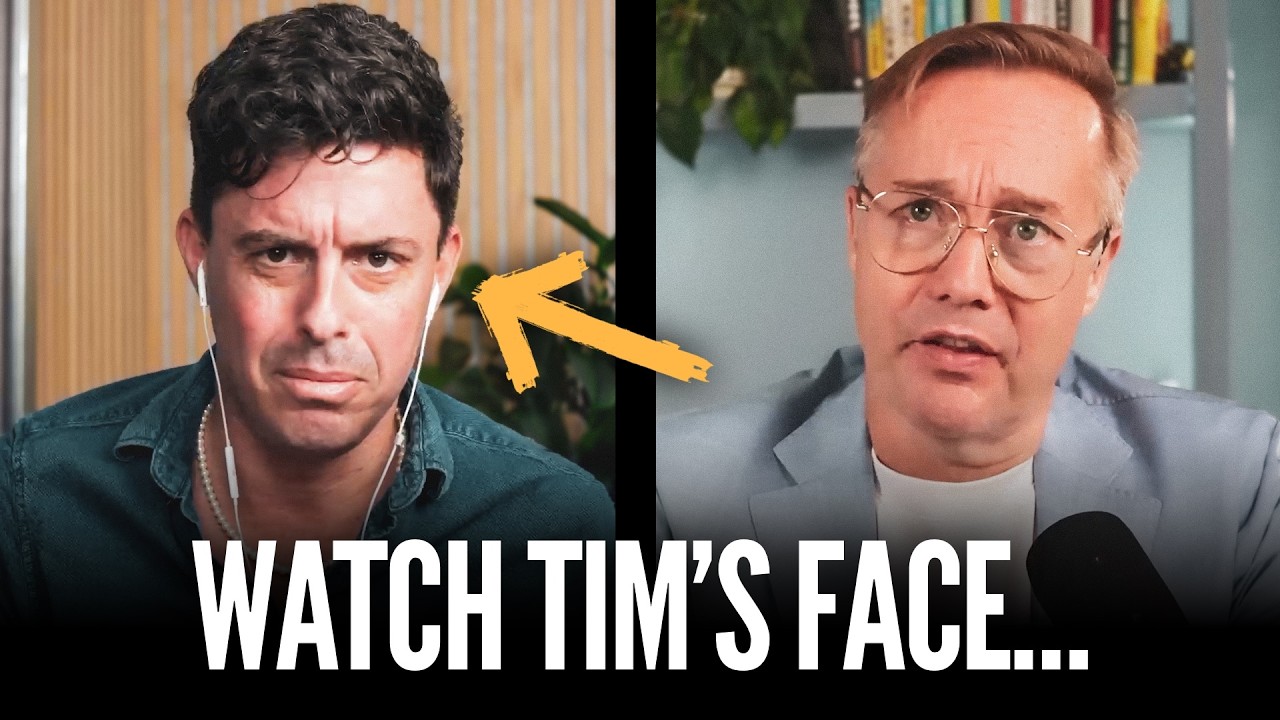
Tim Almost Strokes Out Hearing That Big Tech STILL Likes Trump (Jason Calacanis) | Bulwark Podcast
"Silicon Valley's elite, driven by pragmatic business interests like low taxes and M&A, continue to support Donald Trump despite his erratic behavior, viewing tariffs as inconsequential and access to power as paramount."