BREAKING: Khamenei ELIMINATED; Iran Fires MISSILES Across Region; Israel Hit As U.S.-Israel Strikes
YouTube · m79MMKua2KM
Quick Read
Summary
Takeaways
- ❖Operation Roar of the Lion, a joint U.S.-Israeli campaign, eliminated Supreme Leader Ayatollah Ali Khamenei and over 30 senior Iranian officials.
- ❖Iran declared 40 days of mourning but responded with over 180 missile launches across the Middle East, including strikes on Israel that caused 8 fatalities.
- ❖U.S. and Israeli forces conducted thousands of sorties, dropping over 1,200 munitions on 500+ targets, including strikes in Tehran.
- ❖Iran's retaliatory missile attacks were characterized by small, frequent salvos, attributed to damaged launch capabilities and dispersed targets.
- ❖The Strait of Hormuz saw disrupted shipping, with an Iranian tanker attacked and major shipping companies suspending passage.
- ❖Iranian citizens reportedly celebrated the attacks on their government, with some opposition figures calling for final victory against the regime.
- ❖The U.S. Navy sank an Iranian battleship and neutralized much of Iran's oil shadow fleet, financially choking the IRGC and its proxies.
Insights
1Decapitating Strike on Iranian Leadership
The joint U.S.-Israeli 'Operation Roar of the Lion' successfully eliminated Iran's Supreme Leader Ayatollah Ali Khamenei, his family members, and over 30 senior Iranian Revolutionary Guards Corps (IRGC) officials in initial air strikes. This operation targeted a leadership compound in Tehran where senior regime and military officials were meeting.
Iran confirmed Khamenei's elimination and declared 40 days of mourning (, ). The IDF spokesperson confirmed 30 senior Iranian officials were eliminated (, ). Reuters reported the commander of the Revolutionary Guards and defense ministers were terminated (). The strike targeted a meeting of top regime and military officials ().
2Crippled Iranian Response and Dispersed Firepower
Iran's retaliatory missile launches, totaling over 180, were characterized by small salvos across multiple Middle Eastern arenas rather than a massive, concentrated barrage against Israel. This limited response is attributed to severe damage to Iran's strike and launch capabilities by U.S.-Israeli forces, and the strategic dilemma of facing numerous American targets.
Iran launched missiles in 'every direction across the entire Middle East' in 'many launches and few missiles in each salvo' (, ). The lack of success stemmed from 'severely damaged the Iranian strike capability and their launch capabilities' (, ). Iran dispersed firepower across several arenas, including Gulf states (, ).
3Overwhelming U.S.-Israeli Air and Naval Dominance
U.S. and Israeli forces established overwhelming air and naval superiority, conducting thousands of attack sorties, dropping over 1,200 munitions on hundreds of targets, and striking deep into Tehran. This included neutralizing Iranian air defenses, sinking naval vessels, and financially choking the IRGC by targeting its oil shadow fleet.
Thousands of sorties of attack flights into Iran saturated the airspace with Israeli and American fighter jets (, ). Over 1,200 munitions were dropped by Israeli Air Force fighter jets in 24 hours (). The U.S. Navy sank an Iranian battleship () and eliminated much of the Iranian oil shadow fleet (). An air defensive system (Hordad 3) was destroyed in Kerman ().
4Internal Iranian Celebration and Regime Instability
Despite official mourning, videos circulated showing widespread joy and celebrations among Iranian citizens over the American-Israeli attacks and the elimination of the Supreme Leader. This internal dissent highlights the regime's fragility, with a temporary leadership council established amidst a struggle for stability and control.
Residents of Iran were 'so happy about the American Israeli attack,' with videos showing 'great joy' (, ). The Secretary of Iran's Supreme Council announced a 'temporary leadership council' (). Opposition figure Reza Pahlavi published a message about being 'close to the final victory' ().
Bottom Line
The U.S. and Israel strategically initiated attacks while global stock markets were closed to mitigate economic fallout, demonstrating a calculated approach to geopolitical conflict management beyond military objectives.
This highlights a sophisticated understanding of global financial interconnectedness in military planning, aiming to isolate the conflict's immediate economic impact. It suggests future large-scale military actions might be timed similarly.
Analysts and investors should monitor geopolitical events for such strategic timing, as it could signal attempts to control market reactions to significant international incidents.
The hosts suggest that the Iranian regime cannot survive as an isolationist country without a substantial backer, drawing parallels to North Korea's reliance on the Soviet Union and China. They argue that China is unlikely to provide such backing in the current 'new cold war' context.
This implies that the current military pressure, combined with financial strangulation (e.g., targeting the oil shadow fleet), is designed to force an implosion or collapse of the regime rather than a negotiated surrender, by removing its external support structures.
Companies involved in sanctions enforcement or intelligence gathering related to state-sponsored illicit trade could see increased demand for their services as this strategy unfolds. Geopolitical strategists should analyze the 'cold war' framework for other potential pressure points.
The hosts emphasize the role of thousands of Iranian 'agents' and 'operatives' (Iranian citizens cooperating with Israeli and American intelligence) on the ground, providing crucial live intelligence for precision strikes. This internal cooperation is framed as a key enabler of the operation's success.
This suggests that effective modern warfare against entrenched regimes can heavily rely on leveraging internal dissent and intelligence networks, rather than solely external military force. It also indicates a deep-seated opposition to the regime within Iran.
Intelligence agencies and defense contractors specializing in human intelligence (HUMINT) and covert operations may find this a compelling case study for future strategies. Organizations focused on supporting democratic movements abroad might find avenues for engagement.
Lessons
- Pray for the supernatural protection of Israeli citizens, soldiers, and allies, and for God's will to be done in the region.
- Pray for the people of Iran, for their protection from the regime, and for true regime change in the near future.
- Share content from TBN Israel and other reliable sources to spread awareness about the conflict and its implications.
Notable Moments
U.S. President Donald Trump confirmed Khamenei's death and delivered a message to the Iranian public, framing it as an opportunity to replace the regime.
This statement by a former U.S. President directly encourages internal regime change in Iran, adding a significant political dimension to the military operation and potentially emboldening Iranian opposition.
The hosts highlighted the 'bizarre' situation where Iranians are celebrating attacks on their own country, while some 'political left' factions in the U.S. and 'fringe movements' in Israel call for a halt to the attacks.
This observation underscores the deep internal divisions within Iran and the complex, often counter-intuitive, international reactions to the conflict, challenging conventional understandings of wartime allegiances.
The discussion of 30,000 (or more) wealthy Iranian exiles in the U.S. who are willing to return and rebuild their homeland, drawing a parallel to the early days of Israel.
This introduces a potential long-term vision for a post-regime Iran, suggesting that a well-resourced and motivated diaspora could play a crucial role in a future transition, offering a blueprint for nation-building after conflict.
Quotes
"Iran confirms Kam has been eliminated. In Iran, they declared 40 days of mourning following the elimination of the Supreme Leader Ayatah Ali Ki. And United States President Donald Trump also confirmed the news of his death. He was one of the greatest villains in history. This is the great opportunity for the Iranian people to replace the regime."
"In what other war guys have you seen the people, many of these are foreign experts of course of the Iranian people celebrating in the streets their own country being attacked. They're doing it because of the evil nature of that government. They're cheering on Israel. They're cheering on the US calling them to finish the Ayatollah regime."
"You can't bomb a new regime into place. I mean, there is no bomb that creates a democracy. There is no bomb that you can drop from the sky or munition or drone that can remove the Ayatollas and put in a different leader in place. It has to come from the Iranian people."
"This is not only an elimination of a leader. This is a hit to the head of the nervous system at the same time and the supreme leader of the religion as well. And when that happens, an entire country shifts into an internal emergency mode."
Q&A
Recent Questions
Related Episodes
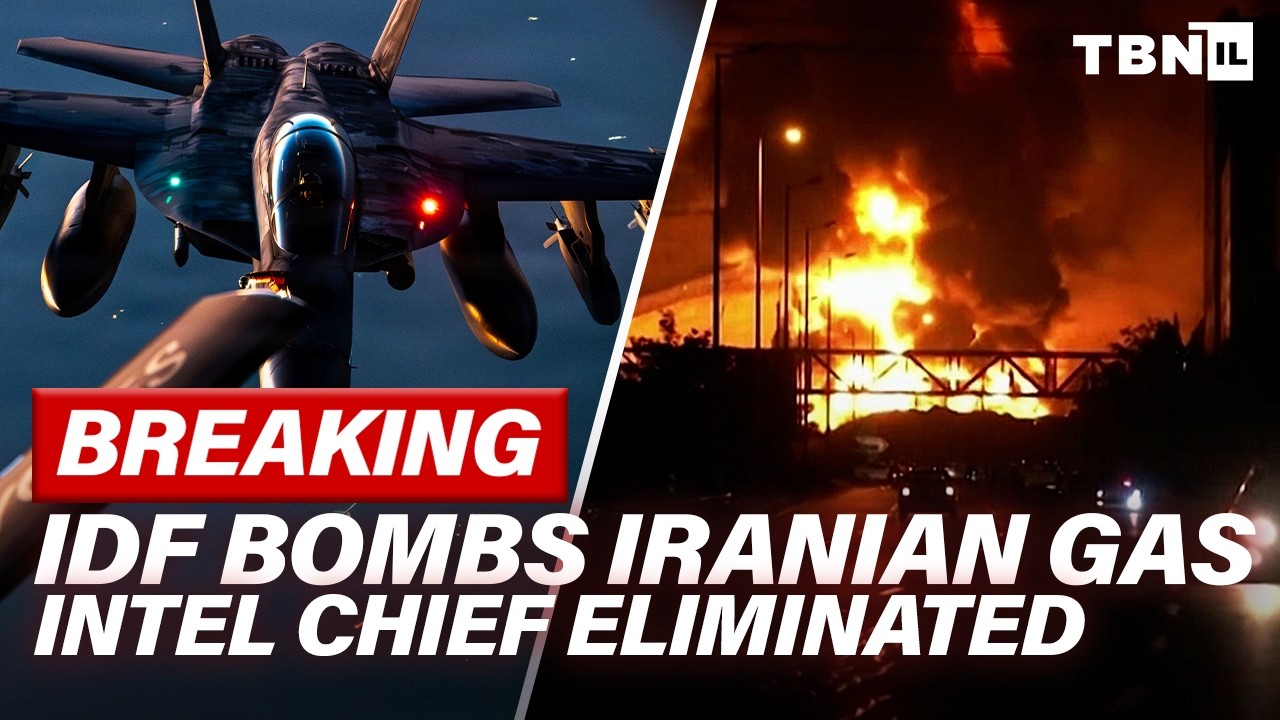
BREAKING: Israel BOMBS Major Iran Gas Site; Top Mullah ELIMINATED; Iran Vows VENGEACE | TBN Israel
"Israel and the United States have escalated their 'Roaring Lion War' against Iran, striking its largest gas facilities, eliminating key intelligence and military figures, and disrupting missile production, while Iran threatens a broader energy war in the Gulf."

Patrick Henningsen: Hezbollah JUST Fired Back at Israel - Iran Vows to “Crush” All Attacks
"Patrick Henningsen argues that the US and Israel initiated an illegal war against Iran, driven by Trump's incompetence and Israeli influence, leading to an inevitable escalation with severe global economic repercussions."
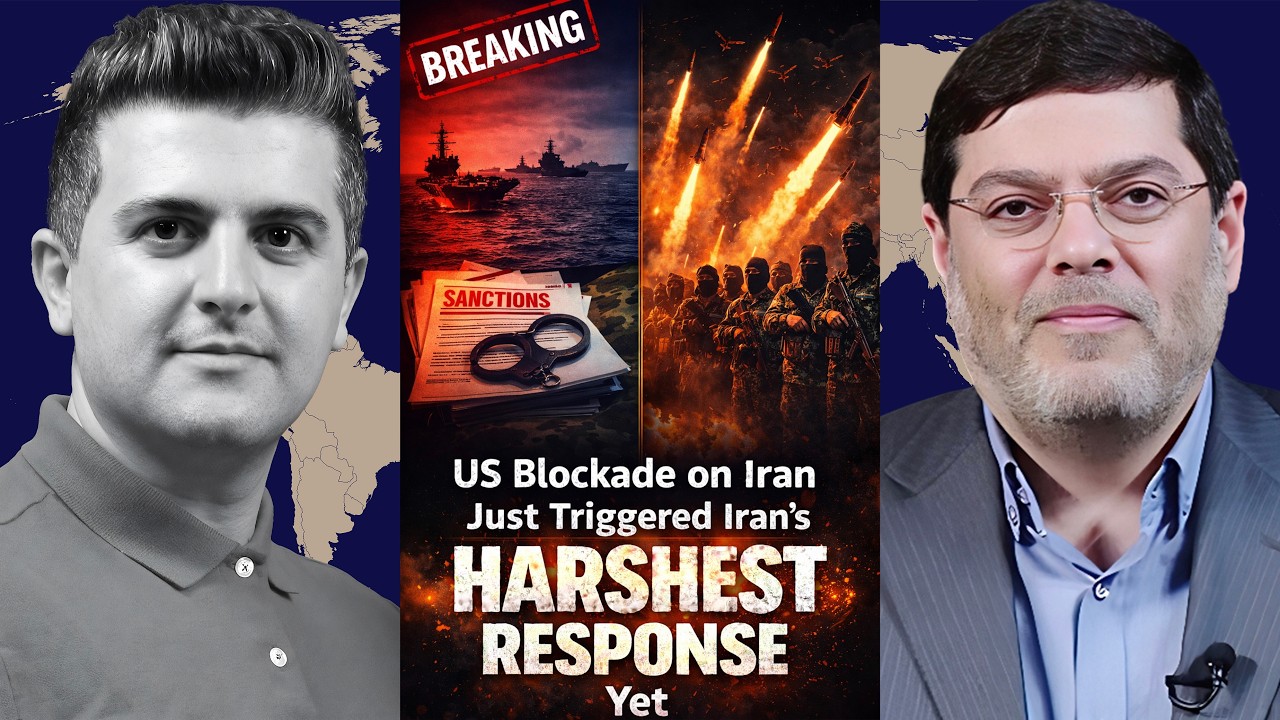
Seyed M. Marandi: US Blockade on Iran Just Triggered Iran’s HARSHEST Response Yet
"An Iranian professor details how US demands and an imposed blockade triggered Iran's harshest response, exposing American strategic missteps and the vulnerability of Gulf Arab states."

🚨 TOTAL F*CKING CHECKMATE 😂😂😂
"The host argues that Trump's 'ceasefire' with Iran was a calculated '5D chess' move to orchestrate a global energy market reshuffle, while simultaneously lambasting 'woke' domestic policies and the 'freefall' of anti-Trump conservative figures."