Lemon LIVE at 5 | Donald Trump Claims He Doesn’t Need Congress...Really?!
YouTube · mzqjuJv58UY
Quick Read
Summary
Takeaways
- ❖The U.S. economy exhibits extreme inequality, with the rich flourishing amidst widespread struggles for basic necessities.
- ❖Political figures are criticized for disseminating false narratives about economic recovery, ignoring the public's reality of high gas and grocery prices.
- ❖The Supreme Court's actions on voting rights are seen as a deliberate move to diminish Black political power, echoing historical patterns of systemic racism.
- ❖Many citizens feel a profound sense of powerlessness and exhaustion from continuously fighting for fundamental rights.
- ❖There is a strong call for white allies to acknowledge and actively use their privilege to combat systemic injustice.
Insights
1Worsening Economic Disparity and Political Disconnect
Guests and callers describe a severe economic downturn for average Americans, characterized by food lines, record-high gas prices, and a lack of job opportunities. Simultaneously, the wealthy are observed to be thriving. Political figures like Tim Scott and Steve Scalise are criticized for presenting an optimistic economic outlook that directly contradicts the public's experience, leading to accusations of 'gaslighting' and being 'out of touch'.
Aquila Hughes states, 'People are hanging by a thread and not well. I mean, we had people on this morning and they're talking about food lines... gas prices are at an all-time high, or at least a four-year high.' () The host notes, 'The rich are they are killing it... every luxury store is packed with rich people.' () Tim Scott is played claiming, 'Gas prices continue to come down, which means that your groceries will come down a little bit as well.' () which is immediately fact-checked by the host and another guest.
2Supreme Court's Attack on Voting Rights and Systemic Racism
The Supreme Court's decision to gut the Voting Rights Act is a central point of outrage. Speakers view this as a direct and severe limitation of Black political power and a continuation of America's historical pattern of systemic racism. This action is framed as a 'slap in the face' to elders who fought for these rights and a betrayal of democratic principles.
Jennifer Griffin asserts, 'The only people that are deciding our future are white people... white people put Trump in office, white people voted for this. So, until enough white people change, we are going to be in this upside down slash bad timeline.' () Marley states, 'Historically the Supreme Court has always reinforced racism in this country.' () The host emphasizes, 'They have limited or if not eradicated black voting power or political power in this country.' ()
3The Enduring Legacy of Segregation and White Supremacy
Multiple callers, including Bonita (70 years old) and Monique, share personal and familial experiences of segregation and Jim Crow laws, emphasizing that these events are not 'a long time ago' but living memories for many. This historical context is used to argue that racism is inherent in the country's DNA and continues to manifest through current political actions, such as the voting rights decision.
Bonita recounts, 'I was 9 years old in 1965 when the Voting Rights Act was passed... I remember visiting relatives in 1964, going to a Woolworth, having my brother who was eight, sit at a counter and being told he couldn't sit there because he was black.' () Monique shares, 'My father... had to endure the indignity of a white child pointing at him and calling him the nword... My mother had to sit at the back of the bus.' ()
Bottom Line
The perception of money equating to intelligence or good leadership is a dangerous misconception that allows unqualified or corrupt individuals to gain power.
This mentality enables figures like Trump to be seen as 'smart businessmen' despite questionable ethics, distracting from their actual impact on the working class and democratic institutions.
Educate the public on the true mechanisms of wealth accumulation and political power, emphasizing character and policy over perceived financial acumen, to foster more informed voting decisions.
The current political climate is causing a significant mental health crisis, with many feeling overwhelmed, powerless, and experiencing anxiety due to ongoing societal and economic challenges.
This widespread emotional distress can lead to disengagement, apathy, or desperate actions, hindering collective efforts for positive change.
Create and promote accessible community-based support systems and platforms (like the show itself) that offer a voice, foster solidarity, and provide strategies for coping with and addressing systemic issues, promoting 'informed without being inundated'.
Lessons
- Engage in direct conversations with friends and family, especially white individuals, to share the truth about current political and economic realities and the impact of systemic racism.
- Actively participate in local and national elections by registering to vote, ensuring voter status is current, and encouraging others to do the same.
- Support independent media and platforms that provide a voice for marginalized communities and offer in-depth, unfiltered discussions on critical societal issues.
- Challenge political 'gaslighting' by fact-checking claims against lived experiences and historical context, refusing to accept narratives that contradict reality.
- Utilize any privilege one possesses to advocate for those whose rights are being eroded, making discomfort a catalyst for change rather than maintaining silence.
Notable Moments
Aquila Hughes vividly describes the widespread economic despair, noting 'people younger than me have less hope than the people older than me' for the first time in her life.
This highlights a profound societal shift where the traditional American dream of upward mobility is perceived as broken, impacting the youngest generations most severely.
The host and Aquila Hughes react with disbelief and laughter to a clip of Tim Scott claiming gas prices are coming down, immediately fact-checking it as '2017' rhetoric.
This moment encapsulates the perceived disconnect and 'gaslighting' from political figures regarding the economic realities faced by everyday Americans.
Jamie Wolf delivers an emotional plea for white people to 'let go of comfort' and 'step into the streets,' acknowledging his own white male responsibility to combat misogyny and rebuild society.
This is a powerful and vulnerable call for white allies to actively engage in the fight for justice, moving beyond passive support to direct action and accountability.
Bonita, a 70-year-old caller, shares her childhood experience of segregation in 1964, being denied service at a Woolworth counter and forced to sit in a movie theater balcony.
Her testimony provides a crucial living link to the Jim Crow era, directly refuting the notion that segregation was 'a long time ago' and highlighting its enduring impact on living individuals.
Multiple callers, including Warren, Kev, and Monique, become visibly emotional and express deep rage and exhaustion over the Supreme Court's voting rights decision, framing it as a continuation of historical assaults on Black people.
These raw emotional responses underscore the profound personal toll and historical weight of the voting rights decision, illustrating the deep pain and frustration within the community.
Quotes
"People are hanging by a thread and and not well. I mean, we had people on this morning and they're talking about food lines that they were waiting in this morning."
"This is like I mean you know from my perspective this is like a moneyaundering scheme... it's corruption at its core."
"Nobody is having that experience. Nobody who's you know getting stuck with the bill is having that experience. And I think that Donald Trump has gotten away with a lot of brazen lies in the past, but people like it's affecting everyone now."
"Let go of comfort people. It's time to step into the streets and be uncomfortable like everybody else is. Stop enjoying the privilege that you got because of your skin color."
"The only people that are deciding our future are white people... until enough white people change, we are going to be in this upside down slash bad timeline."
"At the end of the day, a white man in power just go do what white men been doing forever. Just limit black people. If that's not a privilege, I don't know what is."
"I have less rights now than my grandma had in the 70s, like that's insane."
"We've only been a democracy since 1965. Barely then... Racism still occupies the throne of this country."
"It's a slap in the face to our elders and white people. Y'all need to step the [expletive] up because the rights that were fought for benefit you all as well."
"Jim Crow never ended. And I had to listen to stories of my father who is 90 years old. Had to endure the indignity of a white child pointing at him and calling him the nword."
Q&A
Recent Questions
Related Episodes
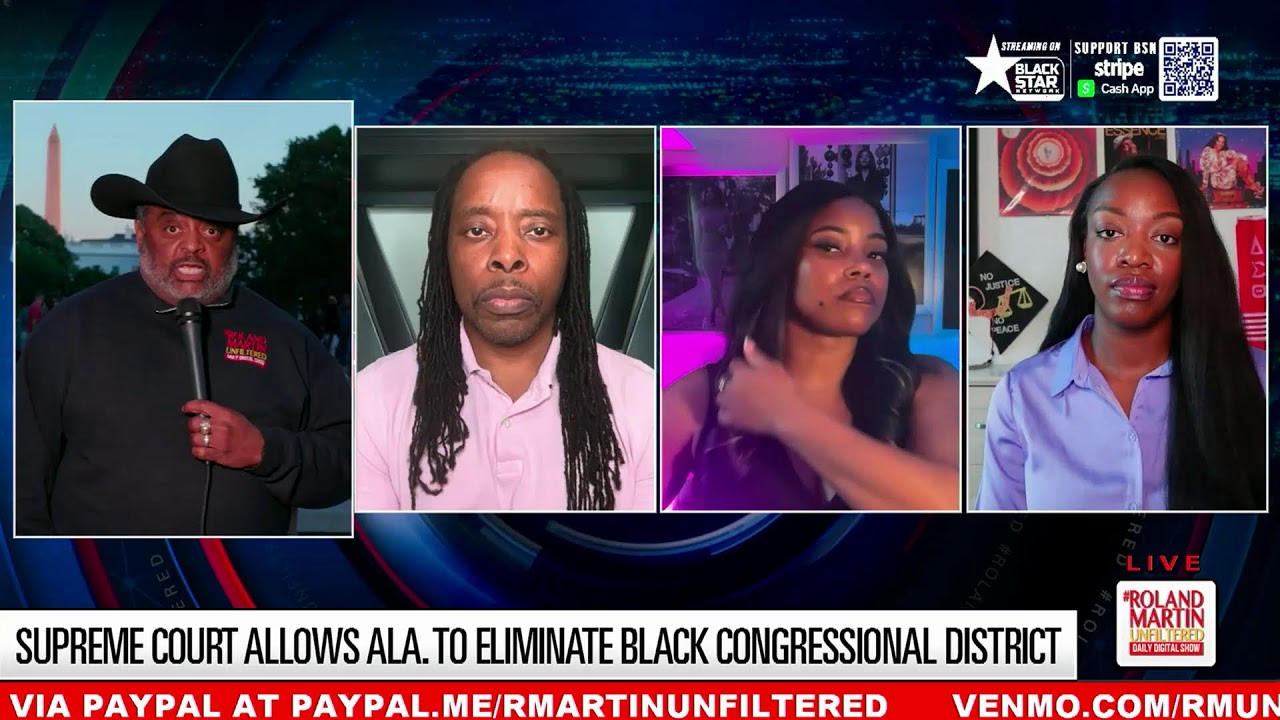
Moral Monday at BLM Plaza. Cleo Fields Sounds Alarm on Louisiana & Gary Chambers Pushes Turnout
"Activists and faith leaders gathered at Moral Monday to denounce 'policy violence' in various forms, from war and budget cuts to voter suppression and healthcare denial, urging sustained mobilization against a 'hijacked' democracy."
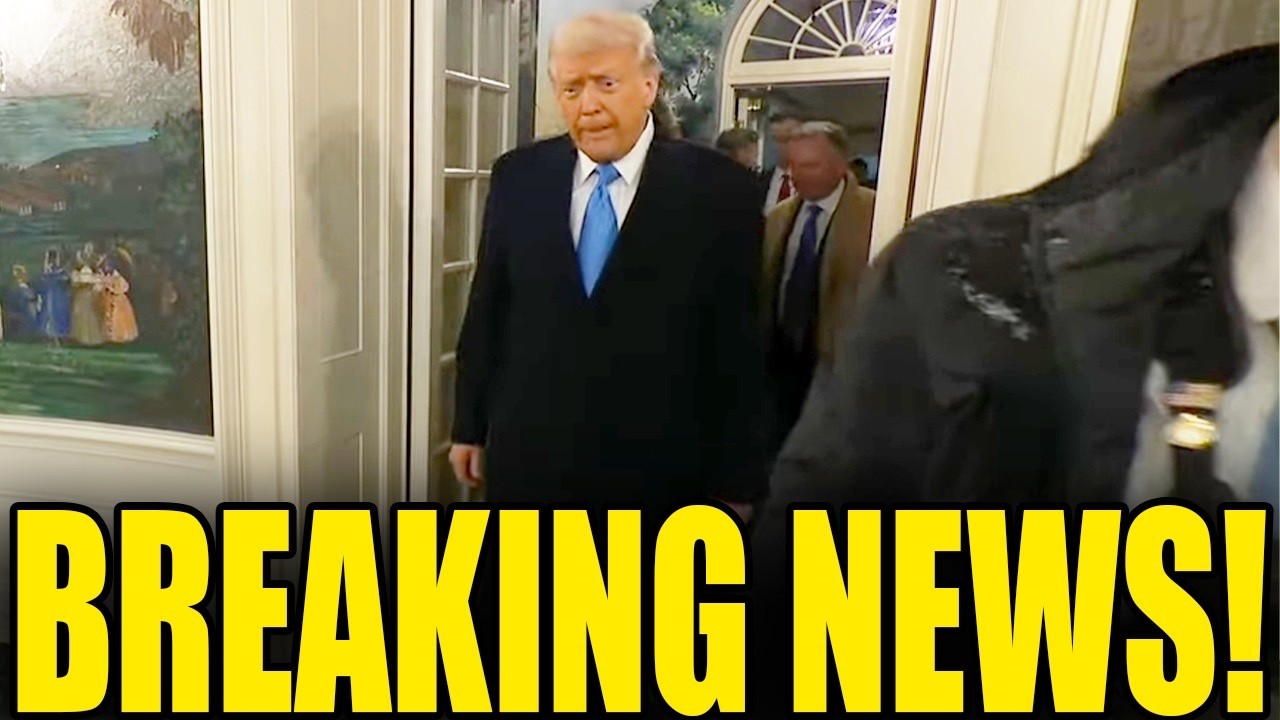
SHOCK BREAKING: SHOCKED TRUMP STORMS OUT OF SUPREME COURT IN RAGE!
"This episode dissects Donald Trump's contentious Supreme Court appearance regarding birthright citizenship, the growing disillusionment of right-wing figures like Alex Jones with Trump, and the political fallout from Kristi Noem's husband's alleged cross-dressing scandal."

HOT TOPICS | WARNING: Donald Trump's Iran War Chaos Has Hit the Point of No Return!
"Don Lemon delivers a scathing critique of Donald Trump's recent actions, framing them as desperate, unconstitutional attempts to consolidate power, undermine democracy, and distract from economic and foreign policy failures, all while questioning his mental stability."

Trump RUSHES Election Scheme as Midterms HAUNT HIM
"The hosts and guest expose the SAVE Act as a deceptive voter suppression tactic, drawing a stark contrast between the protection of gun rights and the erosion of voting rights."