
Mohammad Marandi, Stanislav Krapivnik & Ray McGovern: US & Israel Strike Iran, Iran Fires Back
YouTube · nCFtRG8GPpY
Quick Read
Summary
Takeaways
- ❖The US and Israeli attack on Iran, including a school bombing in Minab, is seen as a direct repetition of the 'Iraq playbook' of deception and false pretexts regarding WMDs.
- ❖Iran has been preparing for a conflict with the United States for 25 years and has developed sophisticated offensive and defensive capabilities.
- ❖The US military is logistically unprepared for a prolonged war of attrition, with limited missile manufacturing capacity and vulnerable overseas bases.
- ❖Iran's strategy involves using older generation missiles and drones first to deplete enemy air defenses, reserving advanced technology for a longer conflict.
- ❖The conflict has severely damaged US diplomatic credibility, as negotiations were ongoing while attacks were planned, alienating the Iranian populace.
- ❖Persian Gulf states hosting US bases are considered American assets and are highly vulnerable to Iranian retaliation, causing irreversible damage to US interests.
- ❖The US administration, particularly under Trump, is characterized as delusional and surrounded by 'Israeli fers' and 'yesmen' lacking strategic foresight.
- ❖Russia and China are actively supporting Iran with military technology upgrades, fuel, and grain, strengthening a multi-polar alliance against US hegemony.
- ❖A prolonged war could lead to Iran shutting down the Persian Gulf, destroying oil and gas facilities, and causing severe, long-term global economic disruption.
- ❖The attacks have solidified Iranian public opinion against the West, pushing the country further towards alliances with Russia, China, and the Global South.
Insights
1US-Israeli Attack Followed 'Iraq Playbook' of Deception
Professor Marandi and Ray McGovern assert that the US and Israeli strikes on Iran were preceded by a familiar pattern of misinformation, reminiscent of the lead-up to the 2003 Iraq War. This included false claims about Iran's nuclear weapons program and missile capabilities, even as negotiations were reportedly making progress. The attack itself was a 'blitzkrieg' aimed at assassinating commanders, similar to a previous '12-day war'.
US Vice President's claims of Iran developing nuclear weapons eight months after Trump declared the program 'obliterated'; Witoff's claim of Iran being 'a week away' from a nuclear weapon; Trump's State of the Union address claiming Iran was building missiles to strike the US (, , ). The attack occurred after the Omani foreign minister reported 'big progress' in negotiations ().
2Iran's Extensive Preparation and Strategic Retaliation
The speakers emphasize that Iran has been preparing for a conflict with the US for 25 years, developing robust offensive and defensive capabilities. Following a previous '12-day war,' Iran enhanced security for its leaders and redesigned underground bases. Iran's current response involves using older, cheaper missiles and drones to deplete enemy air defenses and target US bases in the Persian Gulf and Israeli sites, indicating a strategy for a prolonged conflict rather than a short engagement.
Iranians preparing for 25 years (); senior figures more careful about security post-12-day war (); armed forces preparing offensively and defensively (); using older missiles to draw anti-air fire (); most missile bases untouched and redesigned (, ).
3US Military Logistical Weakness and Unwinnable War
The analysts argue that the US cannot win a prolonged war against Iran due to critical logistical and manufacturing deficiencies. They point out the US's limited capacity to produce Patriot missiles (only 60 per year increase) and its reliance on handmade components, which are expensive and slow to produce. This contrasts sharply with Iran's ability to continuously produce missiles and drones, suggesting the US would run out of ammunition quickly.
Professor Marandi states the US 'can't win this war' (); Stan Krapivnik details Raytheon's 10% increase in Patriot missile production (600 to 660 per year) and the hand-made nature of US missiles (, ); Ray McGovern suggests the US military could run out of ammunition in 'a week' (, ).
4Geopolitical Re-alignment: Iran, Russia, and China
The US's actions are inadvertently strengthening Iran's alliances with Russia and China. The continuous attacks and deceitful negotiations have alienated the Iranian people and government, pushing them to enhance relations with the Global South. Russia has provided Iran with advanced military technology (propulsion, guidance, avionics) and committed to supplying essential resources like diesel and grain via the Caspian Sea, ensuring Iran's ability to sustain a long conflict.
Americans pushing countries closer (); US destroying its capability to negotiate and alienating Iranian people (, ); pushing debate towards enhancing relations with Russia, China, Global South (, ); Russia pouring in technology (propulsion, guidance, HUD, avionics) and committing to diesel and grain supplies (, , , ).
Bottom Line
The US's repeated deceptive tactics, such as negotiating while planning attacks, have irreversibly destroyed its diplomatic credibility with Iran, making future peaceful resolutions nearly impossible.
This breakdown of trust means any future US overtures for dialogue will be met with extreme skepticism, forcing Iran to rely solely on military deterrence and strengthening its non-Western alliances.
For non-Western powers, this creates an opportunity to position themselves as more reliable and trustworthy partners in international relations, potentially accelerating the shift towards a multipolar world order.
The vulnerability of US military bases and assets in Persian Gulf states to Iranian missile and drone attacks reveals a significant weakness in US regional projection and protection capabilities.
This demonstrates that US military presence in the region is not a guarantee of security for its allies or itself, potentially leading to a re-evaluation of alliances and a decline in US influence.
Regional powers previously reliant on US security guarantees may seek alternative defense strategies or strengthen independent military capabilities, fostering greater regional autonomy and potentially new security architectures.
Lessons
- Re-evaluate the long-term sustainability of military interventions without robust domestic manufacturing and logistical support, especially against prepared adversaries.
- Recognize that deceptive diplomatic practices can permanently damage international trust, necessitating a shift towards transparent and consistent foreign policy to maintain credibility.
- Understand that regional conflicts, particularly in energy-rich areas, can trigger global economic instability, requiring proactive strategies to mitigate supply chain disruptions and price spikes.
Quotes
"The White House is full of Israeli fers who have no logic or reason, morality aside, and that's why we are where we are."
"The parallel between Iraq and Iran, just what, 2003, you do the math. Okay. It's just I do a comment on that."
"The US runs out of ammunition in a week for God's sake. All right. Now, I don't think they'll be able to go more a week."
"Every time Iran hits Dubai with a missile, that does irreversible damage to US interests. Every time Iran strikes Qatar with a missile, that does irreversible damage to US interests."
"This empire is not as powerful as it claims to be. It can be hit. It can be hurt. It can."
Q&A
Recent Questions
Related Episodes

Pepe Escobar: “Total Failure”: Trump’s Blockade Just Backfired Disastrously
"Pepe Escobar argues that the US blockade against Iran, spearheaded by Donald Trump, has utterly failed and backfired, accelerating global economic chaos and challenging US geopolitical dominance."
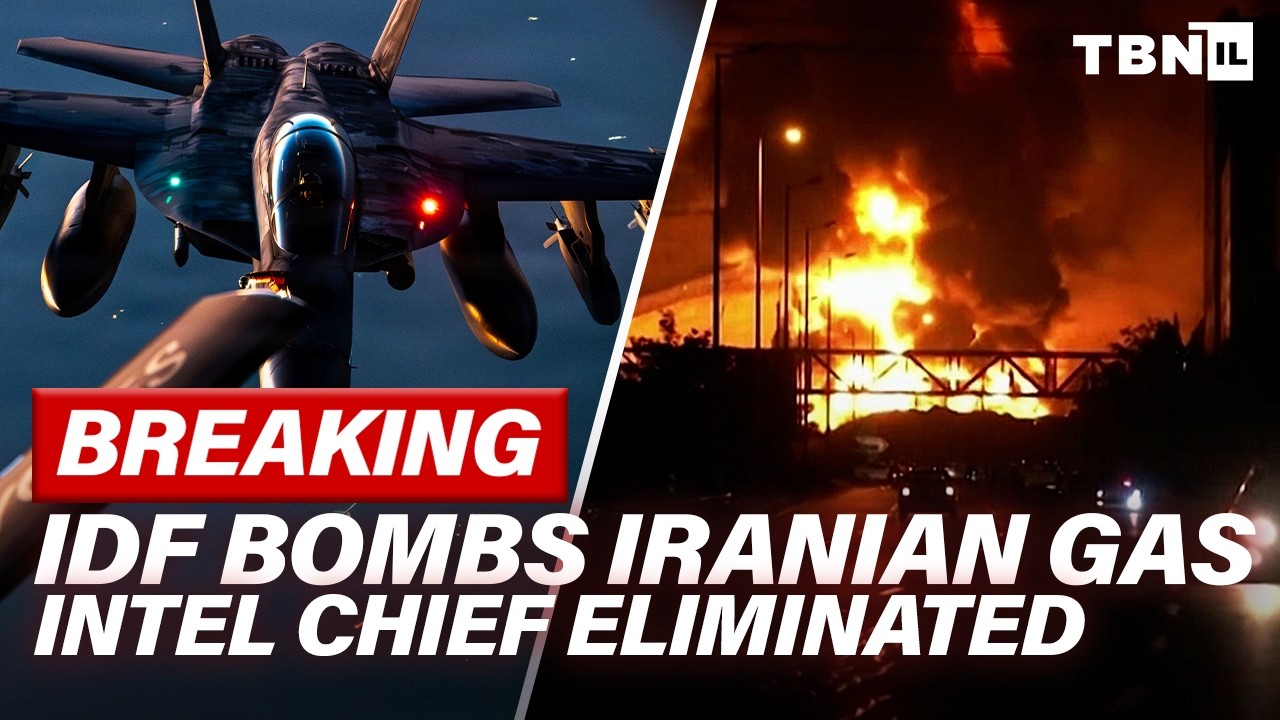
BREAKING: Israel BOMBS Major Iran Gas Site; Top Mullah ELIMINATED; Iran Vows VENGEACE | TBN Israel
"Israel and the United States have escalated their 'Roaring Lion War' against Iran, striking its largest gas facilities, eliminating key intelligence and military figures, and disrupting missile production, while Iran threatens a broader energy war in the Gulf."

Alex Krainer: US STRIKES Iran – Iran RETALIATES Against Kuwait, Bahrain & Jordan!
"Amidst escalating US-Iran conflict and Iranian retaliation against regional US allies, this episode argues that US foreign policy is deeply controlled by an 'Anglo-Zionist conspiracy' led by the Rothschild banking dynasty, prioritizing Israeli interests over American ones."

Patrick Henningsen: Hezbollah JUST Fired Back at Israel - Iran Vows to “Crush” All Attacks
"Patrick Henningsen argues that the US and Israel initiated an illegal war against Iran, driven by Trump's incompetence and Israeli influence, leading to an inevitable escalation with severe global economic repercussions."