
50 Years of Iran Coverage | 60 Minutes Marathon
YouTube · nTBrag95Qr0
Quick Read
Summary
Takeaways
- ❖The Shah of Iran, Mohammad Reza Pahlavi, dismissed US gas shortages as a 'fraud' orchestrated by oil companies and believed himself divinely protected.
- ❖The Shah accused the 'Jewish lobby' of controlling US media and finance, influencing presidential candidates and foreign policy.
- ❖The CIA's role in restoring the Shah in 1953 and establishing SAVAK, Iran's brutal secret police, became a core grievance fueling the 1979 revolution.
- ❖Ayatollah Khomeini demanded the return of the Shah and his wealth as a precondition for freeing American hostages, calling the US Embassy a 'spy nest'.
- ❖Iranian leaders, including Rafsanjani and Ahmadinejad, consistently denied pursuing nuclear weapons, citing religious tenets and the ineffectiveness of such arms.
- ❖President Rouhani clarified that 'Death to America' chants were directed at US policies, not the American people, acknowledging historical US actions against Iran's interests.
- ❖The 2020 US drone strike killing General Qassem Soleimani led to Iran's largest ballistic missile attack against US troops, resulting in over 100 traumatic brain injuries but no deaths.
- ❖President Raisi demanded guarantees that the US would not withdraw from a new nuclear deal, citing past American unilateralism, and denied the Holocaust's scale.
- ❖Iran's Revolutionary Guard is actively hiring international criminal gangs to conduct assassinations and kidnappings of Iranian dissidents and former US officials globally, including on US soil.
Insights
1Shah's Perception of Power and US Influence (1974-1976)
Shah Mohammad Reza Pahlavi believed US gas shortages during the 1973 oil embargo were a 'fraud' orchestrated by oil companies for profit. He viewed accusations of corruption in Iran as 'jealousy' and claimed divine protection for his long rule. In 1976, he controversially asserted that the 'Jewish lobby' was overly powerful in the US, controlling media, banks, and finance, and influencing American presidents to Israel's detriment. He also acknowledged SAVAK agents operated in the US with US government consent, monitoring Iranian dissidents.
Mike Wallace's interviews with Shah Mohammad Reza Pahlavi in 1974 and 1976.
2Roots of the 1979 Revolution: US Complicity and SAVAK Brutality
The widespread fury in Iran leading to the 1979 revolution was significantly fueled by the denied fact that the CIA restored the exiled Shah in 1953 and helped establish SAVAK, Iran's secret police. SAVAK became notorious for torture and repression. US officials, including Ambassador Richard Helms and CIA analyst Jesse Leaf, were aware of SAVAK's brutalities but prioritized maintaining the Shah as a 'pillar' against the Soviet Union, turning a blind eye to human rights abuses. This US 'total commitment' policy, as termed by Richard Cottam, alienated the Iranian populace and opposition groups.
Analysis during the hostage crisis (1980) and interviews with Raji Samghabadi, Max McCarthy, and Jesse Leaf. A classified Senate Foreign Relations Committee report confirmed the CIA's role in forming SAVAK and providing training, including interrogation techniques.
3Ayatollah Khomeini's Stance on Hostages and US Relations (1979)
Ayatollah Ruhollah Khomeini, shortly after the US Embassy takeover, declared that the 52 American hostages would not be freed until the Shah was returned to Iran, along with his 'plundered wealth.' He accused the US Embassy of being a 'spy nest' and dismissed President Carter's accusations of terrorism, stating that the 35 million people of Iran were not terrorists. Khomeini also called for the Egyptian people to overthrow President Sadat for 'compromising with the enemies of Islam' (Israel).
Mike Wallace's interview with Ayatollah Khomeini in 1979.
4Iran's Nuclear Ambitions and US Sanctions (1997-2015)
Iranian Presidents Rafsanjani (1997) and Ahmadinejad (2007) consistently denied pursuing nuclear weapons, asserting their program was solely for peaceful energy. Rafsanjani claimed US sanctions were ineffective as European allies filled trade gaps. Ahmadinejad dismissed US accusations of sending weapons to Iraq as 'laughable' and 'psychological warfare,' stating that nuclear bombs were 'of no use.' President Rouhani (2015) defended the JCPOA nuclear deal, stating it limited paths to a bomb and aimed to build trust, despite hardliner opposition in both the US and Iran. He clarified 'Death to America' chants were against US policies, not its people, citing historical grievances.
Interviews with Presidents Rafsanjani (1997), Ahmadinejad (2007), and Rouhani (2015).
5The Soleimani Assassination and Near-War (2020)
The US drone strike that killed Iranian General Qassem Soleimani in January 2020 was ordered by President Trump due to intelligence indicating Soleimani was planning 'imminent' attacks on US forces. Iran retaliated with a ballistic missile attack on Al Asad airbase in Iraq, the largest such attack against Americans. Despite 11 missiles with 1,000lb warheads hitting the base, no one was killed, though over 100 US troops suffered traumatic brain injuries. US General Frank McKenzie credited a timely evacuation, based on commercial satellite imagery analysis, for preventing an estimated 100-150 casualties and averting a wider war. Iran later mistakenly shot down a Ukrainian airliner, killing 176, believing it was an American bomber.
David Martin's 2021 report, including interviews with Major Alan Johnson, Lieutenant Colonel Tim Garland, Master Sergeant John Haynes, Sergeant Kimbol Celts, and General Frank McKenzie.
6President Raisi's Hardline Stance and Distrust of US (2022)
In 2022, President Ebrahim Raisi expressed deep distrust of the US, demanding 'guarantees' that any new nuclear deal would be 'lasting' and that the US would not unilaterally withdraw, citing past American behavior. He dismissed US claims about Iran's nuclear weapons program as 'baseless' and stated that possessing nuclear weapons has 'no place in our doctrine.' Raisi also refused a meeting with President Biden, saw no change between Trump and Biden administrations regarding sanctions, and denied the scale of the Holocaust, stating historical events should be 'investigated by researchers.' He vowed justice for Soleimani's assassination but denied Iran would engage in 'an eye for an eye' assassinations.
Lesley Stahl's interview with President Ebrahim Raisi in 2022.
7Iran's Global 'Shadow War' and Criminal Proxies (2023)
Iran is engaged in a 'shadow war,' actively hiring international criminal gangs to intimidate, abduct, and assassinate perceived enemies of the regime globally, including on US soil. Targets include former US government officials like John Bolton and Mike Pompeo, as well as vocal Iranian activists abroad like Masih Alinejad and Jamshid Sharmahd. The FBI confirmed plots to kidnap Alinejad via speedboat to Venezuela and later to assassinate her. Iran uses criminal proxies to maintain 'deniability' and exploit their existing networks. British counterterrorism policing reported foiling 15 Iranian kidnapping and assassination attempts since 2022.
Lesley Stahl's 2023 report, including interviews with John Bolton, Masih Alinejad, Giselle Sharmahd, and Matt Jukes (UK counterterrorism).
8Reza Pahlavi's Vision for a Post-Regime Iran (2023)
Reza Pahlavi, son of the last Shah, sees the Iranian regime as collapsing and aims to lead a transitional government to democracy. He envisions a new Iran with territorial integrity, clear separation of religion and state, equality under law, individual liberties, and a democratic process for self-determination. Pahlavi supports dismantling the nuclear weapons program and establishing peace with Israel, citing Iran's historical role in sheltering Jews. He believes he is uniquely positioned as a transitional leader, not a future monarch, and has signaled support from elements within the Iranian military and police.
Scott Pelley's interview with Reza Pahlavi in 2023.
Lessons
- Recognize the deep historical roots of US-Iran mistrust, including the 1953 coup and SAVAK's abuses, when formulating current foreign policy.
- Be aware of Iran's evolving 'shadow war' tactics, including the use of criminal proxies for assassinations and kidnappings of dissidents and former officials globally.
- Understand that Iranian leaders often differentiate between 'the American people' and 'US policies' when expressing anti-American sentiment, which can be a point for diplomatic engagement.
- Consider the internal dynamics and opposition within Iran, including figures like Reza Pahlavi, who advocate for a secular, democratic future and peace with regional adversaries.
- Prioritize robust intelligence gathering and security measures to counter Iran's covert operations targeting individuals and interests on foreign soil.
Quotes
"You are not short of oil. Have you seen Have you seen the lines of cars stretching for blocks, in some cases for miles, waiting to get gas? But you have imported more oil than any time in the past. Well, not recently we haven't. You have. You mean we are still importing more oil than we were, let's say, in September? You believe that? I can't say for sure. But what is certain is that you are not importing less. Then then we were importing last September, then this whole thing is a fraud? You know that ships are changing their destinations two or three times in the oceans? You sell the oil for a certain destination and it ends up somewhere else? What you seem to be saying is that that there is some fraud involved, that there is something going on that doesn't meet the eye. Oh, something is going on, for sure. And who is being enriched by it? The oil companies."
"Not entirely, but I think even a little too much even for Israel interests. You think the Jewish lobby in the United States is too powerful for the interests of Israel? I think so. Sometimes they are disserving the interests of Israel because they are they're pushing around too many people. How do you mean pushing around? Well, pressuring. They have many means at their disposal. They are putting up pressure on many many people. And at the end, I don't think that if it will it will even help Israel. Why, if this is true, why would the president of the United States pay attention to that lobby? They are strong. Strong in what sense? They are controlling many things. Controlling what? Newspapers, medias, banks, finances, and I'm going to stop there."
"Sadat states he is a Muslim. And we are not. He is not, for he compromises with the enemies of Islam. Sadat has united with our enemies. Sadat knows well what is occurring south of Lebanon. And with the Palestinians. He knows the crimes of Israel. Yet he still considers Begin a friend and himself a Muslim. You must try to evaluate what he is doing then through Islam. The Egyptian people do not back Sadat. And once again, the official interpreter, reading from his prepared text. I demand that Egyptian people try to overthrow him just as we did with the Shah."
"I don't particularly like the word exchange, but from a humanitarian perspective, if we can take a step, we must do it. The American side must take its own steps."
"This is not Guantanamo Bay. This is not a Baghdad prison. This is not a secret prison in Europe. This is not Abu Ghraib. This is Iran. I'm the president of this country."
"What the then American government did, by the direct order of Trump himself, to assassinate Mr. Qassem Soleimani, this was a heinous crime. We want justice to be served. We are not going to forget about this. I'm wondering what you mean by justice. Does it mean an eye for an eye? There was this assassination, now we're going to have an, you know, an answer, a satisfaction. That's the type of the actions that the Americans and Zionist regimes are doing in the world. We are not going to carry out the same actions."
"I think the targeting of American citizens by a hostile foreign government uh is very close to an act of war. What would happen if they succeeded in assassinating someone like you, a well-known former official? Well, I wouldn't like to find out uh for for myself or for the country, but why are we sitting here quietly talking about this when they're in effect uh saying they're going to commit acts of war against American citizens on American soil? Does the fact that Iran it feels emboldened to come after our citizens, does it mean we've lost our deterrence?"
"I'm not running for office. I'm not. Are you saying in this interview that you wouldn't lead Iran? That's a different thing. They trust me as a transitional leader. Not as the future king or future president or future whatever. I'm totally focused on my mission in life, which is let me bring the country to a point that they can make that free choice. That would be enough for me having said mission accomplished."
Q&A
Recent Questions
Related Episodes

Larry Johnson & Col. Wilkerson: 4 US Warships Tried to Enter Strait of Hormuz – Then Iran Launched
"A critical analysis reveals escalating US-Iran military confrontations in the Strait of Hormuz, a stark disconnect in diplomatic rhetoric, and a significant geopolitical realignment in the Middle East away from US influence."
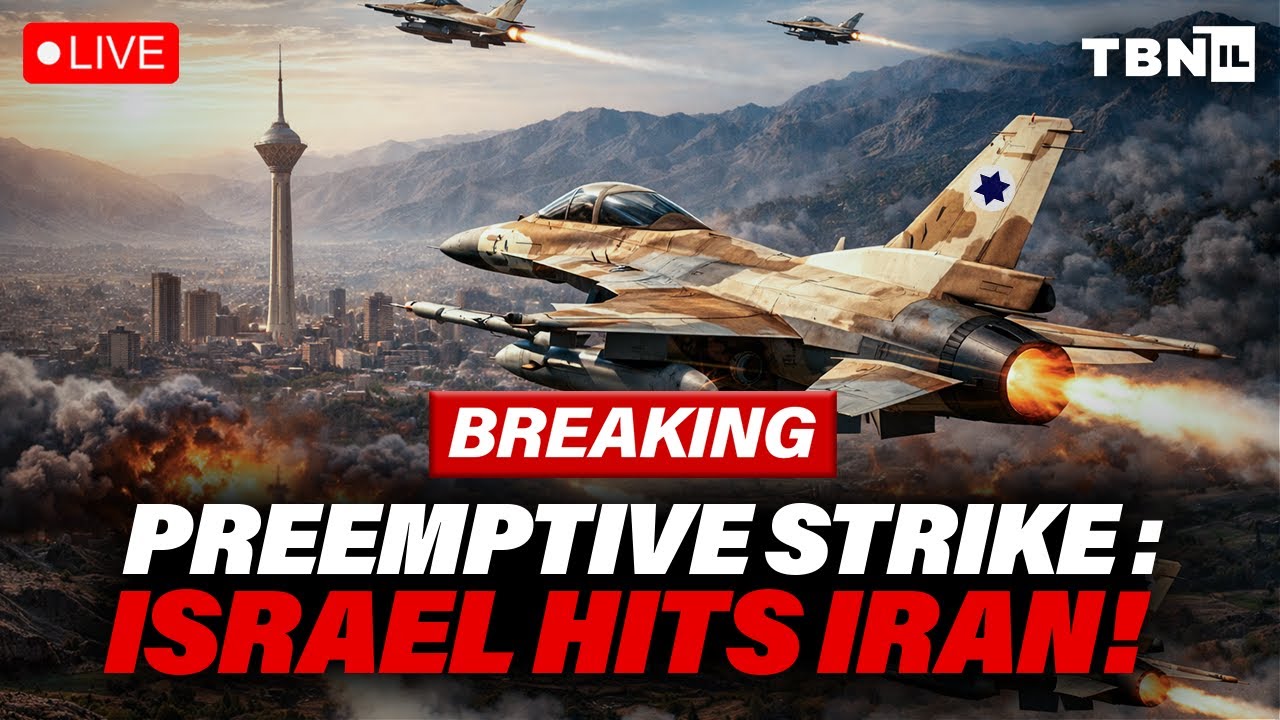
BREAKING: Israel Preemptive Strike on Iran - Explosions in Tehran LIVE! | | TBN Israel
"Israel and the United States launched a coordinated preemptive strike against Iran, targeting regime and military assets, triggering immediate Iranian missile retaliation against Israel and US bases in the region."

Mohammad Marandi & Larry C. Johnson: U.S. & Iran on the Brink as Critical Negotiations Unfold LIVE
"Two geopolitical analysts argue that the US and Israel are on the brink of a catastrophic war with Iran, driven by irrationality and miscalculation, which would lead to global economic collapse and US instability."
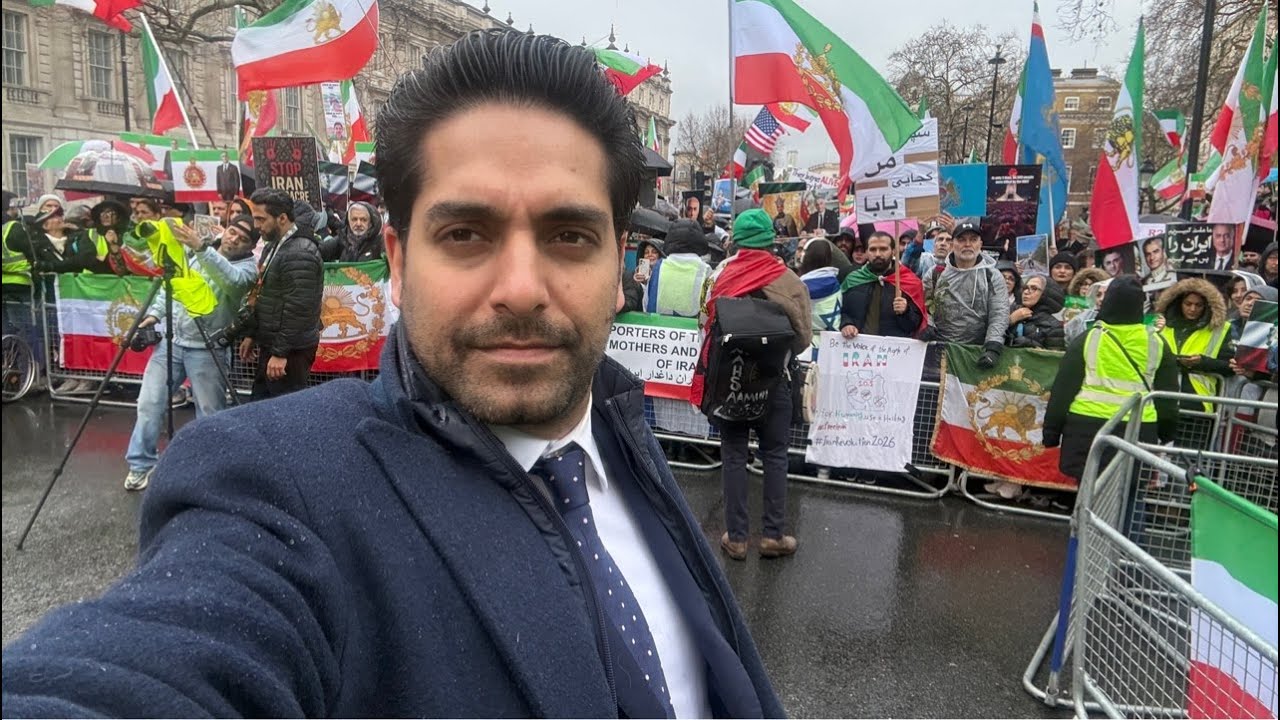
🚨 BREAKING: Anti-Islamist Iranians Out In London Against UK's IRGC Members
"Anti-Islamist Iranian protesters in London faced Metropolitan Police obstruction while demanding the UK government designate the IRGC as a terrorist organization, criticizing its perceived leniency compared to other nations."