
Ray McGovern: West Asia Changing FAST, Israel LOSES Big - Putin REJECTS Zelensky
YouTube · njK5kxdDNdE
Quick Read
Summary
Takeaways
- ❖Iran has strategically linked negotiations with the US to the situations in Lebanon and Gaza, demanding a comprehensive regional deal.
- ❖International law permits and encourages violent resistance against illegal occupation, a principle Iran and its allies are leveraging.
- ❖Robert Kagan acknowledges Iran's control over the Strait of Hormuz, signaling a dramatic shift in regional power dynamics away from Israel.
- ❖US military aid to Israel and the integration of their armies are seen as enabling Israeli aggression, hindering peace efforts.
- ❖Putin views Zelensky as an illegitimate leader and his recent peace overture as an insulting propaganda ploy, indicating a lack of serious negotiation prospects.
- ❖Israel is not a formal US ally and has rejected mutual defense treaties to maintain operational freedom, while allegedly spying on US officials.
Insights
1Iran's Strategic Leverage in West Asia
Iran has successfully altered its negotiation strategy with the United States, now insisting that any agreement must include considerations for Lebanon and Gaza. This reflects Iran's increased regional influence and its ability to integrate these areas into its 'arc of resistance,' making them non-negotiable elements in broader diplomatic efforts. Robert Kagan's assessment confirms Iran's growing control over vital chokepoints like the Strait of Hormuz, granting it substantial economic and political leverage globally.
The host notes Iran's changed strategy to include Lebanon and Gaza in US negotiations []. Robert Kagan states, 'Iran is in control of the straight... It'll be under Iranian management, which means they will control who gets in and who gets out' [].
2Legality of Resistance Against Occupation
Ray McGovern asserts that international law supports the right of occupied peoples to resist their occupiers, including through violent means. He cites historical examples like Ireland's struggle against Great Britain and references a Chinese lawyer at the UN body in Geneva who affirmed this principle. This perspective frames the actions of groups like Hamas and Hezbollah as legally justified responses to what is considered an illegal occupation by Israel, dating back to the unprovoked 1967 Six-Day War.
McGovern states, 'international law and the right under international law for resistance people against illegal occupation to work their will against the occupiers... Yes, it's legal' []. He mentions Menachem Begin's admission that the 1967 war was unprovoked [] and UN Resolution 242 [].
3Israel's Non-Ally Status and US Intermeshment
Despite common perception, Israel is not a formal ally of the United States. In 1973, Israel rejected a mutual defense treaty offer from the US because such treaties would require internationally recognized borders and pre-notification for military actions against neighbors. Instead, Israel benefits from a unique arrangement where its military and intelligence operations are deeply intermeshed with the US, providing it with support without the constraints of a formal alliance.
McGovern explains, 'Israel is not an ally of the United States... We offered them a mutual defense treaty... they rejected it' []. He notes treaties require recognized borders and pre-notification for attacks, which Israel wanted to avoid []. He adds that recent legislation 'melds the Israeli army and the US army in a way that has never been melded before' [].
4Putin's Rejection of Zelensky and Ukraine War Endgame
Vladimir Putin dismissed a recent letter from Ukrainian President Zelensky as an 'insult' and a propaganda tactic, refusing to engage in talks with a leader he considers illegitimate and whose term has expired. Putin indicated that the war is nearing its end, potentially by the close of the year, with Russia achieving its demilitarization objectives. He emphasized Russia's capability for precision strikes on decision-making centers, not civilian areas, and expressed willingness for serious negotiations only when Ukraine is ready to 'recognize reality' and accept Russian compromises.
Putin 'answered politely that that's not going to happen' regarding a meeting with Zelensky []. McGovern states Putin's view that Zelensky's letter was 'an insult a grand insult' [] and that 'it's going to be over by the end of this year' []. Putin also highlighted Russia's air defenses and ability to 'work our will as we wish on Kiev' [].
Bottom Line
Netanyahu may possess compromising information on Donald Trump, potentially 'Epstein tapes,' which could be used for blackmail, influencing US policy decisions regarding Israel.
This suggests a non-public, coercive dynamic in US-Israel relations, where personal vulnerabilities of US leaders might be exploited to ensure continued support for Israeli interests, regardless of broader US strategic goals.
Investigative journalism into the alleged connections between Israeli intelligence and figures like Jeffrey Epstein could expose hidden levers of geopolitical influence and accountability gaps in foreign policy decision-making.
Marco Rubio, as National Security Advisor, acts as a 'sphincter' controlling the flow of intelligence to the US President, potentially misinforming the leader and shaping policy based on a filtered narrative.
This implies a significant vulnerability in the US intelligence apparatus, where a single individual or a small group can gatekeep critical information, leading to biased decision-making and strategic errors, particularly concerning complex international issues.
Advocacy for reforms in intelligence briefing protocols to ensure diverse, unfiltered information reaches the President, reducing the risk of manipulation and improving the quality of foreign policy decisions.
Key Concepts
Arc of Resistance
A geopolitical concept describing a network of states and non-state actors (e.g., Iran, Hezbollah, Hamas, Houthis) united by their opposition to Israel and US influence in the Middle East, forming a contiguous zone of resistance.
International Law of Resistance
The principle, cited by McGovern, that international law not only permits but encourages occupied peoples to use armed struggle to throw off an occupier, justifying actions by groups like Hamas and Hezbollah.
Lessons
- Critically evaluate mainstream media narratives on West Asian conflicts, seeking out diverse sources that challenge conventional wisdom, especially regarding the legality of resistance movements and historical events.
- Pressure elected officials to scrutinize US military aid to Israel and the deepening integration of US and Israeli military forces, questioning whether these arrangements serve American interests or are influenced by external lobbies.
- Recognize the potential for non-public leverage (e.g., blackmail) in international relations and advocate for greater transparency and accountability in foreign policy decision-making processes.
Notable Moments
Lebanese President Michel Aoun's public condemnation of Iran for using Lebanon as a 'cheap bargaining chip' in negotiations with the US, and his call for Hezbollah to negotiate.
This highlights internal divisions within Lebanon regarding Iran's influence and the country's role in regional conflicts, contrasting with McGovern's view of Aoun as a US client.
Ray McGovern's strong criticism of Robert Kagan, labeling him a 'rat jumping off a sinking ship' for only now acknowledging Iran's rising power after years of advocating for wars in the region.
This underscores a deep-seated frustration with neoconservative foreign policy architects, accusing them of intellectual dishonesty and shifting positions only when their previous policies have demonstrably failed.
Quotes
"They are using Lebanon as a cheap bargaining chip in their negotiation with the United States. It's unacceptable. And here also, Hezbollah must understand that... no other way but to sit and talk."
"We have to be honest. Those Egyptian formations in the Sinai, they were no threat to us. We just decided to attack him. That's how it went down. It was an opportunity to attack him. We were not threatened by Nasser's folks."
"Iran is in control of the straight... It'll be under Iranian management, which means they will control who gets in and who gets out, how quickly and at what price."
"The only way you can get a deal is as if you stop military supplies to Israel. That's it, folks. Forget about anything else."
"Israel is not an ally of the United States... They have something far better than a mutual defense treaty."
Q&A
Recent Questions
Related Episodes

Patrick Henningsen: Hezbollah JUST Fired Back at Israel - Iran Vows to “Crush” All Attacks
"Patrick Henningsen argues that the US and Israel initiated an illegal war against Iran, driven by Trump's incompetence and Israeli influence, leading to an inevitable escalation with severe global economic repercussions."

LIVE: Trump HIDES FROM PUBLIC as US SOLDIER KILLED!!! 6/2/2026
"The host exposes alleged government cover-ups regarding military casualties, Trump's unexplained public absence, and questionable political appointments, arguing these reflect a 'regime of loser babies' and a failing foreign policy."

🚨 TOTAL F*CKING CHECKMATE 😂😂😂
"The host argues that Trump's 'ceasefire' with Iran was a calculated '5D chess' move to orchestrate a global energy market reshuffle, while simultaneously lambasting 'woke' domestic policies and the 'freefall' of anti-Trump conservative figures."
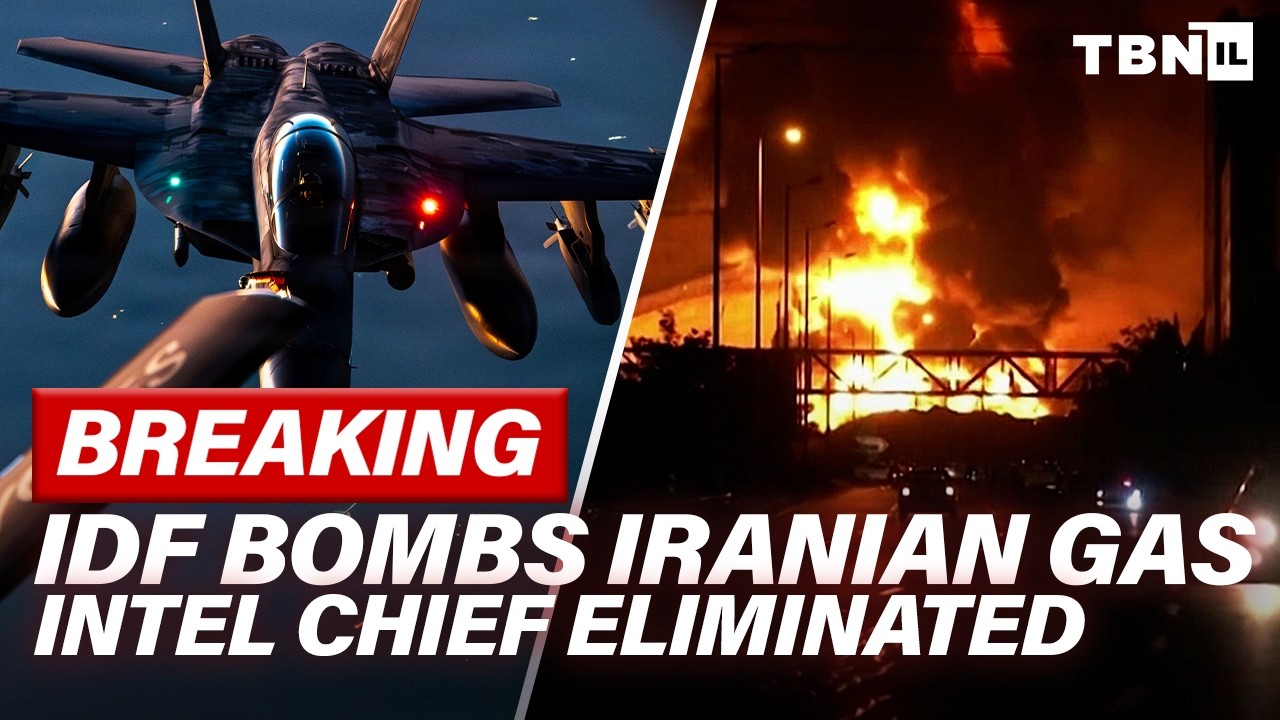
BREAKING: Israel BOMBS Major Iran Gas Site; Top Mullah ELIMINATED; Iran Vows VENGEACE | TBN Israel
"Israel and the United States have escalated their 'Roaring Lion War' against Iran, striking its largest gas facilities, eliminating key intelligence and military figures, and disrupting missile production, while Iran threatens a broader energy war in the Gulf."