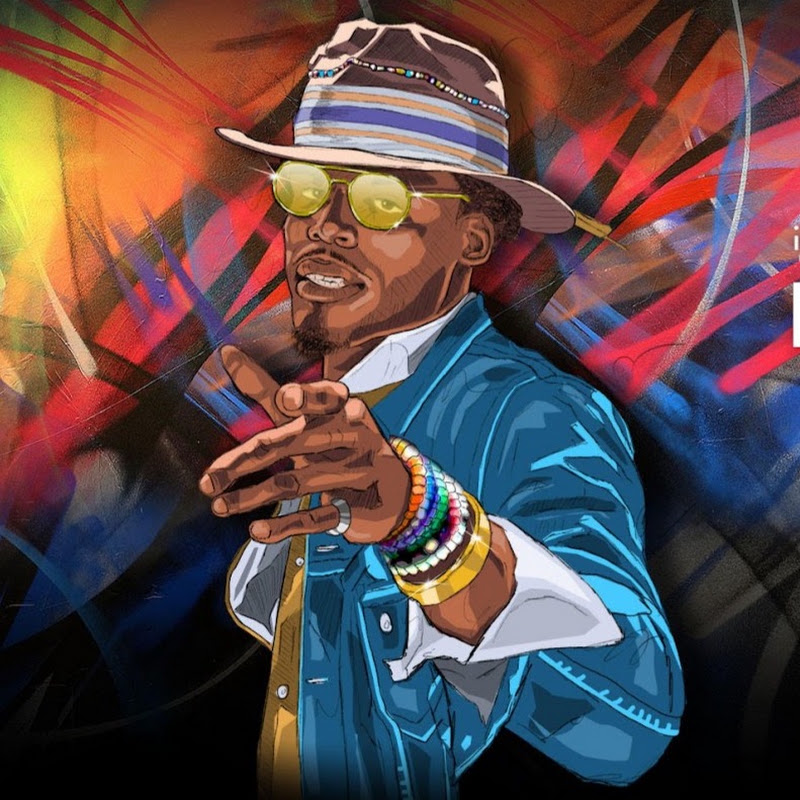
“They Don't Do That Sh*t To My Face” — Stephen A. Smith on Critics & Media Tension
YouTube · nxgZz9UtdEU
Quick Read
Summary
Takeaways
- ❖Stephen A. Smith views new expectations placed on him due to his success as unfair, asserting he has 'never changed' his core principles.
- ❖He criticizes Cam Newton for not challenging Jason Whitlock's 'unfactual' claims about Smith's past during their interview.
- ❖Smith draws a clear line between professional critique and personal attacks, especially when his family or integrity is questioned.
- ❖He highlights the fundamental difference in freedom and accountability between career journalists and former athletes in media.
- ❖Smith believes many criticisms against him are 'conveniently misinformed' and stem from a lack of understanding of his career journey and sacrifices.
- ❖He maintains that his political stance, advocating for both parties to earn the black vote, has been consistent for decades and is not a 'betrayal' of his race.
- ❖Smith's personal dating philosophy emphasizes appreciation over expectation and a woman's role in the home, influenced by his mother's experiences.
- ❖He asserts that many critics avoid confronting him directly because they lack facts and fear the consequences of challenging his established position and influence.
Insights
1Journalistic Integrity vs. Athlete Platforms
Stephen A. Smith firmly distinguishes his career as a professional journalist, built on decades of reporting and earning the right to editorialize, from the platforms of former athletes. He argues that journalists are 'handcuffed' by corporate rules and must adhere to factual reporting, whereas athletes often enjoy greater independence but may lack the same investigative rigor or accountability. This distinction informs his expectation that even friendly interviewers challenge unsubstantiated claims.
Smith explains that until recently, he needed ESPN's permission for interviews, unlike athletes who have inherent independence (). He recounts being the 21st African-American general sports columnist in U.S. history, a title that 'licenses' opinion through earned credibility (). He contrasts this with Matt Barnes' interview with Gavin Newsom, where critical questions about California's issues were largely unasked, attributing it to a lack of journalistic background ().
2The Principle of Loyalty and Accountability in Media
Smith emphasizes that while he values loyalty, it does not mean unquestioning support or silence in the face of falsehoods. His primary issue with Cam Newton's interview with Jason Whitlock was the failure to challenge Whitlock's 'unfactual' and 'personal' attacks against Smith. He believes that true loyalty, especially among colleagues, involves holding others accountable for their statements, particularly when they lack evidence.
Smith states his only issue with Cam's Whitlock interview was allowing Whitlock to 'talk and talk [expletive] and don't have no facts' without being grilled (). He clarifies that while he didn't question Cam's intent, he expected Cam to ask 'how would you know that?' about Whitlock's claims (). He also expresses that he would never allow someone on his platform to speak negatively about a colleague without challenging them ().
3LeBron James Conflict: Professionalism vs. Personal Disrespect
Smith details his long-standing tension with LeBron James, which escalated when LeBron went on Pat McAfee's show to 'insult' Smith. Smith viewed this as a personal attack, especially given its timing and location. He asserts that while he has since moved past the animosity for the sake of professionalism and LeBron's importance to the culture, the incident crossed a line from professional disagreement to personal disrespect.
Smith states that LeBron going on Pat McAfee's show 'just to disrespect me, that forever changed' their dynamic, making it personal (). He recounts LeBron approaching him courtside at a game on the day his new contract was announced, further escalating the perceived disrespect (). Smith clarifies his critique of LeBron regarding Bronny was about LeBron's responsibility as a basketball savant, not an attack on Bronny as a person or his family ().
4Strategic Independence and the Black Vote
Smith advocates for the black community to strategically leverage its vote by not being beholden to one political party. He argues that consistent support for the Democratic Party without demanding accountability has led to a lack of genuine representation, as neither party feels compelled to earn their vote. This stance, which he has held for decades, is presented as a means to empower the black community politically.
Smith recalls a speech from 2007/2010 where he wished 'every black person would vote Republican' for one election (). He explains this strategy: Democrats assume the black vote, Republicans don't care, leaving the black community 'devoid of representation' (). He emphasizes the need for both parties to 'work to get our vote' ().
5The Power of Influence and Unintended Consequences
Smith explains that his elevated position in media means that criticisms directed at him can have unintended consequences for the critics themselves. By attacking a 'validated' figure, critics inadvertently challenge the judgment of the 'power brokers' who elevated Smith, potentially jeopardizing their own career opportunities within the industry.
Smith states that people 'hurt themselves when they speak against you' because he has been 'validated by power brokers' (). He gives an example: if someone calls Cam Newton an 'idiot,' it also reflects on the person who 'selected you, who big uped you' (). He mentions critics who talked negatively about him later sought jobs at ESPN and were rejected, not by his doing, but because 'you insulted their selection' ().
Bottom Line
The 'conveniently misinformed' public perception of media figures like Stephen A. Smith is often a result of selective information consumption rather than a lack of accessible facts.
This suggests that even in an age of abundant information, audiences often choose narratives that confirm existing biases, making it challenging for public figures to correct misperceptions through factual defense alone.
Media personalities can proactively address potential misinterpretations by providing context and historical background for their stances, rather than solely reacting to criticisms, to shape a more informed public discourse.
The rise of athlete-owned media platforms, while offering independence, also highlights a potential gap in journalistic rigor and accountability compared to traditional, credentialed journalists.
This creates a dual standard in media consumption, where audiences may not differentiate between opinion based on lived experience (athletes) and opinion based on investigative reporting (journalists), leading to blurred lines of credibility.
There's an opportunity for hybrid platforms that combine the authenticity of athlete perspectives with the critical questioning and fact-checking standards of professional journalism, creating a more robust and trustworthy content model.
Lessons
- Cultivate a strong personal brand built on consistent principles and a verifiable track record, as this provides a defense against external criticisms and accusations of 'selling out.'
- When engaging in public discourse, prioritize factual evidence and accountability, especially when discussing colleagues or sensitive topics, to maintain credibility and respect.
- Understand the power dynamics within your industry: recognize that criticizing established figures can have unintended consequences, as it may implicitly challenge the judgment of those in power.
- For content creators, consider the strategic implications of your platform's independence; while freedom is valuable, it also necessitates a higher degree of self-imposed accountability and journalistic ethics.
- Practice strategic voting and political engagement, advocating for policies and candidates that genuinely serve your community's interests rather than blindly adhering to party lines.
Notable Moments
Stephen A. Smith recounts his college days, where he wrote an article for the school newspaper advising his basketball coach to retire due to health issues, even while playing for him and on scholarship.
This anecdote powerfully illustrates Smith's long-standing commitment to speaking his mind and prioritizing what he believes is right, even when it involves personal or professional risk, demonstrating his 'unchanged' nature from early in his career (01:29:58).
Smith details the NFL's attempt to arrange a workout for Colin Kaepernick, including an NFL-drafted waiver, and Kaepernick's refusal to sign it, opting for a different location.
This provides a specific, insider account of a highly controversial event, offering details often overlooked in public narratives and reinforcing Smith's claim of having 'facts' to support his positions (00:57:06).
Smith reveals that executives have approached him asking 'What do you want us to do about it, Stephen?' regarding people who have publicly criticized him.
This moment underscores the immense power and influence Smith wields in the media industry, demonstrating that his 'power brokers' are attentive to his perceived slights and are willing to act on his behalf, even if he chooses not to request it (01:54:02).
Quotes
"Don't come to me trying to put new expectations on me because I finally got the paper that validates the work that I've done for decades. I earned this [expletive]. Nobody give this to me. I worked my ass off."
"My thing is is that there is no one that can come on any platform that I have and just talk [expletive] about you, Peggy, or anybody else in that light and I ain't grilling them."
"I don't care who it is, everybody understand there's loyalty in something. And if you say that, then all of a sudden, that's when I said, 'Wait a minute now, no, Cam, you're wrong on that one.'"
"My opinion is earned. Me giving an opinion is me working myself through the industry to elevate myself to a point where I'm licensed to give my opinion by credible agencies, not just having a YouTube show and I'm free to express myself."
"I wish for one election that every black person would vote Republican. ... What I want is to put ourselves as a community in a position where both parties have to work to get our vote."
"Appreciation can never turn into expectation. With me your days are numbered. ... The minute you think you entitled, you ain't getting [expletive] because you think you entitled."
"I get paid to talk about you. I don't get paid to talk to you."
Q&A
Recent Questions
Related Episodes

A major shift is happening right now
"Donald Trump is losing his grip on the Republican party and movement, evidenced by internal dissent and a broader political landscape grappling with a collapse of accountability and truth."

Trump's HEATED Call + AOC's Data Center Deep Dive | PBD #804
"This episode dissects the week's most impactful events, from Trump's contentious call with Netanyahu and Elon Musk's path to trillionaire status, to the societal implications of AI-driven job displacement and AOC's unexpected political alignment on data center concerns."

KNICKS FANS DON'T KNOW HOW TO ACT, SPURS REVENGE & MA$E & CAM'RON TALK BEING FAMOUS! | S8 EP83
"Hosts Ma$e and Cam'ron, along with guests, passionately debate NBA playoff upsets, player disappointments like Jaylen Brown and Devin Booker, and the evolving athlete's pursuit of fame over pure greatness."

INSTANT FALLOUT from MAJOR Supreme Court Decision... | PoliticsGirl
"The Supreme Court's recent decision in Louisiana v. Cala effectively gutted Section 2 of the Voting Rights Act, opening the door for widespread racial gerrymandering and signaling a return to Jim Crow-era voter suppression tactics."