
Nima R. Alkhorshid: Iran-US Nail Down Deal? as Russia SLAMS Kiev with Oreshnik Missile
YouTube · ohKgl7lxFXw
Quick Read
Summary
Takeaways
- ❖Iran views the Strait of Hormuz as a regional issue to be managed with Oman, not subject to US negotiation or toll-free passage.
- ❖The host asserts that Israel's 'freedom of action' in Lebanon means no genuine ceasefire, allowing continued attacks.
- ❖US support for Israel's 'Greater Israel' agenda is seen as weakening US allies globally and failing to achieve regime change in Iran.
- ❖The war has fostered greater unity within Iran, strengthening public support for its military and leadership.
- ❖Russia, Iran, and China are forming a new security architecture, united against US hegemony and its proxy conflicts in Ukraine, the Middle East, and Taiwan.
Insights
1Iran's Unwavering Stance on the Strait of Hormuz
The host asserts that Iran will not negotiate with the United States regarding the Strait of Hormuz. Iran considers it a regional issue to be decided solely by Iran and Oman, with plans to implement a toll system for passage, especially for countries that supported US actions against Iran. This is framed as a strategic outcome of the recent conflict.
The Iranian Foreign Ministry spokesperson, Baghaei, stated the Strait of Hormuz is a regional issue for Iran and Oman to decide. The host believes Iran will pass a law through parliament to coordinate tolls with Oman, and that the US cannot change this reality. He states, 'There is no way for Iran to change its position, its policy on the Strait of Hormuz.'
2US Foreign Policy: Consistent Support for 'Greater Israel' Agenda
The host argues that there is no substantive difference between Democratic and Republican administrations regarding Middle East policy. Both parties are seen as consistently providing Israel with military aid to pursue its 'Greater Israel' agenda, which involves expanding territory and destabilizing neighboring countries like Lebanon and Syria. This policy, according to the host, has weakened US allies globally.
The host states, 'There is no difference between Democrats and Republicans when it comes to the Middle East.' He cites Anthony Blinken's actions as Secretary of State as an example of unwavering support for Israel, and claims Israel's agenda is 'the greater Israel' defined by 'capturing the land of other countries.'
3Israel's Weakening Position and Fractured Society
Despite US support, the host contends that Israel is significantly weaker across military, economic, political, and internal dimensions compared to before the recent conflict. The society is described as fractured, with growing dissent against Benjamin Netanyahu, even among those who support actions in Gaza. This weakening is attributed to the failure of the war against Iran.
The host states, 'Israel today is nowhere close to what it was before this war has started.' He notes Hezbollah's ability to hit Israeli targets and claims Israel's economy is only 'amazing' in military equipment for 'killing people.' He concludes, 'Israel is weaker today than it was before the war started. Militarily, economically, politically, regionally, internally, the society is fractured in Israel.'
4Emergence of a New Eurasian Security Architecture
The host identifies a growing strategic partnership between Russia, Iran, and China, driven by their shared perception of the United States as a hegemonic enemy. This alliance aims to establish a new security architecture for Eurasia, challenging US influence through proxies like Ukraine, Israel, and Taiwan.
The host states, 'Iran has no ally but its army. It's IRGC.' He then connects this to Russia's similar stance and the 'strategic partnership between Iran and Russia, between Iran and China.' He concludes, 'They're talking about a new security architecture for Eurasia.' and 'They're fighting the same enemy. That's why they're united.'
Lessons
- Recognize the deep-seated Iranian perspective that the Strait of Hormuz is a sovereign regional asset, not an international waterway subject to US demands.
- Understand that, from this viewpoint, US foreign policy in the Middle East is perceived as consistently pro-Israel, irrespective of the administration, and aimed at regional destabilization.
- Consider the argument that recent conflicts have inadvertently strengthened internal unity in Iran and weakened Israel's overall position, contrary to stated US objectives.
- Analyze the geopolitical implications of a perceived growing alliance between Russia, Iran, and China, united by a common opposition to US hegemony and its proxy conflicts.
Quotes
"There is no way for Iran to negotiate on the Strait of Hormuz because it's not they're talking about the international law and all of these sort of, you know, this is this is, you know, something related to international law and each and every country should decide but it's not it's a regional issue in the mind of Iranian. They think this way."
"We have to remember there is no difference between Democrats and Republicans when it comes to the Middle East."
"Israel today is nowhere close to what it was before this war has started. Nowhere. Nowhere close to that position."
"The United States lost the war. The United States couldn't do regime change. They couldn't do regime change in Iran."
"The only ally of Russia is its army. No one else is ally of Russia. ... And Iran, the people in Iran are learning that through this war, this war of aggression against Iranian people..."
Q&A
Recent Questions
Related Episodes
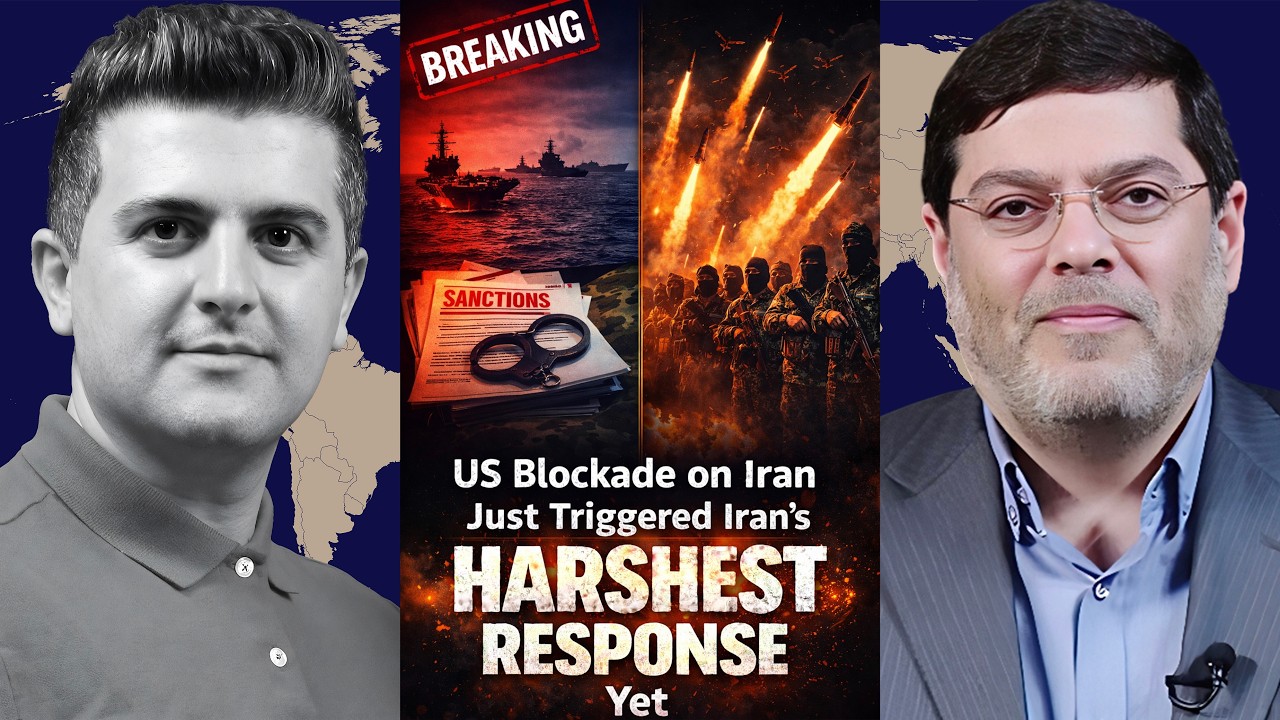
Seyed M. Marandi: US Blockade on Iran Just Triggered Iran’s HARSHEST Response Yet
"An Iranian professor details how US demands and an imposed blockade triggered Iran's harshest response, exposing American strategic missteps and the vulnerability of Gulf Arab states."

Patrick Henningsen: Hezbollah JUST Fired Back at Israel - Iran Vows to “Crush” All Attacks
"Patrick Henningsen argues that the US and Israel initiated an illegal war against Iran, driven by Trump's incompetence and Israeli influence, leading to an inevitable escalation with severe global economic repercussions."
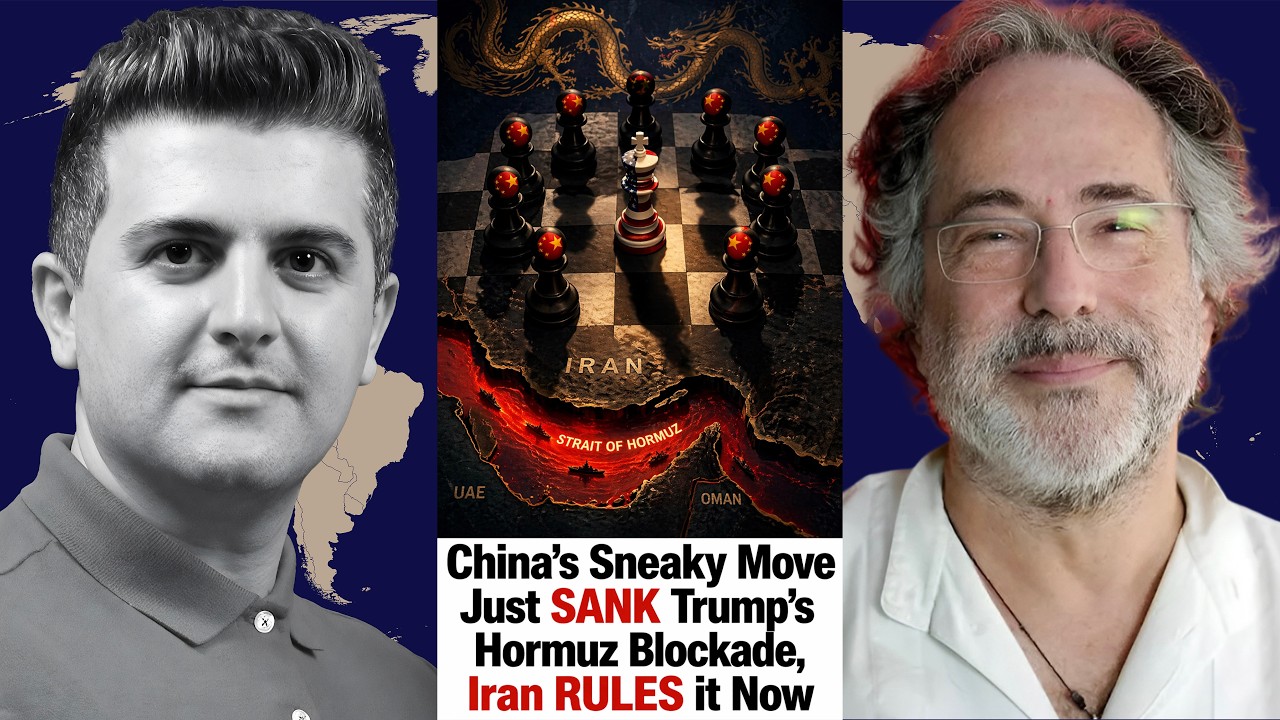
Pepe Escobar: “Total Failure”: Trump’s Blockade Just Backfired Disastrously
"Pepe Escobar argues that the US blockade against Iran, spearheaded by Donald Trump, has utterly failed and backfired, accelerating global economic chaos and challenging US geopolitical dominance."

🚨 TOTAL F*CKING CHECKMATE 😂😂😂
"The host argues that Trump's 'ceasefire' with Iran was a calculated '5D chess' move to orchestrate a global energy market reshuffle, while simultaneously lambasting 'woke' domestic policies and the 'freefall' of anti-Trump conservative figures."