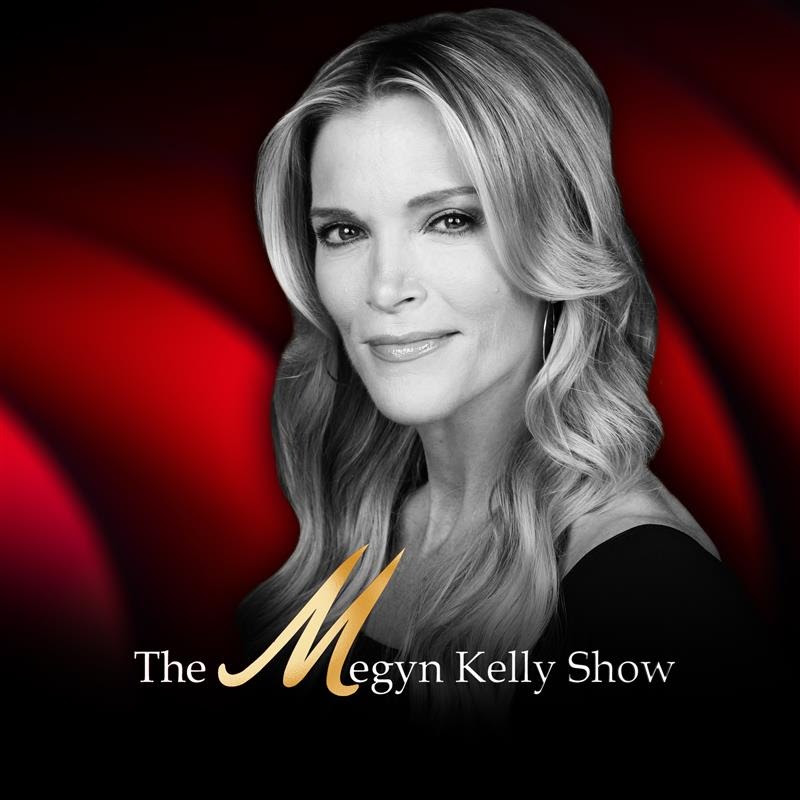
VP JD Vance and Megyn Kelly - The FULL Interview
YouTube · oit9Xg1YC_0
Quick Read
Summary
Takeaways
- ❖Washington D.C. is characterized by insincerity, transactional relationships, and an inability for its political class to self-deprecate.
- ❖President Trump's authenticity is seen as a direct contrast to Washington's political culture, often admired even by critical press members.
- ❖Media bias is perceived as a major issue, with outlets failing to report nuanced stories or acknowledge positive outcomes of the administration's policies, such as reduced crime rates.
- ❖Immigration enforcement is accelerating through new hires and legal victories, despite persistent challenges from left-wing judges and bureaucratic complexities.
- ❖The administration's strategy in Minneapolis involves shifting law enforcement responsibilities to local police as cooperation improves, allowing federal officers to focus on immigration enforcement.
- ❖If Democrats gain House control, the focus will shift heavily to impeachment proceedings rather than bipartisan legislation.
- ❖Preventing Iran from acquiring nuclear weapons is a top foreign policy priority due to proliferation risks and state-sponsored terrorism concerns.
- ❖Greenland is strategically vital for U.S. missile defense, and the U.S. seeks greater benefit for its protective role.
- ❖The SAVE Act is a critical legislative priority to ensure election integrity through voter ID, with calls to reform the filibuster to facilitate its passage.
- ❖Economic affordability is improving, with rents declining and capital investment increasing, but more work is needed to offset previous financial losses for American households.
- ❖The Republican party needs to improve its messaging by leveraging non-traditional media and direct engagement with local communities.
Insights
1Washington's Insincere Political Culture
JD Vance describes Washington D.C. as a 'placeless place' where most residents are not from, fostering a transactional and ego-driven political environment. He notes the prevalence of performative politics, where individuals take themselves too seriously, making it difficult for politicians to self-deprecate or engage in genuine humor. This culture is contrasted with President Trump's perceived authenticity.
Vance recounts the absurdity of motorcades, the mix of tourists and angry radicals, and a friend's observation that all 100 senators believe they will be president. He highlights the inability of Washingtonians to make fun of themselves and contrasts this with Trump's direct communication style. (-)
2Immigration Enforcement Strategy and Legal Hurdles
The Trump administration is committed to accelerating deportations and enforcing immigration policies, despite significant legal and bureaucratic challenges. Vance explains that new immigration enforcement officers are still in training, and many policy victories are delayed by left-wing judges issuing nationwide injunctions. He frames these judicial battles as a fundamental question of democracy and national sovereignty.
Vance cites 2.2 million self-deportations and 675,000 actual deportations under the administration. He details how newly hired immigration officers are still in training and how judges have tried to stop policies like ending temporary protected status for Haitian immigrants, forcing appeals to the Supreme Court. He argues that if courts can prevent an elected administration from reversing a previous administration's policy, it undermines the will of the American people. (-)
3Media Bias and Public Trust
Vance asserts that the mainstream media exhibits a strong political bias, often portraying the administration and its figures in a one-dimensional, angry light. He argues that this lack of nuance and constant antagonism contributes to the media's low public trust, preventing them from reporting positive outcomes, such as significant drops in crime rates, if they are associated with the administration's policies.
Vance criticizes the media's reaction to President Trump's comment to Caitlyn Collins about smiling and a New York Times reporter's question about his 'real' persona. He points to the media's inability to connect the lowest crime rate in 125 years to the administration's 'pro-law and order policies' and deportation of criminals, attributing it to a refusal to express nuance or truth about policies they disagree with. (-)
4Strategic Importance of Greenland for U.S. National Security
Greenland is critical to America's national security, particularly for its missile defense system. Vance explains that if Russia or China controlled Greenland, the U.S. missile defense system would be inoperable. He argues that the U.S. is currently 'on the hook' for defending the island without receiving adequate benefit, necessitating a re-evaluation of the arrangement with Denmark and Greenland.
Vance states that the entire U.S. missile defense system would be inoperable if Greenland were controlled by Russia or China, both of whom have expressed interest. He notes Greenland's small population (60,000) and Denmark's underinvestment in security, arguing the U.S. protects the island without sufficient reciprocal benefit. (-)
5Republican Messaging Challenges and Solutions
Vance acknowledges a widespread frustration among the Republican base that the administration's achievements and sound policies are not effectively communicated to the public. He attributes this to the declining power and editorial slant of traditional media. The proposed solution involves increased direct engagement through non-traditional media and frequent travel by the President and Vice President to connect with local communities.
Vance addresses the audience's concern that 'Republicans suck at messaging' and that many wins go unnoticed. He suggests that the President and he will 'get on the road a lot more' and utilize 'non-traditional media' like podcasts and local affiliates, which he believes have 'more narrative power' than traditional outlets. (-)
Quotes
"The thing you have to realize about the United States Senate is that it's a hundred people who wake up every morning, look in the mirror, and think to themselves, they're going to be the president of the United States."
"If Washington is an insincere place... [Trump] is like the polar opposite. He just says what's on his mind. He doesn't care what how anybody's going to react to it. You what you see is what you get."
"What human being isn't sometimes pissed off at what's going on in the country, but also can laugh about it? What human being doesn't enjoy playing with their kids, but maybe gets annoyed when they're dealing with some at work? The idea that you have to be like one-dimensional is, I think, one of the reasons why the media is so broken."
"Are the American people still sovereign if one administration can do something and the other administration can't do what the American people elected them to do in order to reverse it?"
"The biggest threat to security in the world is a lot of people having nuclear weapons. So what the president said is Iran's not going to get a nuclear weapon."
Q&A
Recent Questions
Related Episodes
SHOCK BREAKING: SHOCKED TRUMP STORMS OUT OF SUPREME COURT IN RAGE!
"This episode dissects Donald Trump's contentious Supreme Court appearance regarding birthright citizenship, the growing disillusionment of right-wing figures like Alex Jones with Trump, and the political fallout from Kristi Noem's husband's alleged cross-dressing scandal."

🚨 THEY F*CKED AROUND FOR THE LAST TIME 😭😭😭
"This episode unleashes a torrent of highly opinionated commentary on the US-Iran deal, Israel's role, and a scathing critique of 'leftist' policies and immigration, particularly highlighting the UK grooming gang report as evidence of Western societal decay."
🚨 THEY… F*CKING... FOUND… OUT… 😂😂😂
"The host delivers a fiery, unfiltered commentary on global and domestic political events, framing them as a battle between a 'collapsing globalist order' and a 'resurgent new right' that prioritizes national sovereignty and traditional Western values."
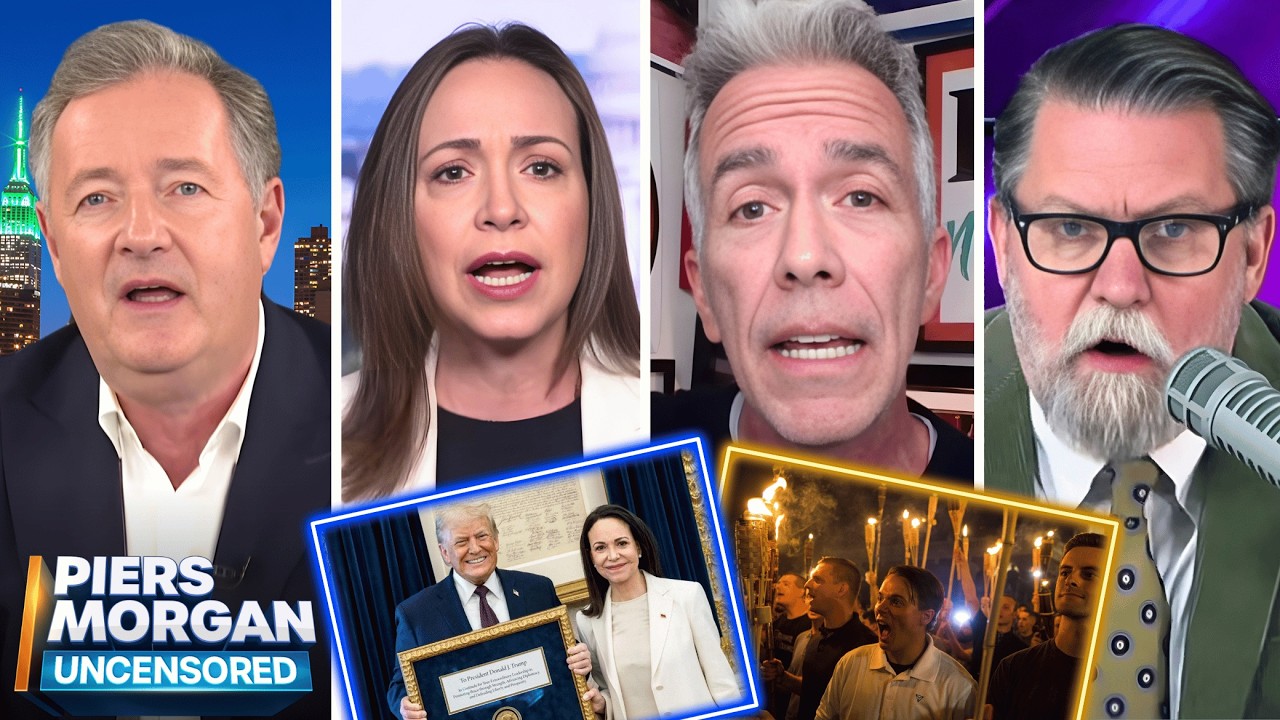
"Fighting Solves EVERYTHING!" Who's To Blame For Political Violence? + Maria Machado On Trump
"This episode dissects the escalating political violence in the US, with panelists fiercely debating the role of partisan rhetoric and media in radicalization, alongside an interview with Venezuelan opposition leader Maria Machado on US intervention and her country's future."